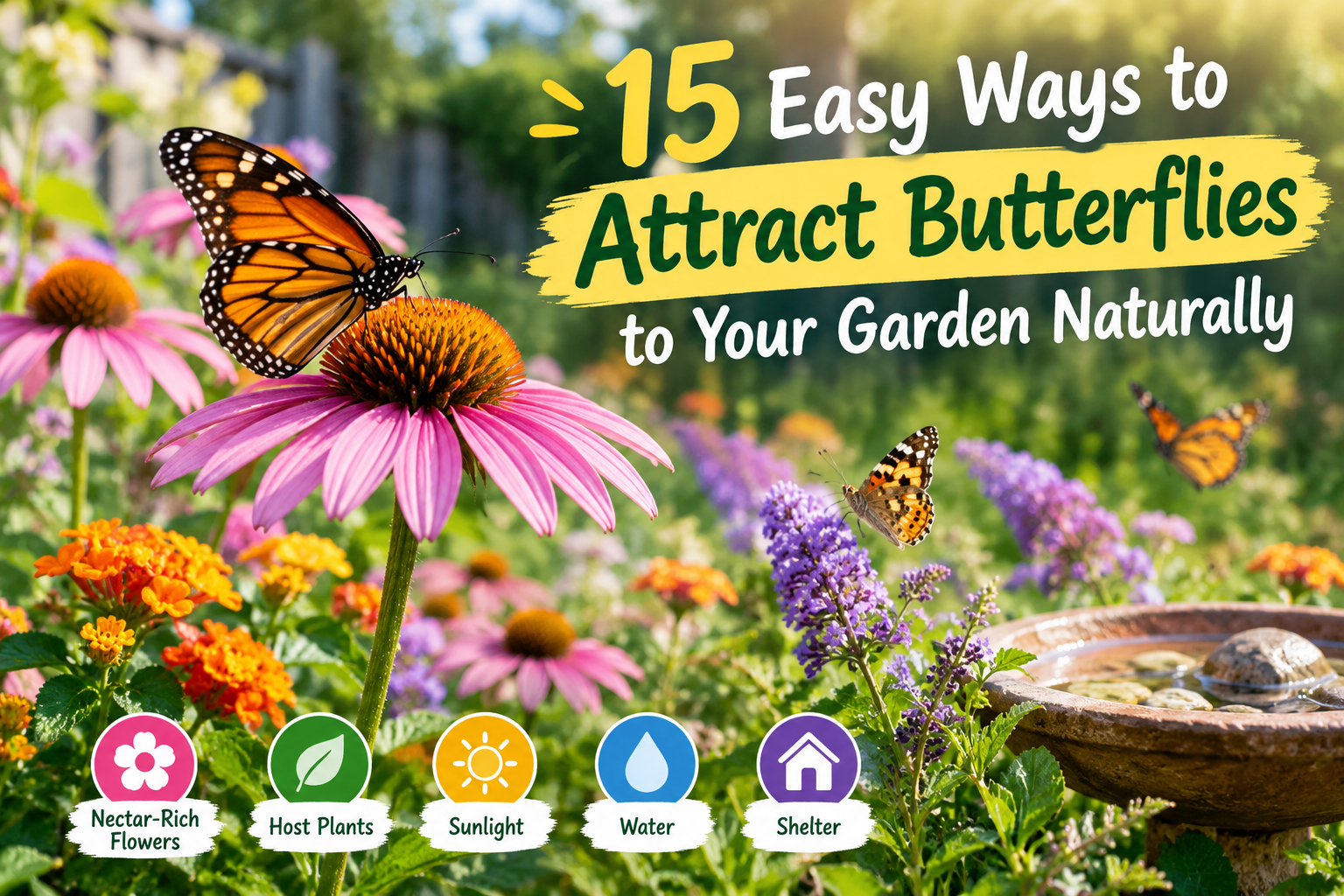
A garden filled with colorful butterflies can make any backyard feel more alive. Beyond their beauty, butterflies are also important pollinators that help many flowering plants reproduce. If you want to attract butterflies to your garden, you do not need expensive equipment or complicated techniques. A few thoughtful changes can create a welcoming space where butterflies can feed, rest, and lay their eggs. The key is to provide the things butterflies need throughout their life cycle. Nectar-rich flowers give adult butterflies energy, while specific host plants provide food for caterpillars. Butterflies also need sunlight, shelter, water, and a safe place away from harmful pesticides. Whether you have a large backyard, a small garden, raised beds, or a few containers, you can create a butterfly-friendly space. In this guide, you will learn how to attract butterflies naturally, which plants to grow, how to provide water and shelter, and which common gardening habits can make your garden less attractive to these beautiful visitors. Why Attract Butterflies to Your Garden? Butterflies are more than beautiful visitors. They are part of a healthy garden ecosystem and can contribute to pollination as they move from flower to flower. A butterfly-friendly garden can also support other beneficial insects, including bees and moths. By choosing a variety of native and nectar-rich plants, you can create a more diverse backyard environment. Another benefit is that butterflies make gardening more enjoyable. Watching different species visit your flowers can help you connect with nature and learn more about the life cycle of insects. Most importantly, creating a butterfly garden does not require a perfect landscape. Even a small collection of suitable flowers and host plants can provide valuable resources. Choose the Right Flowers to Attract Butterflies Flowers are one of the easiest ways to attract butterflies. Adult butterflies mainly visit flowers for nectar, so choosing plants with accessible, nectar-rich blooms is essential. Try to grow several types of flowers rather than relying on just one plant. Different butterfly species may prefer different flowers, and blooming at different times of the year ensures food is available for longer. Best Butterfly-Friendly Flowers Consider adding these plants to your backyard: When possible, select plants suited to your local climate and growing conditions. Grow Host Plants for Caterpillars One mistake gardeners often make is focusing only on flowers for adult butterflies. If you want to create a complete butterfly habitat, you should also grow host plants. Adult butterflies lay their eggs on particular plants. After the eggs hatch, caterpillars feed on those plants before forming their chrysalis. This means some leaves may have holes or visible caterpillars. That is not necessarily a problem. In a butterfly garden, a little leaf damage is part of the natural process. Popular Host Plants Depending on your region and butterfly species, useful host plants may include: Before planting, research which butterfly species are common in your region and which host plants they use. Provide Plenty of Sunshine Butterflies are cold-blooded insects, so they rely on sunlight to warm their bodies. A sunny section of your backyard can therefore become an important part of a butterfly garden. Try to place butterfly-friendly flowers where they receive several hours of sunlight each day. Open areas near flowers can provide butterflies with places to warm themselves before they begin feeding. Flat rocks, stones, or sunny leaves can also become convenient resting spots. Create a Sunny Butterfly Area You can improve your garden by: Provide a Simple Water Source Butterflies need water, but they generally do not drink from deep ponds like birds do. Instead, they often gather around shallow, damp areas where they can obtain moisture and minerals. This behavior is sometimes called puddling. You can create a simple butterfly puddling station using a shallow container filled with sand or soil. Keep the material slightly damp and add a few flat stones where butterflies can land safely. How to Make a Butterfly Puddling Area You can create one using: Keep the area moist rather than flooded. Refresh the water regularly, especially during hot weather. Avoid Harmful Pesticides If your goal is to attract butterflies naturally, pesticide use is one of the most important things to reconsider. Broad-spectrum insecticides can kill beneficial insects as well as unwanted pests. They may also harm caterpillars that you actually want in a butterfly garden. Instead, use preventative gardening methods and tolerate a reasonable amount of insect activity. Natural Pest Management Options Try these approaches first: Remember that caterpillars are part of the butterfly life cycle. Avoid removing every caterpillar you see. Plant Flowers in Groups A single flower may be difficult for a butterfly to notice from a distance. Planting several flowers together creates a larger and more visible source of nectar. Instead of planting one zinnia here and one there, consider planting several together. The same approach can be used with coneflowers, lantana, verbena, or other butterfly-friendly plants. Grouped planting can also make your garden look more organized and colorful. Choose Different Flowering Seasons A successful butterfly garden should provide food throughout the growing season. If all your flowers bloom during the same few weeks, butterflies may have plenty of food temporarily but little afterward. Choose plants with different flowering periods. Early, mid-season, and late-blooming plants can help maintain a continuous supply of nectar. Aim for Seasonal Variety For example: The exact plants will depend on your climate and local growing season. Provide Shelter from Wind Butterflies are delicate insects and strong wind can make feeding and resting difficult. A garden with some natural protection can be more comfortable for butterflies. Trees, shrubs, fences, tall plants, and dense planting can create sheltered areas. However, do not make the entire garden heavily shaded. A combination of sunny feeding areas and protected resting spots works well. Add Native Plants to Your Garden Native plants are often an excellent choice for attracting local butterflies because they have developed alongside local wildlife. They can provide nectar for adult butterflies and, in some cases, serve as host plants for
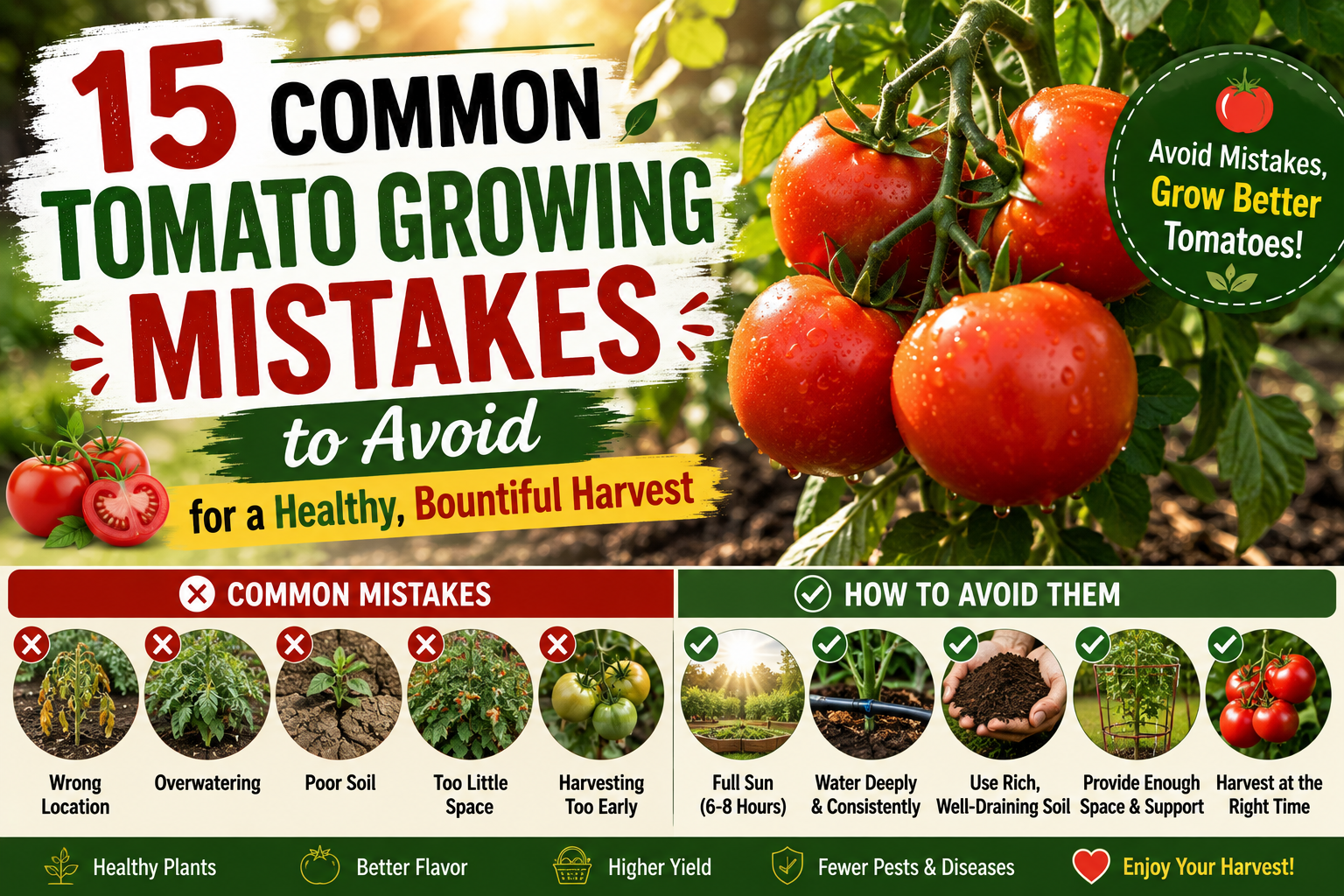
🍅15 Common Tomato Growing Mistakes to Avoid for a Healthy, Bountiful Harvest
Tomatoes are one of the most rewarding vegetables to grow in a backyard garden. With enough sunlight, good soil, regular watering, and a little care, even beginners can enjoy a healthy harvest of juicy, flavorful tomatoes. However, tomato plants can also be surprisingly sensitive. Small mistakes with planting, watering, feeding, pruning, or pest control can quickly lead to weak growth, yellow leaves, cracked fruit, or a disappointing harvest. Understanding common Tomato Growing mistakes can save you time, money, and frustration. The good news is that most tomato problems are easy to prevent once you know what to look for. Whether you are growing tomatoes in raised beds, containers, or directly in the ground, the basic care principles remain similar. In this guide, you will learn about the most common tomato growing mistakes and simple ways to avoid them. From choosing the wrong location to harvesting too late, each section provides practical tips that can help your plants stay healthy and productive throughout the growing season. Why Avoiding Tomato Growing Mistakes Matters Tomatoes need several basic conditions to grow successfully. They require plenty of sunlight, nutrient-rich soil, consistent moisture, good air circulation, and enough space for their roots and branches. When one of these needs is ignored, plants may become stressed. Stressed plants are more likely to develop diseases, attract pests, produce fewer flowers, or develop poor-quality fruit. Fortunately, successful Tomato Growing does not require complicated equipment or expert gardening skills. Paying attention to a few basic details can make a major difference. 15 Common Tomato Growing Mistakes and How to Avoid Them 1. Choosing the Wrong Location One of the biggest tomato growing mistakes is planting tomatoes in an area that does not receive enough sunlight. Tomatoes are sun-loving plants. They generally perform best when they receive around six to eight hours of direct sunlight each day. A shaded location can result in weak stems, slow growth, fewer flowers, and smaller harvests. How to avoid this mistake If your garden receives limited sunlight, choose a location with the longest period of direct exposure rather than simply relying on how bright the area looks. 2. Planting Tomatoes Too Early Tomatoes are warm-season plants, so planting them too early can expose them to cold temperatures. Cool soil can slow root development, while frost can seriously damage or kill young plants. Even if the weather feels warm during the day, nighttime temperatures may still be too low. How to avoid this mistake Wait until the danger of frost has passed and the soil has warmed before transplanting tomatoes outdoors. Hardening off young plants is also important. Gradually expose seedlings to outdoor conditions over several days instead of moving them directly from a protected indoor environment into the garden. 3. Giving Tomato Plants Too Little Space It can be tempting to plant many tomato plants in a small garden. However, overcrowding creates several problems. Plants growing too close together compete for water, nutrients, sunlight, and root space. Dense foliage also reduces air circulation, which can encourage fungal diseases. How to avoid this mistake Give each tomato plant enough room to grow according to its variety. Indeterminate tomatoes usually require more space because they continue growing throughout the season. Determinate varieties are generally more compact. Always check the spacing recommendations on your seed packet or plant label. 4. Planting Tomatoes in Poor Soil Tomatoes grow best in fertile, well-draining soil. Planting them in compacted or nutrient-poor soil can limit root development and reduce plant growth. Heavy soil can also hold too much water around the roots. How to improve the soil Healthy soil gives tomato roots access to the water, air, and nutrients they need. 5. Planting Seedlings Too Shallow Tomatoes have an unusual ability to develop roots along their buried stems. For this reason, planting tomatoes slightly deeper than many other vegetables can encourage a stronger root system. A weak root system may make plants more vulnerable to drought and poor growth. How to avoid this mistake Remove the lower leaves from a healthy transplant and bury part of the stem when planting. Avoid burying the entire plant, however, and make sure the upper leaves remain above the soil. For container-grown seedlings, make sure the container is deep enough to accommodate healthy root development. 6. Overwatering Tomato Plants Overwatering is one of the most common problems in Tomato Growing. Tomatoes need consistent moisture, but constantly wet soil can reduce oxygen around the roots and contribute to root problems. Excess moisture can also increase the risk of certain diseases. Overwatering may cause yellowing leaves, weak growth, or wilting despite the soil being wet. How to avoid overwatering Water deeply rather than giving plants small amounts of water frequently. Check the soil before watering. If the surface is slightly dry and the deeper soil still has moisture, you may not need to water immediately. Use containers with drainage holes, and avoid allowing pots to sit in standing water. 7. Letting Tomato Plants Dry Out Completely The opposite mistake is allowing tomato plants to become severely dry. Irregular watering can stress plants and contribute to problems such as blossom-end rot and fruit cracking. Tomatoes prefer relatively consistent moisture throughout the growing season. Better watering habits The goal is not to keep the soil constantly wet. Instead, maintain reasonably consistent moisture without creating waterlogged conditions. 8. Watering the Leaves Instead of the Soil Watering from above can leave foliage wet for extended periods. When combined with poor air circulation, this can create favorable conditions for certain fungal diseases. How to avoid this mistake Direct water toward the soil around the base of the plant. A soaker hose or drip irrigation system can make watering easier. If you use a watering can or hose, apply water slowly around the root zone instead of spraying the entire plant. Morning watering also gives any accidentally wet foliage more time to dry during the day. 9. Using Too Much Fertilizer More fertilizer does not always mean more tomatoes. Excess nitrogen can
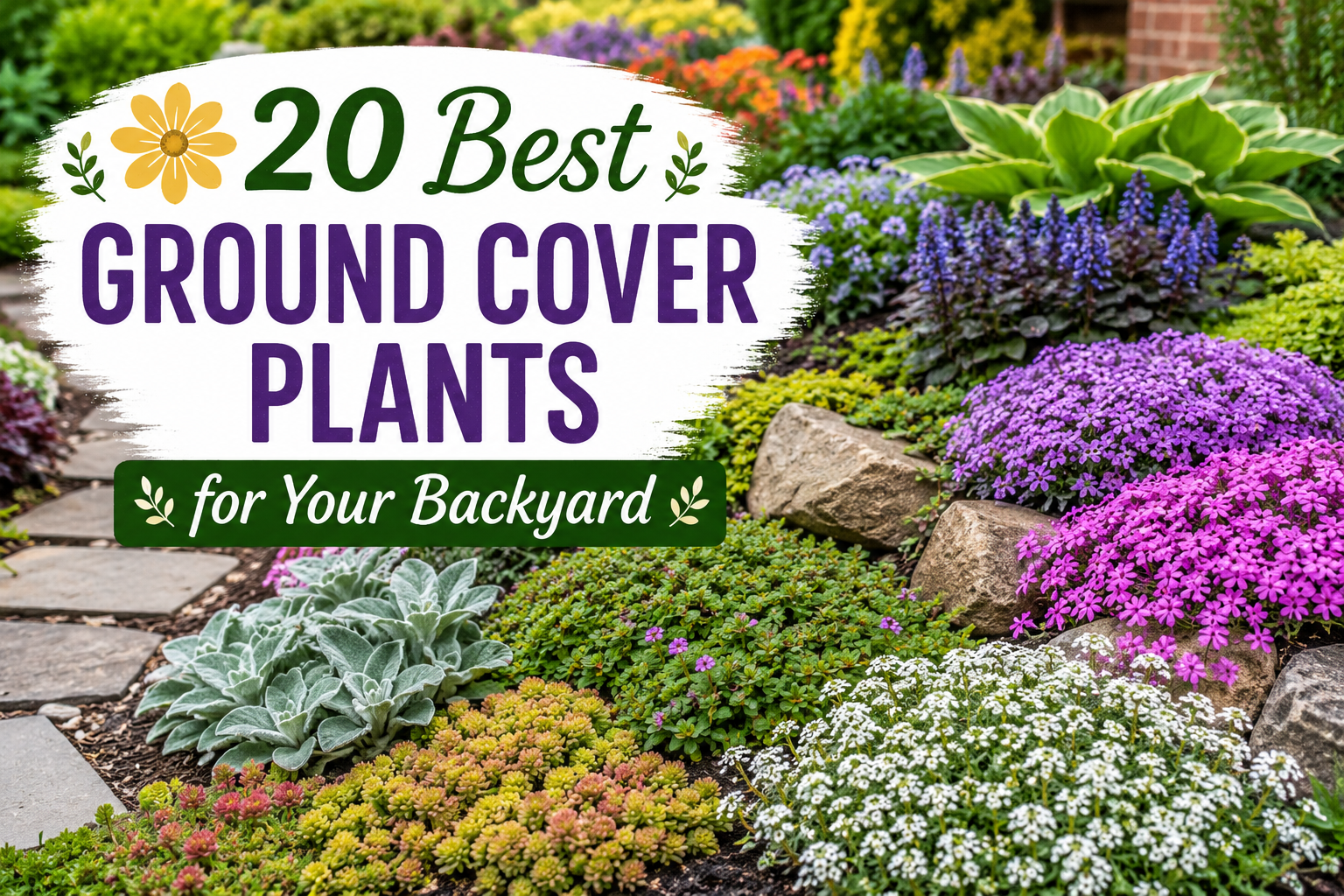
🌼 20 Best Ground Cover Plants for Your Backyard
Ground Cover Plants are an excellent way to add color, texture, and greenery to areas of your backyard where grass or traditional flower beds may be difficult to maintain. These low-growing plants spread across the soil, helping create a lush and attractive landscape while reducing the amount of exposed ground. Whether you have a sunny slope, shady corner, rocky area, or space beneath trees, there is likely a ground cover plant that can thrive there. Some varieties produce beautiful flowers, while others are valued for their evergreen foliage, fragrance, or ability to control weeds. Ground cover plants can also help reduce soil erosion, conserve moisture, and make garden beds look more finished. Many are low-maintenance once established, making them especially useful for busy gardeners and beginners. In this guide, you’ll discover 20 of the best Ground Cover Plants for your backyard, including their sunlight requirements, watering needs, bloom times, and ideal uses. You’ll also learn how to choose, plant, and care for ground covers successfully. What Are Ground Cover Plants? Ground cover plants are low-growing plants that spread horizontally across the soil rather than growing tall. They are commonly used to fill empty spaces between larger plants, cover slopes, replace sections of lawn, and create attractive garden borders. Some ground covers spread quickly, while others grow more slowly and form neat, compact mats. Depending on the variety, they may be evergreen or deciduous and may produce flowers during one or more seasons. Common Uses for Ground Cover Plants Benefits of Growing Ground Cover Plants Adding Ground Cover Plants to your backyard can provide both practical and decorative benefits. 1. Helps Control Weeds A dense layer of ground cover can block sunlight from reaching weed seeds. As the plants spread, they leave less open soil where unwanted weeds can establish. 2. Reduces Soil Erosion Ground covers are especially useful on slopes. Their roots help hold soil in place during heavy rain and watering. 3. Conserves Soil Moisture Leaves and stems create a protective layer over the soil, helping reduce evaporation during warm weather. 4. Adds Beauty Ground covers come in many colors and textures. Some produce colorful flowers, while others provide attractive foliage throughout the year. 5. Requires Less Lawn Maintenance Certain ground covers can be used instead of grass in areas where mowing is difficult, such as slopes or narrow spaces. 6. Supports Pollinators Flowering ground covers can provide nectar and pollen for bees, butterflies, and other beneficial insects. How to Choose the Best Ground Cover Plants The best ground cover isn’t necessarily the fastest-growing one. You should choose a variety based on your backyard’s conditions and the amount of maintenance you’re willing to provide. Important Factors to Consider Choosing the right plant for the right location is one of the easiest ways to create a healthy and attractive backyard. 20 Best Ground Cover Plants for Your Backyard 1. Creeping Thyme Creeping thyme is one of the most popular choices for sunny locations. It forms a low-growing carpet of foliage and produces small flowers during summer. It is also drought-tolerant once established and can tolerate some foot traffic, making it useful between stepping stones. Growing Tips 2. Creeping Phlox Creeping phlox creates a colorful carpet of flowers in spring. Its small blooms are commonly found in shades of pink, purple, blue, and white. It works particularly well on slopes and rock gardens. Growing Tips 3. Sedum Sedum, also called stonecrop, is a tough succulent ground cover that performs particularly well in dry locations. Its fleshy leaves store water, allowing it to tolerate periods of drought. Growing Tips 4. Sweet Woodruff Sweet woodruff is an excellent choice for shady areas. It produces small white flowers in spring and has attractive green foliage. Its low-growing habit makes it useful beneath trees and shrubs. Growing Tips 5. Ajuga Ajuga, commonly called bugleweed, forms dense mats of colorful foliage. Depending on the variety, leaves may be green, purple, bronze, or variegated. It also produces attractive flower spikes in spring. Growing Tips 6. Lily of the Valley Lily of the valley is a classic shade-loving ground cover with fragrant white, bell-shaped flowers. It spreads through underground rhizomes and can eventually create a dense planting. Growing Tips Note: Lily of the valley can be toxic if eaten, so it should be planted carefully around children and pets. 7. Pachysandra Pachysandra is an evergreen ground cover that performs well in shady locations. Its glossy foliage provides year-round interest in mild climates. It is especially useful beneath trees where grass often struggles. Growing Tips 8. Periwinkle (Vinca) Periwinkle is a vigorous ground cover with glossy green leaves and attractive blue, purple, or white flowers. It can quickly cover bare areas, although its vigorous growth means you should monitor its spread. Growing Tips 9. Lamb’s Ear Lamb’s ear is loved for its soft, silvery-gray leaves. Its foliage adds a unique texture to flower beds and garden borders. It prefers dry conditions and good drainage. Growing Tips 10. Heuchera Heuchera, commonly known as coral bells, is valued for its colorful foliage rather than only its flowers. Leaves can appear in shades of burgundy, green, bronze, silver, and purple. It works particularly well in partially shaded gardens. Growing Tips Ground Cover Plants Comparison Table Ground Cover Plant Sunlight Water Needs Bloom Time Maintenance Creeping Thyme Full sun Low Summer Low Creeping Phlox Full sun–partial shade Moderate Spring Low Sedum Full sun Low Summer–fall Low Sweet Woodruff Shade Moderate Spring Low Ajuga Sun–shade Moderate Spring Low Lily of the Valley Shade Moderate Spring Low Pachysandra Shade Moderate Spring Low Periwinkle Sun–shade Low–moderate Spring Low Lamb’s Ear Full sun Low Summer Low Heuchera Partial shade Moderate Summer Low Best Ground Cover Plants for Sunny Areas Sunny areas provide excellent growing conditions for many drought-tolerant ground covers. Top Choices for Full Sun When planting in full sun, choose varieties that can tolerate heat and drying soil. Best Ground Cover Plants for Shade Shady areas can be challenging, especially beneath large trees. Fortunately, several
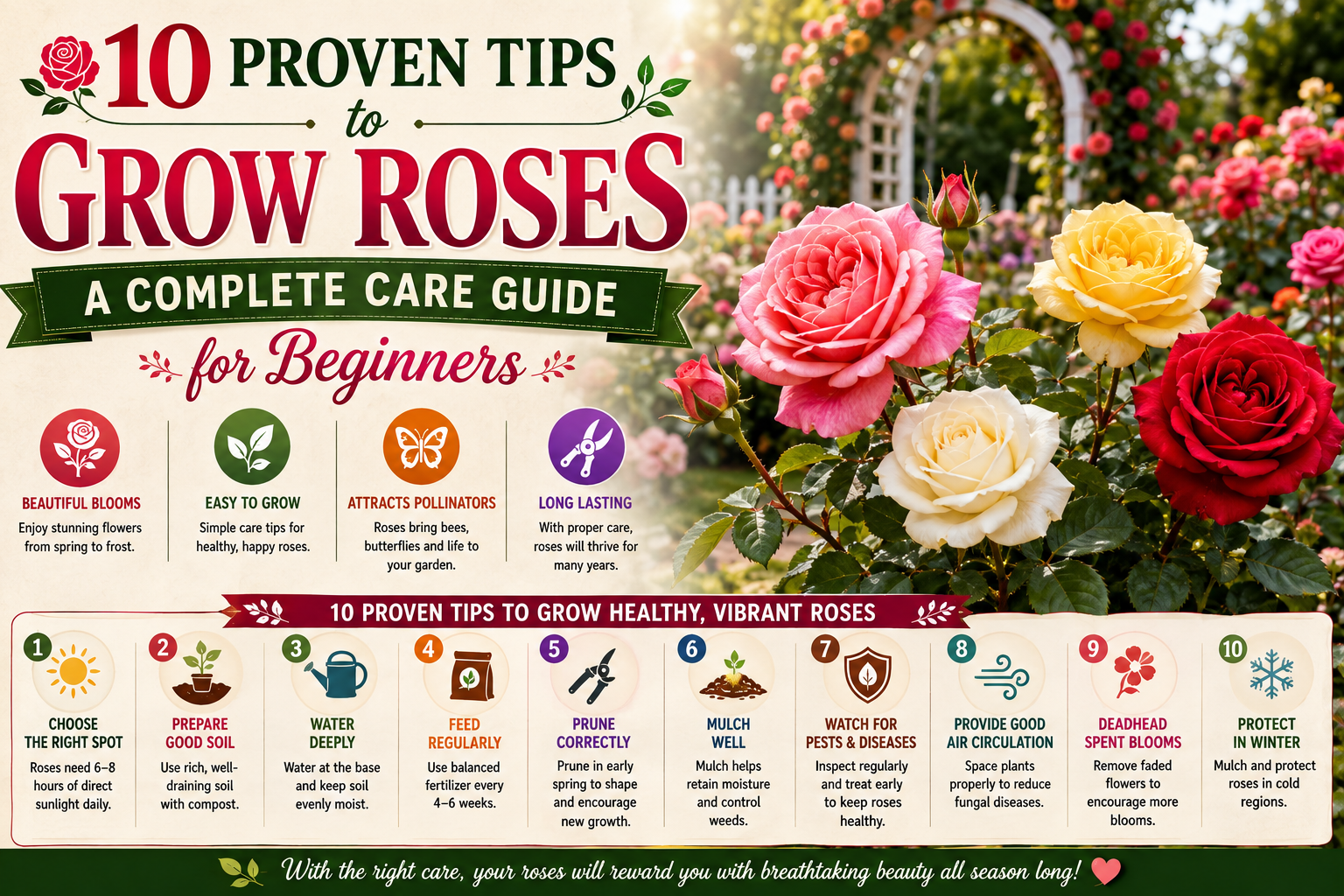
🌹10 Proven Tips to Grow Roses: Care Guide for Beginners
Roses are among the most admired flowers in the world, known for their stunning blooms, rich fragrance, and timeless beauty. Whether you’re creating a colorful flower bed, decorating a backyard, or growing flowers in containers, learning how to Grow Roses successfully can transform your garden into a breathtaking space. Although roses have a reputation for being difficult to grow, modern varieties are much easier to care for than many people think. With the right location, healthy soil, regular watering, and proper pruning, rose plants can reward you with beautiful blooms from spring through fall. From classic hybrid tea roses to climbing and shrub varieties, there’s a rose suitable for every type of garden and every level of gardening experience. In this complete guide, you’ll learn everything you need to Grow Roses, including how to choose the right variety, prepare the soil, plant correctly, water efficiently, fertilize properly, and protect your plants from pests and diseases. Whether you’re a beginner or an experienced gardener, these practical tips will help you enjoy healthy, vibrant roses year after year. Why Grow Roses? Roses have remained one of the most popular garden flowers for centuries because they combine beauty, fragrance, and versatility. They can enhance almost any landscape, from formal gardens to small patios. Growing roses also brings long-term rewards. Many varieties bloom repeatedly throughout the growing season, providing months of colorful flowers with proper care. Some roses are grown for their fragrance, while others are valued for their disease resistance, vibrant colors, or ability to attract pollinators. With so many varieties available, it’s easy to find roses that suit your garden and climate. Benefits of Growing Roses Growing roses offers many advantages beyond their beautiful appearance. Beautiful Blooms Throughout the Season Many modern rose varieties bloom repeatedly from late spring until the first frost. Enhances Garden Beauty Roses create elegant focal points in: Wonderful Fragrance Many rose varieties produce sweet, pleasant scents that make outdoor spaces more enjoyable. Attracts Pollinators Open-flowered roses attract: These pollinators help support a healthy garden ecosystem. Excellent Cut Flowers Fresh roses make beautiful indoor floral arrangements and bouquets. Choosing the Right Rose Variety Selecting the right rose variety is one of the most important steps for success. Different types vary in size, bloom style, fragrance, and maintenance needs. Consider the following factors before buying rose plants: Choosing varieties suited to your local conditions helps ensure healthier plants and more flowers. Easy Roses for Beginners If you’re new to gardening, start with disease-resistant and low-maintenance varieties. Beginner-Friendly Rose Types These varieties are hardy, bloom generously, and require less maintenance than traditional hybrid tea roses. Types of Roses (Comparison Table) Rose Type Best For Maintenance Bloom Style Ideal Location Hybrid Tea Cut flowers Moderate Large single blooms Flower beds Floribunda Continuous blooms Easy Flower clusters Borders Climbing Roses Walls and trellises Moderate Large clusters Arches and fences Shrub Roses Low maintenance Easy Abundant blooms Landscapes Miniature Roses Containers Easy Small blooms Pots and balconies Ground Cover Roses Slopes and edging Low Spreading blooms Borders Best Time to Grow Roses Timing plays a major role in helping roses establish healthy roots. The ideal planting time depends on your climate: Avoid planting during extreme heat or when the ground is frozen, as this can stress young plants. Bare-Root Roses vs. Potted Roses Feature Bare-Root Roses Potted Roses Planting Time Late winter to early spring Spring through fall Cost Usually less expensive Slightly higher Root Establishment Strong once planted Immediate growth Availability Seasonal Available year-round Best For Experienced and budget-conscious gardeners Beginners and quick planting Bare-root roses are economical and establish well, while potted roses are easier for beginners and provide instant garden appeal. Essential Supplies You’ll Need Having the right gardening tools makes it much easier to Grow Roses successfully. Investing in a few basic supplies will help your rose plants establish healthy roots and produce beautiful blooms throughout the growing season. Basic Gardening Supplies Quality tools not only make planting easier but also help maintain healthy rose bushes for years to come. Step-by-Step Guide to Grow Roses Planting roses correctly gives them the best possible start. Follow these simple steps to encourage strong root development and abundant blooms. Step 1: Select the Right Location Choose a spot that receives at least 6–8 hours of direct sunlight every day. Roses thrive in sunny locations with good air circulation. Avoid planting near large trees or shrubs that compete for water and nutrients. Step 2: Prepare the Soil Healthy soil is essential for vigorous rose growth. Before planting: Rich, well-draining soil allows roots to establish quickly. Step 3: Dig the Planting Hole Dig a hole that is: For bare-root roses, create a small mound of soil in the center of the hole to support the roots. Step 4: Plant the Rose Place the rose in the hole carefully. Fill the hole with soil and gently firm it around the roots. Step 5: Water Thoroughly After planting, water deeply to eliminate air pockets and help the soil settle around the roots. Keep the soil evenly moist during the first growing season. Step 6: Apply Mulch Spread a 2–3 inch layer of mulch around the base of the plant. Benefits include: Keep mulch a few inches away from the main stem to prevent rot. Best Soil for Roses Healthy soil is one of the most important factors when you Grow Roses. Roses perform best in fertile, well-draining soil rich in organic matter. Ideal Soil Conditions Adding compost every year helps improve both soil fertility and structure. Soil Comparison Table Soil Type Suitable for Roses Recommendation Loamy Soil ⭐⭐⭐⭐⭐ Excellent Best choice Sandy Soil ⭐⭐⭐ Good Add compost to improve moisture retention Clay Soil ⭐⭐ Fair Improve drainage with organic matter Rocky Soil ⭐ Poor Not recommended without major soil improvement How to Water Roses Properly Proper watering helps roses develop deep, healthy roots and produce more flowers. Young roses require more frequent watering than established plants. Best Watering Practices Deep watering encourages roots to grow
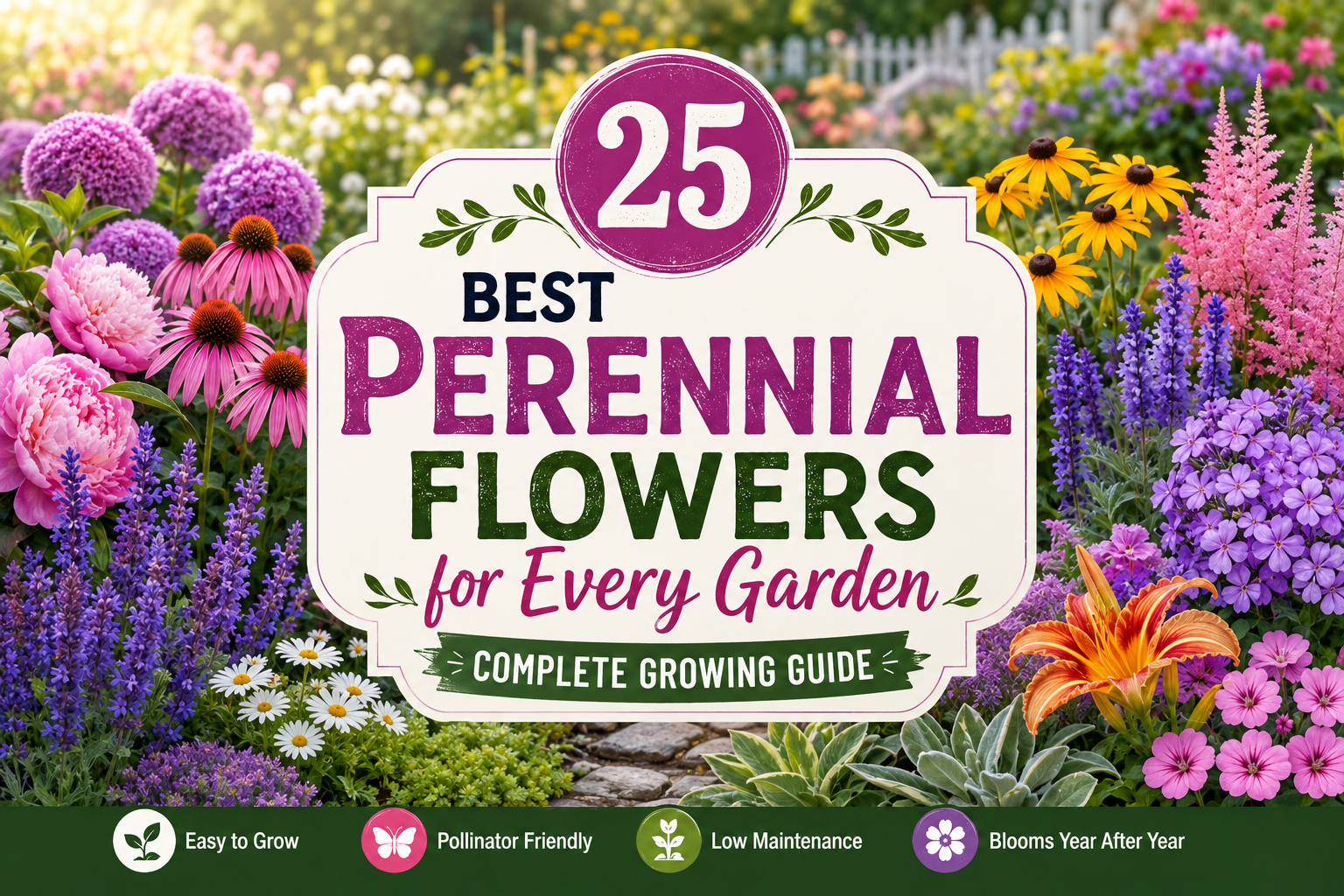
25 Best Perennial Flowers for Every Garden
Perennial flowers are one of the best investments you can make for a beautiful, long-lasting garden. Unlike annuals that need to be replanted every year, Perennial Flowers return season after season, bringing reliable color, texture, and charm to your outdoor space. Once established, many perennials require very little maintenance, making them perfect for both beginner and experienced gardeners. Whether you’re designing a colorful flower bed, attracting pollinators, or creating a cottage-style landscape, perennial flowers offer endless possibilities. From vibrant coneflowers and cheerful black-eyed Susans to elegant peonies and fragrant lavender, there’s a perennial suited to every garden style and climate. Many varieties also attract bees, butterflies, and hummingbirds, helping support local wildlife while enhancing your landscape. In this complete guide, you’ll discover the 25 best Perennial Flowers for every garden, along with their growing requirements, care tips, bloom times, and ideal planting locations. You’ll also learn how to choose the right perennials, compare popular varieties, and keep your garden blooming beautifully year after year with minimal effort. Why Choose Perennial Flowers? Perennial flowers are a favorite among gardeners because they provide beauty year after year without needing to be replanted. Once their root systems are established, these plants often become stronger and produce even more blooms with each growing season. Growing Perennial Flowers also saves time and money in the long run. Instead of buying new flowers every spring, you can enjoy reliable blooms from the same plants for many years. Some perennials bloom for weeks, while others flower in different seasons, allowing you to create a garden that stays colorful from spring through fall. Benefits of Growing Perennial Flowers Adding perennial flowers to your garden offers several long-term advantages. Long-Lasting Beauty Most perennial flowers return every year, providing dependable blooms with minimal effort. Lower Gardening Costs Although the initial purchase may cost slightly more than annual flowers, perennials eliminate the need for yearly replacements. Low Maintenance Many perennial flowers become drought-tolerant after establishment and require less watering and fertilizing. Supports Pollinators Many popular perennial flowers attract: These pollinators improve the health of your entire garden. Improves Garden Design Perennials create structure and consistent color in: How to Choose the Best Perennial Flowers Before selecting plants, consider the growing conditions in your garden. Choose perennial flowers based on: Matching plants to your garden conditions helps ensure healthy growth and continuous blooms. Easy Perennial Flowers for Beginners If you’re just getting started with gardening, choose hardy varieties that are easy to grow. Best Beginner-Friendly Perennials These flowers are forgiving, adaptable, and require very little maintenance once established. Perennial Flowers vs. Annual Flowers Feature Perennial Flowers Annual Flowers Life Cycle Return every year Complete life cycle in one season Replanting Not required annually Required every year Maintenance Low once established Moderate Initial Cost Slightly higher Usually lower Long-Term Value Excellent Moderate Examples Peony, Lavender, Coneflower Marigold, Petunia, Zinnia Best Growing Conditions for Perennial Flowers Although different flowers have different needs, most Perennial Flowers thrive under similar conditions. For the best results: Healthy soil and proper sunlight are the foundation of long-lasting perennial gardens. 25 Best Perennial Flowers for Every Garden 1. Coneflower (Echinacea) Coneflowers are among the most popular Perennial Flowers thanks to their vibrant daisy-like blooms and exceptional drought tolerance. They bloom from early summer until fall and attract butterflies, bees, and songbirds, making them perfect for pollinator gardens. Once established, coneflowers require very little maintenance and thrive in a variety of soil conditions. Growing Tips 2. Black-Eyed Susan Black-Eyed Susan is a cheerful perennial featuring bright golden-yellow petals surrounding dark centers. It blooms for several months and tolerates heat, drought, and poor soil. These hardy flowers brighten flower beds while attracting butterflies throughout summer. Growing Tips 3. Lavender Lavender is famous for its fragrant purple flower spikes and soothing aroma. Besides its ornamental beauty, it attracts pollinators while naturally repelling certain garden pests. Its drought resistance makes it one of the easiest perennial flowers to maintain. Growing Tips 4. Daylily Daylilies produce trumpet-shaped flowers in a wide variety of vibrant colors. Although each bloom lasts only one day, the plant continuously produces new flowers for several weeks. They tolerate different soil types and require very little care. Growing Tips 5. Shasta Daisy Shasta Daisies feature classic white petals with bright yellow centers. Their long-lasting blooms make excellent cut flowers while adding elegance to any garden. These dependable perennials bloom generously with minimal maintenance. Growing Tips 6. Coreopsis (Tickseed) Coreopsis produces cheerful yellow, orange, or pink flowers that bloom continuously for months. It thrives in hot weather and tolerates drought once established. Deadheading faded flowers encourages even more blooms. Growing Tips 7. Bee Balm Bee Balm produces colorful tubular flowers that attract hummingbirds, butterflies, and bees throughout the growing season. Its fragrant foliage and vibrant blooms make it a favorite choice for wildlife-friendly gardens. Growing Tips 8. Yarrow Yarrow is one of the toughest Perennial Flowers, producing flat clusters of tiny blooms in shades of yellow, white, pink, and red. Its drought tolerance and fern-like foliage make it ideal for low-maintenance landscapes. Growing Tips Best Soil for Perennial Flowers Healthy soil helps perennial flowers establish strong root systems that support years of reliable blooms. For the best results: Improving the soil before planting reduces future maintenance and encourages healthier plants. Watering Perennial Flowers Proper watering is especially important during the first growing season while roots become established. Best Watering Practices Deep watering promotes stronger root growth and improves drought resistance. Fertilizing Perennial Flowers Unlike many annual flowers, most perennials don’t require frequent fertilizing. Fertilizer Tips Using too much fertilizer can actually reduce flowering in many perennial varieties. Sunlight Requirements Different perennial flowers have different sunlight needs, so choosing the right location is essential. Sunlight Suitable Perennial Flowers Full Sun (6–8 hours) Coneflower, Lavender, Coreopsis, Yarrow, Shasta Daisy Partial Sun (4–6 hours) Daylily, Bee Balm, Black-Eyed Susan Partial Shade Some Daylily and Bee Balm varieties Providing the correct amount of sunlight helps plants produce healthier foliage and more abundant blooms. Common
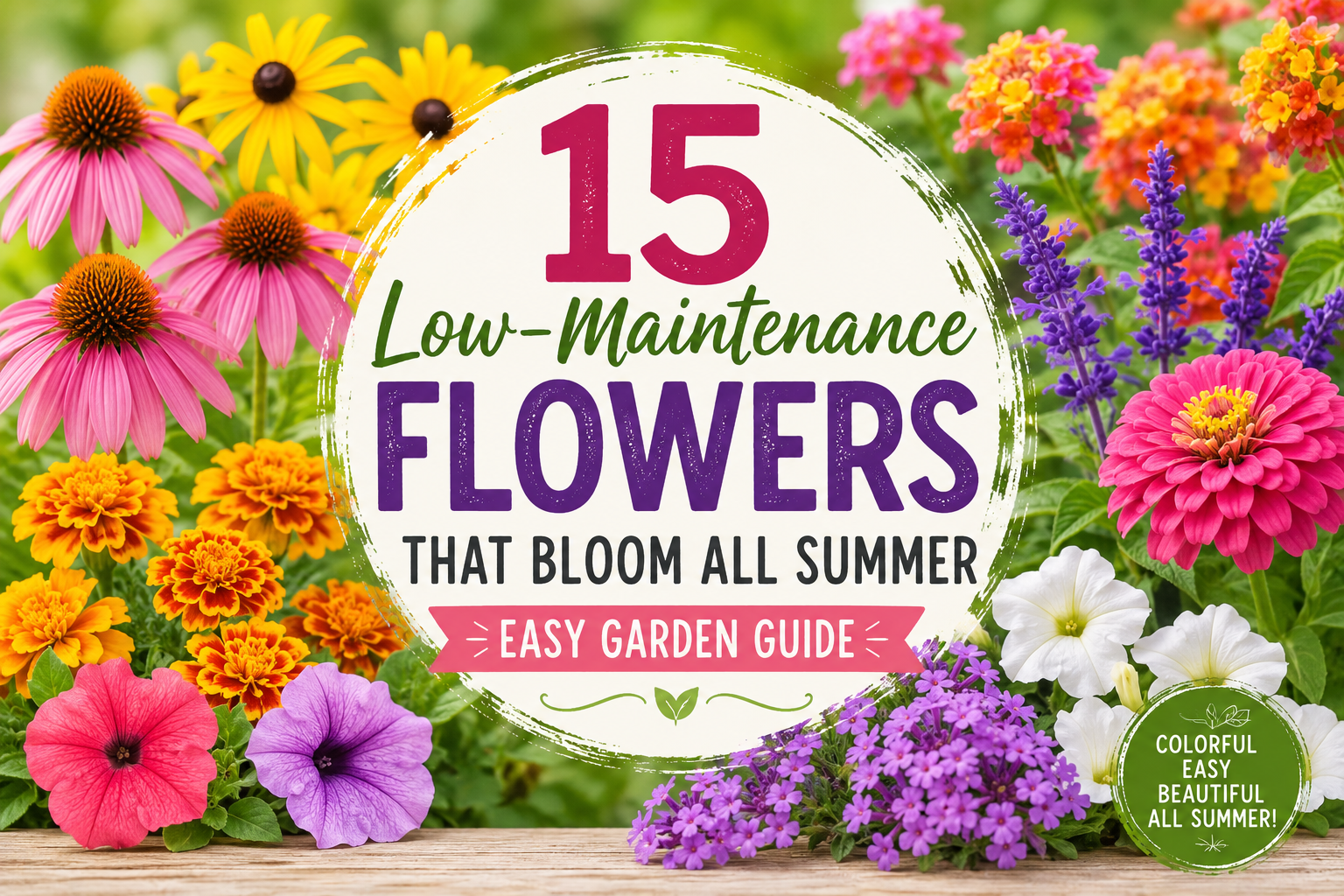
🌸15 Low-Maintenance Flowers That Bloom All Summer
If you love colorful gardens but don’t have time for constant care, choosing Low-Maintenance Flowers is the perfect solution. These easy-to-grow flowers provide vibrant blooms throughout the summer while requiring minimal watering, pruning, and fertilizing. Whether you’re a beginner or an experienced gardener, planting hardy flowering plants can help you enjoy a beautiful landscape without spending hours maintaining it. Many low-maintenance flowers are drought-tolerant, resistant to common pests, and capable of thriving in a variety of soil conditions. As a result, they are ideal for busy homeowners, small backyard gardens, containers, borders, and flower beds. Additionally, many of these flowers attract bees, butterflies, and other pollinators, making your garden healthier and more lively. In this guide, you’ll discover 15 of the best Low-Maintenance Flowers that bloom all summer, along with their growing requirements, care tips, and benefits. You’ll also learn how to choose the right flowers for your garden, compare annuals and perennials, and keep your plants blooming from late spring until the first frost. Why Choose Low-Maintenance Flowers? Many gardeners assume beautiful flower beds require daily attention. Fortunately, that’s not true. Many flowering plants naturally thrive with very little care while producing colorful blooms for months. Choosing Low-Maintenance Flowers offers several advantages: Because these flowers require less effort, you can spend more time enjoying your garden instead of constantly maintaining it. Benefits of Growing Low-Maintenance Flowers Planting easy-care flowers provides more than just beautiful blooms. They also improve your outdoor space and simplify gardening. Some key benefits include: Saves Time Busy schedules often make gardening difficult. Low-maintenance flowers continue blooming with minimal care. Conserves Water Many varieties tolerate drought once established, making them suitable for regions with hot summers. Reduces Gardening Costs Since these flowers need fewer fertilizers, pesticides, and replacements, they are budget-friendly over time. Supports Pollinators Many flowers attract: These visitors help pollinate your garden and support local ecosystems. Brightens Outdoor Spaces Long-lasting blooms keep flower beds, walkways, patios, and containers colorful throughout the growing season. How to Choose the Best Low-Maintenance Flowers Before selecting flowers, consider your growing conditions. Choose flowers based on: Matching flowers to your environment improves growth and reduces maintenance. Easy Low-Maintenance Flowers for Beginners If you’re new to gardening, start with flowers that are known for their reliability. Best Beginner-Friendly Choices These flowers germinate easily, grow quickly, and continue blooming for months with little attention. Annual vs. Perennial Low-Maintenance Flowers Feature Annual Flowers Perennial Flowers Life Cycle One growing season Return every year Bloom Time Long continuous blooms Bloom season varies Replanting Required each year Usually unnecessary Maintenance Low Very low once established Cost Over Time Higher More economical Examples Marigold, Zinnia, Cosmos Coneflower, Coreopsis, Black-Eyed Susan Best Growing Conditions Most Low-Maintenance Flowers perform best when they receive: Adding compost before planting helps improve soil fertility while encouraging healthier blooms. 15 Low-Maintenance Flowers That Bloom All Summer 1. Marigolds Marigolds are among the easiest Low-Maintenance Flowers you can grow. Their bright yellow, orange, and golden blooms add cheerful color to gardens from late spring until the first frost. Besides their beauty, marigolds naturally repel several common garden pests, making them an excellent companion plant for vegetables and herbs. These flowers grow quickly from seeds or nursery plants and adapt well to flower beds, borders, and containers. Deadheading spent blooms encourages even more flowers throughout summer. Growing Tips 2. Zinnias Zinnias are colorful annual flowers that bloom continuously with very little effort. Available in nearly every color except true blue, they create eye-catching flower beds while attracting butterflies and other beneficial pollinators. They tolerate heat extremely well and continue flowering even during hot summer weather. Removing faded flowers helps produce fresh blooms for months. Growing Tips 3. Coneflowers (Echinacea) Coneflowers are hardy perennials known for their large daisy-like flowers with raised centers. Once established, they require very little watering and can tolerate periods of drought. These flowers also attract bees, butterflies, and birds, making them an excellent choice for wildlife-friendly gardens. Growing Tips 4. Black-Eyed Susan Black-Eyed Susan is a reliable perennial that produces cheerful golden-yellow flowers with dark brown centers. It thrives in poor soil and hot weather while requiring minimal care. Because of its long blooming period, it’s a favorite choice for cottage gardens and natural landscapes. Growing Tips 5. Cosmos Cosmos produce delicate, daisy-like flowers that bloom continuously through summer. Their tall stems sway beautifully in the breeze and attract butterflies in large numbers. These flowers actually bloom better when grown in average soil rather than overly fertile soil. Growing Tips 6. Coreopsis Coreopsis, often called Tickseed, produces bright yellow blooms that last for months. It tolerates drought, poor soil, and high temperatures without losing its vibrant appearance. It is one of the longest-blooming perennials available. Growing Tips 7. Verbena Verbena forms clusters of colorful flowers that bloom continuously throughout summer. It spreads nicely across garden beds and hanging baskets while attracting butterflies. Its drought tolerance makes it ideal for warm climates. Growing Tips 8. Moss Rose (Portulaca) Moss Rose thrives in hot, dry conditions where many other flowers struggle. Its succulent leaves store moisture, allowing it to survive with very little watering. The vibrant flowers open during sunny days and come in shades of pink, red, orange, yellow, and white. Growing Tips Best Soil for Low-Maintenance Flowers Healthy soil is the foundation of long-lasting blooms. Fortunately, most Low-Maintenance Flowers don’t require rich soil to thrive. For the best results: Well-prepared soil encourages stronger roots and healthier plants while reducing maintenance. Watering Tips Although these flowers are easy to care for, proper watering helps them bloom longer. Best Watering Practices Deep watering encourages roots to grow deeper into the soil, making plants more drought-resistant. Fertilizer Requirements Unlike high-maintenance flowers, these plants usually need very little fertilizer. Fertilizing Tips A little fertilizer goes a long way for healthy blooms. Sunlight Requirements Most Low-Maintenance Flowers bloom best in full sunlight. Light Requirements Sunlight Suitable Flowers Full Sun (6–8 hours) Marigold, Zinnia, Cosmos, Coreopsis, Moss Rose Partial Sun (4–6 hours) Verbena, Coneflower,
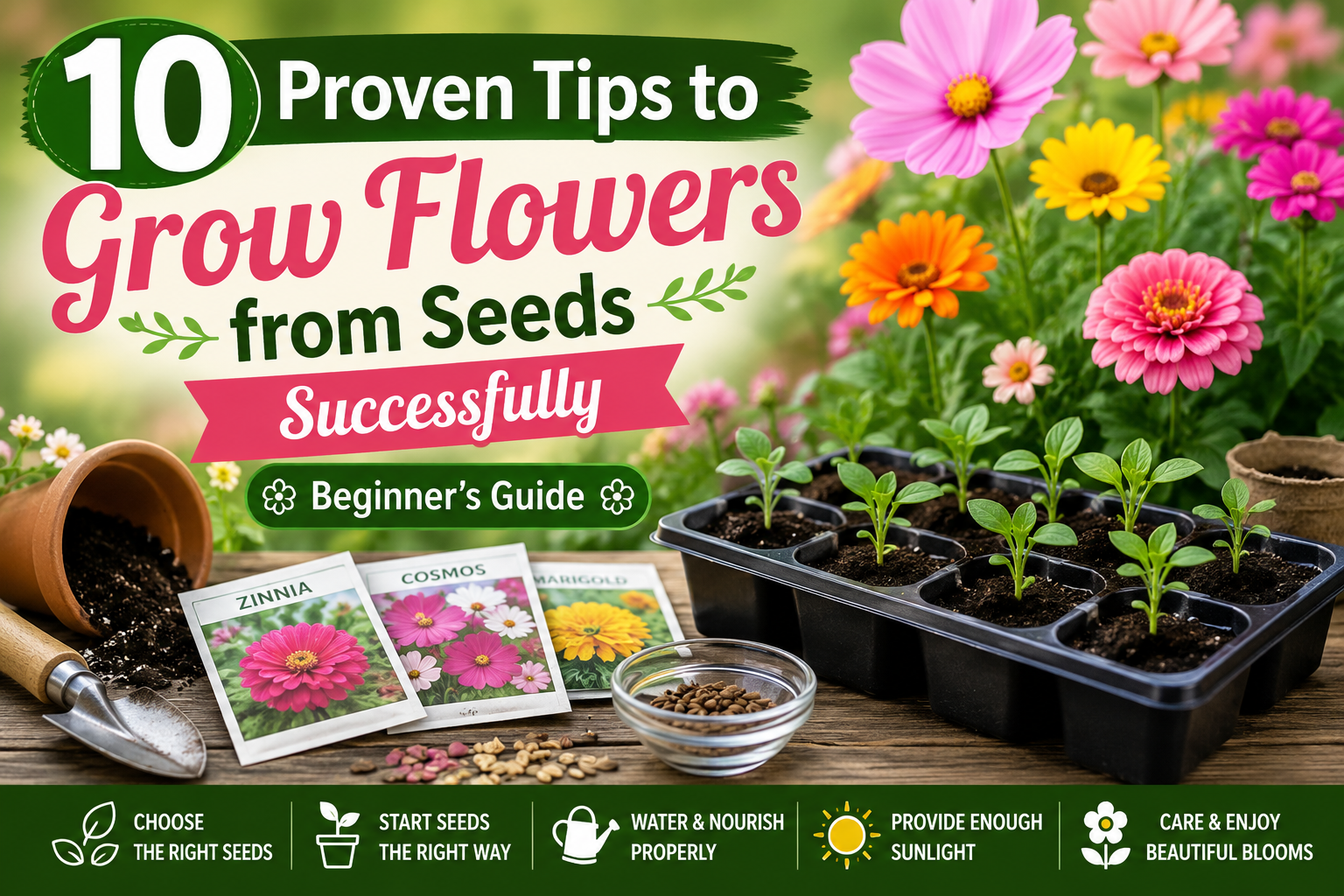
🌺10 Proven Tips to Grow Flowers from Seeds Successfully
Growing flowers from seeds is one of the most rewarding and budget-friendly ways to create a colorful and vibrant garden. Whether you have a spacious backyard, a small patio, or just a few pots on a balcony, learning how to Grow Flowers from seeds allows you to enjoy a wide variety of blooms while saving money compared to buying mature plants. Watching tiny seeds develop into healthy flowering plants is an exciting experience for both beginners and experienced gardeners. The key to success is choosing the right seeds, providing suitable growing conditions, and giving your plants the care they need during each stage of growth. Although some flowers require a little patience, many varieties germinate quickly and bloom beautifully within a few months. By understanding the basics of seed starting, watering, sunlight, and soil preparation, you can avoid common mistakes and enjoy a thriving flower garden throughout the growing season. This guide covers everything you need to know to Grow Flowers from seeds successfully, from selecting the best flower varieties to caring for young seedlings. By the end, you’ll have the confidence to start your own flower garden and enjoy beautiful blooms year after year. Why Grow Flowers from Seeds? Growing flowers from seeds offers many advantages over purchasing fully grown plants. It is an enjoyable gardening activity that allows you to experience every stage of a plant’s life, from germination to flowering. Some of the main reasons to Grow Flowers from seeds include: With proper planning and care, even first-time gardeners can achieve excellent results. Benefits of Growing Flowers from Seeds Starting flowers from seeds provides long-term benefits for your garden and your budget. Some key benefits include: Additionally, growing your own flowers attracts butterflies, bees, and other beneficial pollinators that support a healthy garden ecosystem. Choosing the Right Flower Seeds Choosing suitable flower seeds is one of the most important steps if you want to Grow Flowers successfully. Beginners should start with flowers that germinate easily and require minimal maintenance. When selecting flower seeds, consider the following factors: Always purchase fresh, high-quality seeds from reputable suppliers to improve germination rates. Easy Flowers for Beginners If you’re new to gardening, start with flowers that are easy to grow and forgiving of small mistakes. These flowers germinate quickly, grow vigorously, and produce vibrant blooms with basic care. Annual vs. Perennial Flowers Understanding the difference between annual and perennial flowers helps you choose the right plants for your garden. Feature Annual Flowers Perennial Flowers Lifespan One growing season Multiple years Bloom Time Usually long and continuous Seasonal blooms each year Replanting Required every year Returns each season Maintenance Moderate Generally lower after establishment Best For Instant seasonal color Long-term garden beauty Examples Marigold, Zinnia, Cosmos Coneflower, Lavender, Black-eyed Susan Many gardeners grow a combination of annuals and perennials to enjoy both immediate color and lasting beauty. Best Time to Grow Flowers from Seeds The best time to Grow Flowers depends on the type of flower and your local climate. Starting seeds at the correct time gives young plants the best chance to grow strong and healthy. For most flowering plants: Timing is essential because planting too early or too late can reduce germination and delay flowering. Indoor vs. Outdoor Seed Starting Both indoor and outdoor seed starting methods have their advantages. The best choice depends on your climate, available space, and the type of flowers you want to grow. Indoor Seed Starting Starting seeds indoors gives you greater control over temperature, moisture, and light. Advantages include: However, indoor seedlings require proper lighting, regular watering, and gradual hardening off before moving outside. Outdoor Seed Starting Many flowers grow well when seeds are sown directly into the garden. Benefits include: Prepare the soil carefully, remove weeds, and keep the seedbed consistently moist until seedlings become established. Essential Supplies You’ll Need Before you Grow Flowers from seeds, gather the right supplies to give your seedlings the best possible start. Having everything ready will make the planting process easier and improve your chances of success. Here are the basic gardening supplies you’ll need: While you don’t need expensive equipment, using a quality seed-starting mix and clean containers can greatly improve germination rates. Step-by-Step Guide to Grow Flowers from Seeds Growing flowers from seeds is simple when you follow the correct steps. Taking your time during each stage helps produce healthy plants that bloom beautifully. Step 1: Choose Quality Seeds Start by selecting fresh seeds from a trusted supplier. Check the packaging for the expiration date and growing instructions. Choose flowers that match your local climate and available sunlight. Beginners often have the best success with easy-to-grow varieties such as marigolds, zinnias, and cosmos. Step 2: Prepare the Containers Fill seed trays or small pots with a lightweight seed-starting mix. Avoid using heavy garden soil because it may contain weeds, diseases, and pests that can harm delicate seedlings. Leave about half an inch of space at the top of each container for easy watering. Step 3: Sow the Seeds Correctly Follow the planting depth recommended on the seed packet. As a general rule: Avoid planting seeds too deeply, as this can prevent successful germination. Step 4: Water Gently After sowing the seeds, moisten the soil carefully using a spray bottle or a watering can with a fine rose. The soil should be evenly moist but never soaked. Too much water can cause seeds to rot before they have a chance to sprout. Step 5: Provide Warmth Most flower seeds germinate best in temperatures between 65°F and 75°F (18°C–24°C). Place seed trays in a warm location or use a seedling heat mat if your home is cool. Warm soil encourages faster and more even germination. Step 6: Give Plenty of Light Once seedlings appear, move them to a bright location immediately. Healthy seedlings typically need 6–8 hours of sunlight each day. If natural light is limited, use grow lights positioned a few inches above the plants. Rotate trays regularly so seedlings grow straight instead of leaning
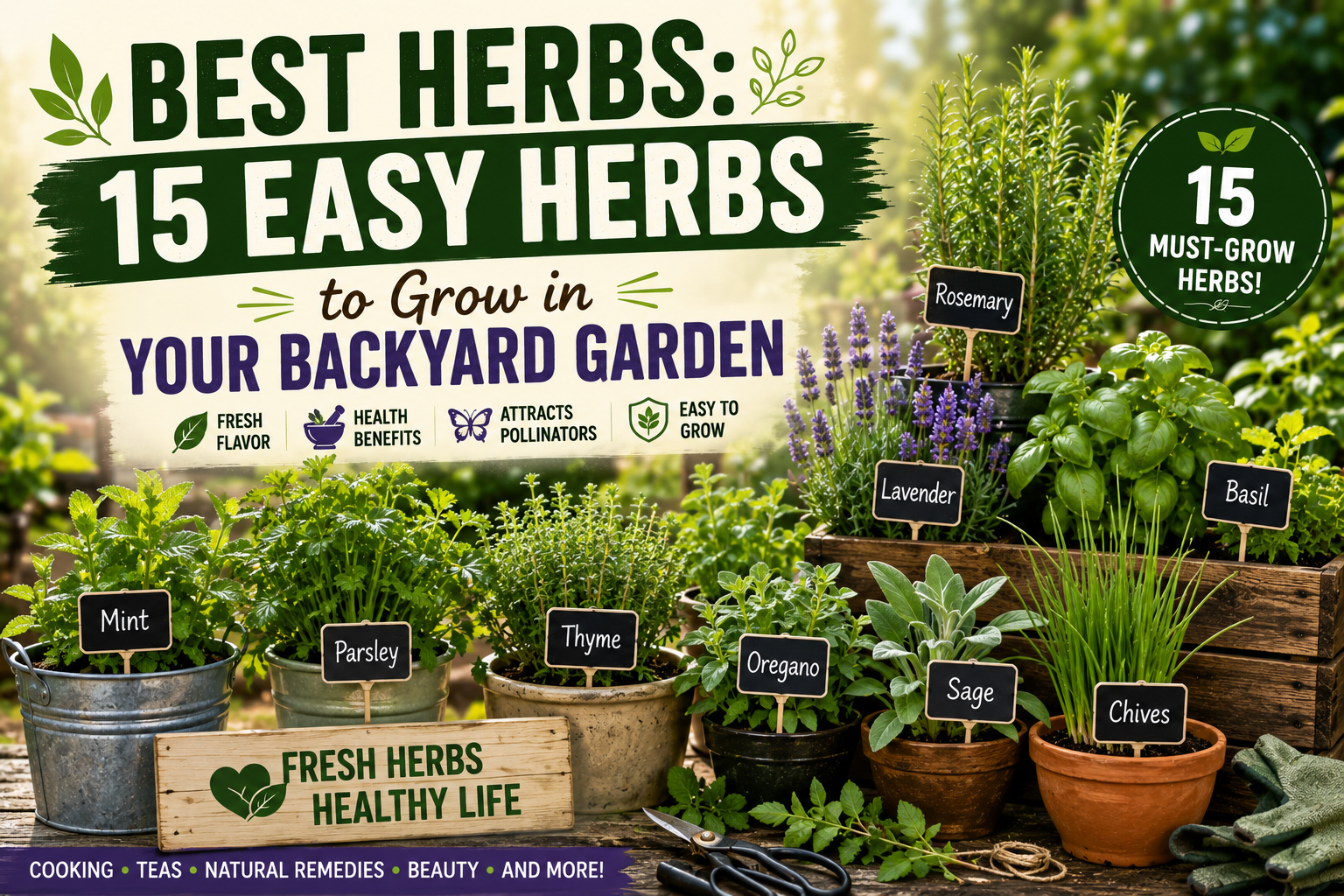
🌿 Best Herbs: 15 Easy Herbs to Grow in Your Backyard
Growing herbs at home is one of the easiest and most rewarding ways to start gardening. Whether you have a spacious backyard, a small raised bed, or a few containers on your patio, herbs are simple to grow and provide fresh flavors for cooking, natural fragrances, and even medicinal benefits. Many of the Best Herbs require very little maintenance, making them perfect for beginners as well as experienced gardeners. From aromatic basil and rosemary to refreshing mint and parsley, homegrown herbs can transform everyday meals while adding beauty and biodiversity to your garden. Besides their culinary uses, herbs attract beneficial pollinators such as bees and butterflies, improve garden health, and often help repel common garden pests naturally. They also save money by providing a continuous supply of fresh herbs throughout the growing season. With proper sunlight, healthy soil, and regular watering, you can enjoy a productive herb garden almost year-round. In this guide, you’ll learn why growing herbs at home is worthwhile, discover the many benefits of planting the Best Herbs, understand the key factors to consider before getting started, and compare the most popular herb gardening methods to choose the one that fits your space and lifestyle. Why Grow Herbs at Home? Growing herbs at home offers fresh ingredients, beautiful greenery, and countless practical benefits. Unlike many vegetables, herbs are compact, easy to maintain, and grow well in a variety of spaces, including raised beds, containers, and traditional garden plots. Fresh herbs provide better flavor than dried store-bought options and can be harvested whenever needed. Many herbs also produce attractive flowers that attract bees, butterflies, and other pollinators, creating a healthier backyard ecosystem. Reasons to Grow Herbs at Home Whether you’re growing herbs for cooking, wellness, or decoration, they are among the easiest plants to maintain in any backyard garden. Benefits of Growing the Best Herbs Choosing the Best Herbs makes gardening more enjoyable because these plants are easy to care for, productive, and useful in many ways. Fresh Flavor All Season Homegrown herbs provide fresh leaves that enhance the taste of salads, soups, pasta, grilled meats, and many other dishes. Beginner-Friendly Most herbs require only: This makes them ideal for first-time gardeners. Supports Pollinators Flowering herbs such as lavender, thyme, oregano, and basil attract bees, butterflies, and other beneficial insects that improve pollination throughout your garden. Natural Pest Control Several herbs naturally repel unwanted insects. Examples include: Saves Money Buying fresh herbs regularly can become expensive. Growing your own provides a continuous harvest for a fraction of the cost. Environmentally Friendly Growing herbs at home reduces plastic packaging, transportation emissions, and food waste while encouraging sustainable gardening practices. Key Benefits Growing the Best Herbs allows you to enjoy fresh harvests while creating a healthier and more attractive backyard garden Factors to Consider Before Growing Herbs Proper planning helps herbs thrive and produce abundant harvests throughout the growing season. Sunlight Most herbs grow best with 6–8 hours of direct sunlight each day. Popular sun-loving herbs include: If your garden receives partial shade, herbs like parsley, mint, and cilantro can still perform well. Soil Quality Healthy soil is essential for growing strong herbs. Improve your soil by adding: Choose well-drained soil to prevent root rot. Water Requirements Most herbs prefer consistent but moderate watering. Avoid overwatering because soggy soil can damage herb roots, especially Mediterranean herbs like rosemary and thyme. Climate Choose herbs that suit your local growing conditions. Cool-season herbs include: Warm-season herbs include: Growing herbs during their preferred season leads to healthier plants and better harvests. Available Space Herbs are extremely versatile and can be grown in: Even a sunny balcony can support a productive herb garden. Harvesting Frequency Many herbs benefit from regular harvesting. Frequent trimming encourages: Avoid removing more than one-third of the plant at a time. Comparison Table: Growing Herbs in Raised Beds vs. Containers vs. In-Ground Gardens Feature Raised Beds Containers In-Ground Gardens Best For Backyard herb gardens Patios, balconies, and small spaces Large gardens Soil Control Excellent Excellent Depends on existing soil Drainage Excellent Very Good Varies by soil type Water Needs Moderate More frequent Moderate Weed Control Easy Very Easy Moderate Maintenance Easy Easy Moderate Mobility Fixed Portable Fixed Ideal for Best Herbs Excellent Excellent Excellent 15 Best Herbs to Grow in Your Backyard Garden Growing the Best Herbs at home is an excellent way to enjoy fresh flavors, natural fragrances, and beautiful greenery throughout the year. Most herbs are easy to maintain, grow well in raised beds, containers, or garden borders, and reward you with repeated harvests. Below are 15 of the Best Herbs every home gardener should consider growing. Herb #1 – Basil Basil is one of the Best Herbs for home gardens because it grows quickly and adds fresh flavor to many dishes. Why It’s One of the Best Herbs It is easy to grow, highly productive, and perfect for salads, pasta, and pesto. Growing Requirements Water Needs Water regularly to keep the soil evenly moist. Harvest Time About 50–70 days after planting. Beginner-Friendly Tips Herb #2 – Mint Mint is a vigorous herb that grows rapidly and is ideal for teas, desserts, and refreshing drinks. Why It’s One of the Best Herbs It is fast-growing and thrives with minimal care. Growing Requirements Water Needs Keep the soil consistently moist. Harvest Time Harvest leaves once plants become well established. Beginner-Friendly Tips Herb #3 – Parsley Parsley is a versatile herb used in countless recipes and garnishes. Why It’s One of the Best Herbs It grows well in many climates and produces fresh leaves for months. Growing Requirements Water Needs Water regularly to maintain moist soil. Harvest Time Approximately 70–90 days. Beginner-Friendly Tips Herb #4 – Cilantro (Coriander) Cilantro provides flavorful leaves while its seeds become coriander spice. Why It’s One of the Best Herbs It offers two useful harvests from a single plant. Growing Requirements Water Needs Keep soil evenly moist. Harvest Time About 45–60 days. Beginner-Friendly Tips Herb #5 – Rosemary Rosemary is a fragrant evergreen herb
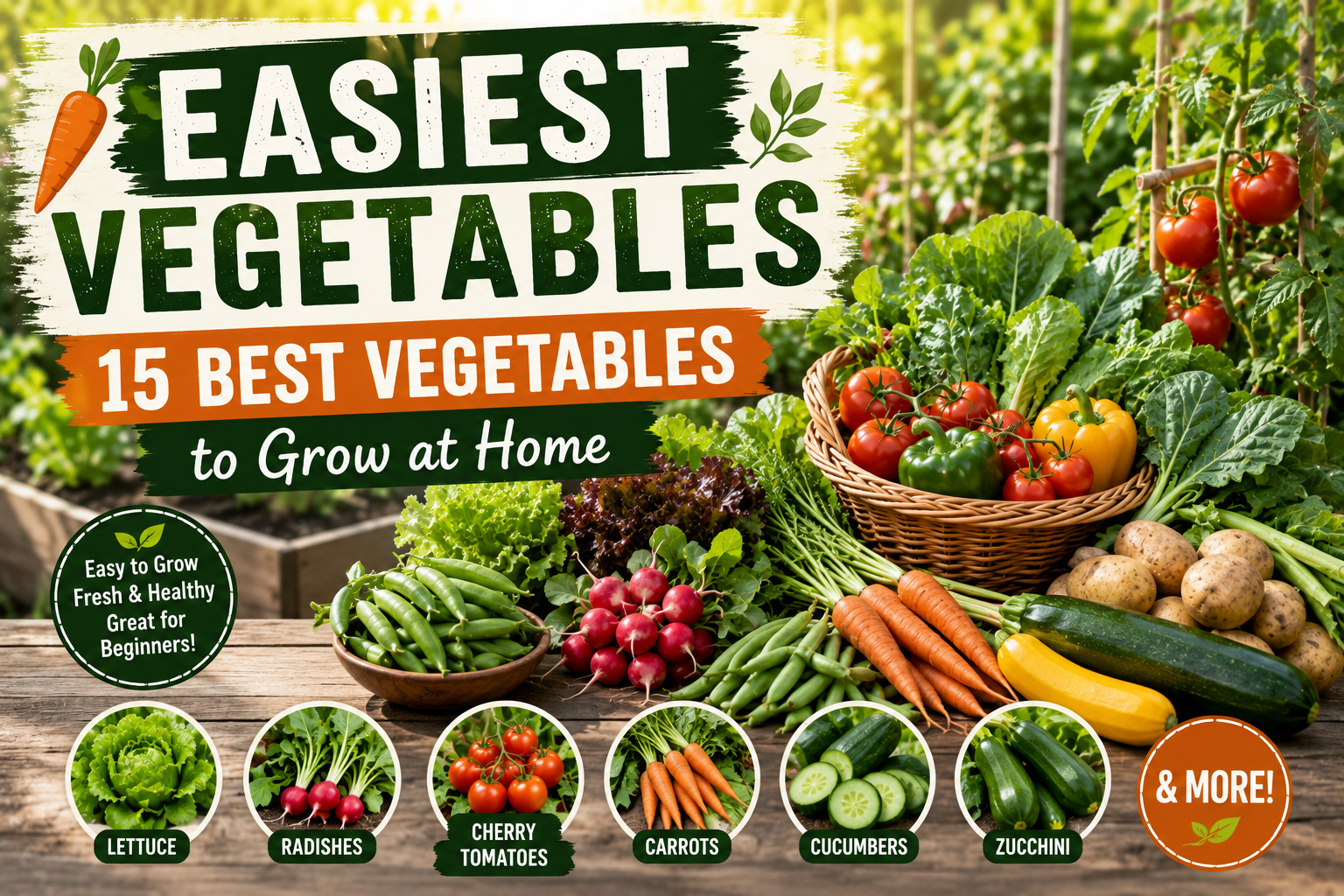
🥕 Easiest Vegetables: 15 Best Vegetables to Grow at Home
Growing your own vegetables is one of the most rewarding ways to enjoy fresh, healthy food while saving money and spending more time outdoors. The good news is that you don’t need years of gardening experience to get started. Many of the Easiest Vegetables grow quickly, require minimal care, and produce generous harvests even in small backyard gardens, raised beds, or containers. Whether you want crisp lettuce for salads, sweet cherry tomatoes, or crunchy carrots, choosing beginner-friendly vegetables makes gardening enjoyable and stress-free. Growing the Easiest Vegetables at home also gives you complete control over how your food is grown. You can avoid unnecessary chemicals, improve your soil naturally, and harvest vegetables at their peak freshness. Gardening also provides excellent exercise, reduces stress, and creates a beautiful outdoor space that the whole family can enjoy. In this guide, you’ll discover why growing vegetables at home is worthwhile, learn the benefits of planting the Easiest Vegetables, understand the key factors to consider before planting, and compare different gardening methods. By the end of this article, you’ll be ready to grow a productive vegetable garden with confidence. Why Grow Your Own Vegetables? Growing vegetables at home is a rewarding hobby that offers fresh produce, healthier meals, and a stronger connection with nature. Even if you have limited space, you can successfully grow many of the Easiest Vegetables in containers, raised beds, or small backyard gardens. Home gardening also allows you to enjoy vegetables at their freshest. Instead of purchasing produce that has traveled long distances, you can harvest vegetables straight from your garden when they are fully ripe and packed with flavor. Benefits of Growing Your Own Vegetables Whether you grow just a few plants or a large vegetable garden, home gardening is an enjoyable activity that provides lasting rewards. Benefits of Growing the Easiest Vegetables at Home Choosing the Easiest Vegetables is the best way for beginners to build confidence and enjoy successful harvests. These vegetables are generally fast-growing, adaptable, and forgiving of small gardening mistakes. Quick Harvests Many beginner-friendly vegetables mature within a few weeks, allowing you to enjoy fresh harvests sooner. Low Maintenance Most of the Easiest Vegetables require only basic care, including regular watering, sunlight, and occasional feeding. Ideal for Small Spaces Many vegetables grow well in: This makes them suitable even if you don’t have a large yard. Saves Money Growing your own vegetables reduces grocery expenses throughout the growing season. Healthier Meals Freshly harvested vegetables often contain excellent flavor and valuable nutrients, making healthy eating easier. Environmentally Friendly Home gardens reduce transportation, packaging waste, and dependence on commercially grown produce. Key Benefits Growing the Easiest Vegetables is a simple way to enjoy delicious harvests while creating a healthier backyard. Factors to Consider Before Growing Vegetables Before planting your garden, take time to plan carefully. Understanding your growing conditions will help your vegetables thrive and produce larger harvests. Sunlight Most vegetables need at least 6–8 hours of direct sunlight every day. Choose the sunniest location available for your vegetable garden. Soil Quality Healthy soil produces healthy vegetables. Improve your soil by adding: Rich soil helps plants develop strong roots and produce better harvests. Water Availability Vegetables require consistent moisture throughout the growing season. Water deeply rather than frequently, especially during hot weather. Climate Choose vegetables suited to your local growing season. Cool-season vegetables include: Warm-season vegetables include: Growing vegetables during their preferred season leads to healthier plants. Available Space Your available space determines which gardening method works best. You can grow the Easiest Vegetables in: Even a small patio can produce an impressive harvest. Pest and Disease Prevention Healthy gardens experience fewer problems. Simple prevention methods include: Preventing problems is much easier than fixing them later. Comparison Table: Raised Beds vs. Containers vs. In-Ground Vegetable Gardening Feature Raised Beds Containers In-Ground Garden Best For Beginners and small backyards Balconies, patios, and limited spaces Large gardens Soil Control Excellent Excellent Depends on existing soil Drainage Excellent Very good Varies by soil type Weed Control Easy Very easy Moderate Water Needs Moderate Frequent Moderate Initial Cost Medium Low to medium Low Maintenance Easy Easy Moderate Ideal for Easiest Vegetables Excellent Excellent Excellent 15 Easiest Vegetables to Grow at Home Growing the Easiest Vegetables at home is a great way to enjoy fresh, nutritious produce while learning basic gardening skills. The vegetables below are beginner-friendly, require simple care, and produce reliable harvests in raised beds, containers, or traditional garden plots. Vegetable #1 – Lettuce Lettuce is one of the Easiest Vegetables because it grows quickly and can be harvested multiple times during the season. Why It’s Easy to Grow It matures fast and grows well in both containers and garden beds. Growing Requirements Water Needs Keep the soil consistently moist but not waterlogged. Harvest Time 30–60 days, depending on the variety. Beginner-Friendly Tips Vegetable #2 – Radishes Radishes are among the fastest-growing vegetables, making them perfect for beginners. Why It’s Easy to Grow They germinate quickly and require very little maintenance. Growing Requirements Water Needs Water regularly to keep roots tender. Harvest Time 20–35 days. Beginner-Friendly Tips Vegetable #3 – Spinach Spinach is a nutritious leafy green that grows well during cooler seasons. Why It’s Easy to Grow It grows rapidly and requires minimal care. Growing Requirements Water Needs Keep soil evenly moist. Harvest Time 35–50 days. Beginner-Friendly Tips Vegetable #4 – Green Beans Green beans are productive plants that provide generous harvests. Why It’s Easy to Grow They germinate easily and produce plenty of beans. Growing Requirements Water Needs Water deeply once or twice a week. Harvest Time 50–60 days. Beginner-Friendly Tips Vegetable #5 – Cherry Tomatoes Cherry tomatoes are one of the most rewarding Easiest Vegetables for home gardeners. Why It’s Easy to Grow They produce abundant fruit throughout the season. Growing Requirements Water Needs Water consistently to prevent cracking. Harvest Time 60–80 days. Beginner-Friendly Tips Vegetable #6 – Carrots Carrots are simple root vegetables that grow well in loose soil. Why It’s Easy to Grow They
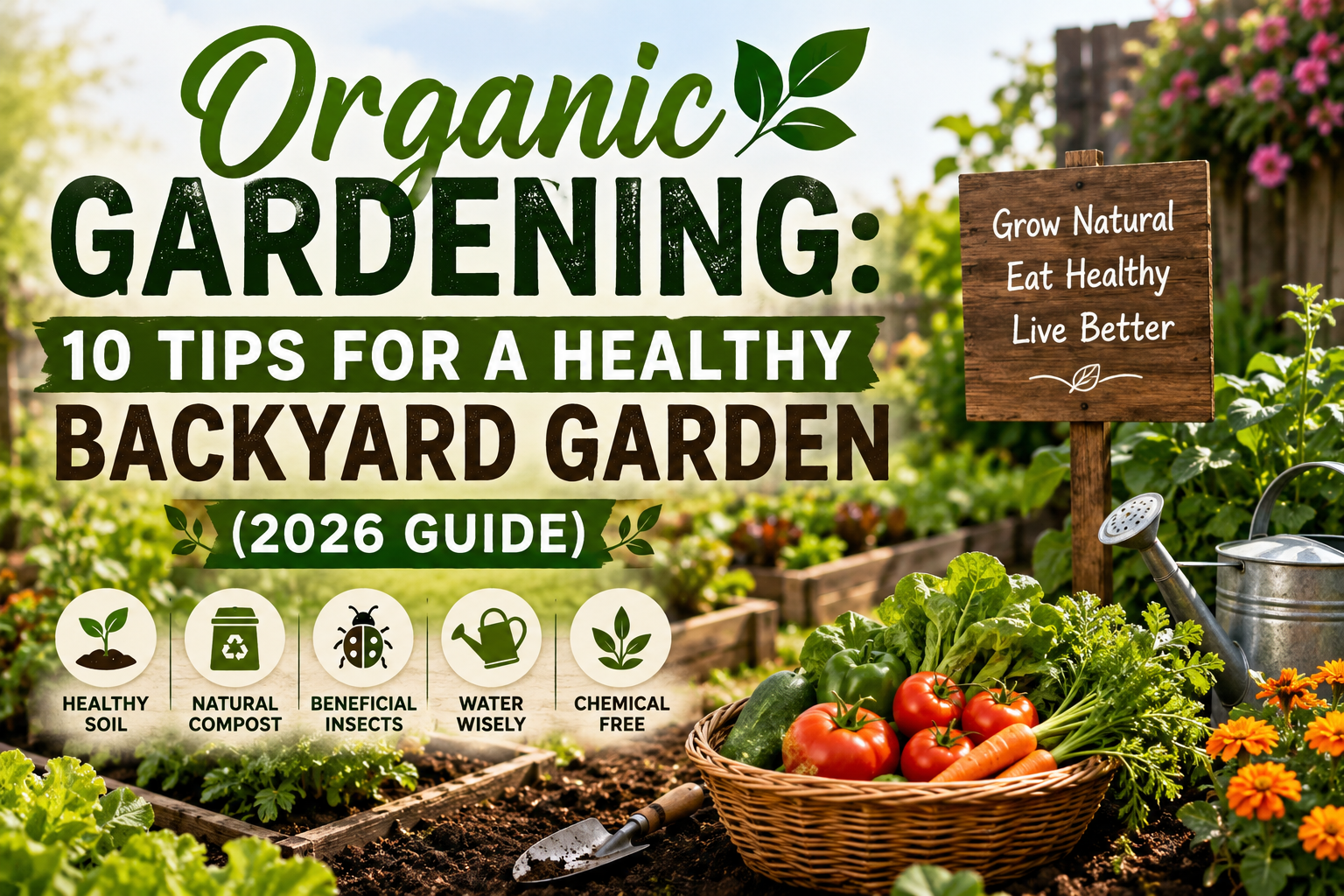
🌿 Organic Gardening:10 Tips for a Healthy Backyard
Organic Gardening is a natural and eco-friendly way to grow healthy plants, vegetables, herbs, and flowers without relying on synthetic fertilizers or chemical pesticides. Instead, it focuses on improving soil health, encouraging beneficial insects, conserving water, and working with nature to create a balanced garden ecosystem. Whether you have a large backyard, a few raised garden beds, or a small container garden, organic gardening helps you produce fresh, nutritious food while protecting the environment. One of the greatest advantages of Organic Gardening is that it promotes long-term garden health. Healthy soil, natural compost, organic mulch, and companion planting all work together to create stronger plants that are more resistant to pests and diseases. This sustainable approach also supports pollinators like bees and butterflies, making your backyard a thriving habitat for beneficial wildlife. In this guide, you’ll learn why Organic Gardening matters, discover its many benefits, understand the key principles behind successful organic gardening, and compare it with conventional gardening methods. Whether you’re just getting started or looking to improve your existing garden, these practical tips will help you grow a healthier and more productive backyard naturally. Why Organic Gardening Matters Organic Gardening is more than just avoiding chemical products. It is a sustainable way of gardening that focuses on building healthy soil, growing strong plants, and protecting the environment. By working with nature instead of against it, gardeners can create a balanced ecosystem where plants, insects, birds, and beneficial microorganisms all play an important role. Unlike conventional gardening, which often depends on synthetic fertilizers and pesticides, organic gardening uses natural methods to improve soil fertility and control pests. These methods support healthier plant growth while reducing pollution and protecting wildlife. Organic gardening also produces fresh fruits, vegetables, and herbs that many gardeners prefer because they are grown using environmentally friendly practices. Why Organic Gardening Is Important By choosing Organic Gardening, you’re investing in a healthier backyard and contributing to a cleaner environment for future generations. Benefits of Organic Gardening There are many reasons why more people are choosing Organic Gardening. It not only improves plant health but also creates a more enjoyable and sustainable gardening experience. Healthier Soil Healthy soil is the foundation of every successful organic garden. Adding compost, mulch, and natural fertilizers increases organic matter and encourages beneficial microorganisms that help plants absorb nutrients more efficiently. Better Plant Growth Strong, healthy soil produces stronger plants. Plants grown organically often develop deeper root systems and become more resistant to pests, diseases, and changing weather conditions. Natural Pest Control Instead of relying on chemical pesticides, Organic Gardening encourages beneficial insects such as ladybugs, lacewings, and praying mantises that naturally keep harmful pests under control. Supports Pollinators Flowers and herbs grown in organic gardens attract bees, butterflies, and other pollinators that improve fruit and vegetable production. Environmentally Friendly Organic gardening reduces chemical runoff into waterways and helps protect birds, insects, and other wildlife. Safer Harvests Growing food naturally allows you to harvest fresh vegetables, herbs, and fruits without depending on synthetic pesticides or fertilizers. Key Benefits of Organic Gardening These benefits make Organic Gardening an excellent choice for beginners and experienced gardeners alike. Essential Principles of Organic Gardening Successful Organic Gardening is built on a few simple principles that work together to create a healthy and productive garden. Understanding these principles will help you grow stronger plants while protecting the environment. Build Healthy Soil Healthy soil is the heart of every organic garden. Instead of relying on synthetic fertilizers, enrich your soil with compost, aged manure, leaf mold, and other organic materials. Healthy soil provides: Feed the Soil, Not Just the Plants Organic gardeners focus on nourishing the soil first. Healthy soil naturally provides plants with the nutrients they need over time. Natural soil amendments include: Encourage Biodiversity A diverse garden is healthier and more resistant to pests and diseases. Grow a variety of: This diversity attracts pollinators and beneficial insects while creating a balanced ecosystem. Use Natural Pest Control Rather than eliminating every insect, Organic Gardening encourages natural predators that keep pest populations under control. Examples include: Natural pest control helps maintain ecological balance. Conserve Water Efficient watering protects plants while reducing waste. Good watering practices include: Practice Sustainable Gardening Organic gardening focuses on long-term sustainability rather than quick results. Simple sustainable practices include: These practices help maintain healthy soil and productive gardens for years to come. Comparison Table: Organic Gardening vs. Conventional Gardening Feature Organic Gardening Conventional Gardening Fertilizers Compost, manure, and natural amendments Synthetic fertilizers Pest Control Beneficial insects, companion planting, and natural sprays Chemical pesticides Soil Health Improves soil over time May reduce soil quality with repeated chemical use Environmental Impact Eco-friendly and sustainable Higher risk of pollution and chemical runoff Pollinator Support Encourages bees, butterflies, and beneficial insects Chemical use may reduce pollinator activity Long-Term Sustainability Excellent Moderate Best For Sustainable home gardens and healthy food production Fast plant growth with higher chemical inputs 10 Organic Gardening Tips for a Healthy Backyard Creating a thriving backyard doesn’t require expensive products or harsh chemicals. Successful Organic Gardening focuses on working with nature to build healthy soil, grow stronger plants, and encourage a balanced garden ecosystem. These ten practical tips will help you maintain a productive and environmentally friendly garden, whether you’re a beginner or an experienced gardener. Tip #1 – Build Healthy Soil Naturally Healthy soil is the foundation of successful Organic Gardening. Rich, fertile soil provides plants with the nutrients, moisture, and support they need to grow strong and resist pests and diseases. Why It’s Important Plants grown in healthy soil develop stronger roots, produce more flowers and vegetables, and are naturally more resistant to environmental stress. How to Do It Benefits Beginner-Friendly Tips Tip #2 – Make Your Own Compost Composting is one of the easiest ways to recycle kitchen and garden waste while improving Organic Gardening practices. Why It’s Important Compost naturally enriches the soil with essential nutrients and beneficial microbes. How to Do It Combine materials such as: Turn the compost pile