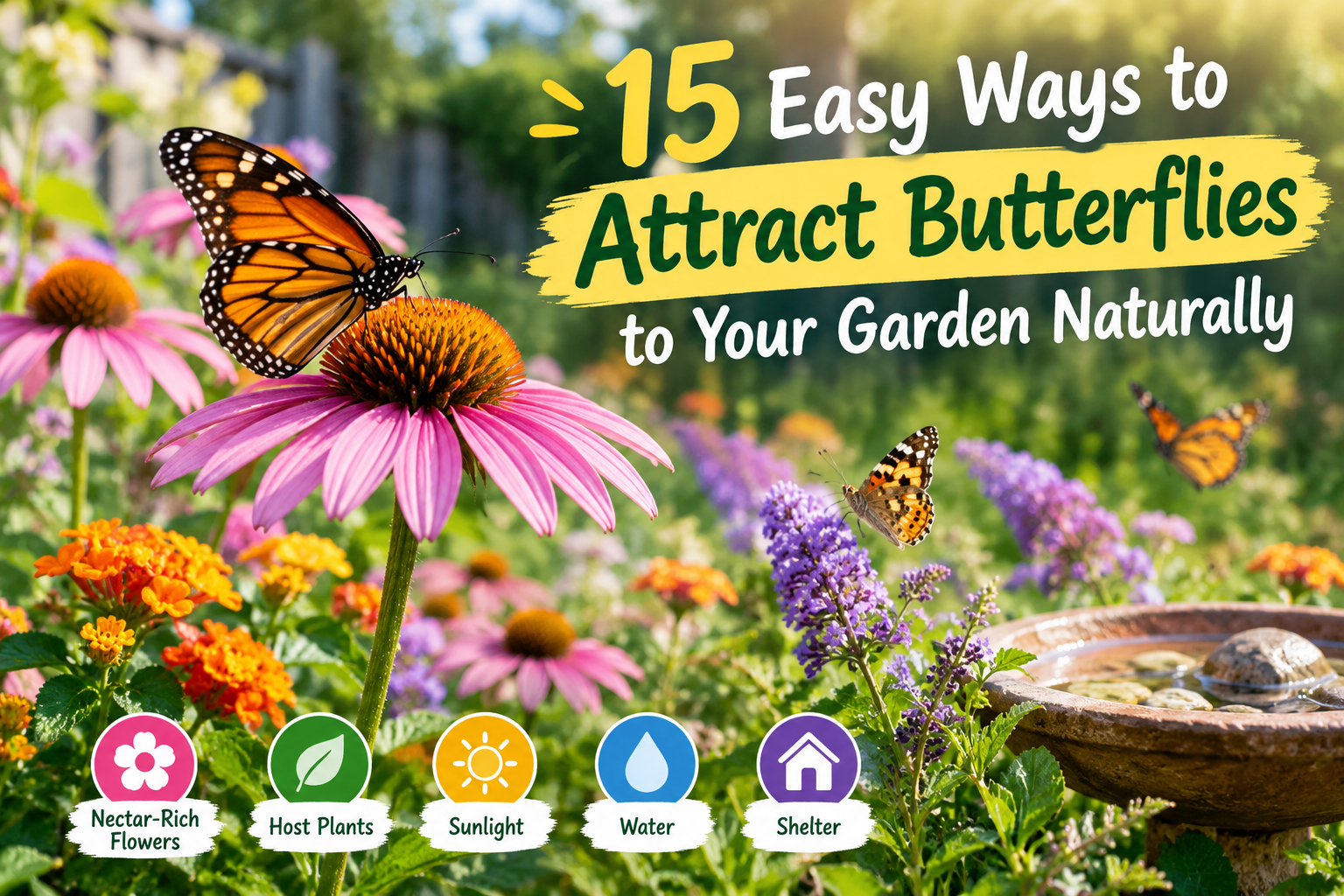
A garden filled with colorful butterflies can make any backyard feel more alive. Beyond their beauty, butterflies are also important pollinators that help many flowering plants reproduce. If you want to attract butterflies to your garden, you do not need expensive equipment or complicated techniques. A few thoughtful changes can create a welcoming space where butterflies can feed, rest, and lay their eggs.
The key is to provide the things butterflies need throughout their life cycle. Nectar-rich flowers give adult butterflies energy, while specific host plants provide food for caterpillars. Butterflies also need sunlight, shelter, water, and a safe place away from harmful pesticides.
Whether you have a large backyard, a small garden, raised beds, or a few containers, you can create a butterfly-friendly space. In this guide, you will learn how to attract butterflies naturally, which plants to grow, how to provide water and shelter, and which common gardening habits can make your garden less attractive to these beautiful visitors.
Why Attract Butterflies to Your Garden?
Butterflies are more than beautiful visitors. They are part of a healthy garden ecosystem and can contribute to pollination as they move from flower to flower.
A butterfly-friendly garden can also support other beneficial insects, including bees and moths. By choosing a variety of native and nectar-rich plants, you can create a more diverse backyard environment.
Another benefit is that butterflies make gardening more enjoyable. Watching different species visit your flowers can help you connect with nature and learn more about the life cycle of insects.
Most importantly, creating a butterfly garden does not require a perfect landscape. Even a small collection of suitable flowers and host plants can provide valuable resources.
Choose the Right Flowers to Attract Butterflies
Flowers are one of the easiest ways to attract butterflies. Adult butterflies mainly visit flowers for nectar, so choosing plants with accessible, nectar-rich blooms is essential.
Try to grow several types of flowers rather than relying on just one plant. Different butterfly species may prefer different flowers, and blooming at different times of the year ensures food is available for longer.
Best Butterfly-Friendly Flowers
Consider adding these plants to your backyard:
- Coneflower: Produces nectar-rich flowers and is easy to grow.
- Zinnias: Their bright blooms are especially attractive to butterflies.
- Butterfly Bush: Long flower clusters provide plenty of nectar.
- Bee Balm: Its colorful flowers can attract butterflies and other pollinators.
- Lantana: Produces clusters of small flowers with accessible nectar.
- Black-Eyed Susan: A hardy flowering plant that provides a useful nectar source.
- Asters: Late-season blooms can provide food when other flowers are fading.
- Phlox: Fragrant flowers can attract several pollinators.
- Verbena: Its small flowers are popular with butterflies.
- Milkweed: Particularly important because it serves as a host plant for monarch caterpillars.
When possible, select plants suited to your local climate and growing conditions.
Grow Host Plants for Caterpillars
One mistake gardeners often make is focusing only on flowers for adult butterflies. If you want to create a complete butterfly habitat, you should also grow host plants.
Adult butterflies lay their eggs on particular plants. After the eggs hatch, caterpillars feed on those plants before forming their chrysalis.
This means some leaves may have holes or visible caterpillars. That is not necessarily a problem. In a butterfly garden, a little leaf damage is part of the natural process.
Popular Host Plants
Depending on your region and butterfly species, useful host plants may include:
- Milkweed for monarch butterflies
- Parsley for swallowtail caterpillars
- Dill for swallowtails
- Fennel for some swallowtail species
- Nettles for several butterfly species
- Native grasses for certain butterfly caterpillars
- Citrus plants for some swallowtail species in suitable climates
Before planting, research which butterfly species are common in your region and which host plants they use.
Provide Plenty of Sunshine
Butterflies are cold-blooded insects, so they rely on sunlight to warm their bodies.
A sunny section of your backyard can therefore become an important part of a butterfly garden.
Try to place butterfly-friendly flowers where they receive several hours of sunlight each day. Open areas near flowers can provide butterflies with places to warm themselves before they begin feeding.
Flat rocks, stones, or sunny leaves can also become convenient resting spots.
Create a Sunny Butterfly Area
You can improve your garden by:
- Planting nectar flowers in sunny locations.
- Leaving a few open spaces between plants.
- Adding flat stones for basking.
- Avoiding excessive shade around flowering plants.
- Grouping flowers together so butterflies can easily find them.
Provide a Simple Water Source
Butterflies need water, but they generally do not drink from deep ponds like birds do. Instead, they often gather around shallow, damp areas where they can obtain moisture and minerals.
This behavior is sometimes called puddling.
You can create a simple butterfly puddling station using a shallow container filled with sand or soil. Keep the material slightly damp and add a few flat stones where butterflies can land safely.
How to Make a Butterfly Puddling Area
You can create one using:
- A shallow dish or plant saucer.
- Clean sand or garden soil.
- A few small stones.
- Fresh water to keep the material damp.
Keep the area moist rather than flooded. Refresh the water regularly, especially during hot weather.
Avoid Harmful Pesticides
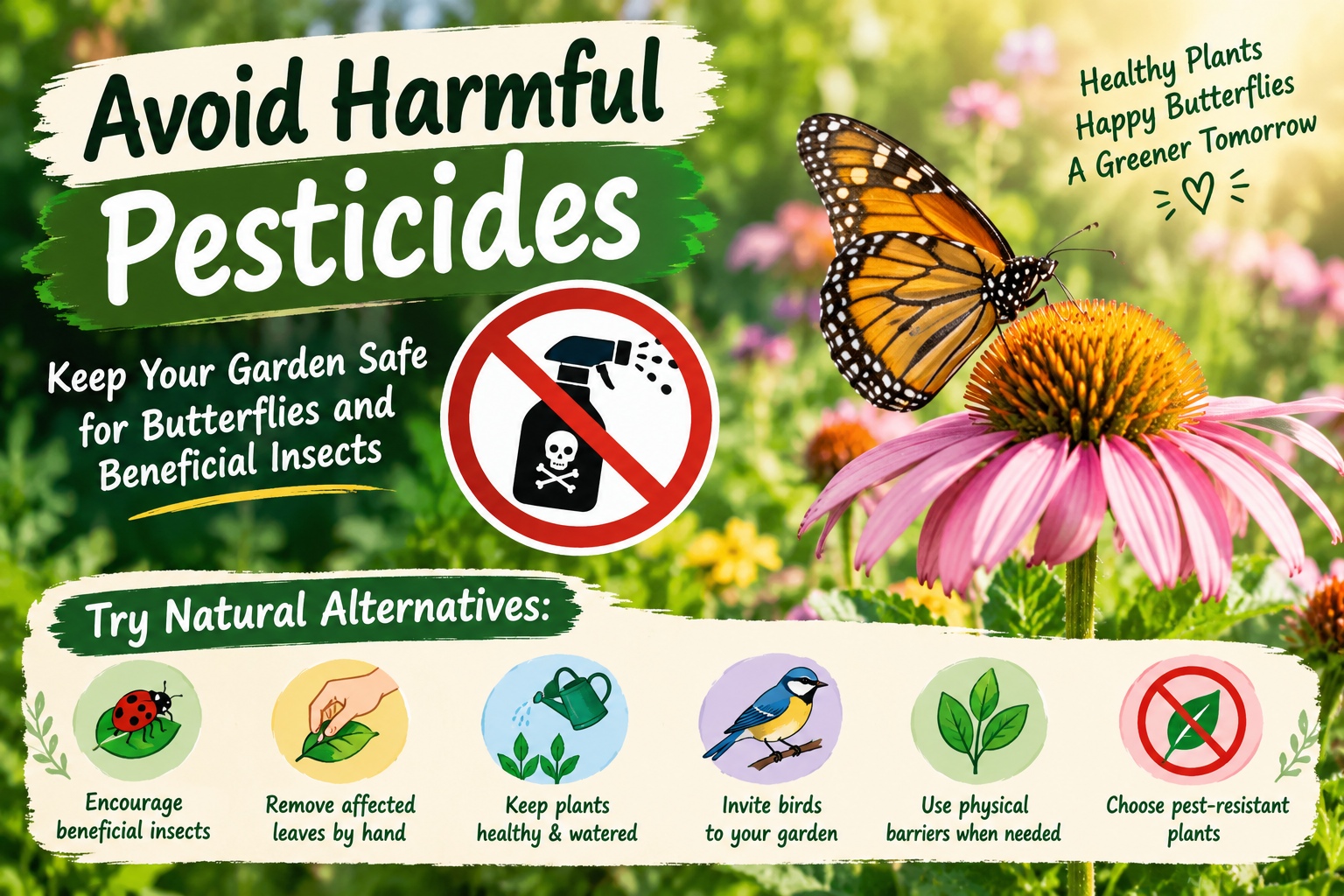
If your goal is to attract butterflies naturally, pesticide use is one of the most important things to reconsider.
Broad-spectrum insecticides can kill beneficial insects as well as unwanted pests. They may also harm caterpillars that you actually want in a butterfly garden.
Instead, use preventative gardening methods and tolerate a reasonable amount of insect activity.
Natural Pest Management Options
Try these approaches first:
- Remove heavily affected leaves by hand.
- Encourage birds and beneficial insects.
- Use physical barriers when appropriate.
- Keep plants healthy with proper watering.
- Remove severely damaged plant material.
- Inspect plants regularly for pests.
- Choose pest-resistant plants suited to your area.
Remember that caterpillars are part of the butterfly life cycle. Avoid removing every caterpillar you see.
Plant Flowers in Groups
A single flower may be difficult for a butterfly to notice from a distance. Planting several flowers together creates a larger and more visible source of nectar.
Instead of planting one zinnia here and one there, consider planting several together. The same approach can be used with coneflowers, lantana, verbena, or other butterfly-friendly plants.
Grouped planting can also make your garden look more organized and colorful.
Choose Different Flowering Seasons
A successful butterfly garden should provide food throughout the growing season.
If all your flowers bloom during the same few weeks, butterflies may have plenty of food temporarily but little afterward.
Choose plants with different flowering periods. Early, mid-season, and late-blooming plants can help maintain a continuous supply of nectar.
Aim for Seasonal Variety
For example:
- Spring: Add early flowering plants that provide nectar after winter.
- Summer: Grow abundant flowers such as zinnias, coneflowers, and bee balm.
- Fall: Include asters and other late-blooming plants.
The exact plants will depend on your climate and local growing season.
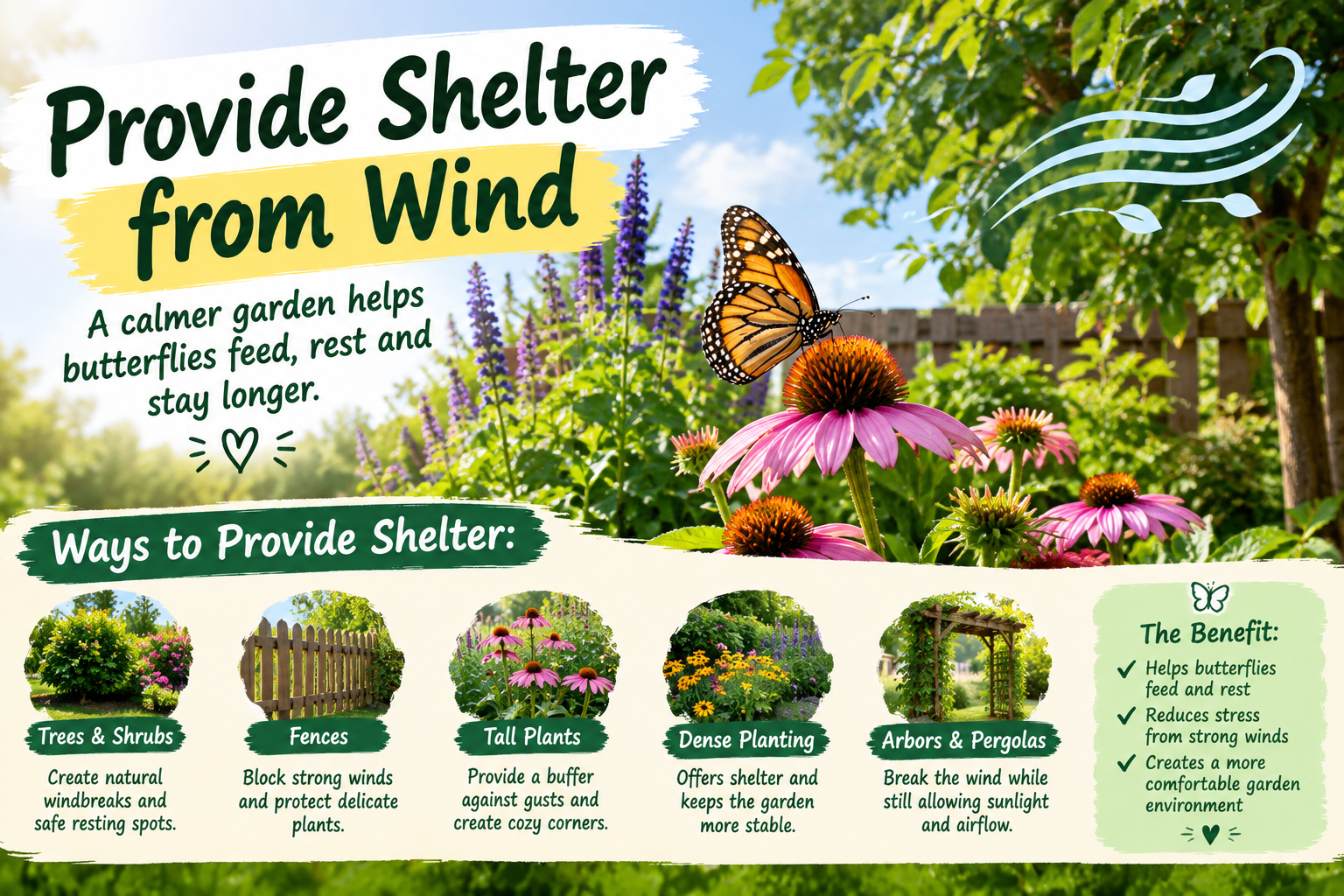
Provide Shelter from Wind
Butterflies are delicate insects and strong wind can make feeding and resting difficult.
A garden with some natural protection can be more comfortable for butterflies.
Trees, shrubs, fences, tall plants, and dense planting can create sheltered areas. However, do not make the entire garden heavily shaded.
A combination of sunny feeding areas and protected resting spots works well.
Add Native Plants to Your Garden
Native plants are often an excellent choice for attracting local butterflies because they have developed alongside local wildlife.
They can provide nectar for adult butterflies and, in some cases, serve as host plants for caterpillars.
Native plants may also be better adapted to your local soil and weather conditions.
Before buying plants, check with a local nursery, botanical garden, or extension service to find out which native butterfly plants grow well in your area.
Comparison Table: Butterfly Garden Features
| Garden Feature | How It Helps Butterflies | Easy to Add? | Best For |
|---|---|---|---|
| Nectar flowers | Provides food for adults | Yes | Adult butterflies |
| Host plants | Provides food for caterpillars | Yes | Butterfly life cycle |
| Shallow water | Provides moisture and minerals | Yes | Adult butterflies |
| Sunny rocks | Provides basking areas | Yes | Resting and warming |
| Native plants | Supports local species | Yes | Long-term habitat |
| Shrubs and dense plants | Provides shelter | Yes | Protection from wind |
| Avoiding pesticides | Reduces accidental insect deaths | Yes | All life stages |
| Flower clusters | Makes nectar easier to find | Yes | Feeding butterflies |
Create a Butterfly Garden in Small Spaces
You do not need a large backyard to attract butterflies. A balcony, patio, small yard, or container garden can provide useful resources.
Choose a few nectar plants and at least one suitable host plant. Place containers where they receive adequate sunlight.
Zinnias, lantana, verbena, herbs, and other suitable plants can work well in containers depending on your climate.
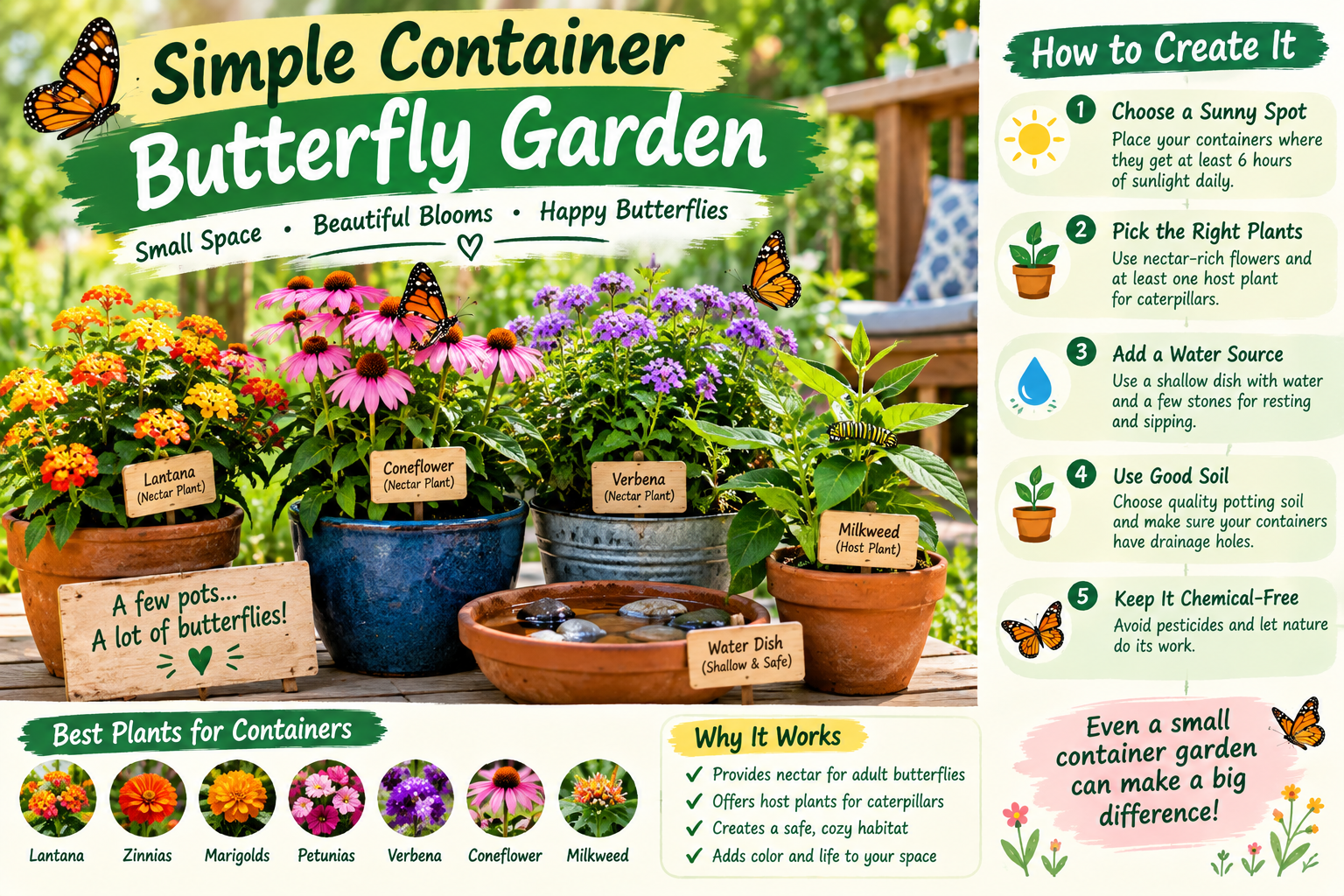
Simple Container Butterfly Garden
Try combining:
- One large container with nectar-rich flowers.
- One container with a host plant.
- A shallow water dish.
- A few small stones for resting.
- A sunny location protected from strong wind.
Even this small setup can provide food and habitat.
Give Butterflies a Chemical-Free Garden
A butterfly garden does not have to be perfectly tidy.
Leaves, fallen plant material, and natural garden debris can provide habitat for insects and other small creatures. Rather than cleaning every part of the garden immediately, consider leaving some areas natural.
This approach can also improve soil health and support a wider range of wildlife.
A balanced garden is more valuable to butterflies than a landscape where every leaf is constantly trimmed and treated.
Common Mistakes to Avoid
Creating a butterfly garden is fairly simple, but a few mistakes can reduce the number of butterflies you see.
Avoid These Common Problems
- Planting only one type of flower: Different butterflies have different preferences.
- Using too many pesticides: These can harm butterflies and caterpillars.
- Ignoring host plants: Nectar alone does not support the complete life cycle.
- Growing flowers only in shaded areas: Butterflies need warmth and sunlight.
- Providing deep water: Butterflies prefer shallow, damp surfaces.
- Removing every caterpillar: Caterpillars are an essential part of the butterfly life cycle.
- Choosing plants without checking your climate: A plant that thrives in one region may struggle in another.
- Keeping the garden completely bare: Butterflies benefit from shelter and natural habitat.
How Long Does It Take to Attract Butterflies?
The answer depends on your location, weather, plant selection, and the butterfly species naturally found nearby.
You may see butterflies soon after flowering plants begin blooming, especially if suitable species are already present in your area.
However, creating a complete butterfly habitat takes longer. Host plants need time to establish, and butterflies may need time to discover new resources.
Be patient and focus on creating a healthy garden rather than expecting immediate results.
How to Maintain a Butterfly-Friendly Garden
Once your butterfly garden is established, maintenance is relatively simple.
Water plants according to their needs and remove dead flowers when appropriate to encourage continued blooming. However, avoid excessive cleanup.
Inspect plants regularly for signs of stress and pests. If you notice caterpillars, identify them before removing them.
You should also keep your shallow water source clean and refill it when needed.
Most importantly, avoid unnecessary chemical treatments.
A Simple Butterfly Garden Plan for Beginners
If you are starting from scratch, you can build your garden gradually.
Step 1: Pick a Sunny Location
Choose an area that receives several hours of sunlight and has some protection from strong wind.
Step 2: Add Nectar Plants
Plant several varieties that bloom at different times.
Step 3: Add Host Plants
Research local butterfly species and plant suitable host plants for their caterpillars.
Step 4: Create a Water Station
Use a shallow dish with damp sand or soil and a few stones.
Step 5: Avoid Pesticides
Use natural pest-management methods whenever possible.
Step 6: Give Nature Time
Allow butterflies, caterpillars, and other beneficial insects to use the garden naturally.
Frequently Asked Questions
1. What is the easiest way to attract butterflies?
Planting nectar-rich flowers in a sunny location is one of the easiest ways to attract butterflies. Zinnias, coneflowers, lantana, verbena, and other suitable flowering plants can provide valuable nectar.
2. What flowers attract the most butterflies?
Butterflies are commonly attracted to nectar-rich flowers such as zinnias, coneflowers, butterfly bush, bee balm, lantana, asters, and verbena. The best choices depend on your local climate and butterfly species.
3. Do butterflies need a water source?
Yes. Butterflies can benefit from shallow, damp areas where they obtain moisture and minerals. A simple puddling station made with damp sand or soil can provide this resource.
4. Should I leave caterpillars on my plants?
If your goal is to support butterflies, you should generally allow caterpillars to remain when possible. Caterpillars are the larval stage of butterflies and need host plants for food.
5. Do butterflies like sun or shade?
Most butterflies prefer sunny areas because they need sunlight to warm their bodies. Providing sunny flowers along with sheltered areas can make your garden more suitable.
6. Can I attract butterflies without a large garden?
Yes. Containers, patios, balconies, and small backyard spaces can support butterflies. A few nectar plants, a suitable host plant, and a small water source can make a useful mini butterfly habitat.
7. Are pesticides bad for butterflies?
Many broad-spectrum pesticides can harm butterflies, caterpillars, and other beneficial insects. Using natural pest-management methods can help create a safer environment.
8. How can I attract butterflies naturally without buying special products?
You can create a butterfly-friendly garden using flowers, host plants, sunlight, shallow water, shelter, and chemical-free gardening practices. No special equipment is necessary.
Final Thoughts
Learning how to attract butterflies is really about creating a garden that meets their basic needs. Provide nectar-rich flowers for adult butterflies, host plants for caterpillars, sunlight for warming, shallow water for moisture, and shelter from strong weather.
You do not need a huge backyard or an expensive garden makeover. Start with a few suitable plants and gradually expand your butterfly-friendly space.
Most importantly, give your garden time to develop naturally. A little leaf damage, a few caterpillars, and some visiting insects are signs that your backyard is becoming a living ecosystem.
With thoughtful plant choices and fewer chemicals, your garden can become a beautiful place where butterflies can feed, rest, and complete their life cycle naturally.
You can also check our article 15 Common Tomato Growing Mistakes to Avoid