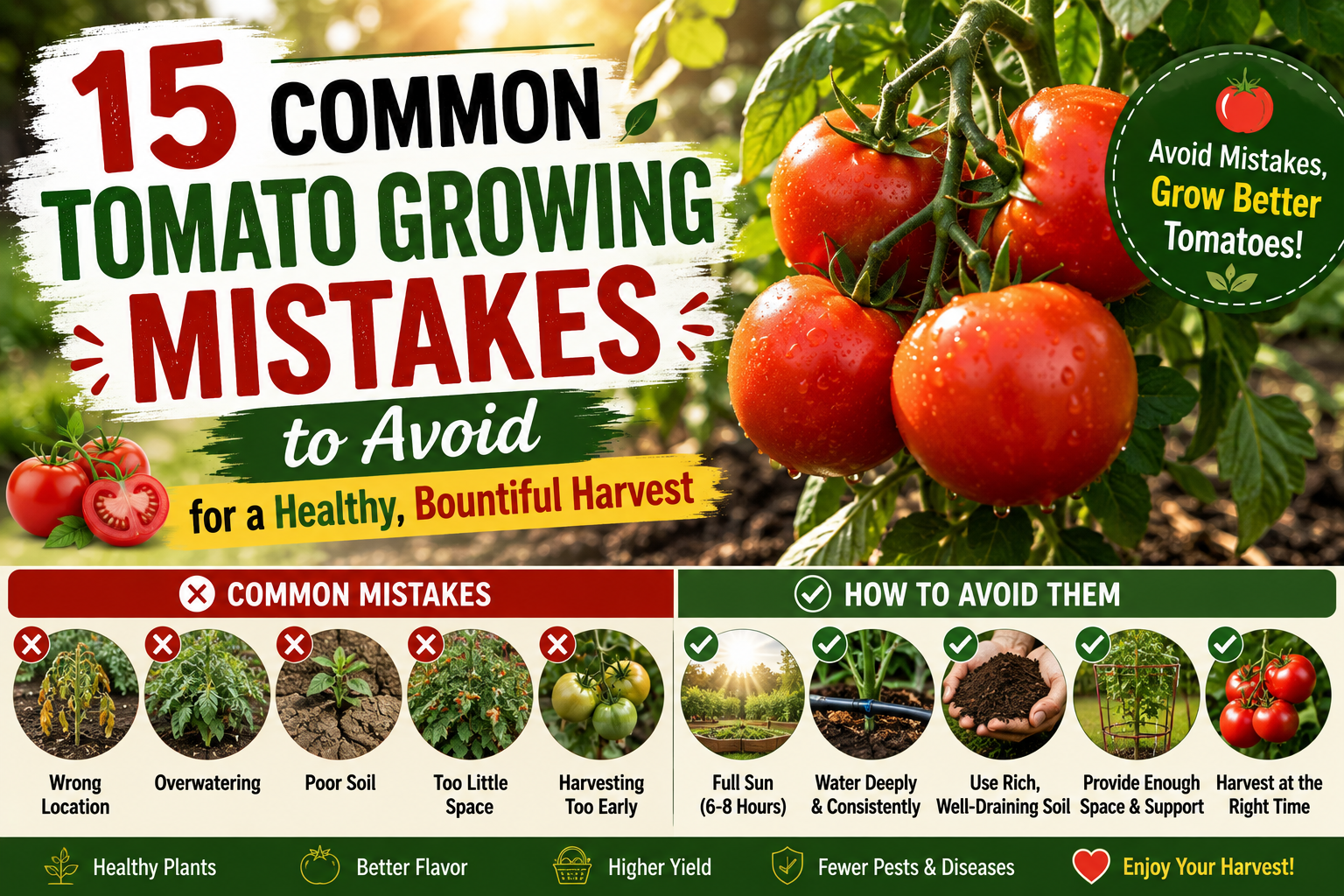
Tomatoes are one of the most rewarding vegetables to grow in a backyard garden. With enough sunlight, good soil, regular watering, and a little care, even beginners can enjoy a healthy harvest of juicy, flavorful tomatoes. However, tomato plants can also be surprisingly sensitive. Small mistakes with planting, watering, feeding, pruning, or pest control can quickly lead to weak growth, yellow leaves, cracked fruit, or a disappointing harvest.
Understanding common Tomato Growing mistakes can save you time, money, and frustration. The good news is that most tomato problems are easy to prevent once you know what to look for. Whether you are growing tomatoes in raised beds, containers, or directly in the ground, the basic care principles remain similar.
In this guide, you will learn about the most common tomato growing mistakes and simple ways to avoid them. From choosing the wrong location to harvesting too late, each section provides practical tips that can help your plants stay healthy and productive throughout the growing season.
Why Avoiding Tomato Growing Mistakes Matters
Tomatoes need several basic conditions to grow successfully. They require plenty of sunlight, nutrient-rich soil, consistent moisture, good air circulation, and enough space for their roots and branches.
When one of these needs is ignored, plants may become stressed. Stressed plants are more likely to develop diseases, attract pests, produce fewer flowers, or develop poor-quality fruit.
Fortunately, successful Tomato Growing does not require complicated equipment or expert gardening skills. Paying attention to a few basic details can make a major difference.
15 Common Tomato Growing Mistakes and How to Avoid Them
1. Choosing the Wrong Location
One of the biggest tomato growing mistakes is planting tomatoes in an area that does not receive enough sunlight.
Tomatoes are sun-loving plants. They generally perform best when they receive around six to eight hours of direct sunlight each day.
A shaded location can result in weak stems, slow growth, fewer flowers, and smaller harvests.
How to avoid this mistake
- Choose the sunniest part of your garden.
- Aim for at least 6–8 hours of direct sunlight.
- Avoid areas shaded by large trees, fences, or buildings.
- Observe your garden throughout the day before planting.
- Rotate container plants if necessary to maximize sunlight.
If your garden receives limited sunlight, choose a location with the longest period of direct exposure rather than simply relying on how bright the area looks.
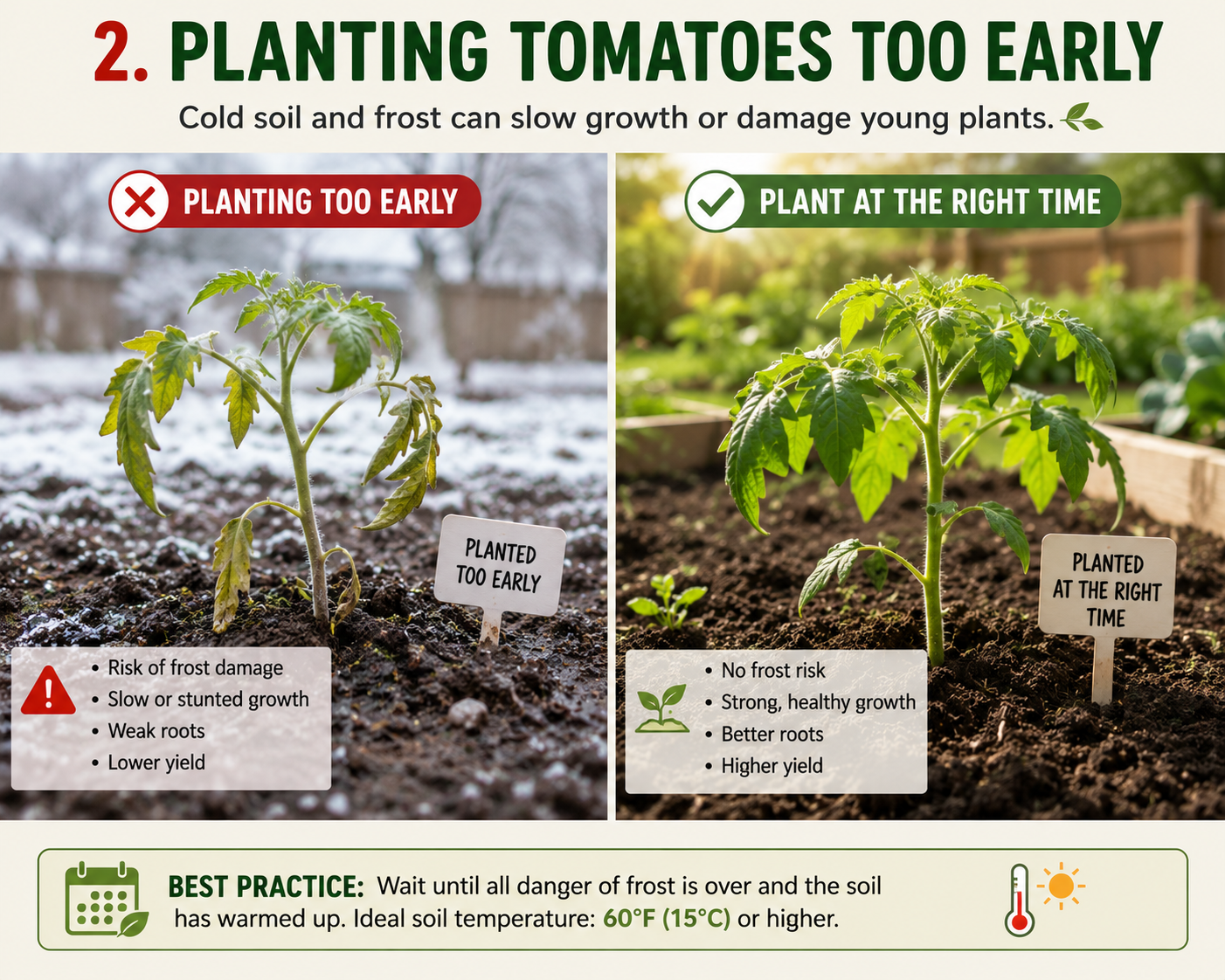
2. Planting Tomatoes Too Early
Tomatoes are warm-season plants, so planting them too early can expose them to cold temperatures.
Cool soil can slow root development, while frost can seriously damage or kill young plants.
Even if the weather feels warm during the day, nighttime temperatures may still be too low.
How to avoid this mistake
Wait until the danger of frost has passed and the soil has warmed before transplanting tomatoes outdoors.
Hardening off young plants is also important. Gradually expose seedlings to outdoor conditions over several days instead of moving them directly from a protected indoor environment into the garden.
3. Giving Tomato Plants Too Little Space
It can be tempting to plant many tomato plants in a small garden. However, overcrowding creates several problems.
Plants growing too close together compete for water, nutrients, sunlight, and root space. Dense foliage also reduces air circulation, which can encourage fungal diseases.
How to avoid this mistake
Give each tomato plant enough room to grow according to its variety.
Indeterminate tomatoes usually require more space because they continue growing throughout the season. Determinate varieties are generally more compact.
Always check the spacing recommendations on your seed packet or plant label.
4. Planting Tomatoes in Poor Soil
Tomatoes grow best in fertile, well-draining soil. Planting them in compacted or nutrient-poor soil can limit root development and reduce plant growth.
Heavy soil can also hold too much water around the roots.
How to improve the soil
- Add mature compost before planting.
- Improve compacted soil with organic matter.
- Make sure excess water can drain away.
- Avoid planting in soil that remains waterlogged.
- Test your soil if plants repeatedly perform poorly.
Healthy soil gives tomato roots access to the water, air, and nutrients they need.
5. Planting Seedlings Too Shallow
Tomatoes have an unusual ability to develop roots along their buried stems. For this reason, planting tomatoes slightly deeper than many other vegetables can encourage a stronger root system.
A weak root system may make plants more vulnerable to drought and poor growth.
How to avoid this mistake
Remove the lower leaves from a healthy transplant and bury part of the stem when planting. Avoid burying the entire plant, however, and make sure the upper leaves remain above the soil.
For container-grown seedlings, make sure the container is deep enough to accommodate healthy root development.
6. Overwatering Tomato Plants
Overwatering is one of the most common problems in Tomato Growing.
Tomatoes need consistent moisture, but constantly wet soil can reduce oxygen around the roots and contribute to root problems. Excess moisture can also increase the risk of certain diseases.
Overwatering may cause yellowing leaves, weak growth, or wilting despite the soil being wet.
How to avoid overwatering
Water deeply rather than giving plants small amounts of water frequently.
Check the soil before watering. If the surface is slightly dry and the deeper soil still has moisture, you may not need to water immediately.
Use containers with drainage holes, and avoid allowing pots to sit in standing water.
7. Letting Tomato Plants Dry Out Completely
The opposite mistake is allowing tomato plants to become severely dry.
Irregular watering can stress plants and contribute to problems such as blossom-end rot and fruit cracking.
Tomatoes prefer relatively consistent moisture throughout the growing season.
Better watering habits
- Check the soil regularly.
- Water deeply around the root zone.
- Water in the morning when possible.
- Use mulch to slow moisture loss.
- Increase watering during prolonged hot or dry weather.
- Adjust watering according to rainfall and soil conditions.
The goal is not to keep the soil constantly wet. Instead, maintain reasonably consistent moisture without creating waterlogged conditions.
8. Watering the Leaves Instead of the Soil
Watering from above can leave foliage wet for extended periods. When combined with poor air circulation, this can create favorable conditions for certain fungal diseases.
How to avoid this mistake
Direct water toward the soil around the base of the plant.
A soaker hose or drip irrigation system can make watering easier. If you use a watering can or hose, apply water slowly around the root zone instead of spraying the entire plant.
Morning watering also gives any accidentally wet foliage more time to dry during the day.
9. Using Too Much Fertilizer
More fertilizer does not always mean more tomatoes.
Excess nitrogen can encourage lush green leaves while reducing flower and fruit production. Plants may look impressive but produce fewer tomatoes.
How to avoid overfertilizing
Use a balanced fertilizer appropriate for vegetables and follow the product’s application instructions.
Compost can also provide organic matter and nutrients without relying entirely on synthetic fertilizers.
Avoid repeatedly adding fertilizer simply because the plant is not producing fruit. First investigate sunlight, temperature, pollination, watering, and variety.
10. Ignoring Mulch
Bare soil around tomato plants can dry quickly and become exposed to temperature changes.
Mulch helps maintain more consistent soil moisture and can reduce weed growth. It also creates a barrier between soil and foliage or fruit.
Good mulch options
- Straw
- Shredded leaves
- Grass clippings that are free from herbicide contamination
- Compost
- Other suitable organic garden mulch
Apply mulch around the plant while keeping a small gap around the stem. This helps prevent excessive moisture from staying directly against the stem.
11. Failing to Support Tomato Plants
Many tomato varieties become heavy as they grow. Without support, branches can bend or fall onto the ground.
Fruit touching soil is more exposed to pests, rot, and physical damage. Unsupported plants can also become difficult to manage.
How to avoid this mistake
Install support before the plant becomes large.
Useful options include:
- Tomato cages
- Stakes
- Trellises
- String or vertical support systems
Indeterminate varieties generally benefit from stronger and taller support because they can continue growing for an extended period.
12. Pruning Too Much or Too Little
Pruning can be useful for some tomato plants, but excessive pruning can remove too much healthy foliage.
Leaves are important because they capture sunlight and help the plant produce energy.
Removing too many leaves can expose fruit to intense sunlight and reduce the plant’s ability to support healthy growth.
A simple pruning approach
Remove damaged, diseased, or unwanted growth as needed. For indeterminate varieties, some gardeners also remove selected suckers to improve plant organization.
Avoid stripping the plant completely.
The best pruning method depends on the tomato variety and the support system being used.
13. Ignoring Pests and Diseases
Tomatoes can attract a variety of garden pests, including aphids, whiteflies, tomato hornworms, and other insects.
Diseases can also become a problem when plants are stressed or foliage remains wet for long periods.
How to prevent problems
- Inspect plants regularly.
- Look underneath leaves for insects or eggs.
- Remove badly damaged foliage when appropriate.
- Keep the garden area clean.
- Provide good air circulation.
- Avoid unnecessary overhead watering.
- Rotate crops when practical.
- Choose disease-resistant varieties when available.
Early detection is one of the easiest ways to prevent a small problem from becoming a major one.
14. Forgetting About Pollination
Tomato flowers are generally self-pollinating, but they still benefit from movement and pollinator activity.
Poor pollination can result in flowers dropping without producing fruit, especially during unfavorable weather.
High temperatures, low temperatures, humidity, and other environmental conditions can also affect fruit set.
How to encourage pollination
- Grow tomatoes in a sunny location.
- Encourage beneficial insects in your garden.
- Avoid unnecessary pesticide use.
- Gently shake or tap flowering branches when growing plants in protected spaces.
- Maintain healthy plants with adequate water and nutrients.
If flowers appear but fruit does not develop, consider environmental conditions before immediately adding fertilizer.
15. Harvesting Tomatoes at the Wrong Time
Leaving ripe tomatoes on the plant for too long can increase the risk of cracking, pests, and damage.
On the other hand, harvesting very immature tomatoes may mean missing some of their best flavor.
How to harvest correctly
Harvest tomatoes when they have developed their expected mature color and feel slightly firm but not rock hard.
Use clean hands or garden shears to remove fruit without damaging the plant.
Regular harvesting can also encourage continued production in many tomato varieties.
Tomato Growing Mistakes: Quick Comparison Table
| Common Mistake | What Can Happen | Better Approach |
|---|---|---|
| Too little sunlight | Weak growth and fewer fruits | Provide 6–8 hours of direct sun |
| Planting too early | Cold damage and slow growth | Wait for suitable temperatures |
| Overcrowding | Poor airflow and competition | Follow recommended spacing |
| Poor soil | Weak growth and low yields | Add compost and improve drainage |
| Overwatering | Root problems and yellow leaves | Water deeply when needed |
| Underwatering | Wilting and fruit problems | Maintain consistent moisture |
| Wet foliage | Increased disease risk | Water at the soil level |
| Too much nitrogen | Excess leaves and fewer fruits | Fertilize according to plant needs |
| No mulch | Faster moisture loss and weeds | Add an organic mulch layer |
| No support | Broken branches and soil contact | Use cages, stakes, or trellises |
| Excessive pruning | Less foliage and sun damage | Prune selectively |
| Ignoring pests | Plant damage and lower yields | Inspect plants regularly |
| Poor pollination | Flowers without fruit | Encourage pollinators and airflow |
| Late harvesting | Cracking and pest damage | Pick mature fruit regularly |
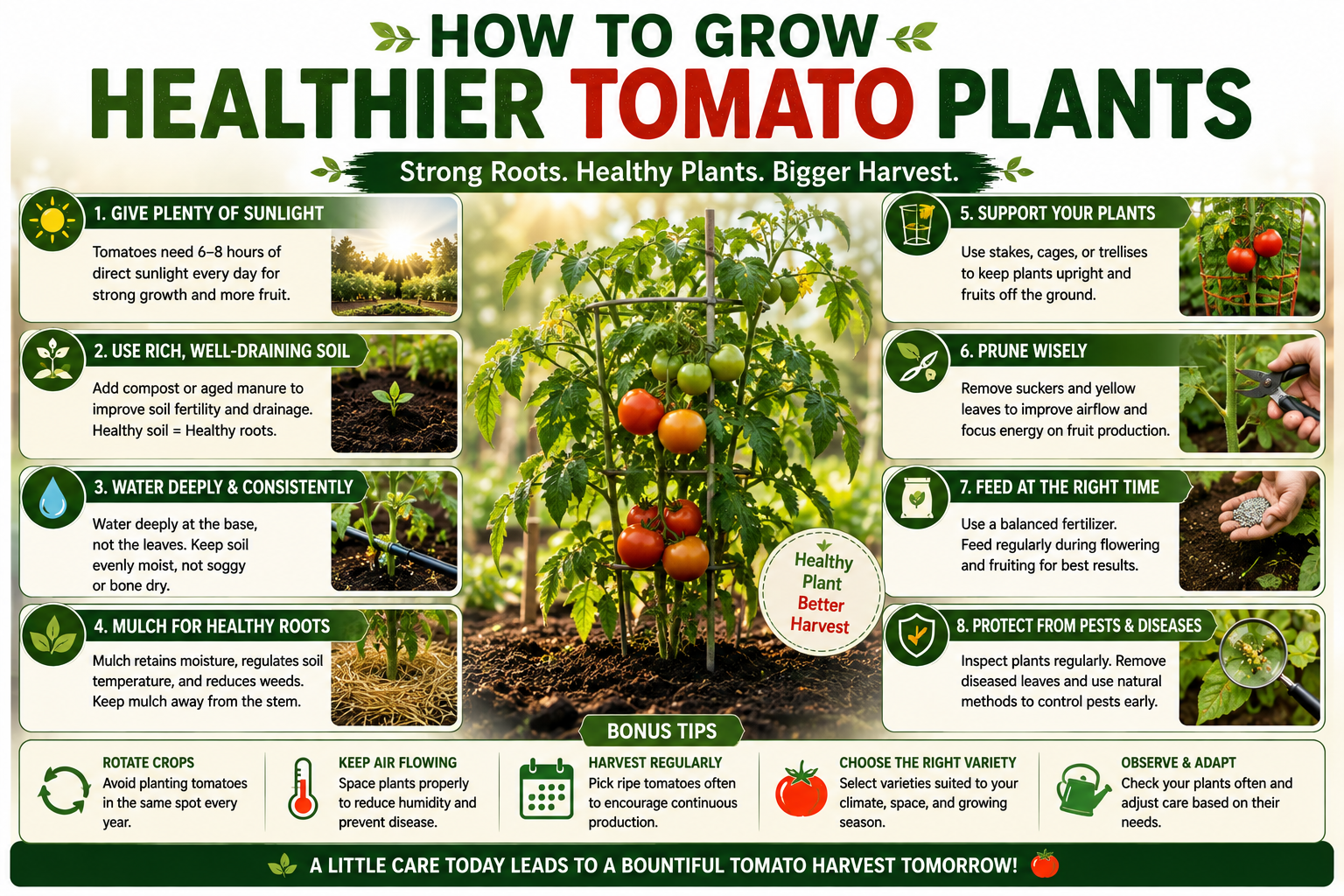
How to Grow Healthier Tomato Plants
Avoiding mistakes is important, but creating the right growing conditions from the beginning is even better.
Choose the Right Tomato Variety
Not every tomato variety is suitable for every garden.
Consider the amount of space available, your climate, the length of your growing season, and how you want to use the tomatoes.
Consider these factors
- Determinate or indeterminate growth
- Fruit size
- Days to maturity
- Disease resistance
- Container suitability
- Climate suitability
- Fresh eating or cooking needs
Choosing the right variety can make Tomato Growing much easier.
Give Tomatoes Plenty of Sunlight
Sunlight supports healthy foliage, flowering, and fruit development.
Before planting, observe the garden and identify areas that receive strong direct sunlight for most of the day.
If growing tomatoes in containers, consider placing them where they can receive the best available sunlight.
Maintain Consistent Soil Moisture
Tomatoes do not need to sit in wet soil, but they should not repeatedly experience severe drought either.
Mulching, deep watering, and monitoring the soil can help maintain more stable moisture levels.
Encourage Good Air Circulation
Leave enough space between plants so air can move through the foliage.
Good airflow helps leaves dry more quickly after rain or watering and makes the plants easier to inspect.
Avoid creating a dense wall of foliage by planting tomatoes too closely together.
Feed Plants According to Their Needs
Tomatoes are productive plants and require nutrients throughout their growing season.
However, fertilizer should be applied thoughtfully.
If you notice unusual leaf color, poor growth, or limited fruit production, investigate the cause before automatically increasing fertilizer.
Common Signs That Something Is Wrong With Your Tomato Plants
Learning to recognize early warning signs can help you correct problems quickly.
Yellow Leaves
Yellow leaves can result from several causes, including overwatering, nutrient problems, aging foliage, or disease.
Check the soil moisture and examine the entire plant before deciding what action to take.
Wilting
Wilting may indicate a lack of water, excessive heat, root problems, or disease.
Check the soil first. If the soil is wet but the plant continues to wilt, investigate other possible causes.
Flowers but No Tomatoes
This can happen because of poor pollination, temperature stress, or other environmental conditions.
Look at sunlight, watering, plant health, and local weather before assuming that fertilizer is the problem.
Cracked Tomatoes
Fruit cracking is often associated with inconsistent moisture, particularly when plants receive a lot of water after a dry period.
Regular moisture and mulch can help reduce fluctuations.
Blossom-End Rot
Blossom-end rot appears as a dark, sunken area on the bottom of developing fruit.
It is commonly associated with problems involving calcium availability and inconsistent water movement within the plant. Maintaining consistent soil moisture is an important preventive step.
Tomato Growing Tips for Beginners
If you are new to Tomato Growing, you do not need to master everything at once.
Start with the basics and observe your plants regularly.
Simple Beginner Rules
- Choose a sunny location.
- Use healthy seedlings or quality seeds.
- Plant after the danger of frost has passed.
- Use fertile, well-draining soil.
- Give plants enough space.
- Water deeply and consistently.
- Mulch around plants.
- Support plants early.
- Inspect leaves and stems regularly.
- Harvest ripe tomatoes frequently.
A few minutes of observation every couple of days can help you identify problems before they become serious.
Seasonal Tomato Growing Care
Tomato care changes as plants move through different stages of growth.
Early Season
Focus on strong roots and healthy establishment.
Protect young plants from unexpected cold and gradually acclimate seedlings before transplanting them outdoors.
Midseason
This is when plants may grow rapidly and begin producing flowers and fruit.
Keep watering consistent, maintain support structures, monitor pests, and harvest ripe tomatoes regularly.
Late Season
As temperatures change, production may slow down.
Continue checking plants for disease and pests. Remove badly damaged foliage and harvest usable fruit before severe weather arrives.
Frequently Asked Questions About Tomato Growing
1. How much sunlight do tomato plants need?
Most tomato plants perform best with about six to eight hours of direct sunlight each day. More sunlight is generally beneficial when temperatures and moisture conditions are suitable.
2. How often should I water tomato plants?
There is no single watering schedule that works for every garden. Soil type, temperature, rainfall, plant size, and container size all affect water requirements. Check the soil regularly and water deeply when needed.
3. Why are my tomato plants growing leaves but not tomatoes?
Excess nitrogen, insufficient sunlight, temperature stress, and poor pollination can contribute to excessive foliage with limited fruit. Check growing conditions before adding more fertilizer.
4. Should tomato plants be pruned?
Some tomato plants benefit from selective pruning, especially indeterminate varieties. However, excessive pruning can remove valuable foliage. Remove damaged or diseased growth and prune according to the variety and support system.
5. Why are my tomatoes cracking?
Tomatoes can crack when moisture levels fluctuate significantly, particularly after a dry period followed by heavy watering or rainfall. Mulching and maintaining more consistent moisture can help.
6. Can tomatoes grow in containers?
Yes. Many tomato varieties can grow successfully in containers. Choose a sufficiently large container with drainage holes and select varieties suited to container growing.
7. Why are my tomato flowers falling off?
Flower drop can be caused by temperature stress, poor pollination, drought, excessive heat, or other environmental conditions. Keep plants healthy and monitor weather conditions.
8. What is the best fertilizer for tomato plants?
There is no single fertilizer that is best for every garden. A fertilizer designed for vegetables or tomatoes can be useful when applied according to its label. Avoid excessive nitrogen because it can encourage leaf growth at the expense of fruit production.
9. Should I remove yellow leaves from tomato plants?
If yellow leaves are old, damaged, or diseased, removing them may improve plant cleanliness and airflow. However, widespread yellowing can indicate an underlying problem, so investigate the cause rather than simply removing leaves.
10. What is the biggest tomato growing mistake beginners make?
Inconsistent watering, insufficient sunlight, overcrowding, and planting at the wrong time are among the most common problems. Starting with the right location and maintaining consistent care can prevent many issues.
Conclusion
Successful Tomato Growing does not have to be difficult. Most tomato problems can be prevented by providing the right growing conditions and paying attention to your plants throughout the season.
Choose a sunny location, prepare healthy soil, give plants enough space, and provide consistent moisture. Support growing plants, monitor pests and diseases, and avoid excessive fertilizer or pruning.
Most importantly, take time to observe your tomato plants. Their leaves, stems, flowers, and fruit can often tell you when something is wrong.
By avoiding these common tomato growing mistakes and following simple gardening practices, you can create stronger plants and enjoy a healthier, more productive tomato harvest in your backyard garden.
You can also check our article 20 Best Ground Cover Plants