
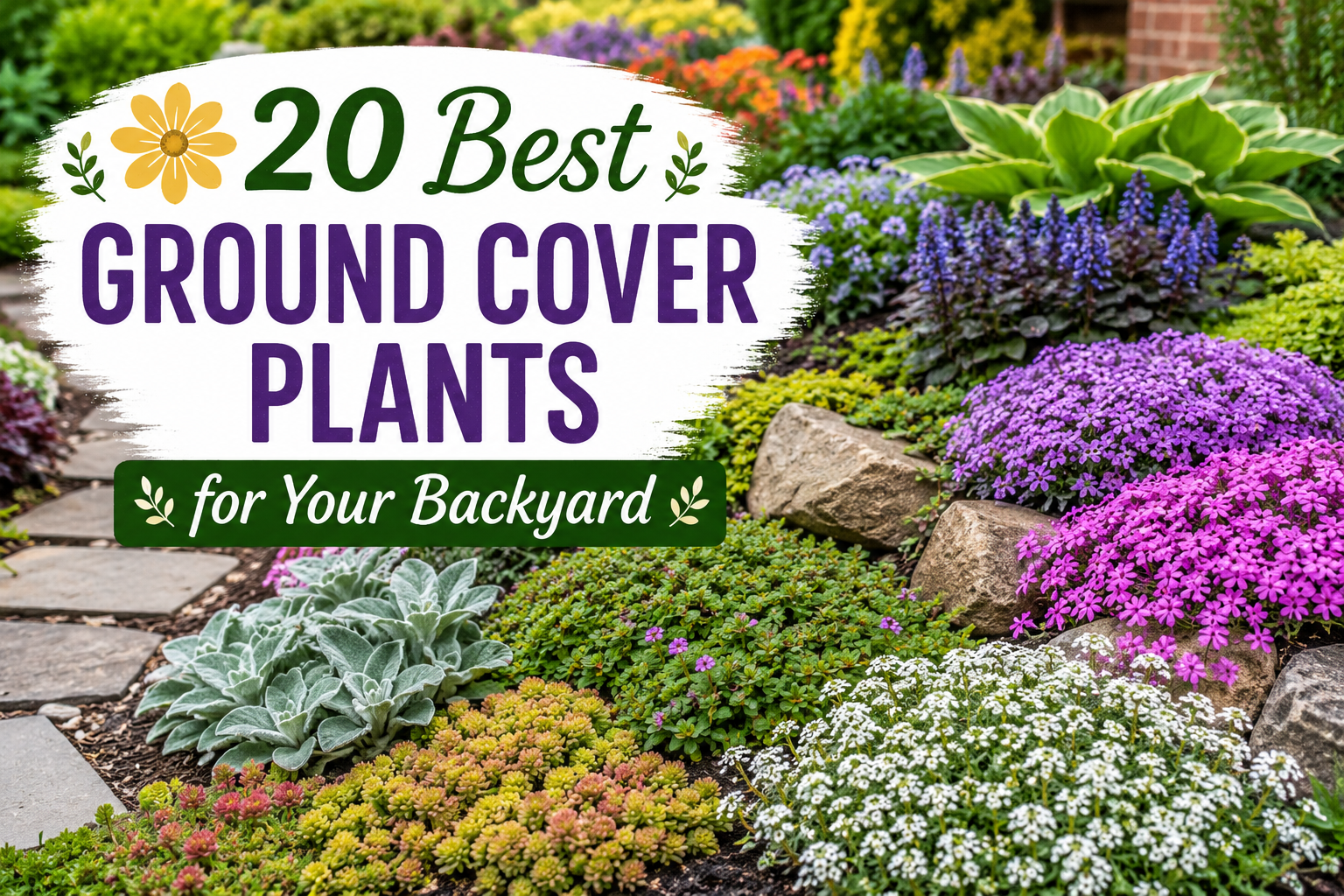
Ground Cover Plants are an excellent way to add color, texture, and greenery to areas of your backyard where grass or traditional flower beds may be difficult to maintain. These low-growing plants spread across the soil, helping create a lush and attractive landscape while reducing the amount of exposed ground.
Whether you have a sunny slope, shady corner, rocky area, or space beneath trees, there is likely a ground cover plant that can thrive there. Some varieties produce beautiful flowers, while others are valued for their evergreen foliage, fragrance, or ability to control weeds.
Ground cover plants can also help reduce soil erosion, conserve moisture, and make garden beds look more finished. Many are low-maintenance once established, making them especially useful for busy gardeners and beginners.
In this guide, you’ll discover 20 of the best Ground Cover Plants for your backyard, including their sunlight requirements, watering needs, bloom times, and ideal uses. You’ll also learn how to choose, plant, and care for ground covers successfully.
What Are Ground Cover Plants?
Ground cover plants are low-growing plants that spread horizontally across the soil rather than growing tall. They are commonly used to fill empty spaces between larger plants, cover slopes, replace sections of lawn, and create attractive garden borders.
Some ground covers spread quickly, while others grow more slowly and form neat, compact mats. Depending on the variety, they may be evergreen or deciduous and may produce flowers during one or more seasons.
Common Uses for Ground Cover Plants
- Filling empty spaces in flower beds
- Covering bare soil
- Reducing weed growth
- Preventing soil erosion
- Covering garden slopes
- Growing beneath trees
- Replacing difficult-to-maintain grass
- Creating borders and pathways
- Adding seasonal flowers and color
Benefits of Growing Ground Cover Plants
Adding Ground Cover Plants to your backyard can provide both practical and decorative benefits.
1. Helps Control Weeds
A dense layer of ground cover can block sunlight from reaching weed seeds. As the plants spread, they leave less open soil where unwanted weeds can establish.
2. Reduces Soil Erosion
Ground covers are especially useful on slopes. Their roots help hold soil in place during heavy rain and watering.
3. Conserves Soil Moisture
Leaves and stems create a protective layer over the soil, helping reduce evaporation during warm weather.
4. Adds Beauty
Ground covers come in many colors and textures. Some produce colorful flowers, while others provide attractive foliage throughout the year.
5. Requires Less Lawn Maintenance
Certain ground covers can be used instead of grass in areas where mowing is difficult, such as slopes or narrow spaces.
6. Supports Pollinators
Flowering ground covers can provide nectar and pollen for bees, butterflies, and other beneficial insects.
How to Choose the Best Ground Cover Plants
The best ground cover isn’t necessarily the fastest-growing one. You should choose a variety based on your backyard’s conditions and the amount of maintenance you’re willing to provide.
Important Factors to Consider
- Sunlight: Full sun, partial shade, or full shade
- Soil: Sandy, loamy, clay, or rocky
- Moisture: Dry, average, or consistently moist
- Climate: Choose plants suitable for your growing zone
- Growth rate: Slow, moderate, or fast
- Maintenance: Low or moderate
- Mature size: Consider how much space the plant will eventually cover
- Purpose: Erosion control, flowers, weed suppression, or decoration
Choosing the right plant for the right location is one of the easiest ways to create a healthy and attractive backyard.
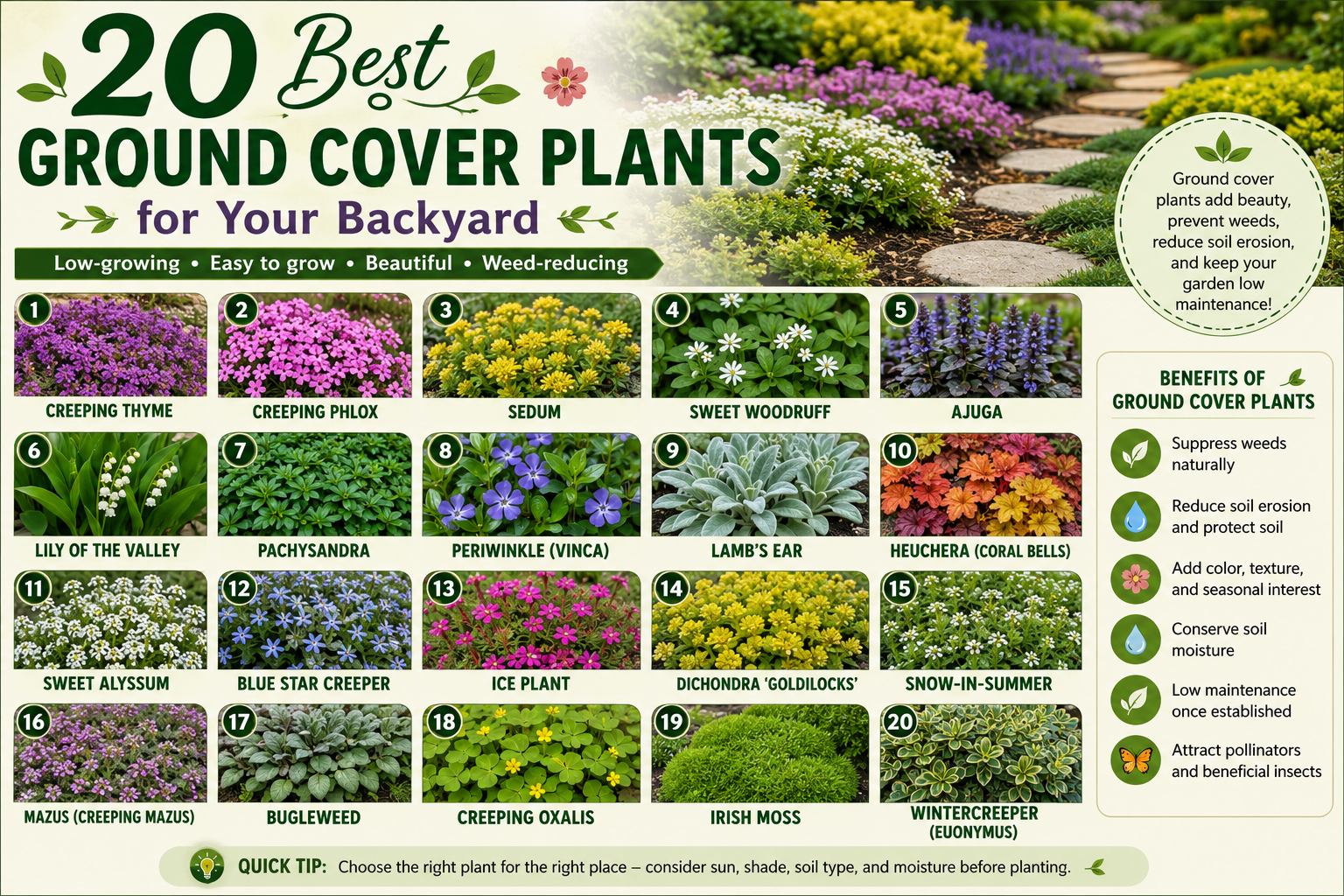
20 Best Ground Cover Plants for Your Backyard
1. Creeping Thyme
Creeping thyme is one of the most popular choices for sunny locations. It forms a low-growing carpet of foliage and produces small flowers during summer.
It is also drought-tolerant once established and can tolerate some foot traffic, making it useful between stepping stones.
Growing Tips
- Sunlight: Full sun
- Water: Low once established
- Bloom: Summer
- Best for: Walkways, rock gardens, and borders
2. Creeping Phlox
Creeping phlox creates a colorful carpet of flowers in spring. Its small blooms are commonly found in shades of pink, purple, blue, and white.
It works particularly well on slopes and rock gardens.
Growing Tips
- Sunlight: Full sun to partial shade
- Water: Moderate
- Bloom: Spring
- Best for: Slopes and rock gardens
3. Sedum
Sedum, also called stonecrop, is a tough succulent ground cover that performs particularly well in dry locations.
Its fleshy leaves store water, allowing it to tolerate periods of drought.
Growing Tips
- Sunlight: Full sun
- Water: Low
- Bloom: Summer to fall
- Best for: Rock gardens and dry areas
4. Sweet Woodruff
Sweet woodruff is an excellent choice for shady areas. It produces small white flowers in spring and has attractive green foliage.
Its low-growing habit makes it useful beneath trees and shrubs.
Growing Tips
- Sunlight: Partial to full shade
- Water: Moderate
- Bloom: Spring
- Best for: Shade gardens
5. Ajuga
Ajuga, commonly called bugleweed, forms dense mats of colorful foliage. Depending on the variety, leaves may be green, purple, bronze, or variegated.
It also produces attractive flower spikes in spring.
Growing Tips
- Sunlight: Partial shade to full sun
- Water: Moderate
- Bloom: Spring
- Best for: Borders and shaded areas
6. Lily of the Valley
Lily of the valley is a classic shade-loving ground cover with fragrant white, bell-shaped flowers.
It spreads through underground rhizomes and can eventually create a dense planting.
Growing Tips
- Sunlight: Partial to full shade
- Water: Moderate
- Bloom: Spring
- Best for: Woodland gardens
Note: Lily of the valley can be toxic if eaten, so it should be planted carefully around children and pets.
7. Pachysandra
Pachysandra is an evergreen ground cover that performs well in shady locations. Its glossy foliage provides year-round interest in mild climates.
It is especially useful beneath trees where grass often struggles.
Growing Tips
- Sunlight: Partial to full shade
- Water: Moderate
- Bloom: Spring
- Best for: Shady borders
8. Periwinkle (Vinca)
Periwinkle is a vigorous ground cover with glossy green leaves and attractive blue, purple, or white flowers.
It can quickly cover bare areas, although its vigorous growth means you should monitor its spread.
Growing Tips
- Sunlight: Full sun to shade
- Water: Low to moderate
- Bloom: Spring
- Best for: Slopes and difficult areas
9. Lamb’s Ear
Lamb’s ear is loved for its soft, silvery-gray leaves. Its foliage adds a unique texture to flower beds and garden borders.
It prefers dry conditions and good drainage.
Growing Tips
- Sunlight: Full sun
- Water: Low
- Bloom: Summer
- Best for: Dry borders and rock gardens
10. Heuchera
Heuchera, commonly known as coral bells, is valued for its colorful foliage rather than only its flowers. Leaves can appear in shades of burgundy, green, bronze, silver, and purple.
It works particularly well in partially shaded gardens.
Growing Tips
- Sunlight: Partial shade
- Water: Moderate
- Bloom: Late spring to summer
- Best for: Borders and shade gardens
Ground Cover Plants Comparison Table
| Ground Cover Plant | Sunlight | Water Needs | Bloom Time | Maintenance |
|---|---|---|---|---|
| Creeping Thyme | Full sun | Low | Summer | Low |
| Creeping Phlox | Full sun–partial shade | Moderate | Spring | Low |
| Sedum | Full sun | Low | Summer–fall | Low |
| Sweet Woodruff | Shade | Moderate | Spring | Low |
| Ajuga | Sun–shade | Moderate | Spring | Low |
| Lily of the Valley | Shade | Moderate | Spring | Low |
| Pachysandra | Shade | Moderate | Spring | Low |
| Periwinkle | Sun–shade | Low–moderate | Spring | Low |
| Lamb’s Ear | Full sun | Low | Summer | Low |
| Heuchera | Partial shade | Moderate | Summer | Low |
Best Ground Cover Plants for Sunny Areas
Sunny areas provide excellent growing conditions for many drought-tolerant ground covers.
Top Choices for Full Sun
- Creeping thyme
- Creeping phlox
- Sedum
- Lamb’s ear
- Ice plant
- Blue star creeper
- Snow-in-summer
When planting in full sun, choose varieties that can tolerate heat and drying soil.
Best Ground Cover Plants for Shade
Shady areas can be challenging, especially beneath large trees. Fortunately, several attractive ground covers thrive with limited sunlight.
Shade-Loving Options
- Sweet woodruff
- Pachysandra
- Heuchera
- Lily of the valley
- Ajuga
- Bunchberry
Before planting, check whether the area receives complete shade or a few hours of filtered sunlight. Even shade-loving plants need appropriate light conditions.
Ground Covers for Slopes and Erosion Control
Slopes can lose soil quickly during heavy rainfall. Plants with spreading growth and strong root systems can help stabilize the surface.
Good Choices for Slopes
- Creeping phlox
- Creeping thyme
- Sedum
- Periwinkle
- Crown vetch
- Juniper ground covers
For steep slopes, choose plants that establish quickly but avoid invasive species that can spread beyond the area where you want them.
How to Plant Ground Cover Plants
Proper planting gives ground covers a strong start and helps them fill the area evenly.
Step 1: Prepare the Soil
Remove existing weeds, grass, rocks, and debris. Loosen the soil and add compost if it lacks organic matter.
Step 2: Plan Plant Spacing
Check the mature width of your chosen plant. Avoid planting too closely because overcrowding can encourage disease and poor airflow.
Step 3: Dig Planting Holes
Make each hole slightly wider than the plant’s root ball. Place the plant at approximately the same depth it was growing in its container.
Step 4: Water Thoroughly
Water immediately after planting. Keep the soil consistently moist while the plants establish their roots.
Step 5: Add Mulch
Apply a thin layer of organic mulch around the plants. Avoid piling mulch directly against stems.
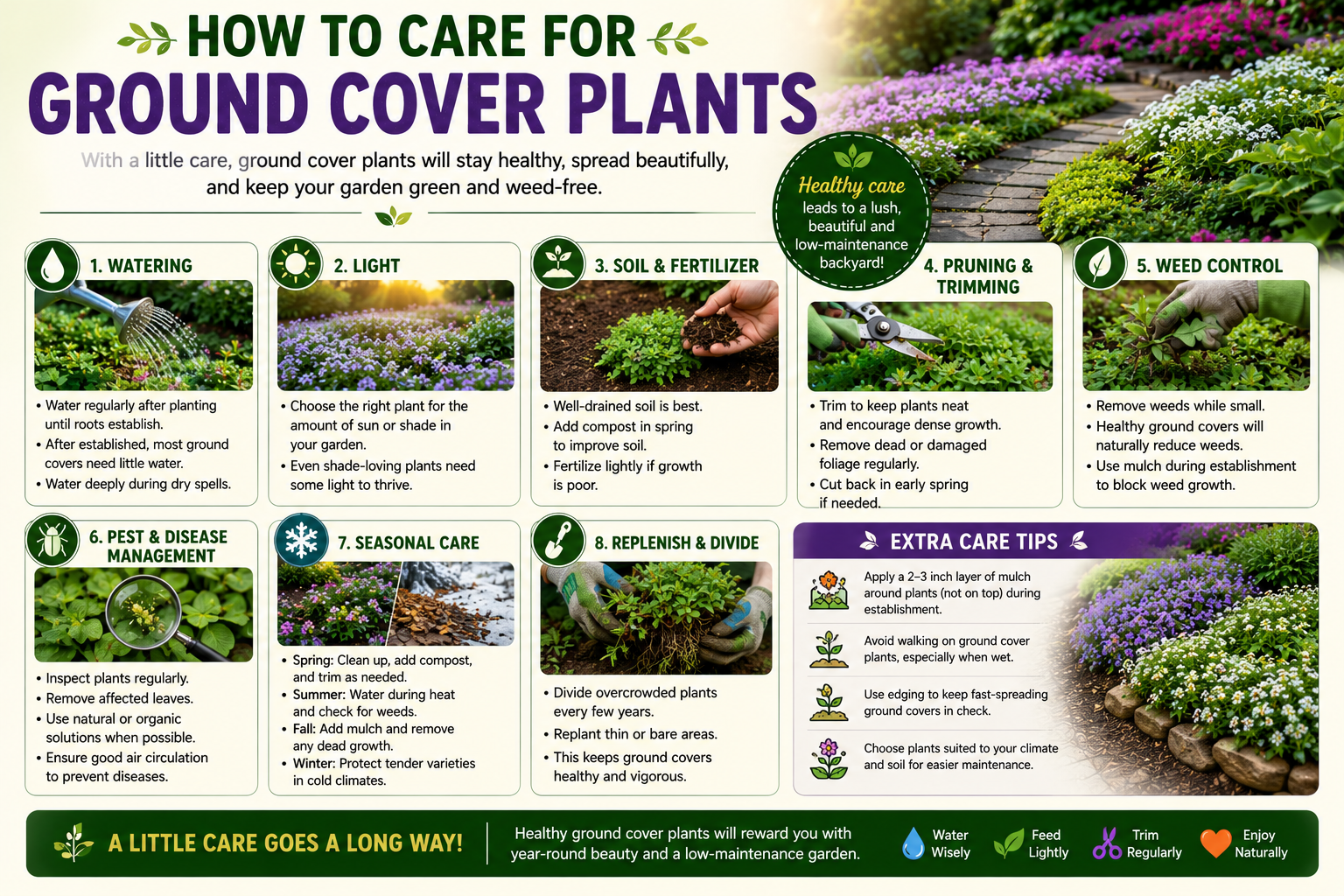
How to Care for Ground Cover Plants
Once established, many Ground Cover Plants require surprisingly little maintenance. However, basic care will help them stay healthy and attractive.
Watering
Newly planted ground covers need regular watering while roots develop.
After establishment, watering requirements depend on the variety. Drought-tolerant plants such as sedum and creeping thyme need much less water than shade-loving plants.
Fertilizing
Most ground covers don’t need heavy feeding.
A layer of compost in spring is often enough for healthy growth. If plants show signs of nutrient deficiency, use a balanced fertilizer according to the product instructions.
Pruning
Trim plants when they become too large for their space. Removing damaged or dead growth also keeps the planting neat.
Weed Control
Pull weeds when they are small. A dense ground cover will eventually reduce available space for weeds, but it won’t necessarily eliminate them completely.
Common Mistakes to Avoid
1. Choosing the Wrong Plant
A shade-loving plant may struggle in full sun, while a drought-tolerant variety may fail in constantly wet soil.
2. Planting Too Closely
Although you want ground covers to spread, overcrowding can lead to poor airflow and disease.
3. Overwatering
Many ground covers are damaged by constantly wet soil. Always check the plant’s moisture requirements.
4. Ignoring Spread
Some varieties spread aggressively. Research mature growth habits before planting.
5. Skipping Soil Preparation
Poor soil can slow establishment and reduce plant health.
6. Using Too Much Fertilizer
Excessive fertilizer can encourage weak, overly lush growth rather than healthy ground cover.
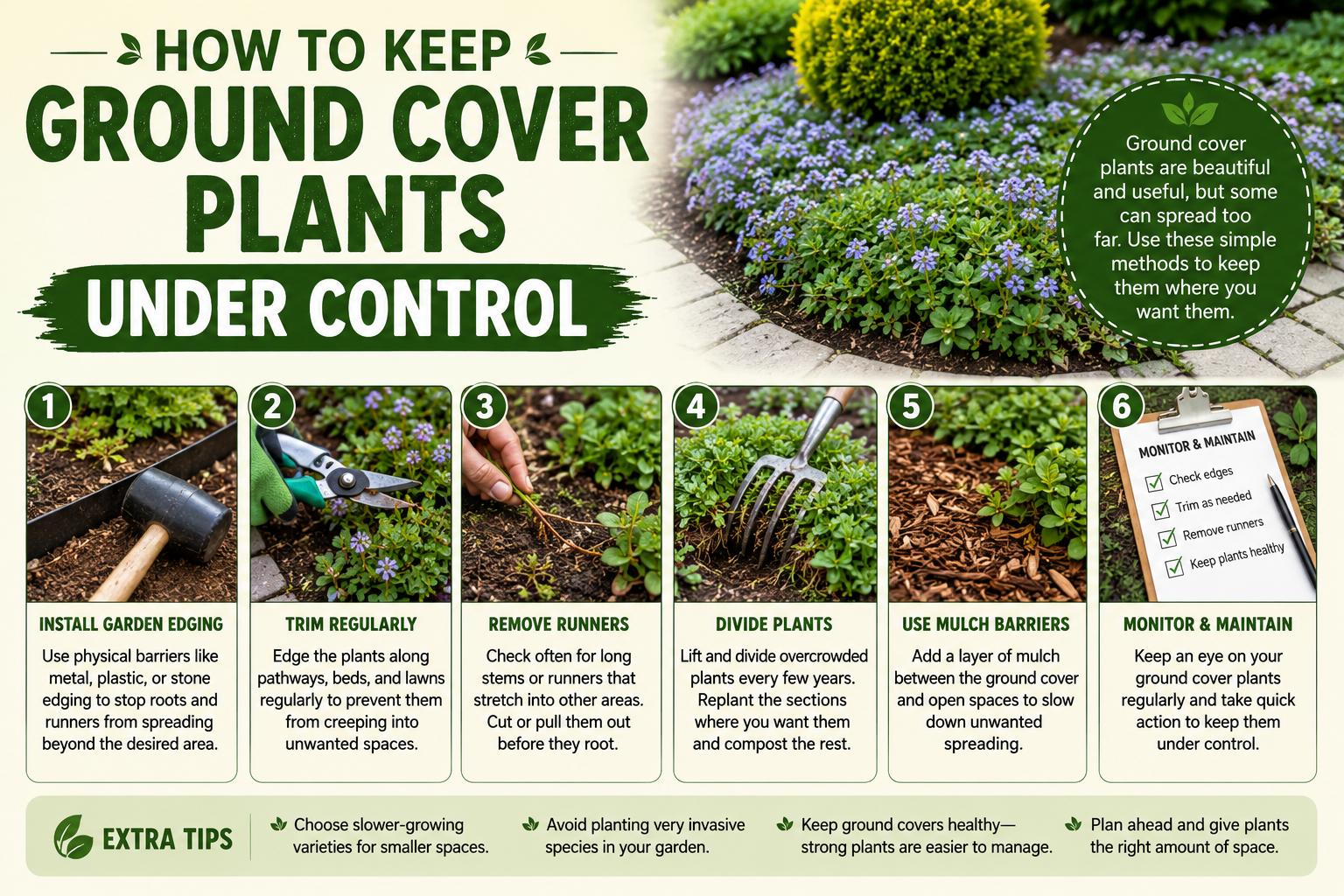
How to Keep Ground Cover Plants Under Control
Fast-growing ground covers can sometimes spread beyond their intended location.
Simple Control Methods
- Install garden edging.
- Trim spreading stems regularly.
- Remove unwanted runners.
- Divide crowded plants.
- Avoid planting vigorous varieties near natural areas.
- Research the plant’s invasive potential in your region before planting.
A plant that is well-behaved in one climate may become invasive in another, so local suitability matters.
Seasonal Care Tips
Spring
Spring is an excellent time to establish new ground covers.
- Remove dead foliage.
- Pull weeds.
- Add compost.
- Plant new varieties.
- Apply a light layer of mulch.
Summer
During summer, focus on watering and controlling weeds.
- Water newly planted areas regularly.
- Check for pests.
- Trim overgrown plants.
- Protect moisture-loving varieties during hot weather.
Fall
Fall is a good time to prepare established plants for winter.
- Remove diseased foliage.
- Reduce watering as temperatures cool.
- Add a light layer of mulch where needed.
Winter
Winter maintenance depends on your climate.
- Avoid walking on frozen plants.
- Protect tender varieties from extreme cold.
- Remove broken or damaged stems when necessary.
Conclusion
Ground Cover Plants are a practical and beautiful addition to almost any backyard. They can fill empty spaces, reduce erosion, suppress weeds, conserve moisture, and add color and texture to areas where traditional lawn or larger plants may not work well.
From sun-loving creeping thyme and sedum to shade-friendly sweet woodruff and pachysandra, there are ground covers for almost every garden condition. The key is to match the plant with your soil, sunlight, moisture level, climate, and available space.
For beginners, start with a few easy-care varieties and give them the right growing conditions. With proper planting and simple maintenance, your ground cover plants can spread into an attractive living carpet that makes your backyard more colorful and easier to maintain.
Frequently Asked Questions
1. What are the best Ground Cover Plants for beginners?
Creeping thyme, sedum, creeping phlox, lamb’s ear, and heuchera are good beginner-friendly options. Choose based on the sunlight and soil conditions in your garden.
2. Do Ground Cover Plants prevent weeds?
Dense ground covers can reduce weed growth by blocking sunlight and occupying open soil. However, they don’t completely eliminate weeds, especially while plants are becoming established.
3. What is the fastest-growing ground cover?
Some varieties, including ajuga and periwinkle, can spread quickly. However, fast growth isn’t always desirable, so choose a plant based on how much space you want it to cover.
4. Which Ground Cover Plants grow well in shade?
Sweet woodruff, pachysandra, heuchera, lily of the valley, and ajuga can perform well in shady locations when soil and moisture conditions are suitable.
5. Which ground covers are best for sunny, dry areas?
Creeping thyme, sedum, and lamb’s ear are excellent choices for sunny locations with relatively dry soil.
6. How often should I water ground cover plants?
Newly planted ground covers generally need regular watering until established. Mature plants should be watered according to their individual moisture requirements and local weather conditions.
7. Can Ground Cover Plants replace grass?
Yes, certain ground covers can replace grass in appropriate locations. However, not every variety tolerates foot traffic, so choose a plant suited to how the area will be used.
You can also check our article 10 Proven Tips to Grow Roses



2 Comments
I appreciated the practical angle on best ground cover plants backyard. So many before-and-after posts skip the “why”, but you explained each choice. The result looks great and the process notes are the real value here.
Thank you so much for your thoughtful comment! I’m glad you found the practical tips and explanations helpful. I wanted the article to focus not just on the results, but also on why each ground cover plant can be a good choice for a backyard. I really appreciate you taking the time to share your feedback!