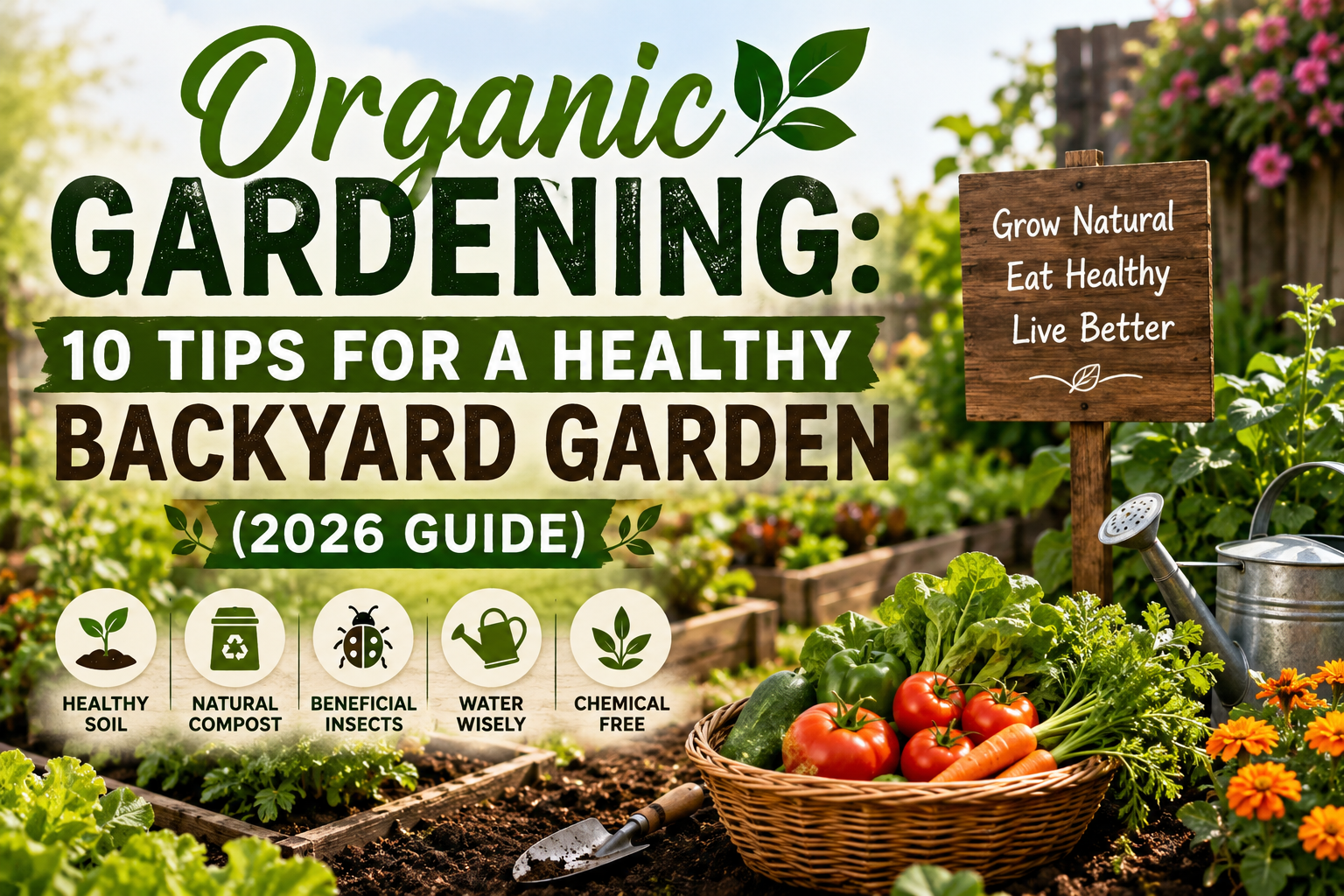
Organic Gardening is a natural and eco-friendly way to grow healthy plants, vegetables, herbs, and flowers without relying on synthetic fertilizers or chemical pesticides. Instead, it focuses on improving soil health, encouraging beneficial insects, conserving water, and working with nature to create a balanced garden ecosystem. Whether you have a large backyard, a few raised garden beds, or a small container garden, organic gardening helps you produce fresh, nutritious food while protecting the environment.
One of the greatest advantages of Organic Gardening is that it promotes long-term garden health. Healthy soil, natural compost, organic mulch, and companion planting all work together to create stronger plants that are more resistant to pests and diseases. This sustainable approach also supports pollinators like bees and butterflies, making your backyard a thriving habitat for beneficial wildlife.
In this guide, you’ll learn why Organic Gardening matters, discover its many benefits, understand the key principles behind successful organic gardening, and compare it with conventional gardening methods. Whether you’re just getting started or looking to improve your existing garden, these practical tips will help you grow a healthier and more productive backyard naturally.
Why Organic Gardening Matters
Organic Gardening is more than just avoiding chemical products. It is a sustainable way of gardening that focuses on building healthy soil, growing strong plants, and protecting the environment. By working with nature instead of against it, gardeners can create a balanced ecosystem where plants, insects, birds, and beneficial microorganisms all play an important role.
Unlike conventional gardening, which often depends on synthetic fertilizers and pesticides, organic gardening uses natural methods to improve soil fertility and control pests. These methods support healthier plant growth while reducing pollution and protecting wildlife.
Organic gardening also produces fresh fruits, vegetables, and herbs that many gardeners prefer because they are grown using environmentally friendly practices.
Why Organic Gardening Is Important
- Protects soil health.
- Reduces environmental pollution.
- Supports beneficial insects and pollinators.
- Produces healthier fruits and vegetables.
- Reduces exposure to synthetic chemicals.
- Encourages biodiversity.
- Improves long-term garden sustainability.
- Creates a safer outdoor space for children and pets.
By choosing Organic Gardening, you’re investing in a healthier backyard and contributing to a cleaner environment for future generations.
Benefits of Organic Gardening
There are many reasons why more people are choosing Organic Gardening. It not only improves plant health but also creates a more enjoyable and sustainable gardening experience.
Healthier Soil
Healthy soil is the foundation of every successful organic garden. Adding compost, mulch, and natural fertilizers increases organic matter and encourages beneficial microorganisms that help plants absorb nutrients more efficiently.
Better Plant Growth
Strong, healthy soil produces stronger plants. Plants grown organically often develop deeper root systems and become more resistant to pests, diseases, and changing weather conditions.
Natural Pest Control
Instead of relying on chemical pesticides, Organic Gardening encourages beneficial insects such as ladybugs, lacewings, and praying mantises that naturally keep harmful pests under control.
Supports Pollinators
Flowers and herbs grown in organic gardens attract bees, butterflies, and other pollinators that improve fruit and vegetable production.
Environmentally Friendly
Organic gardening reduces chemical runoff into waterways and helps protect birds, insects, and other wildlife.
Safer Harvests
Growing food naturally allows you to harvest fresh vegetables, herbs, and fruits without depending on synthetic pesticides or fertilizers.
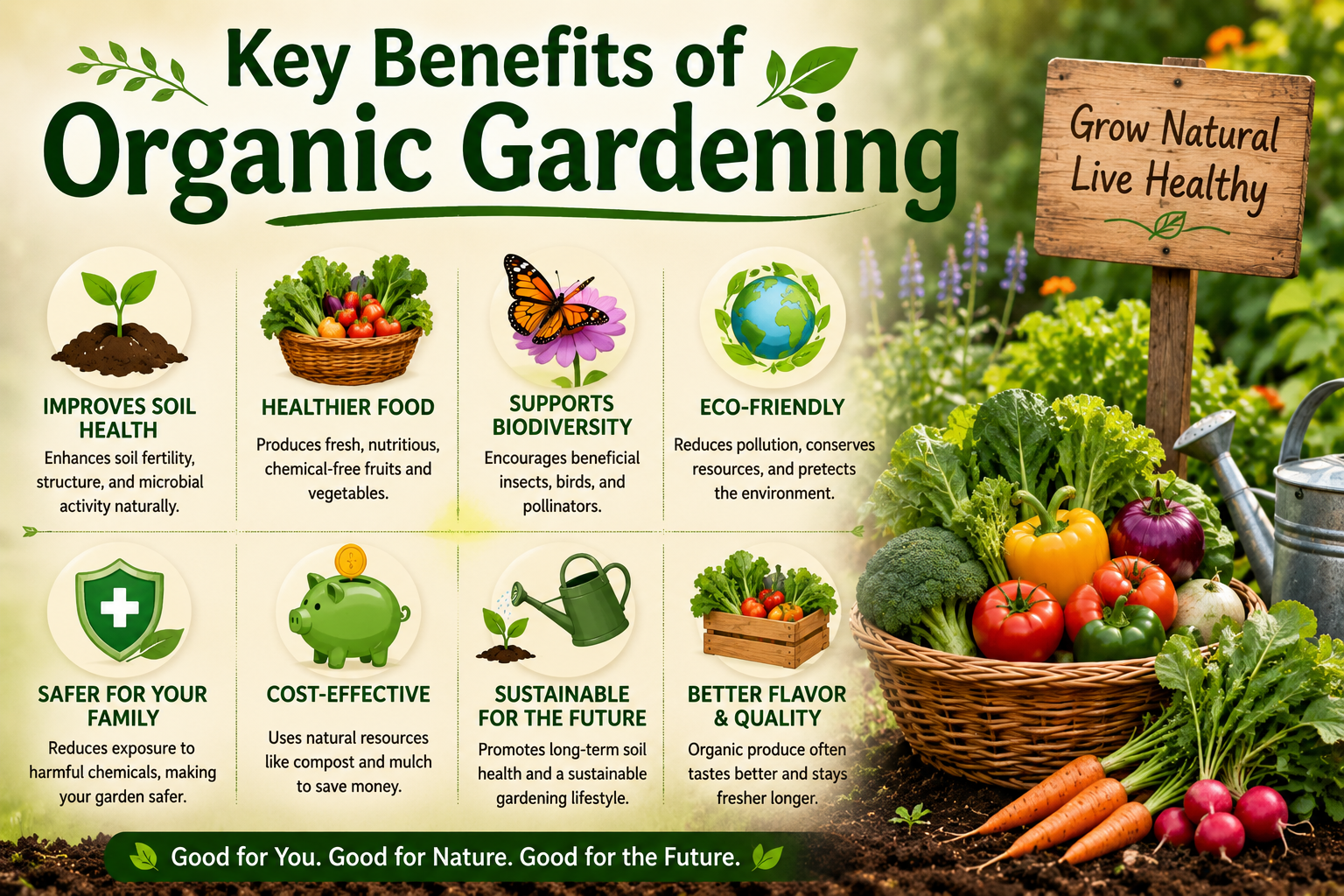
Key Benefits of Organic Gardening
- Improves soil fertility naturally.
- Produces healthier plants.
- Attracts pollinators.
- Reduces harmful chemicals.
- Supports beneficial insects.
- Conserves water with natural methods.
- Encourages biodiversity.
- Promotes sustainable gardening.
These benefits make Organic Gardening an excellent choice for beginners and experienced gardeners alike.
Essential Principles of Organic Gardening
Successful Organic Gardening is built on a few simple principles that work together to create a healthy and productive garden. Understanding these principles will help you grow stronger plants while protecting the environment.
Build Healthy Soil
Healthy soil is the heart of every organic garden. Instead of relying on synthetic fertilizers, enrich your soil with compost, aged manure, leaf mold, and other organic materials.
Healthy soil provides:
- Better drainage.
- Improved moisture retention.
- More nutrients.
- Stronger root growth.
Feed the Soil, Not Just the Plants
Organic gardeners focus on nourishing the soil first. Healthy soil naturally provides plants with the nutrients they need over time.
Natural soil amendments include:
- Compost
- Worm castings
- Aged manure
- Organic mulch
Encourage Biodiversity
A diverse garden is healthier and more resistant to pests and diseases.
Grow a variety of:
- Vegetables
- Herbs
- Flowers
- Native plants
This diversity attracts pollinators and beneficial insects while creating a balanced ecosystem.
Use Natural Pest Control
Rather than eliminating every insect, Organic Gardening encourages natural predators that keep pest populations under control.
Examples include:
- Ladybugs
- Lacewings
- Birds
- Praying mantises
Natural pest control helps maintain ecological balance.
Conserve Water
Efficient watering protects plants while reducing waste.
Good watering practices include:
- Watering early in the morning.
- Using drip irrigation.
- Applying mulch.
- Collecting rainwater when possible.
Practice Sustainable Gardening
Organic gardening focuses on long-term sustainability rather than quick results.
Simple sustainable practices include:
- Composting kitchen scraps.
- Rotating crops.
- Avoiding synthetic chemicals.
- Recycling garden waste.
- Planting native species.
These practices help maintain healthy soil and productive gardens for years to come.
Comparison Table: Organic Gardening vs. Conventional Gardening
| Feature | Organic Gardening | Conventional Gardening |
|---|---|---|
| Fertilizers | Compost, manure, and natural amendments | Synthetic fertilizers |
| Pest Control | Beneficial insects, companion planting, and natural sprays | Chemical pesticides |
| Soil Health | Improves soil over time | May reduce soil quality with repeated chemical use |
| Environmental Impact | Eco-friendly and sustainable | Higher risk of pollution and chemical runoff |
| Pollinator Support | Encourages bees, butterflies, and beneficial insects | Chemical use may reduce pollinator activity |
| Long-Term Sustainability | Excellent | Moderate |
| Best For | Sustainable home gardens and healthy food production | Fast plant growth with higher chemical inputs |
10 Organic Gardening Tips for a Healthy Backyard
Creating a thriving backyard doesn’t require expensive products or harsh chemicals. Successful Organic Gardening focuses on working with nature to build healthy soil, grow stronger plants, and encourage a balanced garden ecosystem. These ten practical tips will help you maintain a productive and environmentally friendly garden, whether you’re a beginner or an experienced gardener.
Tip #1 – Build Healthy Soil Naturally
Healthy soil is the foundation of successful Organic Gardening. Rich, fertile soil provides plants with the nutrients, moisture, and support they need to grow strong and resist pests and diseases.
Why It’s Important
Plants grown in healthy soil develop stronger roots, produce more flowers and vegetables, and are naturally more resistant to environmental stress.
How to Do It
- Add compost every growing season.
- Mix in aged manure or leaf mold.
- Avoid over-tilling the soil.
- Keep the soil covered with mulch.
Benefits
- Improves soil fertility.
- Encourages beneficial microorganisms.
- Increases water retention.
- Supports healthier root growth.
Beginner-Friendly Tips
- Start with a simple compost pile.
- Test your soil every few years.
- Add organic matter regularly.
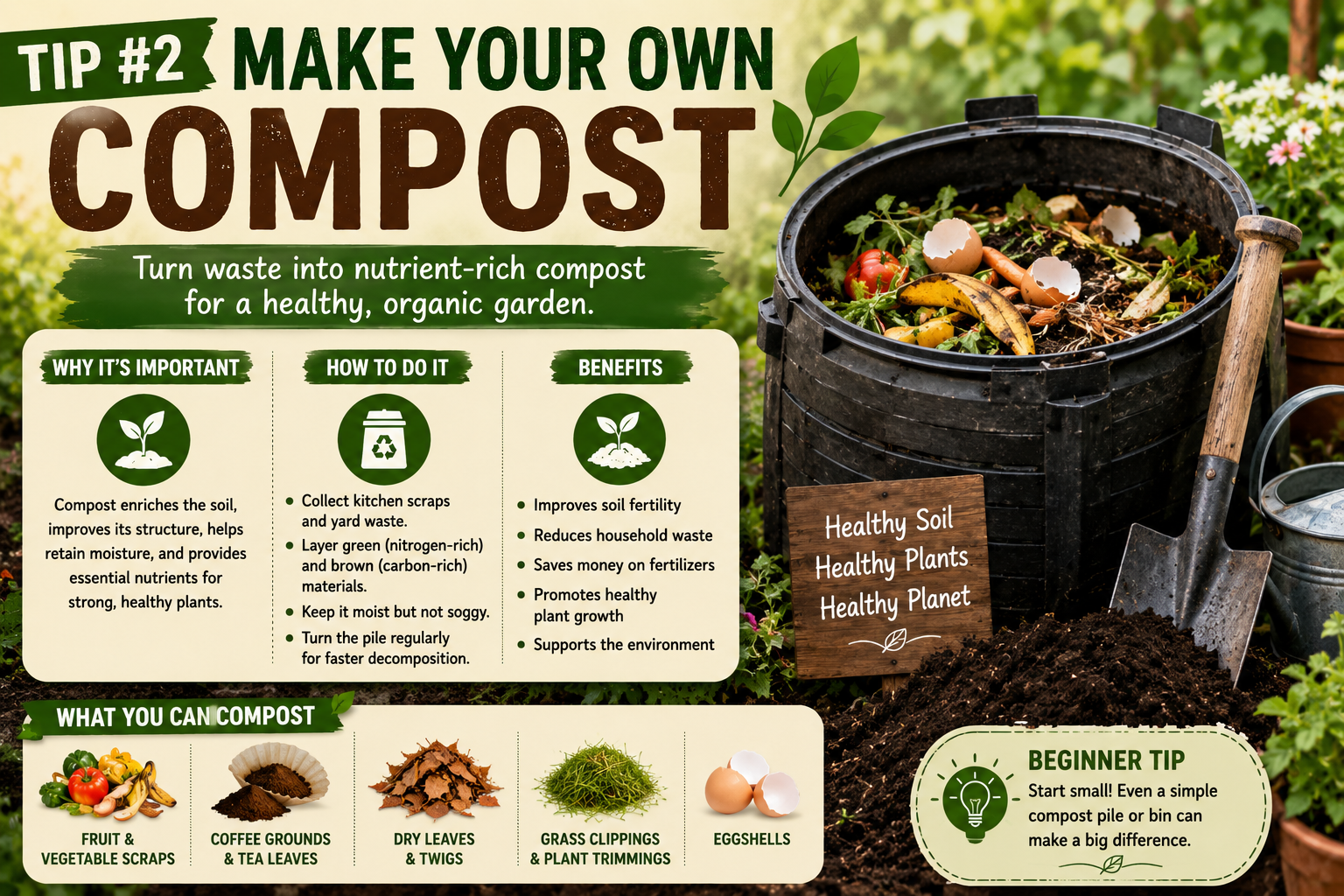
Tip #2 – Make Your Own Compost
Composting is one of the easiest ways to recycle kitchen and garden waste while improving Organic Gardening practices.
Why It’s Important
Compost naturally enriches the soil with essential nutrients and beneficial microbes.
How to Do It
Combine materials such as:
- Fruit and vegetable scraps
- Coffee grounds
- Dry leaves
- Grass clippings
- Small twigs
Turn the compost pile regularly to speed up decomposition.
Benefits
- Improves soil structure.
- Reduces household waste.
- Saves money on fertilizers.
- Supports healthy plant growth.
Beginner-Friendly Tips
- Avoid adding meat or dairy products.
- Keep the compost moist but not soggy.
- Mix green and brown materials evenly.
Tip #3 – Water Plants Wisely
Proper watering is essential for healthy Organic Gardening. Too much or too little water can weaken plants and reduce harvests.
Why It’s Important
Consistent watering helps plants develop deep roots and prevents stress during hot weather.
How to Do It
- Water early in the morning.
- Water deeply instead of lightly.
- Check soil moisture before watering.
- Use drip irrigation or soaker hoses if possible.
Benefits
- Conserves water.
- Reduces plant stress.
- Encourages deeper roots.
- Minimizes fungal diseases.
Beginner-Friendly Tips
- Water the soil instead of the leaves.
- Adjust watering based on rainfall.
- Apply mulch to retain moisture.
Tip #4 – Use Natural Mulch
Mulching is a simple yet effective way to improve Organic Gardening while protecting your soil.
Why It’s Important
Mulch helps regulate soil temperature, suppress weeds, and conserve moisture.
How to Do It
Use natural materials such as:
- Straw
- Wood chips
- Shredded bark
- Pine needles
- Dry leaves
Spread a 2–3-inch layer around your plants.
Benefits
- Reduces weed growth.
- Prevents soil erosion.
- Conserves moisture.
- Gradually enriches the soil.
Beginner-Friendly Tips
- Keep mulch away from plant stems.
- Refresh mulch as it decomposes.
- Use weed-free mulch materials.
Tip #5 – Encourage Beneficial Insects
Beneficial insects are valuable partners in Organic Gardening because they naturally control pests and improve pollination.
Why It’s Important
Helpful insects reduce the need for chemical pesticides while supporting healthier plants.
How to Do It
Grow flowers such as:
- Marigolds
- Sweet alyssum
- Lavender
- Borage
- Calendula
Avoid using harmful insecticides that may kill beneficial insects.
Benefits
- Natural pest control.
- Better pollination.
- Increased biodiversity.
- Healthier garden ecosystem.
Beginner-Friendly Tips
- Plant flowers throughout the garden.
- Provide a shallow water source for insects.
- Avoid spraying chemicals unnecessarily.
Tip #6 – Practice Companion Planting
Companion planting is an important part of Organic Gardening because compatible plants help each other grow.
Why It’s Important
Some plants repel pests, while others attract pollinators or improve soil health.
How to Do It
Plant combinations such as:
- Tomatoes with basil.
- Cucumbers with nasturtiums.
- Carrots with chives.
- Beans with calendula.
Benefits
- Reduces pest problems.
- Improves pollination.
- Supports healthier vegetables.
- Makes better use of garden space.
Beginner-Friendly Tips
- Research compatible plants.
- Mix herbs, flowers, and vegetables.
- Keep a garden journal to record successful combinations.
Tip #7 – Control Pests Naturally
Keeping pests under control naturally protects both your plants and the environment.
Why It’s Important
Natural pest control maintains ecological balance while avoiding harmful chemical residues.
How to Do It
Use methods such as:
- Neem oil spray
- Garlic spray
- Handpicking insects
- Insect barriers
- Companion planting
Benefits
- Safer for beneficial insects.
- Protects pollinators.
- Reduces chemical use.
- Supports healthy crops.
Beginner-Friendly Tips
- Inspect plants weekly.
- Remove damaged leaves promptly.
- Treat pest problems early.
Tip #8 – Choose Native and Disease-Resistant Plants
Selecting suitable plants is one of the easiest ways to succeed with Organic Gardening.
Why It’s Important
Native and disease-resistant varieties usually require less maintenance and fewer treatments.
How to Do It
Choose plants that are:
- Suitable for your climate.
- Naturally disease-resistant.
- Well adapted to local growing conditions.
Benefits
- Fewer pest problems.
- Lower maintenance.
- Better survival rates.
- Reduced water requirements.
Beginner-Friendly Tips
- Buy plants from reputable nurseries.
- Read plant labels carefully.
- Select varieties recommended for your region.
Tip #9 – Rotate Crops Each Season
Crop rotation is a simple practice that improves soil health and reduces pest problems.
Why It’s Important
Growing the same crops in one location every year can deplete nutrients and encourage diseases.
How to Do It
Rotate plant families each season.
For example:
- Tomatoes
- Beans
- Leafy greens
- Root vegetables
Benefits
- Improves soil fertility.
- Reduces pest populations.
- Prevents plant diseases.
- Supports healthier harvests.
Beginner-Friendly Tips
- Keep a yearly planting map.
- Rotate crops every season.
- Include nitrogen-fixing legumes in your rotation.
Tip #10 – Avoid Synthetic Chemicals
One of the core principles of Organic Gardening is minimizing or eliminating synthetic fertilizers and pesticides.
Why It’s Important
Natural gardening methods protect beneficial insects, improve soil health, and reduce environmental pollution.
How to Do It
Replace chemical products with:
- Compost
- Organic fertilizers
- Natural pest control methods
- Mulch
- Companion plants
Benefits
- Healthier soil.
- Cleaner environment.
- Safer food production.
- Long-term garden sustainability.
Beginner-Friendly Tips
- Read product labels carefully.
- Start replacing chemicals gradually.
- Focus on prevention rather than treatment.
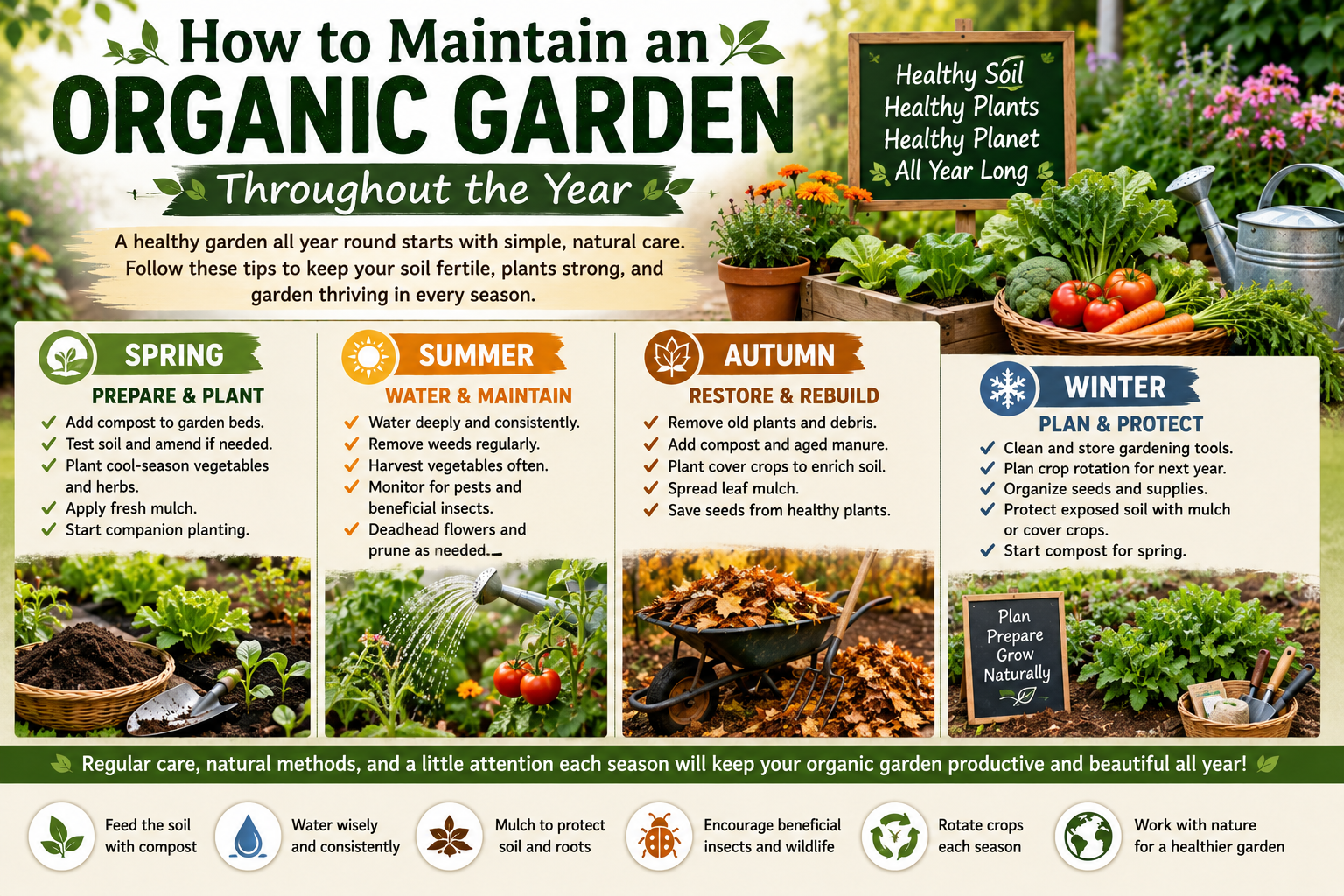
How to Maintain an Organic Garden Throughout the Year
Successful Organic Gardening is an ongoing process rather than a one-time task. Regular care helps keep your soil fertile, plants healthy, and garden productive throughout every season. By following a few simple maintenance practices, you can enjoy a thriving backyard while protecting the environment.
Feed the Soil Regularly
Healthy soil is the foundation of Organic Gardening. Instead of relying on synthetic fertilizers, continue adding organic matter throughout the year.
Good soil amendments include:
- Compost
- Aged manure
- Worm castings
- Leaf mold
These natural materials improve soil fertility and encourage beneficial microorganisms.
Water Consistently
Plants need the right amount of water to stay healthy.
For best results:
- Water early in the morning.
- Water deeply rather than frequently.
- Check soil moisture before watering.
- Use rainwater whenever possible.
Consistent watering encourages deeper root growth and reduces plant stress.
Keep the Garden Mulched
Mulch protects the soil from extreme temperatures while conserving moisture.
Natural mulch materials include:
- Straw
- Wood chips
- Pine needles
- Shredded leaves
- Grass clippings
Replace mulch as it naturally decomposes.
Monitor Plants Regularly
Inspect your plants every week for signs of:
- Pest damage
- Yellow leaves
- Diseases
- Poor growth
Early detection allows you to solve problems before they become serious.
Encourage Biodiversity
A diverse garden naturally supports healthier plants.
Grow a combination of:
- Vegetables
- Herbs
- Flowers
- Native plants
This attracts bees, butterflies, birds, and beneficial insects that contribute to a balanced garden ecosystem.
Common Organic Gardening Mistakes to Avoid
Even experienced gardeners can make mistakes. Avoiding these common errors will help your Organic Gardening efforts succeed.
Overwatering Plants
Too much water can lead to root rot, fungal diseases, and nutrient loss.
Always check the soil before watering.
Ignoring Soil Health
Healthy plants begin with healthy soil.
Continue improving your soil with compost and organic matter instead of depending on fertilizers alone.
Using Too Much Compost
Although compost is beneficial, excessive amounts can upset the nutrient balance.
Apply compost in moderate quantities each growing season.
Planting Too Close Together
Overcrowded plants compete for sunlight, nutrients, and airflow.
Proper spacing:
- Improves air circulation.
- Reduces disease.
- Makes harvesting easier.
Forgetting Crop Rotation
Growing the same vegetables in one location every year encourages pests and diseases.
Rotate crop families each season to maintain healthy soil.
Removing Every Insect
Not all insects are harmful.
Beneficial insects such as ladybugs, lacewings, and bees are valuable partners in Organic Gardening.
Learn to identify helpful insects before removing them.
Seasonal Organic Gardening Tips
Each season brings different gardening tasks. Following seasonal routines helps maintain healthy plants and fertile soil throughout the year.
Spring
It is the best time to prepare your organic garden for a successful growing season.
Spring Checklist
- Add compost to garden beds.
- Test soil if needed.
- Plant cool-season vegetables.
- Apply fresh mulch.
- Start companion planting.
Summer
Warm weather requires regular maintenance to keep plants healthy.
Summer Checklist
- Water deeply during dry periods.
- Remove weeds regularly.
- Harvest vegetables often.
- Monitor for pests.
- Deadhead flowering plants.
Autumn
It is an excellent time to rebuild soil naturally.
Autumn Checklist
- Remove old crops.
- Add compost and aged manure.
- Plant cover crops.
- Spread leaf mulch.
- Save seeds from healthy plants.
Winter
It is ideal for planning next year’s Organic Gardening projects.
Winter Checklist
- Clean gardening tools.
- Organize seed collections.
- Plan crop rotation.
- Protect exposed soil with mulch.
- Start compost for spring.
Following these seasonal tasks helps your organic garden remain healthy all year long.
Conclusion
Organic Gardening is one of the most rewarding ways to create a healthy, beautiful, and sustainable backyard. By working with nature instead of relying on synthetic chemicals, you can grow stronger plants, improve soil fertility, attract beneficial insects, and enjoy fresh fruits, vegetables, herbs, and flowers throughout the growing season.
Simple practices such as building healthy soil, making compost, watering wisely, using natural mulch, encouraging pollinators, practicing companion planting, and rotating crops all contribute to a thriving garden ecosystem. These methods not only improve plant health but also protect the environment and support local wildlife.
Remember that organic gardening is a journey of continuous learning. Observe your garden, make small improvements each season, and be patient as your soil and plants become healthier over time. With consistent care and natural gardening techniques, your backyard will become a productive, eco-friendly space that provides beauty, fresh harvests, and enjoyment for many years.
Frequently Asked Questions (FAQs)
1. What is Organic Gardening?
Organic Gardening is a natural gardening method that grows plants without synthetic fertilizers or chemical pesticides. It focuses on healthy soil, compost, natural pest control, and sustainable gardening practices.
2. Is Organic Gardening suitable for beginners?
Yes. Organic Gardening is beginner-friendly and can be started in raised garden beds, containers, or traditional backyard gardens using simple natural methods
3. What is the best natural fertilizer for an organic garden?
Compost is one of the best natural fertilizers because it improves soil fertility, supports beneficial microorganisms, and provides slow-release nutrients.
4. How can I control pests without chemicals?
You can use companion planting, neem oil, insecticidal soap, beneficial insects, physical barriers, and handpicking to manage pests naturally.
5. How often should I add compost to my organic garden?
Most gardens benefit from adding compost once or twice each year, typically in spring before planting and again in autumn after harvesting.
6. Can I grow vegetables successfully without chemical fertilizers?
Absolutely. Healthy soil enriched with compost, aged manure, worm castings, and organic mulch provides the nutrients vegetables need to grow successfully.
7. Why is healthy soil important in Organic Gardening?
Healthy soil supplies nutrients, retains moisture, supports beneficial microorganisms, and promotes strong root growth, making it the foundation of every successful organic garden.
You can also check our article Companion Plants: 10 Best Plants for Healthier Vegetable Gardens