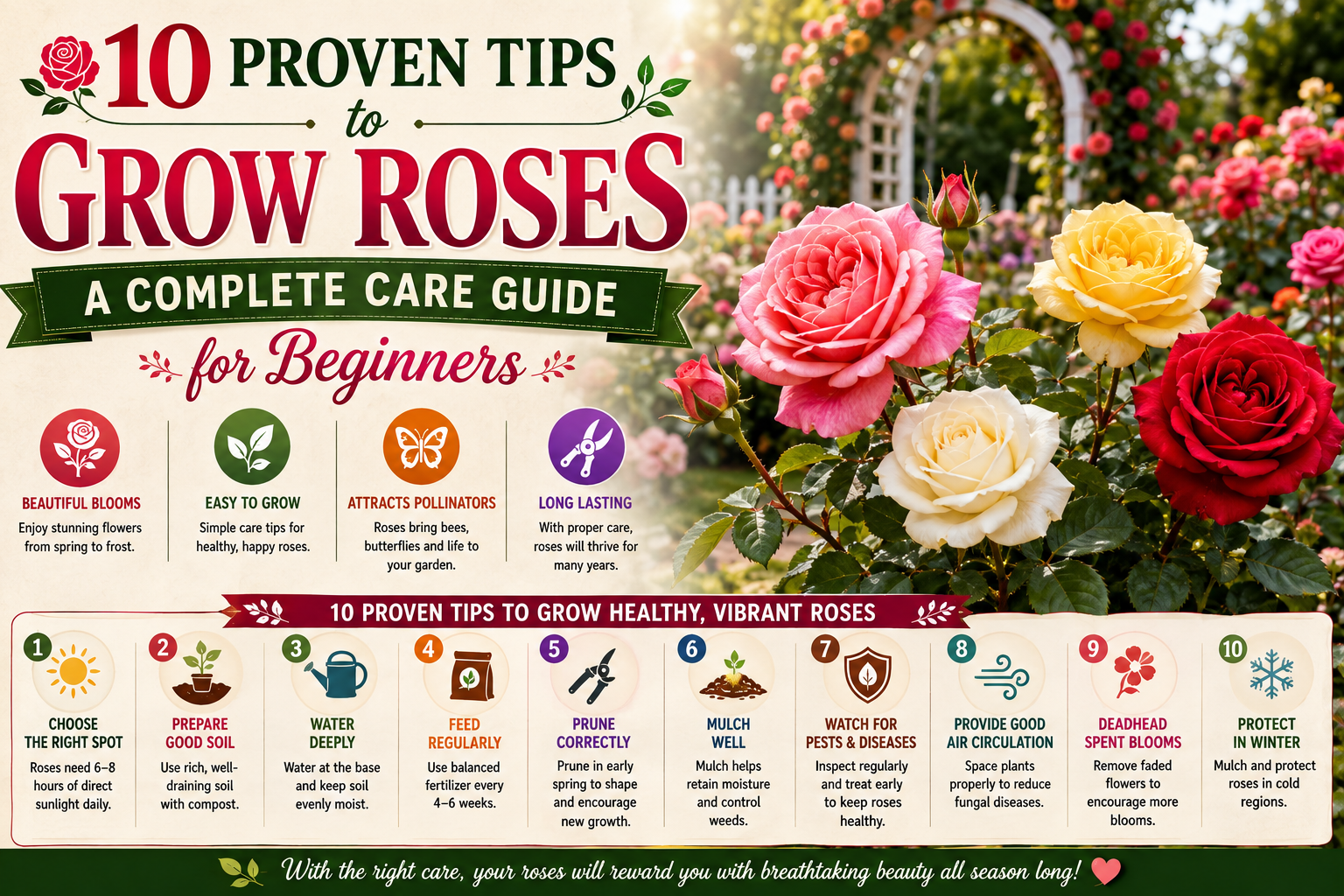
Roses are among the most admired flowers in the world, known for their stunning blooms, rich fragrance, and timeless beauty. Whether you’re creating a colorful flower bed, decorating a backyard, or growing flowers in containers, learning how to Grow Roses successfully can transform your garden into a breathtaking space. Although roses have a reputation for being difficult to grow, modern varieties are much easier to care for than many people think.
With the right location, healthy soil, regular watering, and proper pruning, rose plants can reward you with beautiful blooms from spring through fall. From classic hybrid tea roses to climbing and shrub varieties, there’s a rose suitable for every type of garden and every level of gardening experience.
In this complete guide, you’ll learn everything you need to Grow Roses, including how to choose the right variety, prepare the soil, plant correctly, water efficiently, fertilize properly, and protect your plants from pests and diseases. Whether you’re a beginner or an experienced gardener, these practical tips will help you enjoy healthy, vibrant roses year after year.
Why Grow Roses?
Roses have remained one of the most popular garden flowers for centuries because they combine beauty, fragrance, and versatility. They can enhance almost any landscape, from formal gardens to small patios.
Growing roses also brings long-term rewards. Many varieties bloom repeatedly throughout the growing season, providing months of colorful flowers with proper care.
Some roses are grown for their fragrance, while others are valued for their disease resistance, vibrant colors, or ability to attract pollinators. With so many varieties available, it’s easy to find roses that suit your garden and climate.
Benefits of Growing Roses
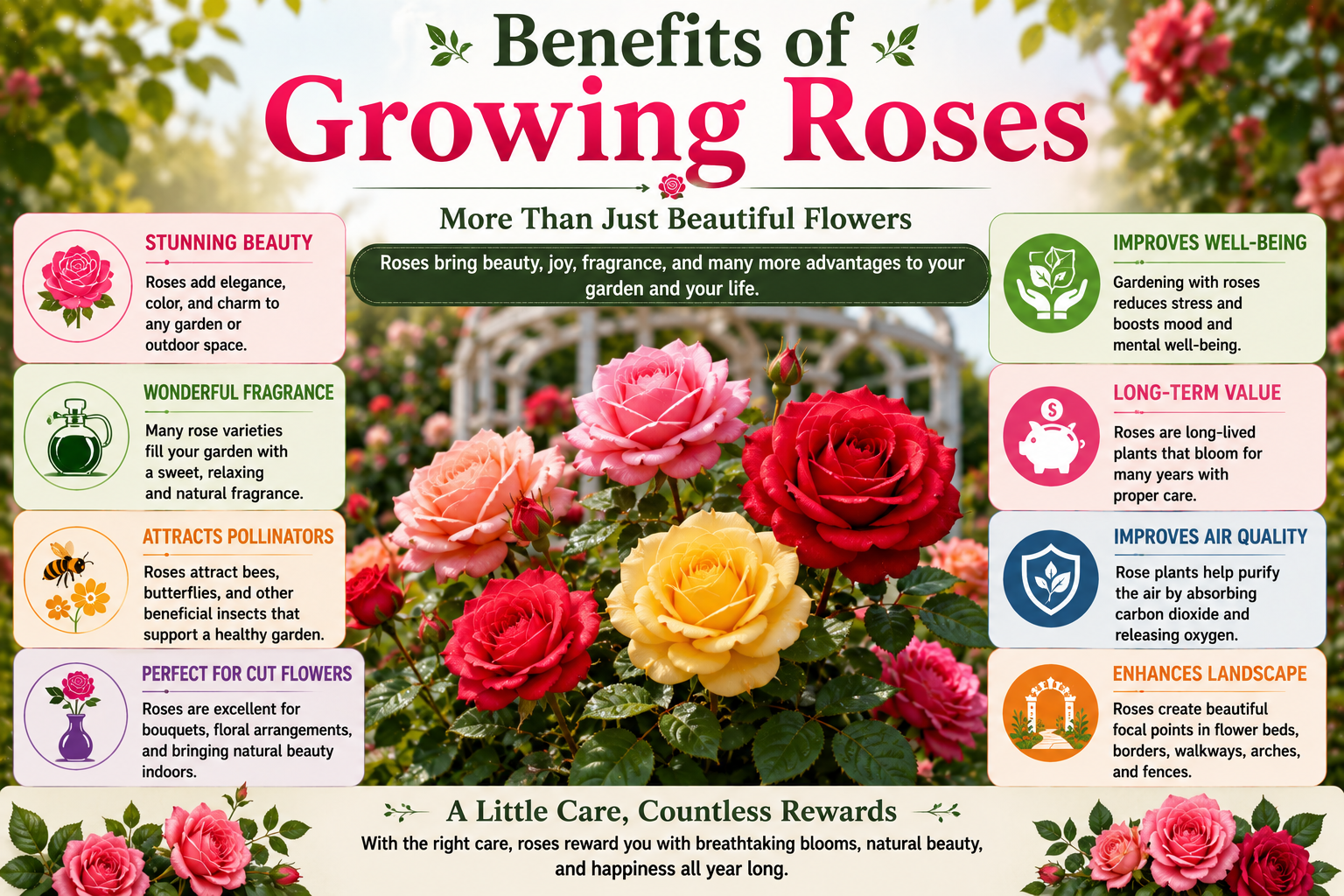
Growing roses offers many advantages beyond their beautiful appearance.
Beautiful Blooms Throughout the Season
Many modern rose varieties bloom repeatedly from late spring until the first frost.
Enhances Garden Beauty
Roses create elegant focal points in:
- Flower beds
- Garden borders
- Walkways
- Arches
- Pergolas
- Containers
Wonderful Fragrance
Many rose varieties produce sweet, pleasant scents that make outdoor spaces more enjoyable.
Attracts Pollinators
Open-flowered roses attract:
- Bees
- Butterflies
- Beneficial insects
These pollinators help support a healthy garden ecosystem.
Excellent Cut Flowers
Fresh roses make beautiful indoor floral arrangements and bouquets.
Choosing the Right Rose Variety
Selecting the right rose variety is one of the most important steps for success. Different types vary in size, bloom style, fragrance, and maintenance needs.
Consider the following factors before buying rose plants:
- Your climate
- Available sunlight
- Garden space
- Desired flower color
- Fragrance preference
- Disease resistance
- Blooming season
Choosing varieties suited to your local conditions helps ensure healthier plants and more flowers.
Easy Roses for Beginners
If you’re new to gardening, start with disease-resistant and low-maintenance varieties.
Beginner-Friendly Rose Types
- Knock Out Roses
- Drift Roses
- Floribunda Roses
- Shrub Roses
- David Austin English Roses
- Iceberg Roses
- Carefree Beauty Roses
- Oso Easy Roses
These varieties are hardy, bloom generously, and require less maintenance than traditional hybrid tea roses.
Types of Roses (Comparison Table)
| Rose Type | Best For | Maintenance | Bloom Style | Ideal Location |
|---|---|---|---|---|
| Hybrid Tea | Cut flowers | Moderate | Large single blooms | Flower beds |
| Floribunda | Continuous blooms | Easy | Flower clusters | Borders |
| Climbing Roses | Walls and trellises | Moderate | Large clusters | Arches and fences |
| Shrub Roses | Low maintenance | Easy | Abundant blooms | Landscapes |
| Miniature Roses | Containers | Easy | Small blooms | Pots and balconies |
| Ground Cover Roses | Slopes and edging | Low | Spreading blooms | Borders |
Best Time to Grow Roses
Timing plays a major role in helping roses establish healthy roots.
The ideal planting time depends on your climate:
- Spring: Best for most regions after the last frost.
- Fall: Suitable in warmer climates where winters are mild.
- Container-grown roses: Can often be planted throughout the growing season with proper watering.
Avoid planting during extreme heat or when the ground is frozen, as this can stress young plants.
Bare-Root Roses vs. Potted Roses
| Feature | Bare-Root Roses | Potted Roses |
|---|---|---|
| Planting Time | Late winter to early spring | Spring through fall |
| Cost | Usually less expensive | Slightly higher |
| Root Establishment | Strong once planted | Immediate growth |
| Availability | Seasonal | Available year-round |
| Best For | Experienced and budget-conscious gardeners | Beginners and quick planting |
Bare-root roses are economical and establish well, while potted roses are easier for beginners and provide instant garden appeal.
Essential Supplies You’ll Need
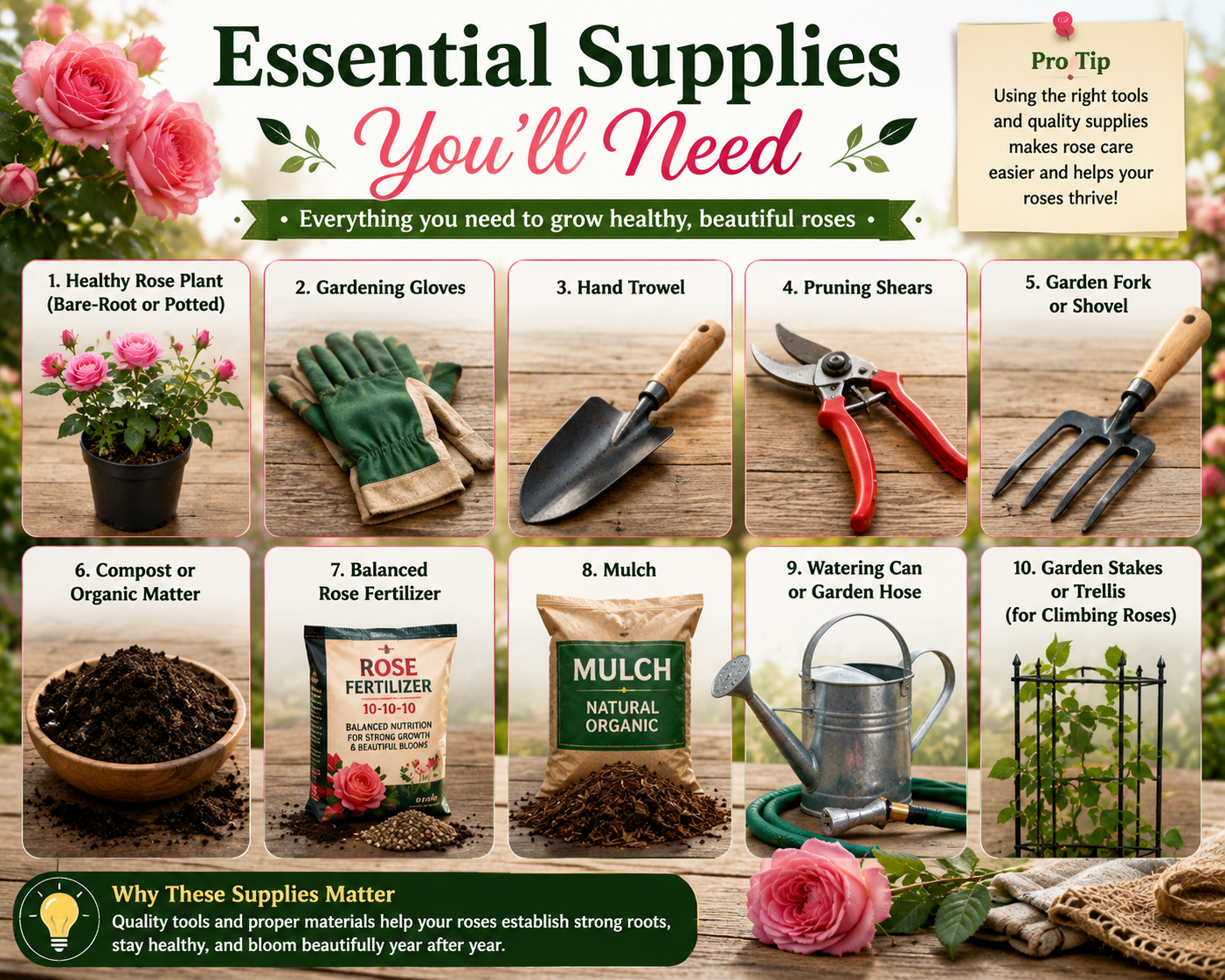
Having the right gardening tools makes it much easier to Grow Roses successfully. Investing in a few basic supplies will help your rose plants establish healthy roots and produce beautiful blooms throughout the growing season.
Basic Gardening Supplies
- Healthy rose plant (bare-root or potted)
- Gardening gloves
- Hand trowel
- Pruning shears
- Garden fork or shovel
- Compost or organic matter
- Balanced rose fertilizer
- Mulch
- Watering can or garden hose
- Garden stakes or trellis (for climbing roses)
Quality tools not only make planting easier but also help maintain healthy rose bushes for years to come.
Step-by-Step Guide to Grow Roses
Planting roses correctly gives them the best possible start. Follow these simple steps to encourage strong root development and abundant blooms.
Step 1: Select the Right Location
Choose a spot that receives at least 6–8 hours of direct sunlight every day. Roses thrive in sunny locations with good air circulation.
Avoid planting near large trees or shrubs that compete for water and nutrients.
Step 2: Prepare the Soil
Healthy soil is essential for vigorous rose growth.
Before planting:
- Loosen the soil to about 18 inches deep.
- Mix compost or well-rotted manure into the soil.
- Ensure good drainage.
- Remove weeds and stones.
Rich, well-draining soil allows roots to establish quickly.
Step 3: Dig the Planting Hole
Dig a hole that is:
- Twice as wide as the root ball
- Deep enough to spread the roots comfortably
For bare-root roses, create a small mound of soil in the center of the hole to support the roots.
Step 4: Plant the Rose
Place the rose in the hole carefully.
- Spread the roots gently.
- Position the graft union just above soil level in warm climates.
- In colder regions, place the graft union slightly below the soil surface.
Fill the hole with soil and gently firm it around the roots.
Step 5: Water Thoroughly
After planting, water deeply to eliminate air pockets and help the soil settle around the roots.
Keep the soil evenly moist during the first growing season.
Step 6: Apply Mulch
Spread a 2–3 inch layer of mulch around the base of the plant.
Benefits include:
- Conserves moisture
- Suppresses weeds
- Regulates soil temperature
- Improves soil quality
Keep mulch a few inches away from the main stem to prevent rot.
Best Soil for Roses
Healthy soil is one of the most important factors when you Grow Roses. Roses perform best in fertile, well-draining soil rich in organic matter.
Ideal Soil Conditions
- Well-draining loamy soil
- Rich in compost or aged manure
- Soil pH between 6.0 and 6.5
- Loose texture for healthy root growth
Adding compost every year helps improve both soil fertility and structure.
Soil Comparison Table
| Soil Type | Suitable for Roses | Recommendation |
|---|---|---|
| Loamy Soil | ⭐⭐⭐⭐⭐ Excellent | Best choice |
| Sandy Soil | ⭐⭐⭐ Good | Add compost to improve moisture retention |
| Clay Soil | ⭐⭐ Fair | Improve drainage with organic matter |
| Rocky Soil | ⭐ Poor | Not recommended without major soil improvement |
How to Water Roses Properly
Proper watering helps roses develop deep, healthy roots and produce more flowers.
Young roses require more frequent watering than established plants.
Best Watering Practices
- Water deeply once or twice each week.
- Water early in the morning.
- Keep leaves as dry as possible.
- Water at the base of the plant.
- Increase watering during hot weather.
- Reduce watering during rainy periods.
Deep watering encourages roots to grow downward, making plants more drought-resistant.
Sunlight Requirements
Sunlight directly affects flower production, plant health, and disease resistance.
Most roses need:
- 6–8 hours of direct sunlight daily
- Morning sunlight is ideal because it dries dew quickly.
- Good airflow around plants helps reduce fungal diseases.
Sunlight Guide
| Sunlight | Growth Performance |
|---|---|
| Full Sun (6–8 hours) | Excellent flowering |
| Partial Sun (4–6 hours) | Moderate blooms |
| Less than 4 hours | Poor flowering and weak growth |
If your garden receives limited sunlight, choose shade-tolerant shrub roses.
Fertilizing Roses
Roses are heavy feeders and benefit from regular fertilization during the growing season.
Fertilizer Tips
- Apply compost in early spring.
- Use a balanced rose fertilizer after new growth appears.
- Feed every 4–6 weeks during active growth.
- Stop fertilizing about 6–8 weeks before the first expected frost.
- Water thoroughly after applying fertilizer.
Avoid over-fertilizing, as too much nitrogen can produce lush foliage with fewer flowers.
Common Rose Growing Problems and Solutions
Even healthy roses may occasionally face pests or diseases. Regular inspection allows you to address problems before they become serious.
| Problem | Possible Cause | Solution |
|---|---|---|
| Yellow leaves | Overwatering or nutrient deficiency | Improve drainage and fertilize appropriately |
| Few blooms | Insufficient sunlight | Move to a sunnier location or prune nearby plants |
| Black spots on leaves | Black spot fungus | Remove infected leaves and apply a suitable fungicide |
| Powdery mildew | Poor air circulation | Space plants properly and avoid overhead watering |
| Aphids | Common garden pest | Spray with water or use insecticidal soap |
| Wilting | Underwatering or root damage | Water deeply and check root health |
| Root rot | Poor drainage | Improve soil drainage and avoid waterlogged conditions |
Inspect your roses every week for signs of pests, diseases, or nutrient deficiencies. Early treatment keeps plants healthy and encourages continuous blooming.
Pruning Roses
Pruning is one of the most important tasks when you Grow Roses. It helps remove dead or damaged branches, improves air circulation, and encourages more flowers throughout the growing season.
The best time to prune most roses is in early spring when new growth begins. Light pruning during summer can also encourage repeat blooming.
How to Prune Roses
- Use clean, sharp pruning shears.
- Remove dead, diseased, or damaged stems.
- Cut just above an outward-facing bud.
- Remove branches that cross or rub together.
- Thin the center of the plant to improve airflow.
- Deadhead faded flowers regularly to encourage new blooms.
Proper pruning keeps your rose bushes healthy, attractive, and productive year after year.
Seasonal Rose Care
Roses need different care throughout the year to stay healthy and produce continuous blooms.
Spring Care
It is the most important growing season for roses.
Spring Checklist
- Remove winter protection.
- Prune dead or damaged stems.
- Apply compost and balanced fertilizer.
- Add fresh mulch.
- Water regularly as temperatures rise.
- Watch for early signs of pests and diseases.
Summer Care
Hot days are when roses produce their most beautiful flowers.
Summer Checklist
- Water deeply once or twice each week.
- Deadhead spent blooms.
- Feed plants every 4–6 weeks.
- Remove weeds around the base.
- Check regularly for aphids, black spot, and powdery mildew.
Fall Care
It is the time to prepare roses for cooler weather.
Fall Checklist
- Reduce fertilizing.
- Continue watering during dry periods.
- Remove diseased leaves.
- Stop deadheading in late fall.
- Add mulch around the base before winter.
Winter Care
Cold protection depends on your local climate.
Winter Checklist
- Cover the base with mulch in cold regions.
- Protect climbing roses from freezing winds.
- Avoid heavy pruning during winter.
- Water occasionally during long dry spells if the ground is not frozen.
Seasonal maintenance helps roses stay strong and bloom beautifully year after year.
Common Mistakes to Avoid
Many rose-growing problems are caused by simple mistakes that can easily be avoided.
Common Mistakes
- Planting roses where they receive too little sunlight.
- Overwatering or allowing water to sit around the roots.
- Using poorly drained soil.
- Overcrowding plants, which reduces airflow.
- Applying too much fertilizer.
- Forgetting to prune regularly.
- Watering the leaves instead of the soil.
- Ignoring pests until they become severe.
- Skipping mulch during hot weather.
- Choosing rose varieties that are not suited to your climate.
Avoiding these mistakes will make it much easier to Grow Roses successfully.
Conclusion
Learning how to Grow Roses is easier than many gardeners expect. With the right variety, a sunny location, healthy soil, consistent watering, and regular pruning, roses can reward you with spectacular blooms for many years.
Whether you choose elegant hybrid tea roses, colorful floribundas, hardy shrub roses, or climbing roses, each type brings unique beauty to your garden. Following proper planting and seasonal care practices will help your plants stay healthy while producing vibrant flowers from spring through fall.
Even beginners can grow stunning roses by starting with disease-resistant varieties and maintaining a simple care routine. With patience and regular attention, your rose garden will become a colorful and fragrant highlight of your outdoor space.
Frequently Asked Questions (FAQs)
1. What is the best month to plant roses?
Spring is the best time in most regions because the weather is mild and plants have plenty of time to establish before summer. In warmer climates, early fall is also an excellent planting season.
2. How much sunlight do roses need?
Most roses require 6–8 hours of direct sunlight each day for healthy growth and abundant flowers.
3. How often should I water roses?
Water deeply once or twice a week, depending on weather conditions and soil moisture. Newly planted roses may need more frequent watering.
4. What type of soil is best for roses?
Roses grow best in fertile, well-draining loamy soil with a slightly acidic pH between 6.0 and 6.5.
5. Why are my roses not blooming?
Common reasons include insufficient sunlight, over-fertilizing with nitrogen, improper pruning, lack of nutrients, or watering issues.
6. How can I prevent diseases on my roses?
Plant roses in a sunny location with good air circulation, water at the base of the plant, remove infected leaves, and inspect plants regularly for early signs of disease.
7. Can roses grow in containers?
Yes. Many miniature, patio, and compact shrub roses thrive in large containers with quality potting soil, good drainage, and regular watering.
You can also check our article 25 Best Perennial Flowers