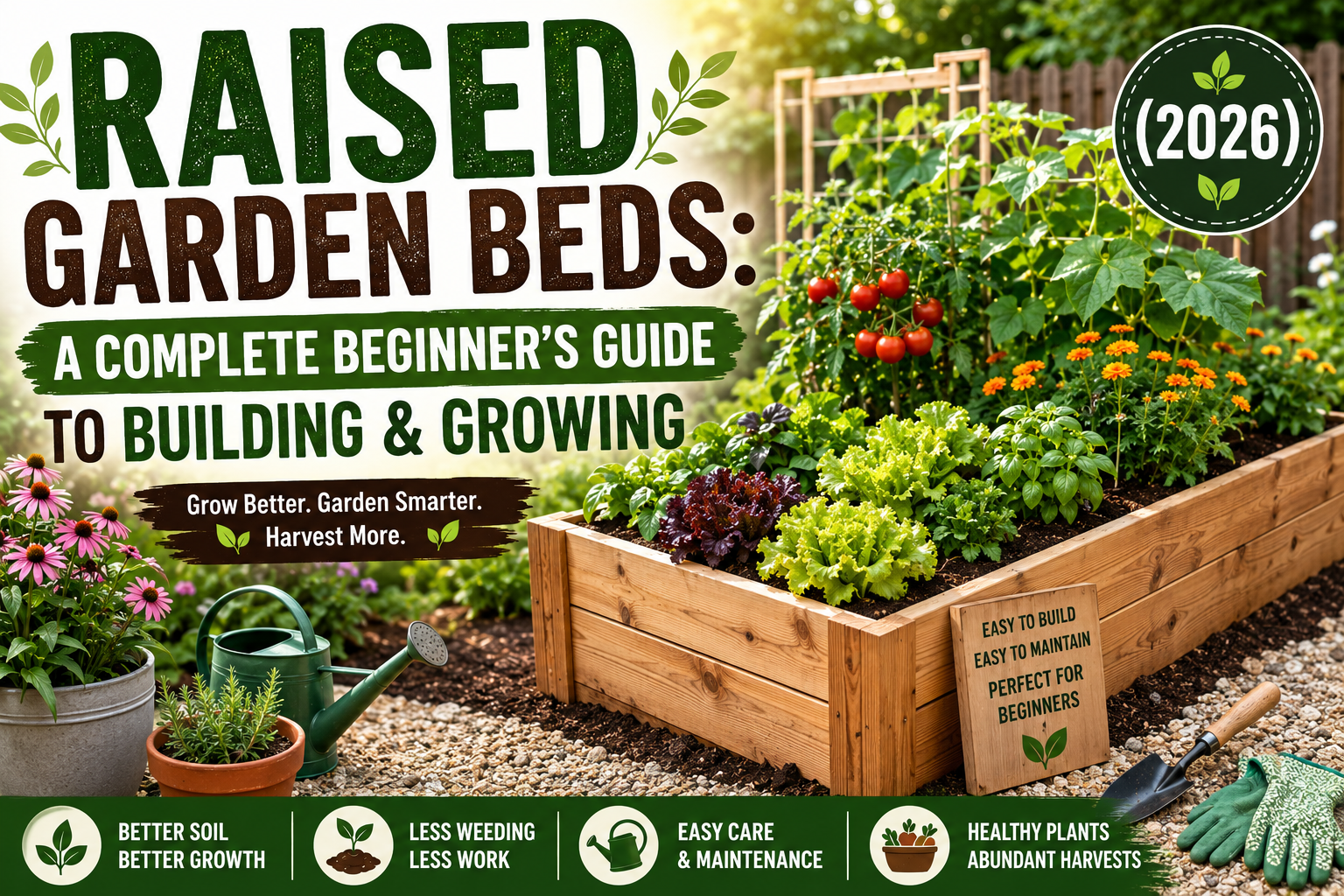
Raised Garden Beds are one of the easiest and most effective ways to start gardening, especially if you’re a beginner. Unlike traditional in-ground gardens, raised beds offer better soil control, improved drainage, and easier maintenance. Whether you want to grow fresh vegetables, colorful flowers, herbs, or small fruits, raised garden beds provide an organized and productive gardening space that can fit almost any backyard.
One of the biggest advantages of Raised Garden Beds is that they allow you to create ideal growing conditions, even if your existing soil is poor or rocky. They also reduce weed growth, improve accessibility, and help plants develop stronger root systems. With the right location, quality materials, and proper care, a raised garden bed can produce healthy plants and abundant harvests for many years.
In this beginner’s guide, you’ll learn why raised garden beds are so popular, explore their many benefits, discover how to choose the best location and materials, and compare them with traditional gardening methods. Whether you’re creating your first vegetable garden or upgrading your outdoor space, this guide will help you get started with confidence.
Why Choose Raised Garden Beds?
Many gardeners choose Raised Garden Beds because they make gardening simpler, more productive, and easier to manage. Instead of working directly with your backyard soil, you can create a customized growing area that provides the perfect environment for healthy plants.
Raised beds also warm up more quickly in spring, allowing you to start planting earlier than in-ground gardens. Because the soil drains better, plants are less likely to suffer from waterlogged roots after heavy rainfall.
Another advantage is that raised beds help organize your garden. Clearly defined planting areas make it easier to care for plants, maintain neat pathways, and reduce accidental damage from walking on the soil.
Reasons to Choose Raised Garden Beds
- Better soil quality and control
- Excellent drainage
- Earlier planting in spring
- Fewer weeds
- Easier access for planting and harvesting
- Improved root growth
- Attractive and organized garden layout
Whether your goal is growing vegetables, herbs, flowers, or small fruits, Raised Garden Beds provide a reliable and beginner-friendly gardening solution.
Benefits of Raised Garden Beds
There are many reasons why Raised Garden Beds have become increasingly popular among home gardeners. They offer practical benefits that improve both plant health and the overall gardening experience.
Better Soil Quality
One of the biggest advantages is the ability to choose your own soil. Instead of relying on poor native soil, you can fill your raised bed with a nutrient-rich mix that promotes healthy root development and vigorous plant growth.
Improved Drainage
Excess water drains away more efficiently in raised beds, reducing the risk of root rot and fungal diseases. This is especially helpful in areas with heavy clay soil or frequent rainfall.
Easier Maintenance
Since raised beds have clearly defined planting areas, tasks such as watering, weeding, fertilizing, and harvesting become much easier.
Fewer Weeds
Raised beds contain fresh, clean soil that usually has fewer weed seeds than existing garden soil. Adding mulch further helps suppress unwanted weeds.
Better Pest Control
Although no garden is completely pest-free, raised beds can make it easier to protect plants by installing row covers, netting, or fencing around the growing area.
Improved Accessibility
Raised beds reduce the need to bend or kneel while gardening, making them a comfortable option for older adults and people with limited mobility.
Longer Growing Season
Because the soil warms faster in spring and drains well after rain, gardeners can often begin planting earlier and continue growing later into the season.
Choosing the Best Location for Raised Garden Beds
Selecting the right location is one of the most important decisions you’ll make when building Raised Garden Beds. Even the best soil and healthiest plants cannot perform well if they don’t receive the proper growing conditions.
Ensure Plenty of Sunlight
Most vegetables, herbs, and flowering plants require at least 6 to 8 hours of direct sunlight each day.
Observe your backyard throughout the day to identify the sunniest location before building your raised beds.
Choose Level Ground
A flat surface helps distribute water evenly throughout the bed and prevents soil from washing away during heavy rain.
If your yard has a slight slope, level the area before installation.
Keep Water Nearby
Choose a location close to a garden hose, rain barrel, or irrigation system. Easy access to water saves time and encourages consistent watering.
Provide Good Air Circulation
Proper airflow helps leaves dry more quickly after rain or watering, reducing the risk of fungal diseases.
Avoid placing raised beds directly against solid walls or dense hedges that block air movement.
Leave Room to Walk
Plan enough space between raised beds so you can comfortably walk, water, weed, and harvest without stepping on the growing soil.
Tips for Choosing the Best Location
- Select a sunny area with at least 6–8 hours of sunlight.
- Build on level ground whenever possible.
- Keep the garden close to a water source.
- Ensure good airflow around plants.
- Leave wide pathways for easy maintenance.
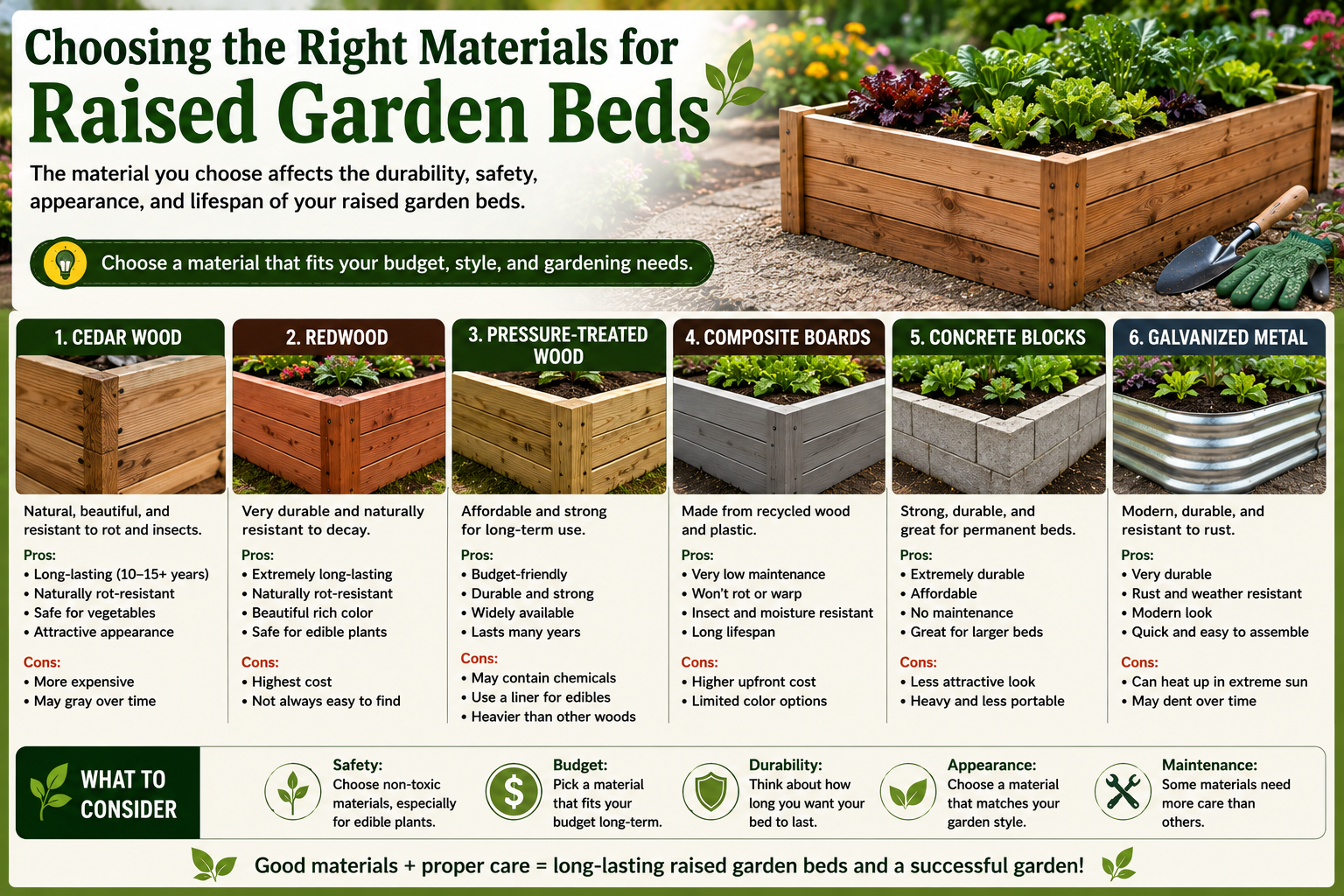
Choosing the Right Materials for Raised Garden Beds
The materials you choose affect the durability, appearance, and lifespan of your Raised Garden Beds. Fortunately, there are several excellent options suitable for beginners.
Cedar Wood
Cedar is one of the most popular materials because it naturally resists rot, insects, and moisture. It can last for many years without chemical treatment.
Redwood
Redwood is another long-lasting option with excellent resistance to decay. Although it costs more than other woods, its durability makes it a worthwhile investment.
Pressure-Treated Wood
Modern pressure-treated lumber is commonly used for raised beds because it is durable and affordable. If growing edible crops, many gardeners prefer lining the inside with landscape fabric for added peace of mind.
Composite Boards
Composite materials made from recycled wood fibers and plastic require very little maintenance. They resist rot, warping, and insect damage, making them ideal for long-term use.
Concrete Blocks
Concrete blocks create sturdy, long-lasting raised beds that require almost no maintenance. They are especially useful for permanent garden designs.
Galvanized Metal
Galvanized steel raised beds have become increasingly popular due to their durability, modern appearance, and resistance to rust.
Best Materials at a Glance
- Cedar – Naturally rot resistant and attractive.
- Redwood – Premium durability and long lifespan.
- Pressure-treated wood – Affordable and strong.
- Composite boards – Low maintenance.
- Concrete blocks – Extremely durable.
- Galvanized steel – Modern, weather resistant, and long-lasting.
Choose a material that fits both your budget and the style of your garden.
Comparison Table: Raised Garden Beds vs. In-Ground Gardens vs. Container Gardening
| Feature | Raised Garden Beds | In-Ground Gardens | Container Gardening |
|---|---|---|---|
| Soil Quality | Excellent control | Depends on existing soil | Excellent control |
| Drainage | Excellent | Varies by soil type | Very good |
| Weed Control | Easy | Moderate to difficult | Easy |
| Initial Cost | Moderate | Low | Low to moderate |
| Maintenance | Low | Moderate | Moderate |
| Accessibility | Excellent | Moderate | Excellent |
| Best For | Vegetables, herbs, flowers | Large gardens | Small spaces, patios, balconies |
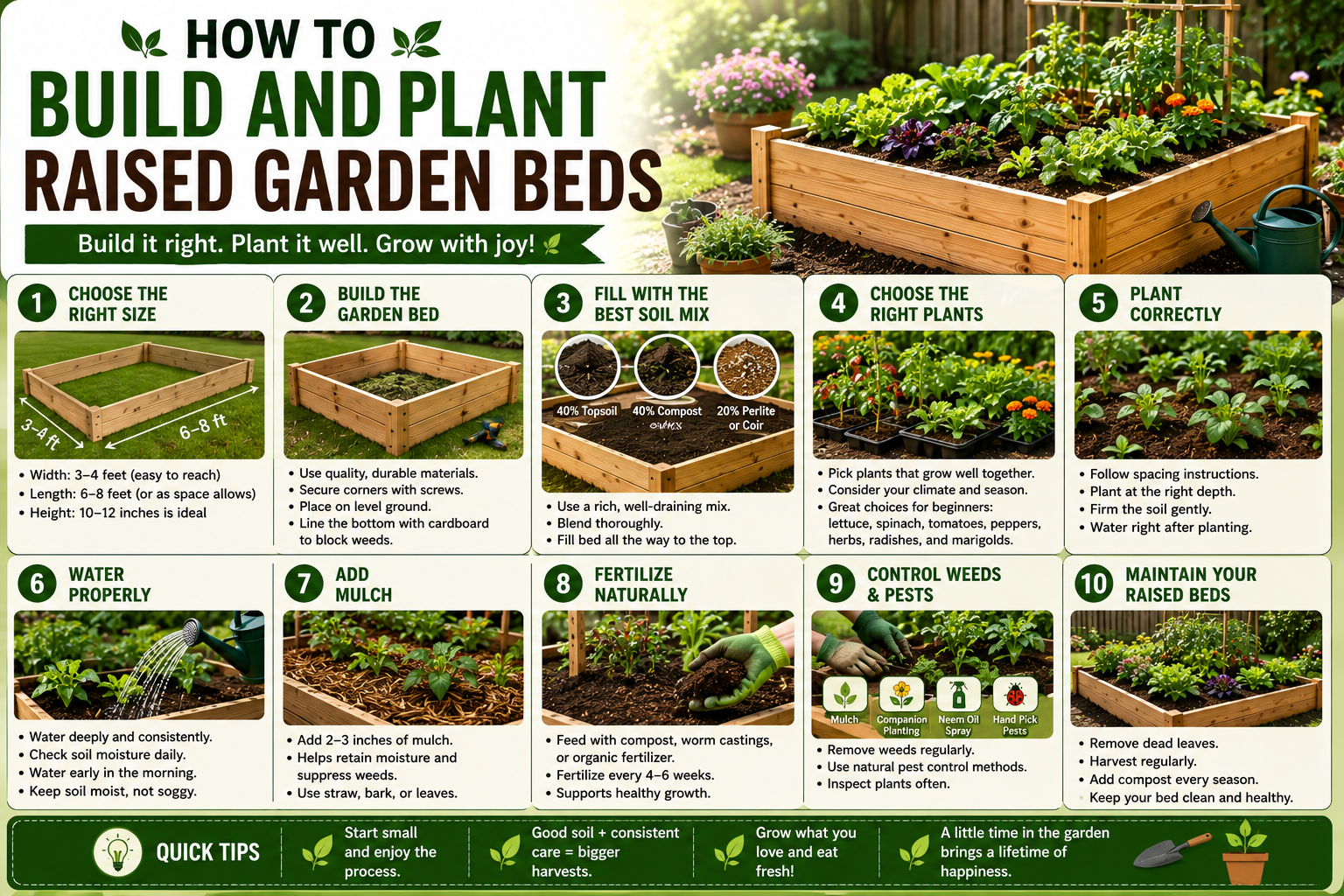
How to Build and Plant Raised Garden Beds
Building Raised Garden Beds is easier than many beginners expect. By following a few simple steps, you can create a productive garden that supports healthy plant growth and makes gardening more enjoyable. Each step below explains why it’s important, how to do it correctly, helpful beginner tips, and common mistakes to avoid.
Step #1 – Choose the Right Size
Selecting the right size is the first step toward successful Raised Garden Beds. A properly sized bed makes planting, watering, weeding, and harvesting much easier.
Why It’s Important
If the bed is too wide, reaching the center becomes difficult without stepping on the soil. Walking on the soil can compact it and reduce healthy root growth.
Simple Instructions
- Keep the width between 3 and 4 feet so you can comfortably reach the middle from either side.
- Choose a length that fits your available space, such as 6 to 8 feet.
- Make the bed 10–12 inches deep for most vegetables and flowers.
Beginner-Friendly Tips
- Start with one raised bed instead of several.
- Leave at least 2–3 feet between beds for easy access.
- Plan pathways before building.
Common Mistakes to Avoid
- Making beds too wide.
- Building beds that are too shallow.
- Placing beds too close together.
Step #2 – Build the Garden Bed
A sturdy frame keeps your soil contained and gives your garden a neat, organized appearance.
Why It’s Important
Strong construction helps your Raised Garden Beds last for many years and prevents the sides from shifting or collapsing.
Simple Instructions
- Choose durable materials such as cedar, redwood, galvanized steel, or concrete blocks.
- Cut materials to the desired size.
- Secure corners with weather-resistant screws or brackets.
- Place the frame on level ground.
Beginner-Friendly Tips
- Use a carpenter’s level before filling the bed.
- Line the bottom with cardboard to suppress weeds.
- Wear gloves and safety glasses while building.
Common Mistakes to Avoid
- Using untreated wood that rots quickly.
- Building on uneven ground.
- Forgetting to secure the corners firmly.
Step #3 – Fill with the Best Soil Mix
Healthy soil is the foundation of productive Raised Garden Beds. A nutrient-rich soil mix supports strong roots and healthy plant growth.
Why It’s Important
Plants rely on healthy soil for water, nutrients, and proper drainage. Poor soil can limit growth and reduce harvests.
Simple Instructions
Fill your raised bed with a balanced mixture of:
- 40% high-quality topsoil
- 40% compost
- 20% materials that improve drainage, such as coarse sand or coconut coir
Mix everything thoroughly before planting.
Beginner-Friendly Tips
- Use fresh compost whenever possible.
- Remove large rocks and debris.
- Test soil pH if growing vegetables.
Common Mistakes to Avoid
- Filling beds with heavy clay soil.
- Using poor-quality garden soil.
- Forgetting to add organic matter.
Step #4 – Choose the Right Plants
Choosing suitable plants ensures your Raised Garden Beds remain productive throughout the growing season.
Why It’s Important
Plants with similar sunlight, water, and nutrient requirements grow better together and are easier to maintain.
Simple Instructions
Good beginner choices include:
- Tomatoes
- Lettuce
- Spinach
- Carrots
- Peppers
- Cucumbers
- Basil
- Marigolds
Group plants with similar growing needs.
Beginner-Friendly Tips
- Start with easy-to-grow crops.
- Read plant spacing instructions.
- Mix flowers with vegetables to attract pollinators.
Common Mistakes to Avoid
- Planting too many varieties at once.
- Ignoring sunlight requirements.
- Choosing plants that outgrow the bed.
Step #5 – Plant Correctly
Proper planting gives seedlings the best chance to establish healthy roots.
Why It’s Important
Correct spacing allows plants to receive enough sunlight, airflow, and nutrients.
Simple Instructions
- Follow seed packet or plant label recommendations.
- Plant at the correct depth.
- Firm the soil gently around each plant.
- Water immediately after planting.
Beginner-Friendly Tips
- Plant during the cooler part of the day.
- Label each row or plant.
- Leave room for mature growth.
Common Mistakes to Avoid
- Planting too deeply.
- Crowding plants together.
- Forgetting to water after planting.
Step #6 – Water Properly
Consistent watering is essential for healthy Raised Garden Beds because raised soil dries out faster than in-ground gardens.
Why It’s Important
Proper watering promotes strong roots and steady plant growth while reducing stress during hot weather.
Simple Instructions
- Water deeply at the base of plants.
- Water early in the morning.
- Check soil moisture before watering again.
Beginner-Friendly Tips
- Install a drip irrigation system if possible.
- Water less frequently but more deeply.
- Adjust watering based on rainfall.
Common Mistakes to Avoid
- Overwatering.
- Wetting leaves unnecessarily.
- Watering during the hottest part of the day.
Step #7 – Add Mulch
Mulch protects both the soil and the plants in your Raised Garden Beds.
Why It’s Important
Mulch helps retain moisture, suppress weeds, regulate soil temperature, and improve soil quality as organic mulch breaks down.
Simple Instructions
Apply a 2–3-inch layer of mulch around plants without covering their stems.
Suitable mulch materials include:
- Straw
- Wood chips
- Shredded bark
- Compost
- Pine needles
Beginner-Friendly Tips
- Refresh mulch each season.
- Keep mulch slightly away from stems.
- Use clean, weed-free mulch.
Common Mistakes to Avoid
- Applying mulch too thickly.
- Covering plant stems.
- Using mulch containing weed seeds.
Step #8 – Fertilize Naturally
Plants in Raised Garden Beds need nutrients throughout the growing season to produce healthy foliage, flowers, and vegetables.
Why It’s Important
Natural fertilizers improve soil health while providing nutrients gradually over time.
Simple Instructions
Feed plants using:
- Compost
- Well-rotted manure
- Worm castings
- Fish emulsion
- Organic slow-release fertilizer
Apply according to product directions.
Beginner-Friendly Tips
- Fertilize in spring and mid-season.
- Water after feeding plants.
- Avoid excessive fertilizer.
Common Mistakes to Avoid
- Overfertilizing.
- Applying fertilizer to dry soil.
- Ignoring nutrient deficiencies.
Step #9 – Control Weeds and Pests
Healthy Raised Garden Beds experience fewer weed problems than traditional gardens, but regular monitoring is still important.
Why It’s Important
Controlling weeds and pests prevents competition for water and nutrients while protecting your crops.
Simple Instructions
- Pull weeds regularly.
- Inspect plants weekly.
- Remove damaged leaves.
- Encourage beneficial insects.
- Use natural pest control methods when necessary.
Beginner-Friendly Tips
- Mulch helps reduce weeds.
- Rotate crops each season.
- Plant companion flowers like marigolds.
Common Mistakes to Avoid
- Allowing weeds to spread.
- Ignoring early pest damage.
- Using harsh chemicals unnecessarily.
Step #10 – Maintain Your Raised Garden Beds
Regular maintenance keeps your Raised Garden Beds productive and attractive throughout the year.
Why It’s Important
Routine care prevents small problems from becoming major issues and helps plants stay healthy.
Simple Instructions
- Remove dead leaves.
- Harvest vegetables regularly.
- Tighten loose screws.
- Replace worn mulch.
- Add compost each growing season.
Beginner-Friendly Tips
- Spend a few minutes in the garden each week.
- Keep gardening tools clean.
- Record what grows best for future seasons.
Common Mistakes to Avoid
- Neglecting routine maintenance.
- Allowing plants to become overcrowded.
- Forgetting seasonal soil improvements.
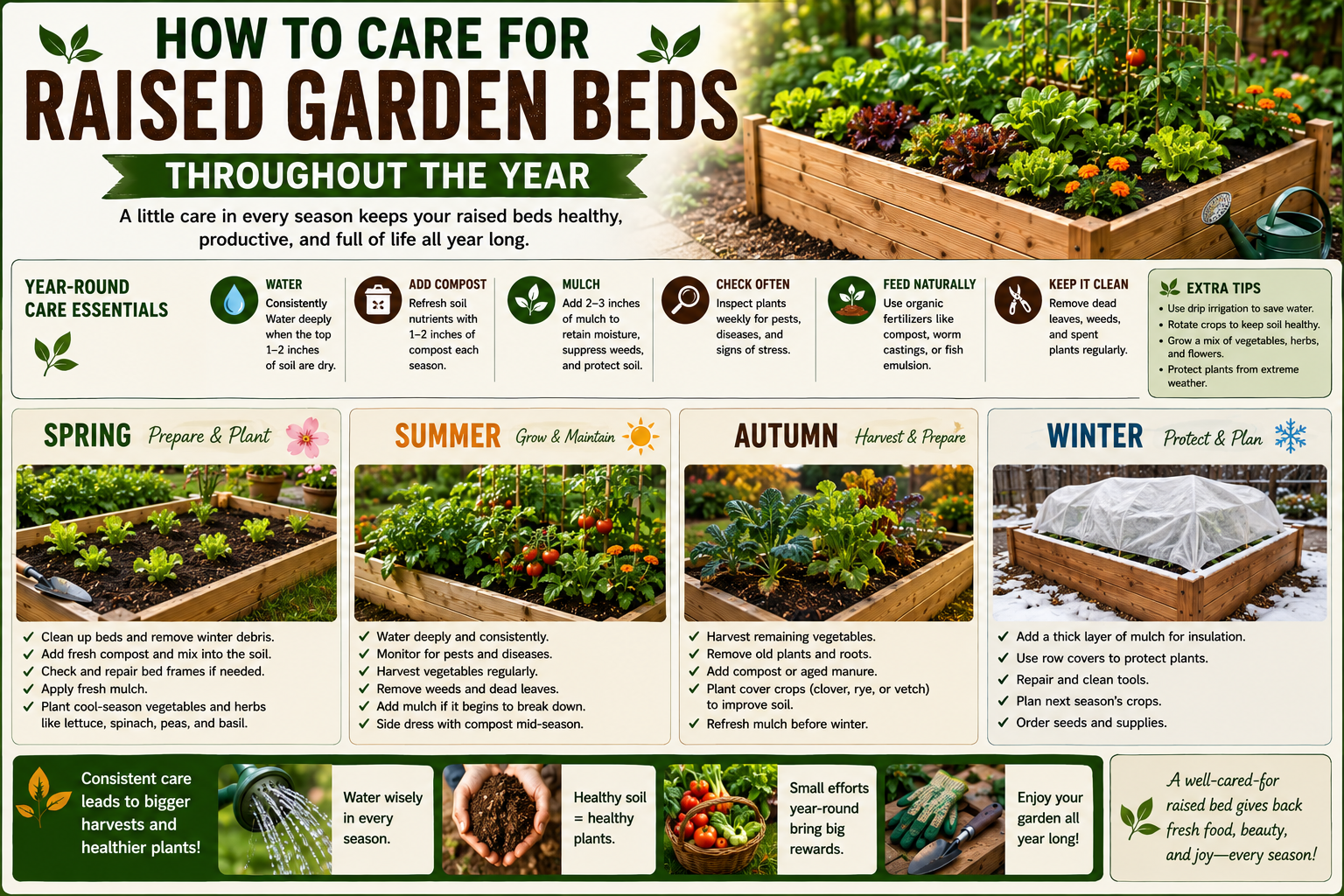
How to Care for Raised Garden Beds Throughout the Year
Proper care is the key to keeping Raised Garden Beds productive and healthy year after year. While raised beds require less maintenance than traditional gardens, they still need regular attention to ensure plants receive enough water, nutrients, and protection from pests and changing weather.
By following a simple year-round care routine, you can enjoy healthy vegetables, herbs, flowers, and abundant harvests in every growing season.
Water Consistently
Because soil in Raised Garden Beds drains well, it can dry out faster than in-ground gardens, especially during hot weather.
Check the soil regularly by inserting your finger about 2 inches deep. If it feels dry, water thoroughly at the base of the plants.
Watering Tips
- Water early in the morning.
- Water deeply rather than lightly.
- Avoid wetting the leaves.
- Reduce watering after heavy rainfall.
- Use drip irrigation or a soaker hose to conserve water.
Add Compost Every Season
Plants remove nutrients from the soil as they grow. Replacing these nutrients helps maintain fertile soil and healthy crops.
Spread a 1–2-inch layer of compost over your Raised Garden Beds at the beginning of each growing season and gently mix it into the top layer of soil.
Refresh Mulch
Organic mulch helps retain moisture, suppress weeds, and regulate soil temperature.
Suitable mulch materials include:
- Straw
- Shredded bark
- Wood chips
- Compost
- Pine needles
Replace mulch whenever it becomes thin or begins to decompose.
Inspect Plants Regularly
Walk through your garden at least once a week and check for signs of problems.
Look for:
- Yellow leaves
- Wilting plants
- Insect damage
- Weed growth
- Fungal diseases
Early detection makes problems much easier to solve.
Feed Plants Naturally
Healthy soil produces healthy plants.
Use natural fertilizers such as:
- Compost
- Worm castings
- Fish emulsion
- Organic slow-release fertilizer
Avoid applying excessive fertilizer, as too much nitrogen encourages leafy growth instead of flowers or vegetables.
Common Raised Garden Bed Gardening Mistakes
Even experienced gardeners occasionally make mistakes that reduce the productivity of Raised Garden Beds. Fortunately, most problems are easy to avoid with proper planning.
Building Beds That Are Too Wide
Beds wider than four feet make it difficult to reach the center without stepping on the soil.
Compacted soil restricts root growth and reduces drainage.
Using Poor Soil
The quality of your soil determines the success of your garden.
Avoid filling raised beds with heavy clay or low-quality soil. Instead, use a balanced mix of compost, topsoil, and organic matter.
Overwatering
Although raised beds drain well, watering too frequently can still cause:
- Root rot
- Yellow leaves
- Fungal diseases
- Weak plant growth
Always check soil moisture before watering.
Planting Too Closely
Crowded plants compete for sunlight, nutrients, and water.
Proper spacing improves airflow and reduces the risk of diseases.
Always follow the recommended spacing on seed packets or plant labels.
Ignoring Crop Rotation
Growing the same vegetables in the same location every year increases the risk of pests and soil nutrient depletion.
Rotate plant families each season to maintain healthy soil and reduce disease problems.
Skipping Regular Maintenance
Small gardening tasks performed consistently prevent larger problems later.
Spend a few minutes each week:
- Pulling weeds
- Removing damaged leaves
- Harvesting ripe vegetables
- Checking for pests
- Watering when necessary
Routine maintenance keeps Raised Garden Beds productive throughout the season.
Seasonal Gardening Tips
Each season requires different gardening tasks to keep Raised Garden Beds in excellent condition.
Spring
It is the ideal time to prepare your raised beds for planting.
Spring Checklist
- Remove winter debris.
- Add fresh compost.
- Repair damaged bed frames.
- Apply mulch.
- Plant cool-season vegetables and flowers.
Summer
Warm weather is the busiest growing season.
Summer Checklist
- Water deeply during dry weather.
- Remove weeds regularly.
- Harvest vegetables often.
- Watch for insects and diseases.
- Add additional mulch if necessary.
Autumn
It is the perfect time to prepare your garden for winter.
Autumn Checklist
- Remove old plants.
- Add compost to replenish nutrients.
- Plant cover crops if desired.
- Clean garden tools.
- Refresh mulch before winter.
Winter
Although gardening slows down, winter is an excellent season for planning.
Winter Checklist
- Protect beds with mulch or row covers.
- Repair wooden frames if needed.
- Sharpen and clean tools.
- Plan next year’s crop rotation.
- Order seeds for spring planting.
Following these seasonal tasks will help your Raised Garden Beds remain healthy and productive year after year.
Conclusion
Raised Garden Beds are one of the best gardening solutions for beginners and experienced gardeners alike. They provide better drainage, improved soil quality, easier maintenance, and greater control over growing conditions than many traditional gardening methods.
By choosing a sunny location, using high-quality materials, filling your beds with nutrient-rich soil, and following proper watering and maintenance practices, you can grow healthy vegetables, herbs, flowers, and fruits with confidence. Regular composting, mulching, crop rotation, and seasonal care will keep your raised beds productive for many years.
Remember that successful gardening is a journey of learning and improvement. Start with a simple design, choose easy-to-grow plants, and build your experience one season at a time. With patience and consistent care, your Raised Garden Beds will become a beautiful and productive part of your backyard, providing fresh harvests and enjoyment throughout the year.
Frequently Asked Questions (FAQs)
1. What are the benefits of raised garden beds?
Raised Garden Beds offer better drainage, healthier soil, fewer weeds, improved accessibility, easier maintenance, and higher productivity compared to many traditional in-ground gardens.
2. How deep should a raised garden bed be?
For most vegetables and flowers, a depth of 10 to 12 inches is sufficient. Root vegetables and larger plants may benefit from beds that are 12 to 18 inches deep.
3. What is the best soil mix for raised garden beds?
A high-quality mix typically contains about 40% topsoil, 40% compost, and 20% materials such as coarse sand or coconut coir to improve drainage and soil structure.
4. What vegetables grow best in raised garden beds?
Tomatoes, lettuce, spinach, carrots, peppers, cucumbers, beans, onions, radishes, and herbs like basil and parsley all grow well in Raised Garden Beds.
5. How often should I water raised garden beds?
Water deeply whenever the top 1–2 inches of soil feel dry. During hot summer weather, raised beds may require watering several times a week, depending on rainfall and plant type.
6. How can I keep weeds out of raised garden beds?
Apply organic mulch, remove weeds while they are small, use clean soil and compost, and avoid allowing weeds to produce seeds.
7. Can beginners build raised garden beds?
Yes. Raised Garden Beds are one of the easiest gardening projects for beginners. With basic tools, quality materials, and proper planning, most people can build and plant a raised bed in a single weekend.
You can also check our article Shady Backyards: 10 Best Plants for a Beautiful Shade Garden