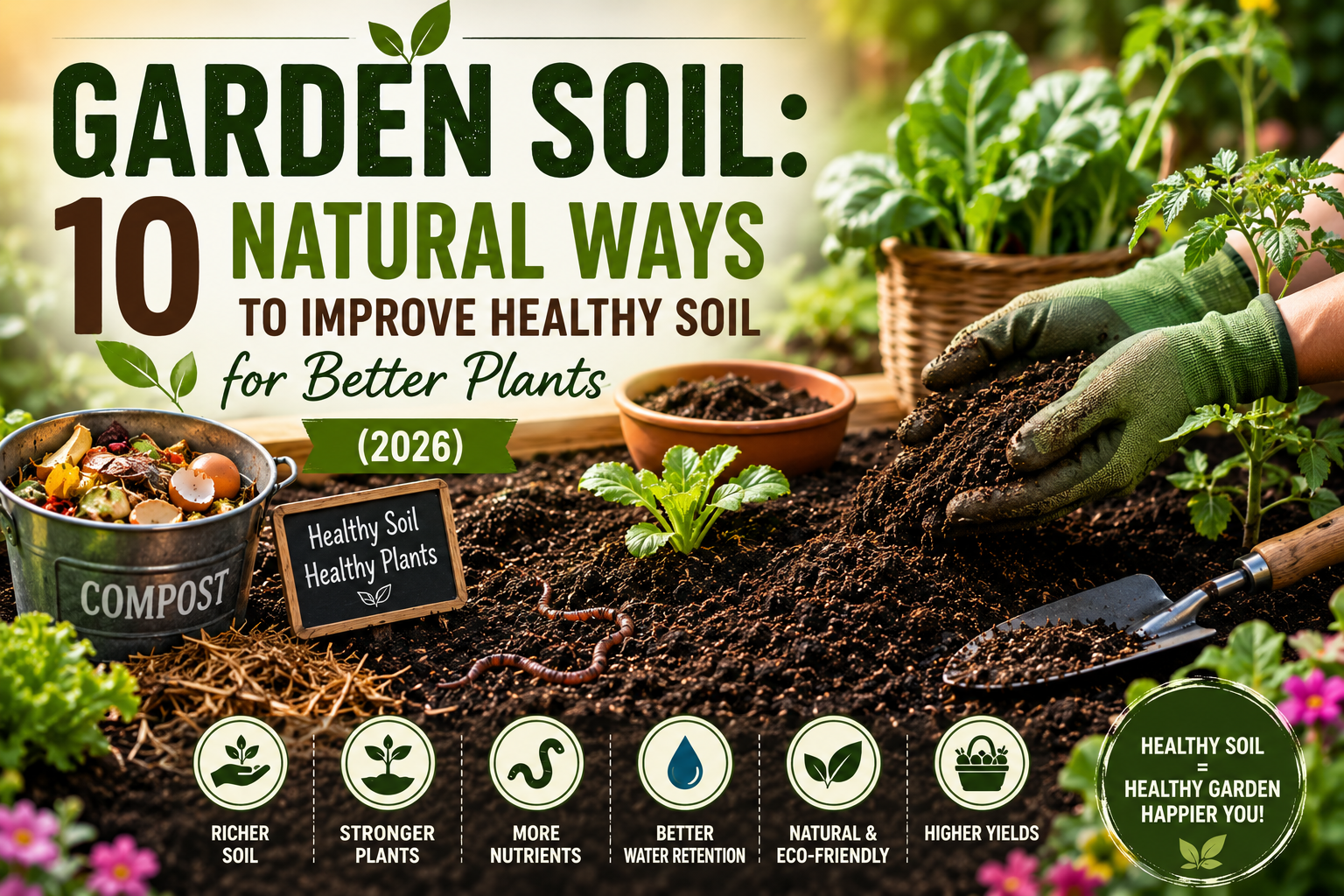
Healthy Garden Soil is the foundation of every successful garden. Whether you’re growing vegetables, flowers, herbs, or shrubs, the quality of your soil directly affects how well your plants grow. Rich, fertile soil provides essential nutrients, holds the right amount of moisture, and allows roots to develop properly. Unfortunately, many gardens have poor soil that is compacted, sandy, or lacking in nutrients, making it difficult for plants to thrive.
The good news is that you don’t need expensive products or harsh chemicals to improve your Garden Soil. Natural methods such as adding compost, using organic mulch, planting cover crops, and encouraging beneficial soil organisms can gradually transform poor soil into a healthy growing environment. These techniques not only improve soil structure but also increase fertility, support earthworms and beneficial microbes, and help plants become stronger and more resistant to pests and diseases.
In this guide, you’ll learn why healthy Garden Soil matters, how to identify common soil problems, and the different types of garden soil. You’ll also discover practical, beginner-friendly methods to naturally improve your soil and create a thriving, productive garden for years to come.
Why Healthy Garden Soil Matters
Healthy Garden Soil is much more than just dirt. It is a living ecosystem filled with beneficial microorganisms, organic matter, earthworms, and nutrients that work together to support plant growth. When your soil is healthy, plants develop stronger roots, absorb nutrients more efficiently, and produce healthier flowers, vegetables, and fruits.
Improving your garden soil naturally also benefits the environment by reducing the need for chemical fertilizers and helping the soil retain water more effectively.
Benefits of Healthy Garden Soil
- Promotes stronger root development.
- Improves water retention and drainage.
- Supplies essential nutrients naturally.
- Encourages beneficial earthworms and microorganisms.
- Reduces soil erosion.
- Produces healthier vegetables, flowers, and herbs.
- Increases resistance to pests and diseases.
- Supports long-term soil fertility.
Investing time in improving your Garden Soil today will reward you with healthier plants and better harvests for many growing seasons.
Signs Your Garden Soil Needs Improvement
Before improving your Garden Soil, it’s important to identify whether it has problems. Healthy soil should feel loose, smell earthy, and drain well. If your plants struggle to grow, the soil may need attention.
Poor Plant Growth
If plants remain small, produce few flowers, or have yellow leaves despite proper watering, your soil may lack essential nutrients.
Water Drains Too Quickly
Sandy soil often allows water to pass through too fast, preventing plant roots from absorbing enough moisture.
Water Stays on the Surface
Clay soil may become compacted, causing water to pool after rainfall or irrigation. Poor drainage can lead to root rot and other plant diseases.
Hard, Compacted Soil
If digging is difficult or plant roots struggle to spread, your soil is likely compacted and needs organic matter to improve its structure.
Few Earthworms
Earthworms are excellent indicators of healthy Garden Soil. If you rarely see them while digging, your soil may lack organic material and biological activity.
Common Signs Your Garden Soil Needs Improvement
- Slow or weak plant growth.
- Yellow or discolored leaves.
- Water pooling after rain.
- Dry soil that cracks easily.
- Hard, compacted ground.
- Few earthworms.
- Poor vegetable or flower production.
Recognizing these signs early allows you to improve soil before they seriously affect your garden.
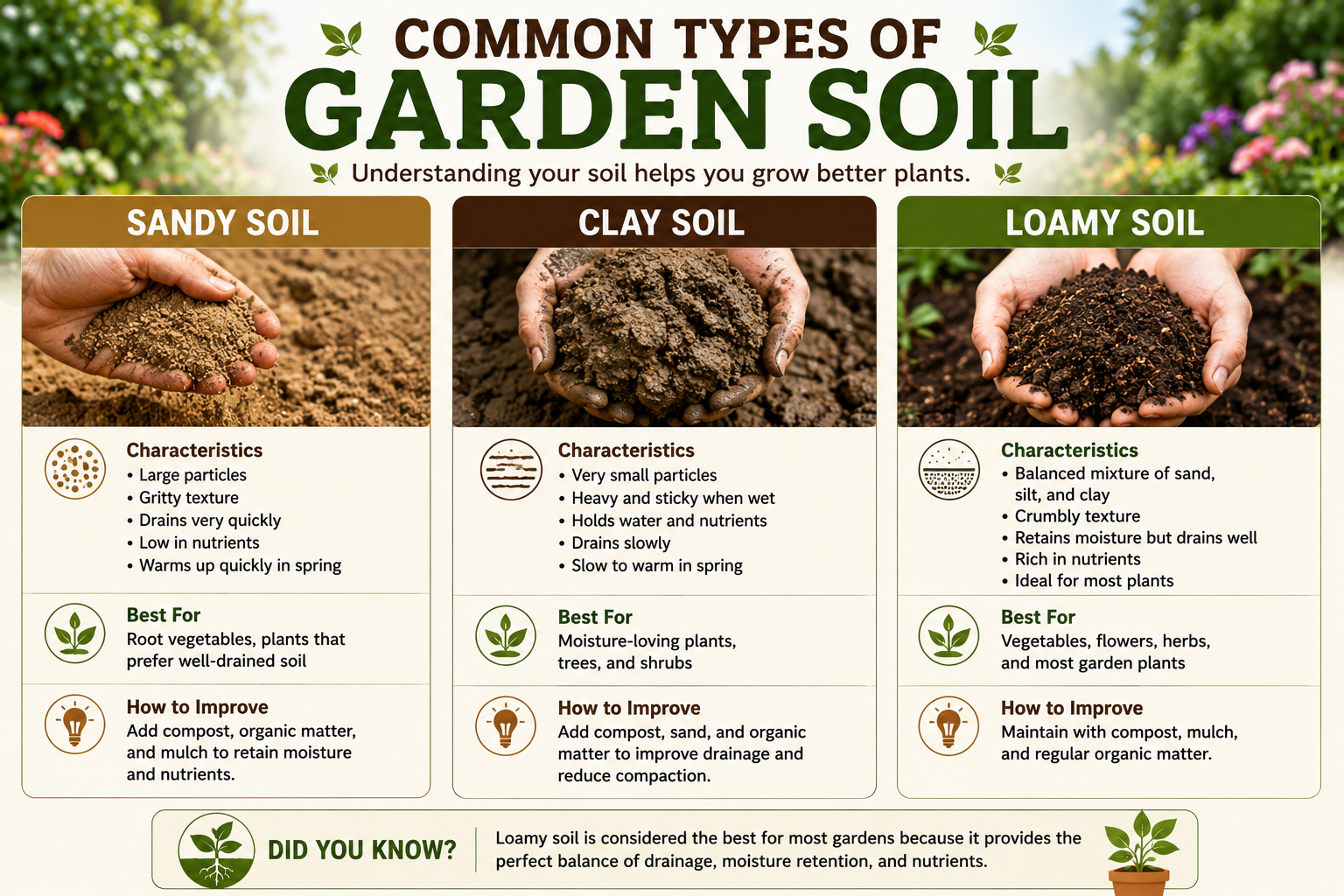
Common Types of Garden Soil
Understanding your soil type helps you choose the best methods for improving Garden Soil naturally. Most gardens contain one of the following soil types.
Sandy Soil
Sandy soil contains large particles that allow water to drain quickly.
Characteristics
- Loose texture.
- Excellent drainage.
- Low nutrient retention.
- Warms quickly in spring.
- Easy to cultivate.
Best Improvement Methods
- Add compost regularly.
- Apply organic mulch.
- Mix in aged manure.
- Water more frequently during dry weather.
Clay Soil
Clay soil contains very small particles that hold water and nutrients but often become compacted.
Characteristics
- Heavy texture.
- Poor drainage.
- Slow warming in spring.
- Rich in nutrients.
- Difficult to work when wet.
Best Improvement Methods
- Add compost each season.
- Use organic mulch.
- Avoid working wet soil.
- Grow cover crops to improve structure.
Loamy Soil
Loamy soil is considered the ideal Garden Soil because it combines sand, silt, and clay in balanced proportions.
Characteristics
- Soft, crumbly texture.
- Excellent drainage.
- High nutrient content.
- Good moisture retention.
- Easy to cultivate.
Best Improvement Methods
- Continue adding compost annually.
- Maintain mulch.
- Rotate crops.
- Avoid excessive tilling.
Although loamy soil requires the least improvement, regular organic care helps maintain its fertility.
Comparison Table: Sandy Soil vs. Clay Soil vs. Loamy Soil
| Feature | Sandy Soil | Clay Soil | Loamy Soil |
|---|---|---|---|
| Texture | Loose and gritty | Heavy and sticky | Soft and crumbly |
| Drainage | Very fast | Slow | Excellent |
| Nutrient Retention | Low | High | High |
| Water Retention | Low | Very high | Balanced |
| Ease of Digging | Easy | Difficult | Easy |
| Best For | Root vegetables with soil improvement | Moisture-loving plants after amendment | Most vegetables, flowers, herbs, and fruits |
| Improvement Needed | Add compost and organic matter | Improve drainage and reduce compaction | Maintain fertility with compost |
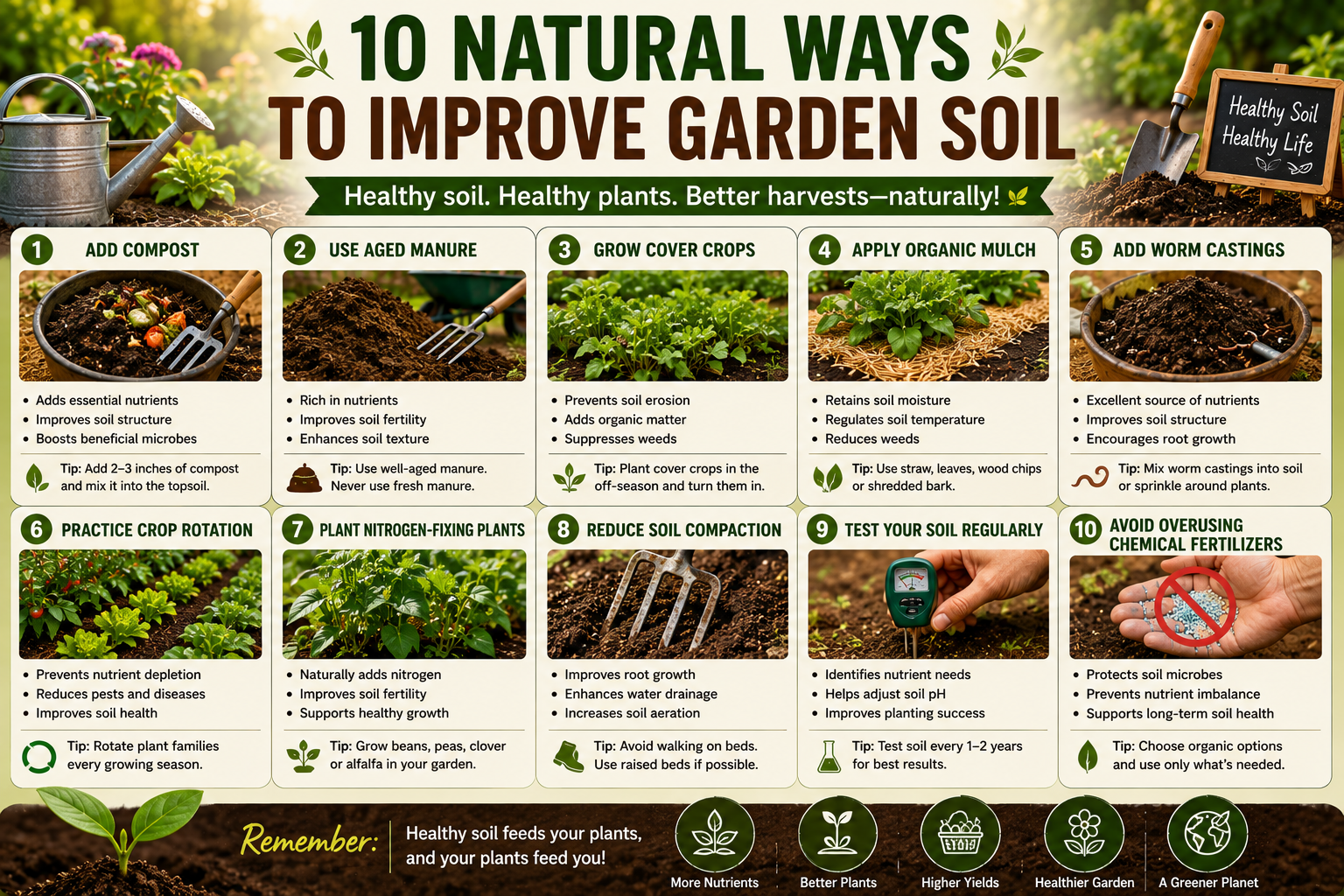
10 Natural Ways to Improve Garden Soil
Improving Garden Soil naturally is one of the best investments you can make for a healthy and productive garden. Organic methods not only increase soil fertility but also improve its structure, encourage beneficial microorganisms, and create an ideal environment for strong plant growth. The following ten methods are simple, affordable, and perfect for beginners.
Method #1 – Add Compost
Compost is often called “black gold” because it is one of the most effective ways to improve Garden Soil naturally. It enriches the soil with nutrients while improving its ability to hold moisture and drain excess water.
Why It’s Important
Compost feeds beneficial microorganisms and provides plants with a steady supply of nutrients, leading to healthier growth and improved harvests.
How to Do It
- Spread a 2–3-inch layer of finished compost over your garden beds.
- Mix it into the top 6–8 inches of soil.
- Add compost before planting and again after harvesting.
Benefits
- Improves soil fertility.
- Increases moisture retention.
- Enhances drainage.
- Encourages earthworms.
- Supports healthy root development.
Beginner-Friendly Tips
- Make compost from kitchen scraps and garden waste.
- Use only fully decomposed compost.
- Add compost every growing season for the best results.
Method #2 – Use Aged Manure
Well-aged manure is another excellent natural fertilizer that improves Garden Soil and supplies essential nutrients for healthy plants.
Why It’s Important
Aged manure adds organic matter while increasing nitrogen, phosphorus, and potassium levels naturally.
How to Do It
- Use manure that has aged for at least six months.
- Spread a thin layer over the soil.
- Mix it into the topsoil before planting.
Benefits
- Boosts soil fertility.
- Improves soil structure.
- Increases beneficial microbial activity.
- Supports vigorous plant growth.
Beginner-Friendly Tips
- Never use fresh manure around growing plants.
- Cow, horse, and chicken manure are popular choices.
- Apply manure during autumn or early spring.
Method #3 – Grow Cover Crops
Cover crops, also known as green manure, protect and improve Garden Soil between growing seasons.
Why It’s Important
They prevent erosion, suppress weeds, and add valuable organic matter when turned into the soil.
How to Do It
Popular cover crops include:
- Clover
- Rye
- Oats
- Buckwheat
- Hairy vetch
Grow them during the off-season and cut them down before they produce seeds.
Benefits
- Prevents soil erosion.
- Improves soil structure.
- Adds organic matter.
- Reduces weeds.
- Supports beneficial insects.
Beginner-Friendly Tips
- Choose cover crops suited to your climate.
- Mow them before flowering.
- Allow the plants to decompose before planting vegetables.
Method #4 – Apply Organic Mulch
Organic mulch protects Garden Soil while gradually improving its quality as it breaks down.
Why It’s Important
Mulch conserves moisture, reduces weeds, and protects soil from temperature extremes.
How to Do It
Apply a 2–3-inch layer around plants using materials such as:
- Straw
- Wood chips
- Shredded bark
- Pine needles
- Leaf mulch
Benefits
- Conserves soil moisture.
- Reduces weed growth.
- Improves soil fertility.
- Prevents erosion.
- Regulates soil temperature.
Beginner-Friendly Tips
- Keep mulch away from plant stems.
- Replace mulch as it decomposes.
- Use clean, weed-free materials.
Method #5 – Add Worm Castings
Worm castings are nutrient-rich natural fertilizers produced by earthworms.
Why It’s Important
They improve Garden Soil by increasing beneficial microorganisms and making nutrients more available to plants.
How to Do It
- Mix worm castings into planting holes.
- Blend them into potting soil.
- Spread a thin layer around established plants.
Benefits
- Provides slow-release nutrients.
- Improves soil structure.
- Encourages healthy roots.
- Boosts beneficial microbes.
- Supports stronger plant growth.
Beginner-Friendly Tips
- Use worm castings with compost for even better results.
- A little goes a long way.
- Store unused castings in a cool, dry place.
Method #6 – Practice Crop Rotation
Growing different crops each year helps maintain healthy Garden Soil and reduces pest problems.
Why It’s Important
Crop rotation prevents nutrient depletion and interrupts the life cycle of many insects and plant diseases.
How to Do It
Rotate plant families each growing season.
For example:
- Tomatoes
- Beans
- Leafy greens
- Root vegetables
Avoid planting the same crop in the same location year after year.
Benefits
- Improves soil fertility.
- Reduces pests.
- Prevents diseases.
- Promotes healthier harvests.
Beginner-Friendly Tips
- Keep a simple garden journal.
- Plan crop locations before planting.
- Rotate crops every year.
Method #7 – Plant Nitrogen-Fixing Plants
Certain plants naturally enrich Garden Soil by adding nitrogen through beneficial bacteria in their roots.
Why It’s Important
Nitrogen is essential for healthy leaf growth and overall plant development.
How to Do It
Grow nitrogen-fixing plants such as:
- Beans
- Peas
- Clover
- Alfalfa
Leave roots in the soil after harvesting whenever possible.
Benefits
- Naturally increases nitrogen.
- Improves soil fertility.
- Supports beneficial bacteria.
- Reduces fertilizer needs.
Beginner-Friendly Tips
- Include legumes in your crop rotation.
- Grow cover crops during the off-season.
- Compost leftover plant material.
Method #8 – Reduce Soil Compaction
Compacted Garden Soil prevents roots from spreading and limits water and air movement.
Why It’s Important
Loose soil allows roots to grow deeper and absorb nutrients more efficiently.
How to Do It
- Avoid walking on planting areas.
- Use raised beds where possible.
- Add compost regularly.
- Loosen soil gently with a garden fork.
Benefits
- Improves drainage.
- Encourages deeper roots.
- Increases oxygen in the soil.
- Supports beneficial organisms.
Beginner-Friendly Tips
- Create permanent garden paths.
- Avoid working wet soil.
- Add organic matter every season.
Method #9 – Test Your Soil Regularly
Testing your Garden Soil helps you understand its nutrient levels and pH before adding fertilizers or amendments.
Why It’s Important
Knowing your soil’s condition prevents unnecessary treatments and helps plants grow more successfully.
How to Do It
- Use a home soil testing kit.
- Test every one to three years.
- Follow the recommendations based on the results.
Benefits
- Identifies nutrient deficiencies.
- Measures soil pH.
- Prevents overfertilizing.
- Improves gardening decisions.
Beginner-Friendly Tips
- Test soil before planting each season.
- Keep records of your results.
- Adjust soil gradually instead of making drastic changes.
Method #10 – Avoid Overusing Chemical Fertilizers
Although chemical fertilizers provide quick nutrients, excessive use can damage Garden Soil over time.
Why It’s Important
Too many synthetic fertilizers reduce beneficial microorganisms and may lead to nutrient imbalances.
How to Do It
- Use organic fertilizers whenever possible.
- Apply only the recommended amount.
- Feed plants according to their growth stage.
Benefits
- Protects beneficial soil life.
- Maintains long-term fertility.
- Reduces environmental pollution.
- Supports sustainable gardening.
Beginner-Friendly Tips
- Read fertilizer labels carefully.
- Combine compost with natural fertilizers.
- Focus on building healthy soil rather than feeding plants alone.
How to Maintain Healthy Garden Soil Throughout the Year
Improving Garden Soil is only the first step. To keep your garden productive, you need to maintain healthy soil throughout the year. Regular care helps preserve nutrients, improve soil structure, and support beneficial organisms such as earthworms and microbes. With a simple maintenance routine, your soil will continue to produce healthy vegetables, flowers, herbs, and shrubs season after season.
Water the Soil Properly
Proper watering keeps Garden Soil healthy and prevents problems such as compaction, nutrient loss, and root damage.
Instead of watering lightly every day, water deeply and less frequently. This encourages plants to develop stronger root systems.
Watering Tips
- Water early in the morning.
- Water deeply rather than often.
- Check soil moisture before watering.
- Avoid overwatering.
- Use drip irrigation or soaker hoses when possible.
Add Organic Matter Regularly
Organic matter gradually breaks down and improves soil fertility.
Add compost, aged manure, or leaf mold to your Garden Soil every growing season to replenish nutrients and improve soil structure.
Benefits include:
- Better drainage.
- Increased moisture retention.
- Improved microbial activity.
- Healthier plant growth.
Keep the Soil Covered
Bare soil quickly loses moisture and is more vulnerable to erosion.
Cover your Garden Soil with organic mulch throughout the year.
Good mulch materials include:
- Straw
- Shredded bark
- Wood chips
- Compost
- Pine needles
- Dry leaves
Mulch also helps reduce weed growth and regulate soil temperature.
Avoid Soil Disturbance
Excessive digging or tilling can damage beneficial microorganisms and earthworms.
Instead:
- Disturb the soil only when necessary.
- Add compost to the surface.
- Allow earthworms to naturally improve soil structure.
This practice helps preserve healthy Garden Soil for years.
Encourage Beneficial Soil Life
Healthy Garden Soil is full of living organisms that naturally recycle nutrients.
Encourage them by:
- Using compost.
- Avoiding unnecessary chemicals.
- Keeping soil moist.
- Planting diverse crops.
- Adding organic mulch.
Healthy soil life creates healthier plants.
Common Garden Soil Mistakes to Avoid
Many gardening problems begin with poor soil care. Avoiding these common mistakes will help your Garden Soil remain fertile and productive.
Overwatering
Too much water removes oxygen from the soil and encourages root diseases.
Always check the soil before watering.
Ignoring Soil pH
Many gardeners add fertilizer without knowing whether their soil is too acidic or too alkaline.
Testing your soil every few years helps plants absorb nutrients more effectively.
Using Fresh Manure
Fresh manure may burn plant roots and introduce harmful bacteria.
Always use well-aged or composted manure.
Leaving Soil Bare
Bare soil dries quickly and becomes vulnerable to erosion.
Protect your Garden Soil with mulch or cover crops whenever possible.
Walking on Garden Beds
Stepping directly on planting areas compacts the soil.
Compacted soil:
- Restricts root growth.
- Reduces drainage.
- Limits oxygen movement.
- Slows plant development.
Create permanent pathways to avoid compacting your garden beds.
Using Too Many Chemical Fertilizers
Excessive chemical fertilizers may temporarily boost plant growth but can gradually reduce soil health.
Choose natural soil amendments whenever possible.
Seasonal Soil Care Tips
Each season requires different maintenance practices to keep Garden Soil healthy.
Spring
It is the ideal time to prepare your soil for planting.
Spring Checklist
- Test soil pH.
- Add compost.
- Mix in organic matter.
- Apply fresh mulch.
- Prepare planting beds.
Summer
Hot weather increases moisture loss.
Summer Checklist
- Water deeply.
- Refresh mulch.
- Remove weeds regularly.
- Monitor soil moisture.
- Add compost around heavy-feeding plants.
Autumn
It is an excellent time to rebuild soil naturally.
Autumn Checklist
- Remove dead plants.
- Add aged manure or compost.
- Plant cover crops.
- Spread leaf mulch.
- Avoid leaving bare soil.
Winter
Although plants grow slowly during winter, your soil still benefits from protection.
Winter Checklist
- Leave mulch in place.
- Protect exposed soil.
- Plan crop rotation.
- Clean gardening tools.
- Prepare compost for spring.
Following these seasonal tasks helps maintain fertile Garden Soil all year long.
Conclusion
Healthy Garden Soil is the foundation of every successful garden. Whether you’re growing vegetables, flowers, herbs, or fruit, nutrient-rich soil supports stronger roots, healthier plants, and more abundant harvests. By improving your soil naturally with compost, aged manure, cover crops, organic mulch, worm castings, and other sustainable methods, you create a thriving environment that benefits both your plants and the ecosystem.
Maintaining healthy soil doesn’t require expensive products or complicated techniques. Simple practices such as watering wisely, adding organic matter, reducing soil compaction, rotating crops, and protecting the soil with mulch can make a significant difference over time. These natural methods improve soil fertility while encouraging beneficial microorganisms and earthworms that keep your garden productive.
Remember that healthy soil develops gradually. With patience, consistent care, and regular maintenance, your Garden Soil will continue to improve each season. The effort you invest today will reward you with stronger plants, healthier harvests, and a beautiful garden for many years to come.
Frequently Asked Questions (FAQs)
1. What is the fastest natural way to improve garden soil?
Adding high-quality compost is one of the quickest and most effective ways to improve Garden Soil. Compost increases nutrients, improves drainage, and enhances soil structure.
2. How often should I add compost to my garden soil?
Most gardens benefit from adding compost once or twice each year, usually in spring before planting and again in autumn after harvesting.
3. Can I improve clay soil naturally?
Yes. Mix compost, aged manure, leaf mold, and other organic matter into clay soil over time to improve drainage, reduce compaction, and increase root growth.
4. Is sandy soil good for gardening?
Sandy soil drains well but often lacks nutrients and moisture retention. Regular applications of compost and organic mulch help make sandy Garden Soil much more productive.
5. Why are earthworms important for garden soil?
Earthworms naturally loosen the soil, improve drainage, recycle organic matter, and create nutrient-rich castings that help plants grow stronger.
6. Should I test my garden soil?
Yes. Testing Garden Soil every one to three years helps identify nutrient deficiencies and soil pH, allowing you to make better decisions about fertilizers and soil amendments.
7. Can I improve garden soil without using chemical fertilizers?
Absolutely. Compost, aged manure, worm castings, cover crops, mulch, and crop rotation naturally improve Garden Soil while supporting long-term soil health and sustainable gardening.
You can also check our article Raised Garden Beds