Growing healthy vegetables isn’t just about watering, fertilizing, and providing enough sunlight. Choosing the right Companion Plants can also make a big difference in the success of your garden. Companion planting is a natural gardening method where certain plants are grown together because they help each other thrive. Some companion plants attract beneficial insects and pollinators, while others naturally repel harmful pests or improve soil health. This simple technique can lead to healthier plants, higher yields, and a more balanced garden ecosystem without relying heavily on chemical pesticides.
Whether you’re growing tomatoes, cucumbers, peppers, beans, or leafy greens, adding the right Companion Plants can make your vegetable garden more productive and easier to maintain. Companion planting is suitable for gardens of all sizes, including raised garden beds, container gardens, and traditional backyard gardens. It’s also an excellent choice for beginners because it’s affordable, environmentally friendly, and easy to implement.
In this guide, you’ll learn why companion planting is so effective, discover its many benefits, understand how it works, and compare it with traditional planting methods. By the end, you’ll be ready to create a healthier and more productive vegetable garden naturally.
Why Companion Plants Matter
Companion Plants play an important role in creating a healthy and balanced vegetable garden. Instead of growing vegetables alone, companion planting combines different plants that support one another. This natural gardening technique has been used for centuries because it helps reduce pests, attract pollinators, improve soil quality, and encourage stronger plant growth.
Many vegetables become healthier when planted near flowers or herbs that naturally repel insects or attract beneficial predators. For example, marigolds help deter certain soil pests, while basil can improve the growth of nearby tomatoes. Some companion plants even help shade the soil, reducing moisture loss during hot weather.
By choosing the right plant combinations, gardeners can reduce the need for chemical pesticides and fertilizers while creating a more diverse and attractive garden.
Why Companion Plants Are Important
- Naturally reduce harmful garden pests.
- Attract bees, butterflies, and other pollinators.
- Encourage beneficial insects like ladybugs and lacewings.
- Improve biodiversity in the garden.
- Help maximize growing space.
- Support healthier plant growth.
- Reduce the need for chemical treatments.
- Create a more beautiful and colorful garden.
Using Companion Plants is a simple yet highly effective way to grow healthier vegetables while supporting a balanced garden ecosystem.
Benefits of Companion Planting
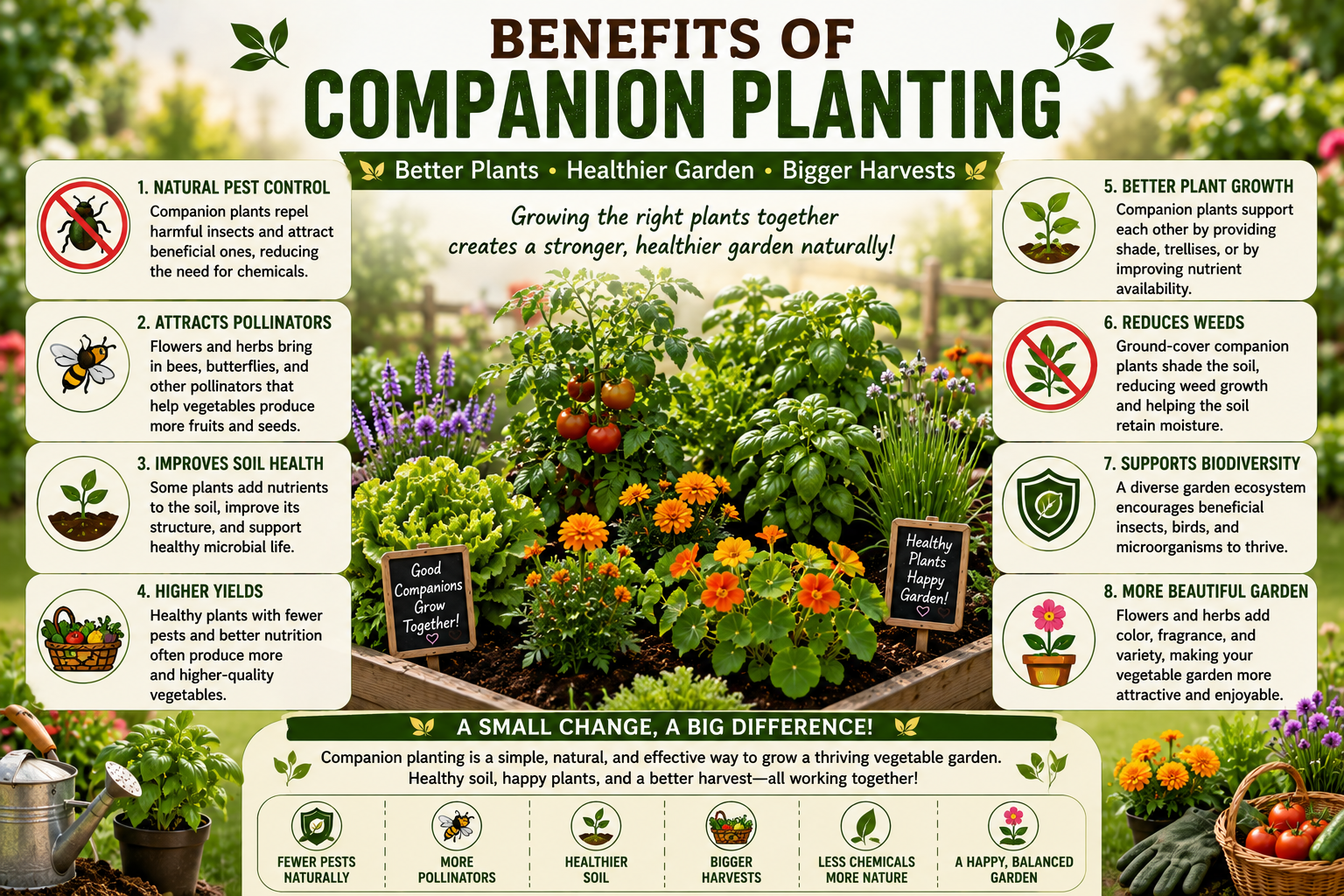
Companion planting offers many advantages beyond pest control. It helps plants grow stronger, improves harvest quality, and creates a healthier environment for both plants and beneficial wildlife.
Natural Pest Control
Many Companion Plants release scents that confuse or repel harmful insects. Others attract beneficial insects that feed on common garden pests such as aphids, whiteflies, and caterpillars.
Better Pollination
Flowers like sweet alyssum, borage, and lavender attract bees and butterflies, increasing pollination for vegetables that produce fruit.
Improved Soil Health
Some companion plants improve soil quality by fixing nitrogen or adding organic matter when they decompose.
Increased Biodiversity
Growing a variety of plants encourages beneficial insects, birds, and microorganisms that contribute to a healthier garden ecosystem.
Efficient Use of Space
Companion planting allows gardeners to grow multiple crops together, making better use of limited garden space.
Reduced Weed Growth
Ground-cover companion plants help shade the soil, reducing weed growth and conserving moisture.
Healthier Harvests
Vegetables grown with suitable companions often experience fewer pest problems and produce stronger, healthier crops.
Key Benefits of Companion Planting
- Fewer harmful insects.
- More pollinators.
- Better soil health.
- Improved plant growth.
- Higher vegetable yields.
- Reduced weed problems.
- Less reliance on chemical pesticides.
- More attractive gardens.
Whether you’re a beginner or an experienced gardener, adding Companion Plants can significantly improve the health and productivity of your vegetable garden.
How Companion Planting Works
Companion planting works by taking advantage of the natural relationships between different plants. Certain plants help each other grow by providing protection, improving soil conditions, attracting beneficial insects, or discouraging pests.
For example, flowering plants attract pollinators that improve vegetable production, while aromatic herbs can mask the scent of vegetables, making them harder for pests to find.
Some plants also have different root depths, allowing them to use water and nutrients from different soil levels instead of competing with one another.
Ways Companion Plants Support Vegetables
Pest Repellent Plants
Strongly scented herbs and flowers help discourage insects.
Examples include:
- Marigolds
- Basil
- Mint
- Lavender
Pollinator Plants
These flowers attract bees, butterflies, and other helpful insects.
Examples include:
- Borage
- Sweet Alyssum
- Calendula
- Dill
Beneficial Insect Attractors
Some plants attract insects that naturally feed on pests.
Examples include:
- Yarrow
- Dill
- Fennel
- Sweet Alyssum
Soil-Improving Plants
Legumes and other nitrogen-fixing plants improve soil fertility for nearby vegetables.
Examples include:
- Beans
- Peas
- Clover
Beginner Tips for Successful Companion Planting
- Grow flowers alongside vegetables.
- Mix herbs throughout the garden.
- Avoid planting large crops too closely together.
- Research compatible plant combinations before planting.
- Observe how plants perform together and make adjustments each season.
Understanding how Companion Plants interact with vegetables allows gardeners to create healthier, more productive gardens naturally.
Comparison Table: Companion Planting vs. Traditional Planting
| Feature | Companion Planting | Traditional Planting |
|---|---|---|
| Pest Control | Natural pest reduction using beneficial plants | Often depends on pesticides or manual control |
| Pollination | Attracts more bees and butterflies | May attract fewer pollinators |
| Soil Health | Can improve soil naturally with diverse plants | Soil improvement usually requires additional amendments |
| Biodiversity | High diversity of flowers, herbs, and vegetables | Often limited to one or two crop types |
| Chemical Use | Reduced need for pesticides | May require more chemical treatments |
| Garden Appearance | Colorful, diverse, and visually attractive | Simpler, less diverse appearance |
| Best For | Organic and sustainable vegetable gardening | Conventional vegetable gardening |
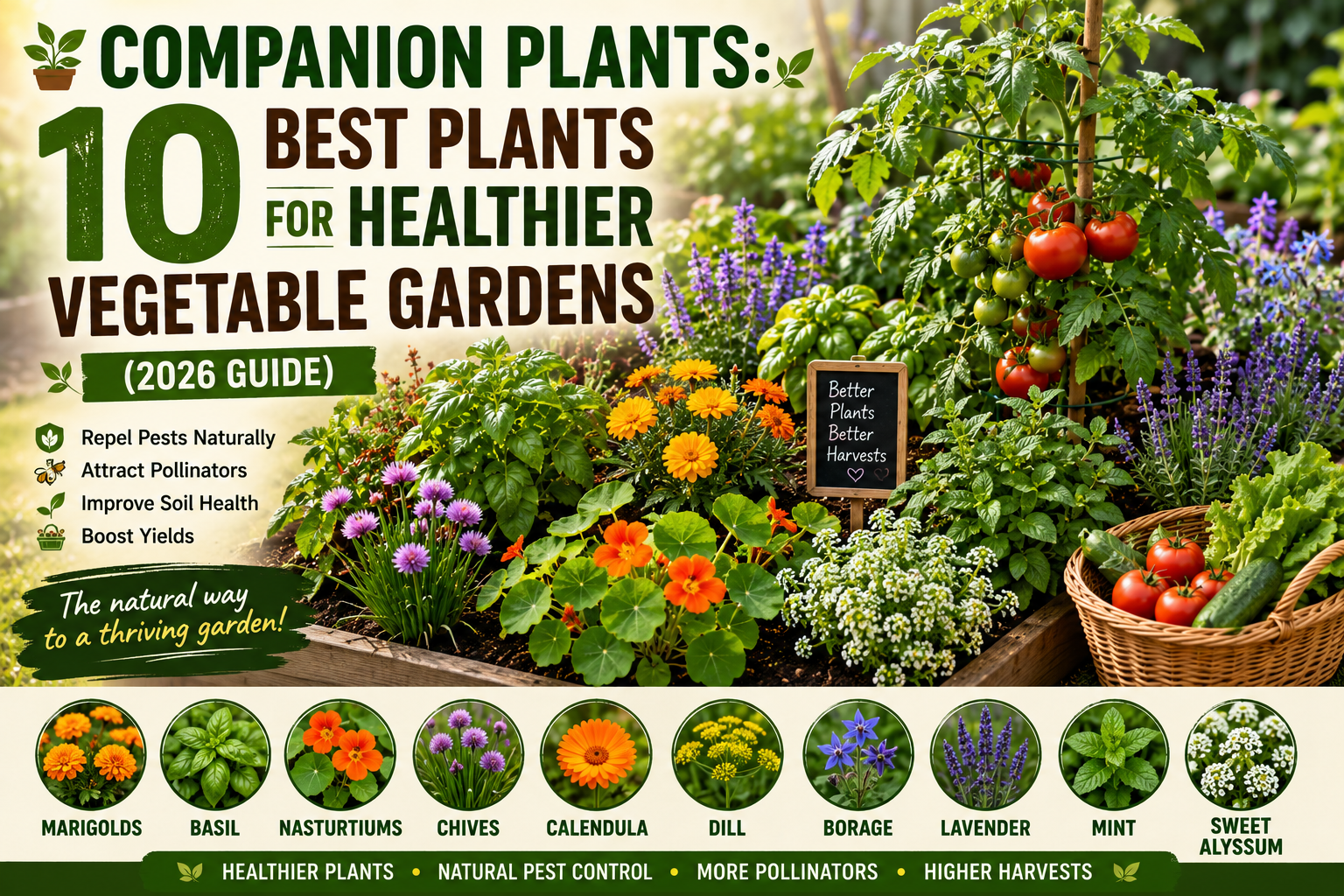
10 Best Companion Plants for Vegetables
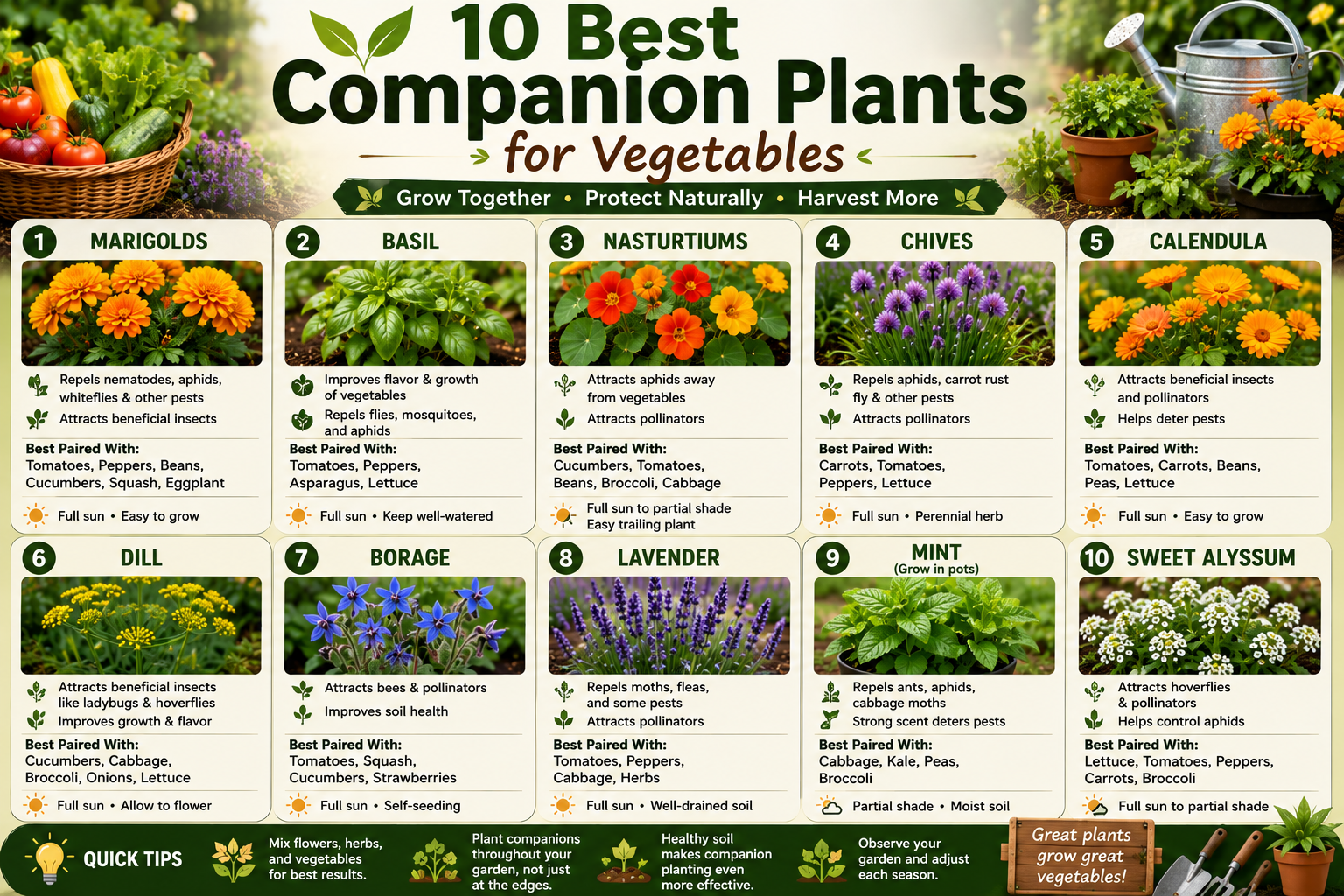
Adding Companion Plants to your vegetable garden is one of the easiest ways to improve plant health naturally. The right companion plants can repel harmful insects, attract pollinators, improve soil quality, and even increase vegetable yields. Below are ten of the best companion plants that work well in most home gardens.
Companion Plant #1 – Marigolds
Marigolds are one of the most popular Companion Plants because of their bright flowers and natural pest-repelling properties.
Why It’s Beneficial
Marigolds release a scent that helps deter certain pests, including aphids, whiteflies, and some soil-dwelling nematodes. Their colorful blooms also attract beneficial pollinators.
Best Vegetables to Pair With
- Tomatoes
- Peppers
- Cucumbers
- Beans
- Squash
- Eggplant
Growing Requirements
- Full sun
- Well-drained soil
- Moderate watering
- Easy to grow from seeds or seedlings
Benefits for Pest Control or Pollination
- Repels harmful insects.
- Attracts bees and butterflies.
- Encourages beneficial insects.
Beginner-Friendly Tips
- Plant marigolds around the edges of vegetable beds.
- Remove faded flowers to encourage continuous blooming.
- Water regularly until established.
Companion Plant #2 – Basil
Basil is a fragrant herb that improves both the health and flavor of nearby vegetables.
Why It’s Beneficial
Its strong aroma helps confuse certain insect pests while attracting pollinators during flowering.
Best Vegetables to Pair With
- Tomatoes
- Peppers
- Asparagus
- Lettuce
Growing Requirements
- Full sun
- Fertile, well-drained soil
- Regular watering
Benefits for Pest Control or Pollination
- Helps deter aphids and whiteflies.
- Attracts bees.
- Supports healthier tomato growth.
Beginner-Friendly Tips
- Harvest basil regularly to encourage bushy growth.
- Pinch off flowers if growing for leaves.
- Avoid overwatering.
Companion Plant #3 – Nasturtiums
Nasturtiums are colorful flowers that act as trap crops by attracting pests away from vegetables.
Why It’s Beneficial
They lure aphids and other insects away from valuable crops, reducing pest damage naturally.
Best Vegetables to Pair With
- Cucumbers
- Tomatoes
- Beans
- Broccoli
- Cabbage
Growing Requirements
- Full sun to partial shade
- Average soil
- Moderate watering
Benefits for Pest Control or Pollination
- Attracts pollinators.
- Draws aphids away from vegetables.
- Supports beneficial insects.
Beginner-Friendly Tips
- Plant near vegetables that often attract aphids.
- Avoid overly rich soil.
- Allow flowers to spread naturally.
Companion Plant #4 – Chives
Chives are easy-to-grow herbs that provide both culinary value and natural pest protection.
Why It’s Beneficial
Their onion-like scent discourages several common garden pests.
Best Vegetables to Pair With
- Carrots
- Tomatoes
- Lettuce
- Peppers
Growing Requirements
- Full sun
- Well-drained soil
- Moderate watering
Benefits for Pest Control or Pollination
- Repels aphids.
- Attracts bees during flowering.
- Supports healthier vegetable growth.
Beginner-Friendly Tips
- Divide clumps every few years.
- Harvest leaves regularly.
- Grow in garden beds or containers.
Companion Plant #5 – Calendula
Calendula produces cheerful orange and yellow flowers that attract many beneficial insects.
Why It’s Beneficial
It encourages pollinators while helping reduce populations of harmful insects.
Best Vegetables to Pair With
- Tomatoes
- Carrots
- Beans
- Peas
- Lettuce
Growing Requirements
- Full sun
- Fertile soil
- Moderate watering
Benefits for Pest Control or Pollination
- Attracts bees.
- Supports ladybugs.
- Encourages beneficial insects.
Beginner-Friendly Tips
- Remove faded flowers regularly.
- Plant throughout the vegetable garden.
- Water during dry periods.
Companion Plant #6 – Dill
Dill is an excellent herb for attracting beneficial insects that naturally control pests.
Why It’s Beneficial
Its flowers attract predatory insects that feed on aphids and caterpillars.
Best Vegetables to Pair With
- Cucumbers
- Cabbage
- Broccoli
- Onions
- Lettuce
Growing Requirements
- Full sun
- Well-drained soil
- Moderate watering
Benefits for Pest Control or Pollination
- Attracts hoverflies and ladybugs.
- Encourages pollinators.
- Supports natural pest control.
Beginner-Friendly Tips
- Allow some plants to flower.
- Sow seeds directly outdoors.
- Avoid transplanting mature plants.
Companion Plant #7 – Borage
Borage is a beautiful flowering herb that benefits both vegetables and pollinators.
Why It’s Beneficial
Its nectar-rich flowers attract bees while improving biodiversity in the garden.
Best Vegetables to Pair With
- Tomatoes
- Squash
- Cucumbers
- Strawberries
Growing Requirements
- Full sun
- Well-drained soil
- Moderate watering
Benefits for Pest Control or Pollination
- Attracts bees.
- Encourages beneficial insects.
- Supports healthier vegetable production.
Beginner-Friendly Tips
- Allow plants to self-seed if desired.
- Water during prolonged dry weather.
- Remove spent flowers to maintain appearance.
Companion Plant #8 – Lavender
Lavender is a fragrant perennial that adds beauty while supporting beneficial insects.
Why It’s Beneficial
Its strong scent discourages some pests while attracting bees and butterflies.
Best Vegetables to Pair With
- Tomatoes
- Peppers
- Cabbage
- Herbs
Growing Requirements
- Full sun
- Sandy, well-drained soil
- Low to moderate watering
Benefits for Pest Control or Pollination
- Attracts pollinators.
- Repels certain flying insects.
- Supports beneficial biodiversity.
Beginner-Friendly Tips
- Avoid overwatering.
- Prune lightly after flowering.
- Plant in sunny areas with good airflow.
Companion Plant #9 – Mint
Mint is an aromatic herb that naturally helps discourage several common garden pests.
Why It’s Beneficial
Its strong fragrance masks the scent of nearby vegetables, making them less attractive to insects.
Best Vegetables to Pair With
- Cabbage
- Kale
- Broccoli
- Peas
Growing Requirements
- Full sun to partial shade
- Moist soil
- Regular watering
Benefits for Pest Control or Pollination
- Helps deter ants and cabbage moths.
- Attracts pollinators.
- Provides fresh culinary herbs.
Beginner-Friendly Tips
- Grow mint in containers to prevent spreading.
- Harvest frequently.
- Keep soil evenly moist.
Companion Plant #10 – Sweet Alyssum
Sweet Alyssum is a low-growing flowering plant that attracts many beneficial insects.
Why It’s Beneficial
It provides nectar for pollinators and predatory insects that naturally control pests.
Best Vegetables to Pair With
- Lettuce
- Tomatoes
- Peppers
- Carrots
- Broccoli
Growing Requirements
- Full sun to partial shade
- Well-drained soil
- Moderate watering
Benefits for Pest Control or Pollination
- Attracts hoverflies.
- Encourages bees.
- Supports natural pest management.
Beginner-Friendly Tips
- Plant along garden borders.
- Water regularly during dry weather.
- Trim lightly after flowering to encourage new blooms.
How to Plan a Companion Planting Garden
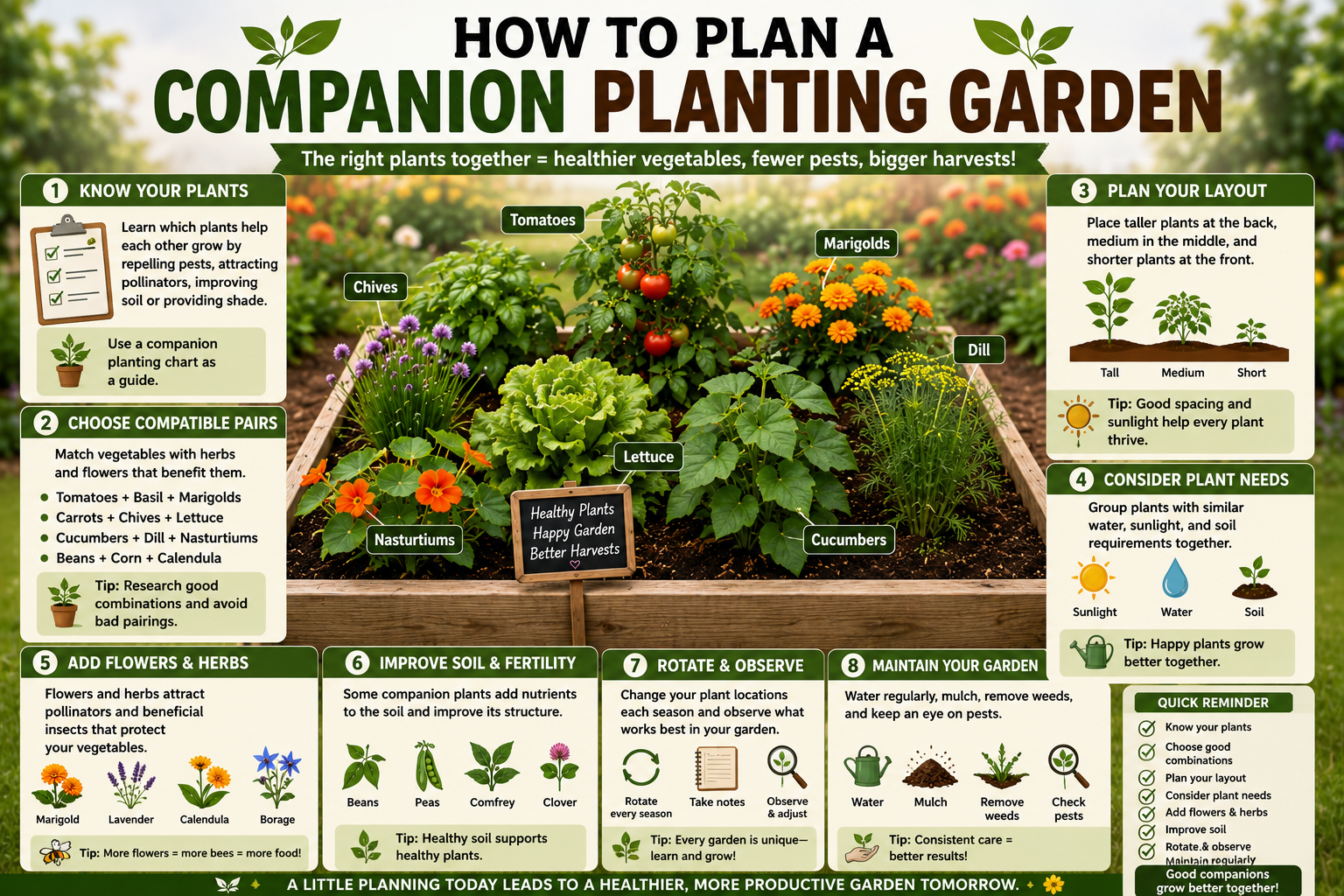
Planning your garden carefully is the key to getting the most from Companion Plants. Instead of planting vegetables randomly, choose flowers, herbs, and vegetables that naturally support one another. A well-planned companion planting garden can reduce pest problems, attract more pollinators, improve plant health, and increase your harvest.
Even if you have a small backyard or only a few raised garden beds, companion planting is easy to incorporate into your garden design.
Choose Compatible Plants
Not all plants grow well together. Research compatible plant combinations before planting your garden.
Some excellent pairings include:
- Tomatoes with basil and marigolds
- Cucumbers with nasturtiums and dill
- Carrots with chives
- Beans with calendula
- Peppers with basil
- Lettuce with sweet alyssum
These combinations help create a healthier growing environment.
Mix Flowers, Herbs, and Vegetables
A diverse garden attracts more beneficial insects than a garden containing only vegetables.
Include a combination of:
- Flowering plants
- Culinary herbs
- Leafy vegetables
- Fruiting vegetables
- Root crops
This diversity supports pollinators and natural pest predators.
Consider Plant Size
Place taller plants where they won’t shade smaller crops unnecessarily.
For example:
- Tomatoes behind lettuce.
- Sunflowers at the back of the garden.
- Sweet alyssum along pathways.
- Basil between tomato plants.
Good spacing also improves airflow and reduces disease.
Leave Room for Growth
Avoid overcrowding your Companion Plants.
Proper spacing allows plants to receive:
- Enough sunlight
- Good airflow
- Adequate nutrients
- Easy access for harvesting
Always follow spacing recommendations on plant labels or seed packets.
Observe and Adjust
Every garden is unique.
Keep notes each season about:
- Which plant combinations performed best.
- Pest problems.
- Pollinator activity.
- Vegetable harvests.
Over time, you’ll develop the most successful companion planting plan for your garden.
Common Companion Planting Mistakes to Avoid
Although Companion Plants are easy to grow, avoiding a few common mistakes will help you achieve better results.
Planting Incompatible Crops
Some vegetables compete for nutrients or attract similar pests.
Research compatible plant combinations before planting.
Overcrowding Plants
Too many plants in one area reduce airflow and increase the risk of fungal diseases.
Give every plant enough room to grow.
Ignoring Sunlight Requirements
Most vegetables and many companion plants require at least 6–8 hours of sunlight each day.
Place sun-loving plants in bright locations and shade-tolerant varieties where they receive partial shade.
Forgetting to Rotate Crops
Growing the same vegetables in the same location each year can increase pests and diseases.
Rotate crop families every growing season to maintain healthy soil.
Depending Only on Companion Plants
While Companion Plants help reduce pests naturally, they should be part of an overall garden care routine.
Also remember to:
- Water consistently.
- Improve soil with compost.
- Remove weeds.
- Inspect plants regularly.
- Harvest vegetables on time.
Healthy gardening practices work best alongside companion planting.
Seasonal Companion Planting Tips
Each season offers opportunities to get the most from your Companion Plants.
Spring
It is the perfect time to establish your companion planting garden.
Spring Checklist
- Prepare the soil with compost.
- Plant cool-season vegetables.
- Sow companion flower seeds.
- Add mulch after planting.
- Water consistently while plants establish.
Summer
It is when companion planting provides the greatest benefits.
Summer Checklist
- Water deeply during dry weather.
- Deadhead flowering companion plants.
- Watch for pests.
- Harvest vegetables regularly.
- Encourage pollinators with blooming flowers.
Autumn
It is the ideal season to prepare your garden for next year.
Autumn Checklist
- Remove diseased plants.
- Add compost to garden beds.
- Plant cover crops if desired.
- Save flower seeds.
- Record successful plant combinations.
Winter
Although growth slows during winter, planning ahead leads to better results.
Winter Checklist
- Plan next year’s garden layout.
- Order seeds.
- Clean gardening tools.
- Review crop rotation plans.
- Start indoor seedlings where appropriate.
Following these seasonal tips will help your Companion Plants and vegetables remain healthy throughout the year.
Conclusion
Using Companion Plants is one of the easiest and most natural ways to create a healthier vegetable garden. By growing compatible flowers, herbs, and vegetables together, you can naturally reduce pest problems, attract pollinators, improve biodiversity, and support stronger plant growth without relying heavily on chemical pesticides.
Whether you choose marigolds to deter pests, basil to grow alongside tomatoes, or sweet alyssum to attract beneficial insects, every companion plant contributes to a more balanced garden ecosystem. Combined with healthy soil, regular watering, proper spacing, and seasonal maintenance, companion planting helps produce healthier vegetables and larger harvests.
Remember that successful gardening is a continuous learning process. Observe how different plants perform together, keep notes each season, and make adjustments as needed. With a little planning and patience, Companion Plants can transform your vegetable garden into a productive, beautiful, and environmentally friendly space that you can enjoy for years to come.
Frequently Asked Questions (FAQs)
1. What are companion plants?
Companion Plants are flowers, herbs, or vegetables grown together because they support one another by attracting pollinators, repelling pests, improving soil health, or encouraging stronger growth.
2. Which companion plant is best for tomatoes?
Basil and marigolds are among the best companion plants for tomatoes because they help attract pollinators and naturally discourage certain garden pests.
3. Do companion plants really help control pests?
Yes. While they don’t eliminate every pest, many Companion Plants attract beneficial insects, repel harmful pests, and create a healthier garden ecosystem that reduces pest pressure naturally.
4. Can I use companion planting in raised garden beds?
Absolutely. Companion planting works very well in Raised Garden Beds, container gardens, and traditional backyard vegetable gardens.
5. Which flowers attract pollinators to vegetable gardens?
Sweet alyssum, borage, calendula, lavender, marigolds, and nasturtiums are excellent choices for attracting bees, butterflies, and other pollinators.
6. Can beginners use companion planting?
Yes. Companion planting is simple, affordable, and beginner-friendly. Start with easy combinations like tomatoes with basil and marigolds or cucumbers with nasturtiums.
7. Should I rotate companion plants every year?
Yes. Rotating vegetables and their companion plants each season helps maintain healthy soil, reduces pest buildup, and lowers the risk of plant diseases.
You can also check our article Garden Soil: 10 Natural Ways to Improve Healthy Soil for Better Plants (2026)