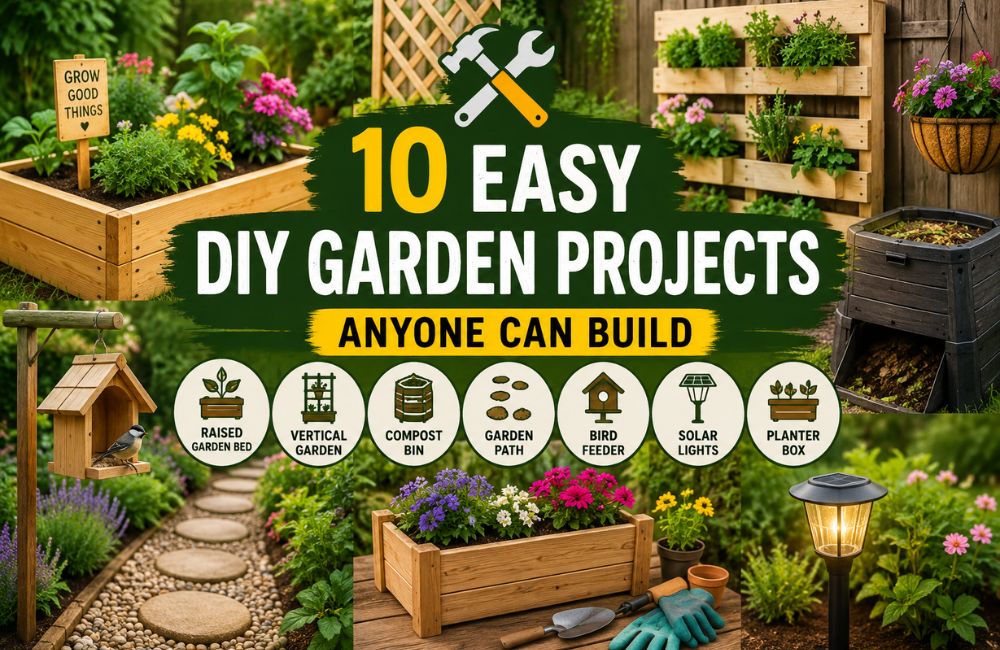
Creating a beautiful garden doesn’t have to be expensive or require professional skills. With a few basic tools, affordable materials, and a little creativity, anyone can complete simple DIY Garden projects that improve the look and functionality of an outdoor space. Whether you have a small backyard, a spacious garden, or even a patio, do-it-yourself projects allow you to personalize your landscape while saving money.
A DIY Garden project is a rewarding way to spend time outdoors, learn new skills, and add unique features to your yard. From building raised garden beds to making bird feeders and decorative pathways, these projects are suitable for beginners and experienced gardeners alike. Many can be completed over a weekend using easy-to-find materials from your local hardware or garden center.
In this guide, you’ll discover ten easy DIY Garden projects that are budget-friendly, practical, and simple to build. Each project is designed to enhance your outdoor space, encourage healthy plant growth, and create a garden you’ll enjoy throughout the year.
Why DIY Garden Projects Are Worth Trying
A DIY Garden project offers more than just a beautiful outdoor space. It gives you the freedom to customize your garden while keeping costs under control.
Instead of purchasing expensive ready-made garden features, you can build them yourself using affordable or recycled materials. Many DIY projects also allow you to reuse items you already have at home, making gardening more sustainable.
Benefits of DIY Garden Projects
- Save money on landscaping.
- Personalize your outdoor space.
- Improve gardening skills.
- Recycle and repurpose old materials.
- Increase your home’s curb appeal.
- Create functional outdoor features.
- Enjoy a rewarding weekend activity.
Even simple improvements can transform an ordinary backyard into a welcoming place to relax and entertain family and friends.
How to Plan Your DIY Garden Project
Planning is one of the most important steps before starting any DIY Garden project. A clear plan helps you stay within your budget, avoid mistakes, and complete each project more efficiently.
Start by identifying what your garden needs most. You may want additional planting space, better organization, more seating, or decorative features that add character to your yard.
Simple Planning Tips
- Set a realistic budget.
- Measure the available space.
- Sketch a basic garden layout.
- Choose beginner-friendly projects.
- Make a list of required materials.
- Gather the necessary tools before starting.
- Complete one project at a time.
It’s also a good idea to consider your local climate and choose materials that can withstand your area’s weather conditions.
Comparison Table: DIY Garden Projects vs. Store-Bought Garden Features
| Feature | DIY Garden Projects | Store-Bought Garden Features |
|---|---|---|
| Cost | Lower | Higher |
| Customization | Fully customizable | Limited options |
| Skill Level | Beginner to intermediate | No building required |
| Installation | Self-installed | Ready to use or professional installation |
| Creativity | High | Moderate |
| Long-Term Value | Excellent | Good |
| Best For | Budget-conscious gardeners | Those seeking convenience |
Tip: Combining DIY projects with a few ready-made accessories can help you create a unique garden while staying within your budget.
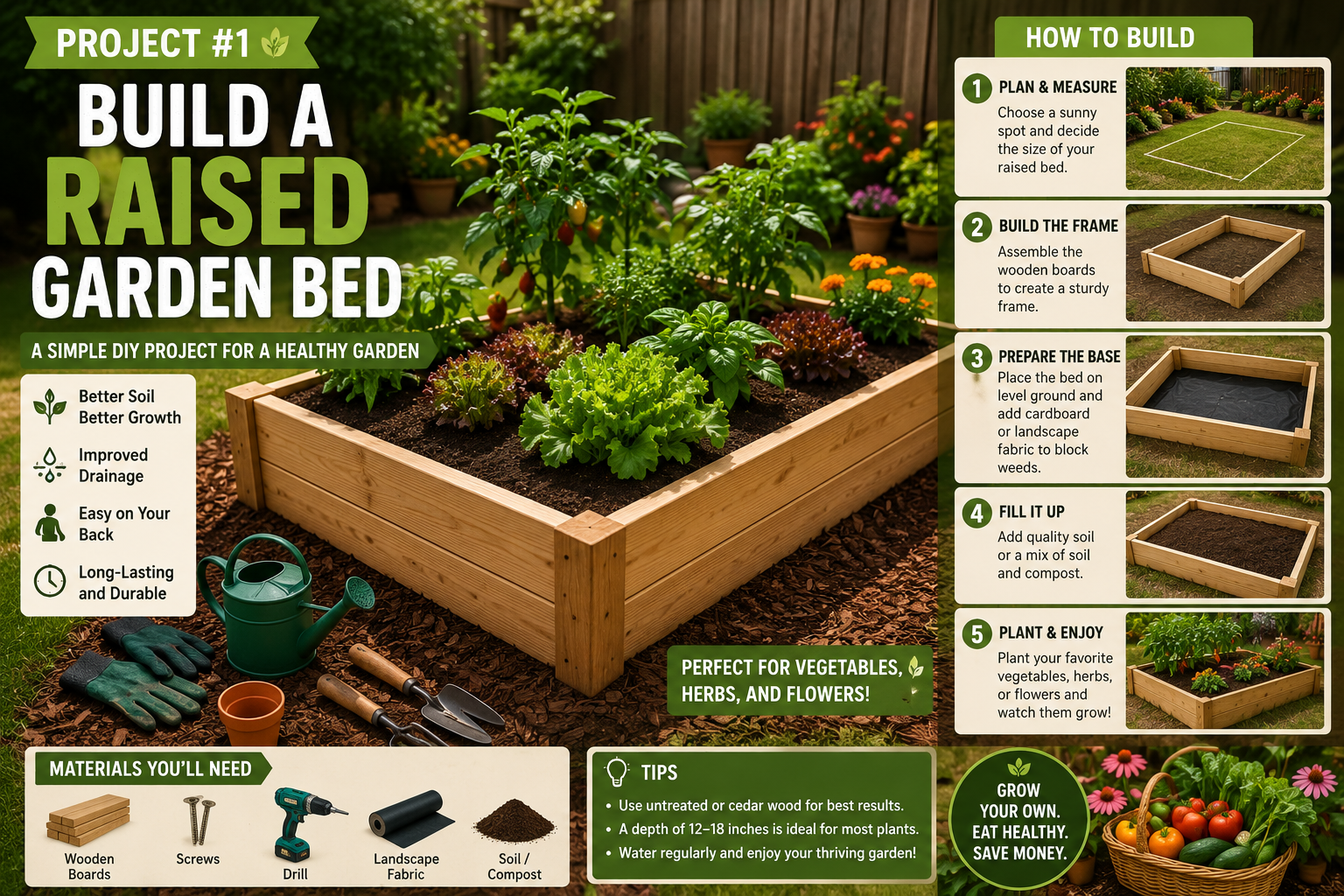
Project #1 – Build a Raised Garden Bed
A raised garden bed is one of the most practical and rewarding DIY Garden projects. It provides better soil control, improves drainage, and makes gardening more comfortable by reducing the need to bend down.
You can build a simple raised bed using cedar boards, treated lumber, concrete blocks, or reclaimed wood. Choose a sunny location and fill the bed with quality garden soil and compost for the best results.
Benefits of Raised Garden Beds
- Improves soil quality
- Better drainage
- Easier weed control
- Reduces back strain
- Extends the growing season
- Suitable for vegetables, herbs, and flowers
Raised beds are perfect for beginners because they are easy to maintain and produce healthy plants with less effort.
Project #2 – Create a Garden Path
A garden path improves both the appearance and functionality of your outdoor space. It guides visitors through your garden while protecting plants from being stepped on.
One of the easiest DIY Garden projects is creating a gravel or stepping-stone pathway.
Popular materials include:
Materials for a Garden Path
- Gravel
- Stepping stones
- Bricks
- Natural stone
- Wood slices
- Crushed granite
To build a path, mark the route, remove grass, lay landscape fabric to reduce weeds, and add your chosen material.
A well-designed pathway instantly gives your garden a more organized and professional appearance.
Project #3 – Make a DIY Bird Feeder
A homemade bird feeder is a fun and affordable project that brings colorful birds into your garden.
Birds not only create a lively atmosphere but also help control insects and support a healthy garden ecosystem.
You can make a bird feeder using simple materials such as:
Easy Bird Feeder Ideas
- Wooden boards
- Plastic bottles
- Mason jars
- Teacups
- Pinecones with birdseed
- Coconut shells
Hang the feeder in a quiet location away from predators and refill it regularly with fresh birdseed.
Adding a bird feeder is an enjoyable DIY Garden project for families and children while encouraging local wildlife to visit your backyard.
Project #4 – Build a Simple Trellis
A trellis provides vertical support for climbing plants while adding height and visual interest to your garden.
Building a wooden or metal trellis is an inexpensive weekend project that requires only basic tools.
Plants that grow well on a trellis include:
Best Plants for a Trellis
- Cucumbers
- Peas
- Pole beans
- Clematis
- Morning glories
- Climbing roses
- Jasmine
A trellis helps improve air circulation around plants, makes harvesting easier, and maximizes growing space in smaller gardens.
You can paint or stain your trellis to match your garden style, creating a decorative feature that combines beauty with functionality.
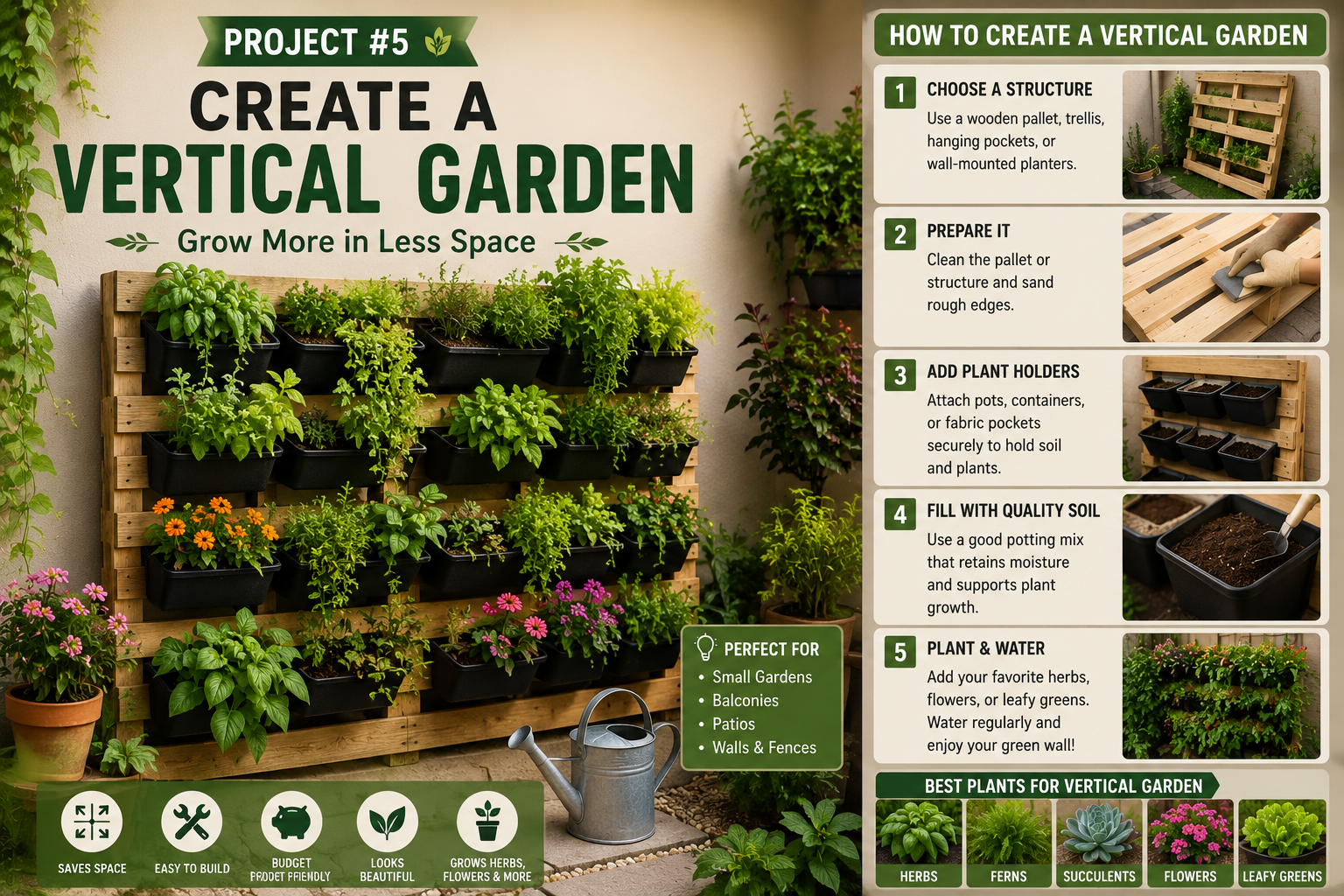
Project #5 – Create a Vertical Garden
A vertical garden is one of the most practical DIY Garden projects for homeowners with limited space. Instead of growing plants across the ground, a vertical garden allows you to grow upward using walls, fences, trellises, or wooden pallets.
This project is perfect for herbs, flowers, leafy greens, and even strawberries. It also adds a beautiful green feature to patios, balconies, or backyard fences.
Benefits of a Vertical Garden
- Saves valuable garden space
- Improves airflow around plants
- Makes harvesting easier
- Adds beauty to fences and walls
- Perfect for small backyards
You can create a vertical garden using recycled pallets, hanging planters, fabric pocket organizers, or wall-mounted shelves. Be sure to choose a location that receives enough sunlight for the plants you want to grow.
Project #6 – Build a Compost Bin
A compost bin is an excellent DIY Garden project that turns kitchen scraps and yard waste into nutrient-rich compost.
Instead of throwing away organic waste, composting creates a natural fertilizer that improves soil quality and supports healthier plants.
Materials You Can Compost
- Fruit and vegetable scraps
- Coffee grounds
- Tea bags
- Dry leaves
- Grass clippings
- Small twigs
- Eggshells
Avoid adding meat, dairy products, oily foods, or diseased plants, as these can attract pests or slow the composting process.
A simple compost bin can be built from wooden pallets, wire mesh, or plastic storage containers with ventilation holes. Turn the compost regularly to help it break down more quickly.
Project #7 – Make Garden Stepping Stones
Garden stepping stones create attractive walkways while protecting grass and flower beds from foot traffic.
This beginner-friendly DIY Garden project allows you to customize your garden with unique designs and colors.
Materials You’ll Need
- Quick-setting concrete mix
- Plastic or rubber molds
- Decorative pebbles
- Colored glass
- Mosaic tiles
- Gloves and a trowel
You can personalize each stepping stone with handprints, leaf impressions, or colorful mosaic patterns.
Arrange the finished stones through flower beds, vegetable gardens, or lawn areas to create an inviting path that blends beauty with function.
Project #8 – Build a Wooden Garden Bench
Every garden needs a comfortable place to sit and enjoy the surroundings. Building a wooden bench is a rewarding DIY Garden project that adds both style and practicality.
You can build a simple bench using pressure-treated lumber, cedar boards, or reclaimed wood.
Benefits of a Garden Bench
- Provides comfortable outdoor seating
- Enhances your landscape design
- Affordable weekend project
- Easy to customize with paint or stain
- Long-lasting with proper maintenance
Place your bench beneath a shade tree, beside a flower bed, or near a garden path to create a peaceful spot for relaxing.
For extra comfort, add weather-resistant cushions or decorative outdoor pillows.
Project #9 – Create a DIY Water Feature
A water feature brings movement, sound, and a relaxing atmosphere to your garden.
Fortunately, you don’t need a large pond or expensive equipment to enjoy the soothing sound of flowing water.
Easy Water Feature Ideas
- Solar-powered fountain
- Birdbath fountain
- Ceramic pot fountain
- Small pond
- Water bowl with aquatic plants
Small water features also attract birds, butterflies, and other beneficial wildlife to your garden.
Choose a level location and clean the fountain regularly to keep the water fresh and clear.
Adding a water feature is an easy way to make your DIY Garden feel more peaceful and inviting.
Project #10 – Install Solar Garden Lights
Solar garden lights are one of the simplest and most affordable DIY Garden improvements.
They charge during the day using sunlight and automatically light up your garden at night without increasing your electricity bill.
Advantages of Solar Garden Lights
- Energy-efficient
- Eco-friendly
- No wiring required
- Improves nighttime safety
- Highlights pathways and flower beds
- Easy to install
Place solar lights along walkways, around patios, or near garden borders to create a warm and welcoming atmosphere after sunset.
For the best performance, install them in locations that receive full sunlight throughout the day.
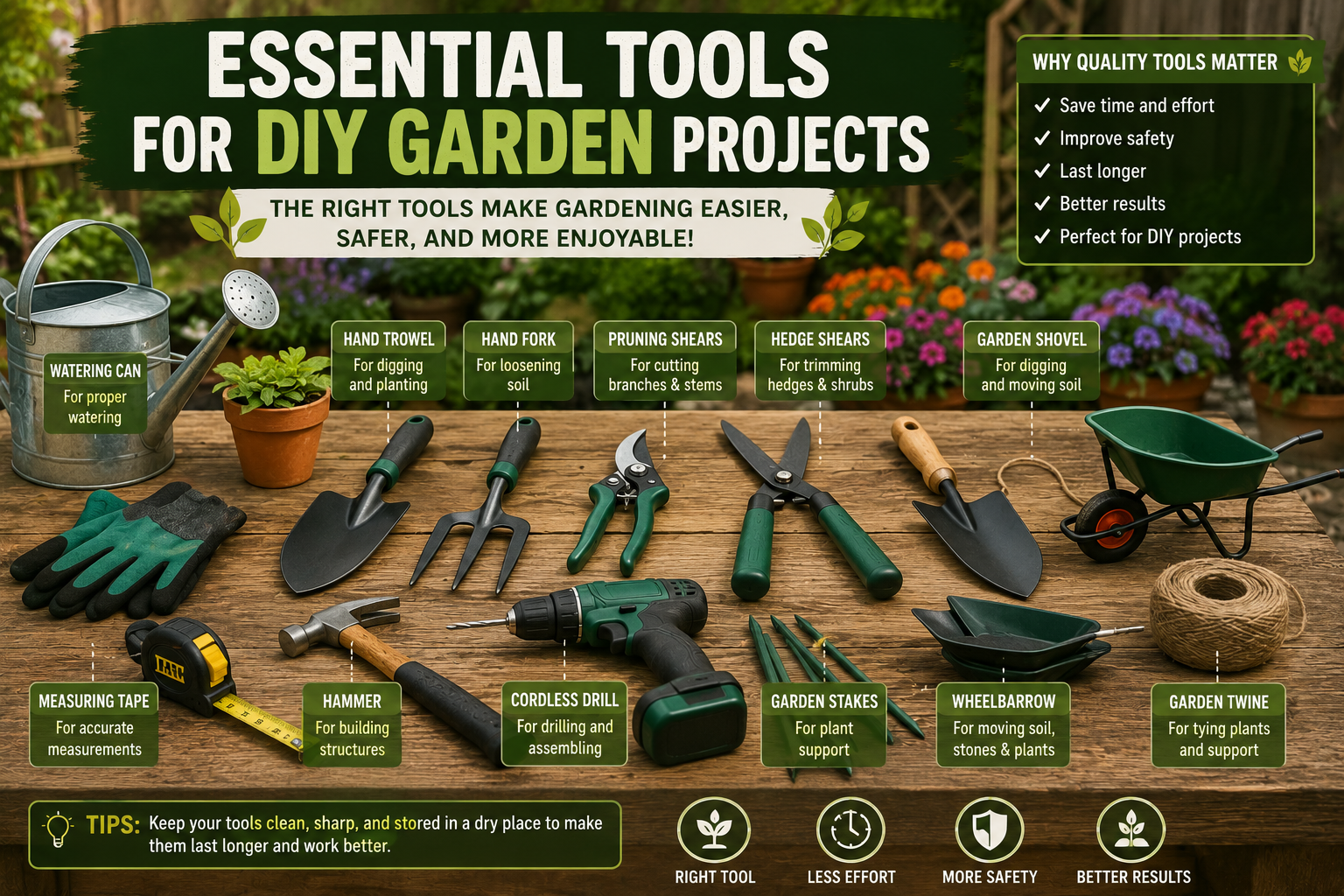
Essential Tools for DIY Garden Projects
Having the right tools makes every DIY Garden project easier, safer, and more enjoyable.
While you don’t need a large collection of equipment, a few basic tools can handle most beginner-friendly projects.
Must-Have DIY Garden Tools
- Garden shovel
- Hand trowel
- Garden fork
- Pruning shears
- Tape measure
- Hammer
- Cordless drill
- Screwdriver set
- Wheelbarrow
- Work gloves
- Spirit level
- Watering can or garden hose
Investing in quality tools helps you complete projects more efficiently and ensures they last for many gardening seasons.
Common DIY Garden Mistakes to Avoid
Even simple projects can become frustrating if you don’t plan carefully. Avoiding these common mistakes will save time, money, and effort while helping your garden thrive.
1. Starting Without a Plan
Beginning a project without measuring your space or gathering materials often leads to unnecessary delays and extra costs. Sketch your ideas and create a materials list before you start.
2. Choosing the Wrong Location
Some plants require full sun, while others prefer partial shade. Place raised beds, vertical gardens, and trellises where they’ll receive the right amount of sunlight.
3. Ignoring Soil Quality
Healthy plants begin with healthy soil. Improve poor soil by mixing in compost or organic matter before planting.
4. Overwatering Plants
Watering too frequently can damage roots and encourage fungal diseases. Instead, check the soil moisture and water deeply only when needed.
5. Using Low-Quality Materials
Although it’s important to stay within your budget, choosing durable materials for outdoor projects will save money over time by reducing repairs and replacements.
6. Forgetting Regular Maintenance
Even the best DIY Garden projects require ongoing care. Clean garden paths, inspect wooden structures, refill bird feeders, prune plants, and maintain water features to keep your garden looking its best.
By planning carefully, using the right tools, and avoiding these common mistakes, you’ll create attractive and long-lasting garden features that add beauty, function, and value to your outdoor space.
DIY Garden Safety Tips
Safety should always come first when working on any DIY Garden project. Even simple gardening tasks involve tools, lifting, and outdoor conditions that can cause injuries if you’re not careful. Following a few basic safety practices will help you complete your projects confidently while protecting yourself and your family.
Wear the Right Safety Gear
Before starting any project, wear clothing and protective equipment suited to the task.
Essential Safety Equipment
- Gardening gloves
- Safety glasses
- Closed-toe shoes or boots
- Dust mask when cutting wood or mixing concrete
- Hearing protection when using power tools
- Sunscreen and a wide-brim hat
Proper safety gear reduces the risk of cuts, splinters, and sunburn while making outdoor work more comfortable.
Use Tools Correctly
Always inspect your tools before use and follow the manufacturer’s instructions. Keep blades sharp because dull tools require more force and are often more dangerous.
Store tools in a dry place after use and keep them out of reach of children.
Lift Heavy Materials Safely
Many DIY Garden projects involve lifting soil bags, stones, lumber, or concrete blocks.
To avoid back injuries:
- Bend your knees instead of your back.
- Keep heavy loads close to your body.
- Ask for help when moving large items.
- Use a wheelbarrow whenever possible.
Taking your time can prevent unnecessary strain and injuries.
Be Careful with Power Tools
If you’re using drills, saws, or other power tools, work in a clean, dry area and avoid distractions.
Never use damaged extension cords, and unplug tools before changing blades or bits.
Protect Children and Pets
Keep children and pets away from work areas while building your DIY Garden projects.
Store nails, screws, paint, fertilizers, and sharp tools safely after each project.
Work in Good Weather
Avoid outdoor construction during heavy rain, storms, or extreme heat.
If temperatures are high:
- Drink plenty of water.
- Take regular breaks.
- Work during the morning or evening.
- Wear lightweight clothing.
Staying hydrated helps prevent heat exhaustion while working outside.
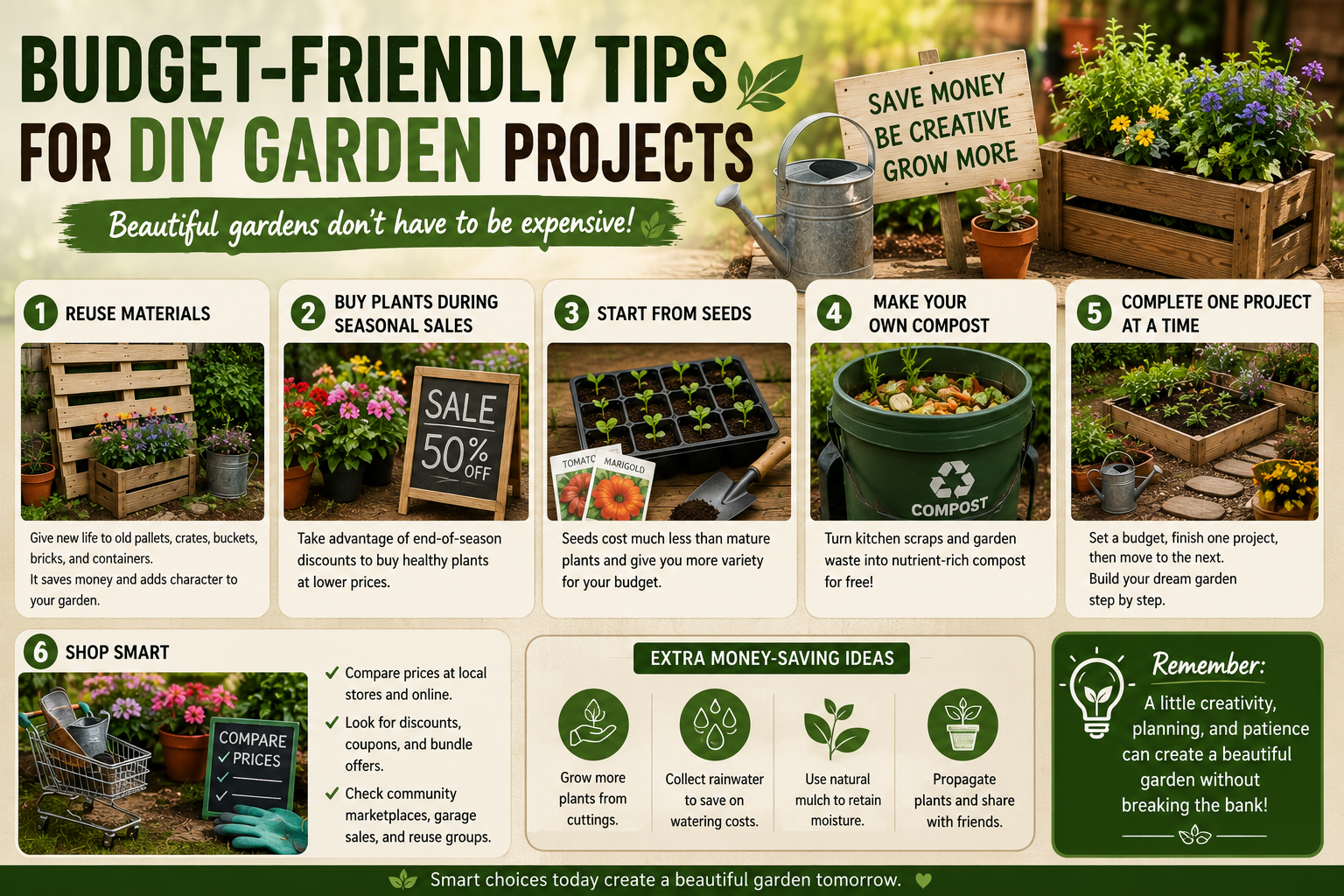
Budget-Friendly Tips for DIY Garden Projects
One of the biggest advantages of a DIY Garden is saving money without sacrificing beauty. With smart planning and creative ideas, you can build impressive garden features on almost any budget.
Reuse Materials
Many useful building materials are already available around your home.
Consider reusing:
- Wooden pallets
- Old bricks
- Concrete blocks
- Tree branches
- Buckets and containers
- Wooden crates
- Old furniture
Repurposing materials reduces waste while adding character to your garden.
Buy Plants During Seasonal Sales
Garden centers often offer discounts at the end of each growing season.
Buying healthy plants during these sales allows you to expand your garden while staying within budget.
Start from Seeds
Growing flowers and vegetables from seeds costs much less than buying mature plants.
Although seedlings take longer to grow, they offer significant savings over time.
Make Your Own Compost
Instead of purchasing expensive fertilizers, create compost from kitchen scraps and garden waste.
Homemade compost enriches the soil naturally and supports healthy plant growth.
Complete One Project at a Time
Trying to build an entire garden at once can become expensive.
Instead:
- Set a monthly budget.
- Finish one project before starting another.
- Upgrade your garden gradually.
This approach keeps costs manageable while allowing you to enjoy each improvement.
Shop Smart
Compare prices at local garden centers, hardware stores, and online retailers before purchasing supplies.
You can also find affordable materials through community marketplaces, garage sales, or neighborhood reuse groups.
Conclusion
Building a beautiful DIY Garden doesn’t require advanced skills or a large budget. With careful planning, basic tools, and a little creativity, you can transform your outdoor space into a functional and attractive garden that reflects your personal style.
Whether you build raised garden beds, install a vertical garden, create decorative pathways, or add solar lighting, every project improves both the appearance and usefulness of your backyard. The key is to start with simple projects, use quality materials, and maintain your garden throughout the year.
Remember that gardening is an ongoing journey rather than a one-time project. As your skills and confidence grow, you can continue adding new features and expanding your outdoor space. By following the ideas in this guide, you’ll enjoy a thriving DIY Garden that provides beauty, relaxation, and satisfaction for years to come.
Frequently Asked Questions (FAQs)
1. What is the easiest DIY garden project for beginners?
Building a raised garden bed, creating a gravel path, installing solar garden lights, or making a bird feeder are among the easiest DIY garden projects for beginners.
2. How much does a DIY garden project usually cost?
The cost depends on the project and materials used. Many simple DIY garden projects can be completed for $20–$150, especially if you reuse or recycle materials.
3. What tools do I need for DIY garden projects?
Basic tools include a shovel, hand trowel, hammer, cordless drill, pruning shears, measuring tape, wheelbarrow, work gloves, and a garden hose or watering can.
4. Can I build DIY garden projects without woodworking experience?
Yes. Many beginner-friendly projects, such as garden paths, compost bins, container gardens, and bird feeders, require only basic tools and simple construction techniques.
5. What are the best materials for outdoor DIY garden projects?
Pressure-treated wood, cedar, gravel, natural stone, concrete blocks, recycled pallets, and weather-resistant hardware are excellent choices because they are durable and suitable for outdoor use.
6. How can I save money on DIY garden projects?
Reuse old materials, grow plants from seeds, make your own compost, shop during seasonal sales, and complete one project at a time to keep costs low.
7. How often should I maintain my DIY garden projects?
Inspect your garden every few weeks. Clean pathways, tighten loose screws, repaint wooden structures when needed, prune plants regularly, and check solar lights or water features to keep everything in good conditio
You can also check our article Top 15 Backyard Landscaping Ideas