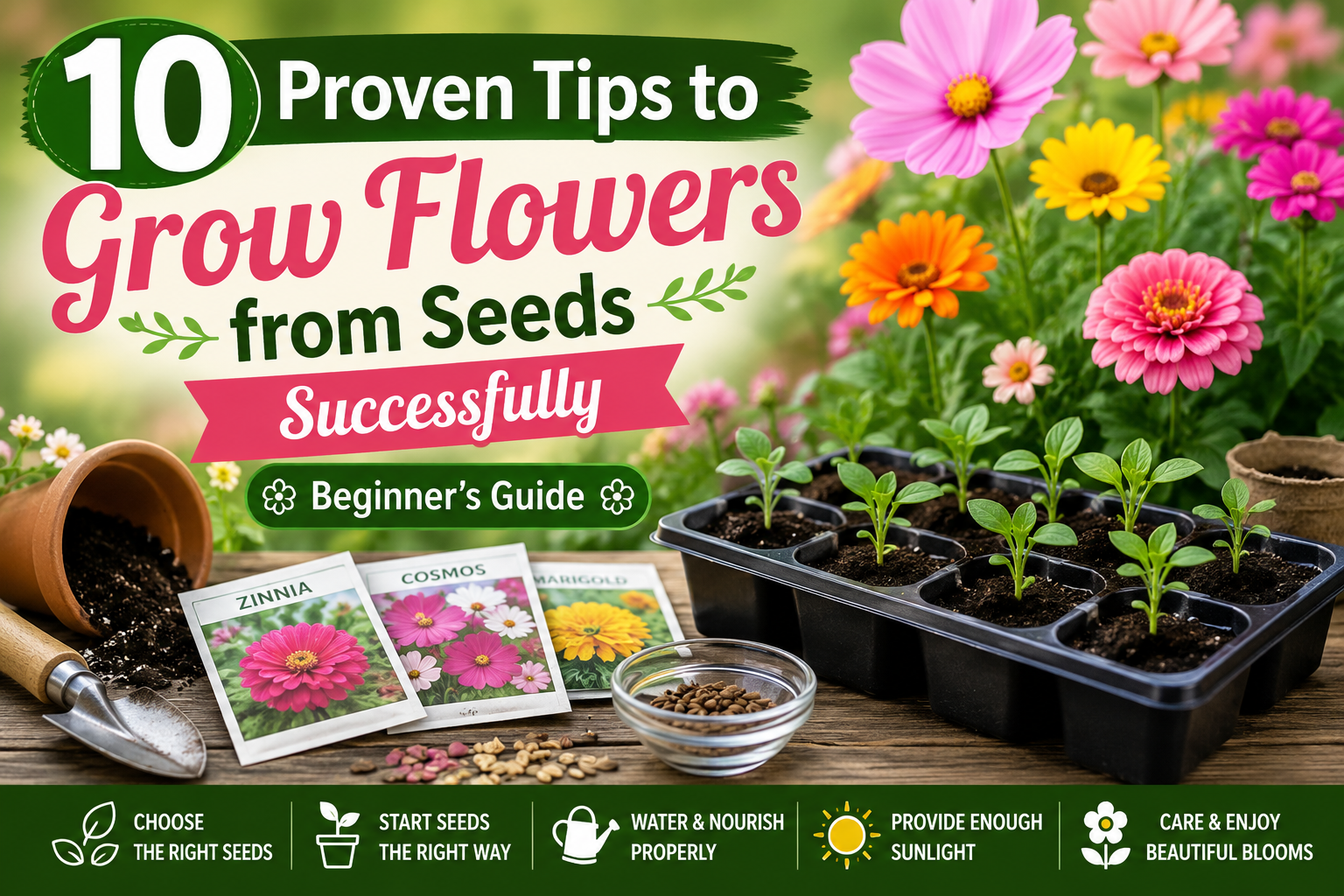
Growing flowers from seeds is one of the most rewarding and budget-friendly ways to create a colorful and vibrant garden. Whether you have a spacious backyard, a small patio, or just a few pots on a balcony, learning how to Grow Flowers from seeds allows you to enjoy a wide variety of blooms while saving money compared to buying mature plants. Watching tiny seeds develop into healthy flowering plants is an exciting experience for both beginners and experienced gardeners.
The key to success is choosing the right seeds, providing suitable growing conditions, and giving your plants the care they need during each stage of growth. Although some flowers require a little patience, many varieties germinate quickly and bloom beautifully within a few months. By understanding the basics of seed starting, watering, sunlight, and soil preparation, you can avoid common mistakes and enjoy a thriving flower garden throughout the growing season.
This guide covers everything you need to know to Grow Flowers from seeds successfully, from selecting the best flower varieties to caring for young seedlings. By the end, you’ll have the confidence to start your own flower garden and enjoy beautiful blooms year after year.
Why Grow Flowers from Seeds?
Growing flowers from seeds offers many advantages over purchasing fully grown plants. It is an enjoyable gardening activity that allows you to experience every stage of a plant’s life, from germination to flowering.
Some of the main reasons to Grow Flowers from seeds include:
- It is much more affordable than buying nursery-grown plants.
- You can choose from hundreds of unique flower varieties.
- Seeds allow you to grow rare or heirloom flowers that may not be available locally.
- Plants grown from seeds often adapt better to your garden environment.
- Gardening from seeds is a rewarding learning experience for beginners and children.
With proper planning and care, even first-time gardeners can achieve excellent results.
Benefits of Growing Flowers from Seeds
Starting flowers from seeds provides long-term benefits for your garden and your budget.
Some key benefits include:
- Lower gardening costs: A single packet of seeds can produce dozens of flowering plants.
- Greater variety: Choose from annuals, perennials, wildflowers, and native plants.
- Healthier plants: Seed-grown flowers often develop stronger root systems.
- Eco-friendly gardening: Less plastic waste compared to purchasing potted plants.
- Personal satisfaction: Watching seeds grow into colorful blooms is incredibly rewarding.
Additionally, growing your own flowers attracts butterflies, bees, and other beneficial pollinators that support a healthy garden ecosystem.
Choosing the Right Flower Seeds
Choosing suitable flower seeds is one of the most important steps if you want to Grow Flowers successfully. Beginners should start with flowers that germinate easily and require minimal maintenance.
When selecting flower seeds, consider the following factors:
- Your local climate and growing season
- Available sunlight in your garden
- Soil type and drainage
- Mature plant size
- Water requirements
- Blooming season
Always purchase fresh, high-quality seeds from reputable suppliers to improve germination rates.
Easy Flowers for Beginners
If you’re new to gardening, start with flowers that are easy to grow and forgiving of small mistakes.
- Marigolds
- Sunflowers
- Zinnias
- Cosmos
- Nasturtiums
- Calendula
- Sweet Alyssum
- Morning Glory
- Bachelor’s Button
- Poppies
These flowers germinate quickly, grow vigorously, and produce vibrant blooms with basic care.
Annual vs. Perennial Flowers
Understanding the difference between annual and perennial flowers helps you choose the right plants for your garden.
| Feature | Annual Flowers | Perennial Flowers |
|---|---|---|
| Lifespan | One growing season | Multiple years |
| Bloom Time | Usually long and continuous | Seasonal blooms each year |
| Replanting | Required every year | Returns each season |
| Maintenance | Moderate | Generally lower after establishment |
| Best For | Instant seasonal color | Long-term garden beauty |
| Examples | Marigold, Zinnia, Cosmos | Coneflower, Lavender, Black-eyed Susan |
Many gardeners grow a combination of annuals and perennials to enjoy both immediate color and lasting beauty.
Best Time to Grow Flowers from Seeds
The best time to Grow Flowers depends on the type of flower and your local climate. Starting seeds at the correct time gives young plants the best chance to grow strong and healthy.
For most flowering plants:
- Start seeds indoors 6–8 weeks before the last expected frost.
- Sow warm-season flowers outdoors after the danger of frost has passed.
- Cool-season flowers can often be planted directly outdoors in early spring or fall.
- Always check the seed packet for recommended planting times.
Timing is essential because planting too early or too late can reduce germination and delay flowering.
Indoor vs. Outdoor Seed Starting
Both indoor and outdoor seed starting methods have their advantages. The best choice depends on your climate, available space, and the type of flowers you want to grow.
Indoor Seed Starting
Starting seeds indoors gives you greater control over temperature, moisture, and light.
Advantages include:
- Earlier blooms
- Higher germination rates
- Better protection from pests and harsh weather
- Longer growing season
- Stronger seedlings before transplanting
However, indoor seedlings require proper lighting, regular watering, and gradual hardening off before moving outside.
Outdoor Seed Starting
Many flowers grow well when seeds are sown directly into the garden.
Benefits include:
- Less equipment required
- No transplant shock
- Lower maintenance
- Strong natural root development
- Ideal for fast-growing flower varieties
Prepare the soil carefully, remove weeds, and keep the seedbed consistently moist until seedlings become established.
Essential Supplies You’ll Need
Before you Grow Flowers from seeds, gather the right supplies to give your seedlings the best possible start. Having everything ready will make the planting process easier and improve your chances of success.
Here are the basic gardening supplies you’ll need:
- High-quality flower seeds
- Seed starting trays or small pots
- Seed-starting mix
- Watering can or spray bottle
- Plant labels
- Gardening gloves
- Small hand trowel
- Grow lights (if growing indoors)
- Clear plastic dome or plastic wrap (optional for humidity)
- Balanced flower fertilizer
While you don’t need expensive equipment, using a quality seed-starting mix and clean containers can greatly improve germination rates.
Step-by-Step Guide to Grow Flowers from Seeds
Growing flowers from seeds is simple when you follow the correct steps. Taking your time during each stage helps produce healthy plants that bloom beautifully.
Step 1: Choose Quality Seeds
Start by selecting fresh seeds from a trusted supplier. Check the packaging for the expiration date and growing instructions.
Choose flowers that match your local climate and available sunlight. Beginners often have the best success with easy-to-grow varieties such as marigolds, zinnias, and cosmos.
Step 2: Prepare the Containers
Fill seed trays or small pots with a lightweight seed-starting mix.
Avoid using heavy garden soil because it may contain weeds, diseases, and pests that can harm delicate seedlings.
Leave about half an inch of space at the top of each container for easy watering.
Step 3: Sow the Seeds Correctly
Follow the planting depth recommended on the seed packet.
As a general rule:
- Tiny seeds should be lightly pressed onto the soil surface.
- Medium-sized seeds should be covered with a thin layer of soil.
- Larger seeds should be planted about twice as deep as their width.
Avoid planting seeds too deeply, as this can prevent successful germination.
Step 4: Water Gently
After sowing the seeds, moisten the soil carefully using a spray bottle or a watering can with a fine rose.
The soil should be evenly moist but never soaked.
Too much water can cause seeds to rot before they have a chance to sprout.
Step 5: Provide Warmth
Most flower seeds germinate best in temperatures between 65°F and 75°F (18°C–24°C).
Place seed trays in a warm location or use a seedling heat mat if your home is cool.
Warm soil encourages faster and more even germination.
Step 6: Give Plenty of Light
Once seedlings appear, move them to a bright location immediately.
Healthy seedlings typically need 6–8 hours of sunlight each day.
If natural light is limited, use grow lights positioned a few inches above the plants.
Rotate trays regularly so seedlings grow straight instead of leaning toward the light.
Step 7: Thin the Seedlings
When seedlings develop their first set of true leaves, remove the weaker plants.
This gives the healthiest seedlings enough room to grow stronger roots and stems.
Although thinning may seem difficult, overcrowded seedlings often struggle to thrive.
Step 8: Harden Off Before Transplanting
Before moving seedlings outdoors, gradually expose them to outdoor conditions.
Over the course of 7–10 days:
- Place them outside for a few hours each day.
- Slowly increase their outdoor exposure.
- Protect them from strong winds and intense afternoon sun.
This process helps prevent transplant shock and prepares plants for life in the garden.
How to Water Seedlings Properly
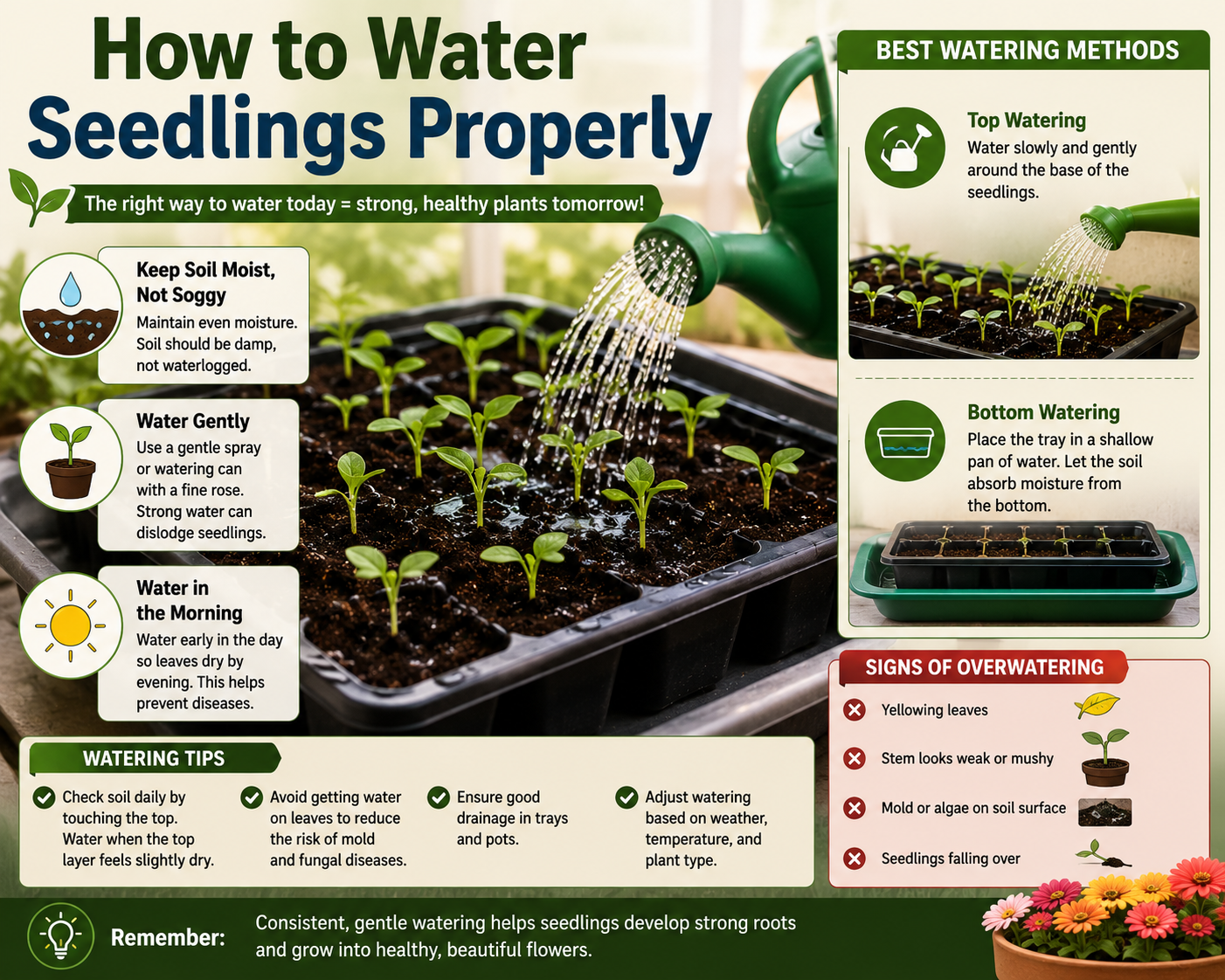
Watering is one of the most important parts of successfully learning to Grow Flowers from seeds. Young seedlings are delicate and need consistent moisture without becoming waterlogged.
Follow these watering tips:
Keep the Soil Evenly Moist
Seedlings grow best when the soil stays consistently moist.
Check the soil daily by touching the surface. If it feels dry, water gently.
Water from the Bottom When Possible
Place seed trays in a shallow tray filled with water for several minutes.
This allows the soil to absorb moisture from below while keeping stems and leaves dry.
Bottom watering also helps reduce fungal diseases.
Avoid Overwatering
Too much water can cause:
- Root rot
- Mold growth
- Damping-off disease
- Weak root development
Allow excess water to drain completely after watering.
Water Early in the Day
Morning watering gives seedlings time to dry before evening, reducing the risk of fungal problems.
Avoid watering late at night whenever possible.
Best Soil and Fertilizer
Healthy soil provides the foundation for strong flowers. Using the right growing medium helps seeds germinate quickly and encourages healthy root development.
Choosing the Best Soil
For the best results, use a high-quality seed-starting mix rather than regular garden soil.
A good seed-starting mix should be:
- Light and fluffy
- Well-draining
- Free of weeds
- Sterile
- Rich in organic materials
Heavy soil can compact easily and make it difficult for seedlings to grow.
Fertilizing Young Seedlings
Seeds contain enough nutrients for initial growth, so fertilizer isn’t needed immediately.
Once seedlings develop two to three sets of true leaves, begin feeding them with a diluted, balanced liquid fertilizer every two to three weeks.
Avoid applying too much fertilizer because excessive nutrients may encourage leafy growth instead of flowers.
Compost can also be added to garden beds before transplanting to improve soil fertility naturally.
Sunlight Requirements
Light is essential if you want to Grow Flowers that are healthy, strong, and full of colorful blooms.
Different flower varieties have different light requirements, but most flowering plants thrive in full sun.
Full Sun
Flowers needing full sun require at least 6–8 hours of direct sunlight each day.
Examples include:
- Sunflowers
- Zinnias
- Marigolds
- Cosmos
- Petunias
Partial Sun
Some flowers perform well with 4–6 hours of sunlight.
Examples include:
- Impatiens
- Begonias
- Foxgloves
Shade-Loving Flowers
Certain flowers prefer limited sunlight and grow better in shaded gardens.
Examples include:
- Bleeding Heart
- Astilbe
- Coleus
Always read the seed packet carefully to match each flower’s sunlight needs with your garden conditions.
Common Germination Problems and Solutions
Even experienced gardeners occasionally face germination problems. Fortunately, most issues can be solved with simple adjustments.
| Problem | Possible Cause | Solution |
|---|---|---|
| Seeds fail to sprout | Old or poor-quality seeds | Use fresh seeds from a trusted supplier |
| Slow germination | Low temperatures | Keep the soil warm between 65°F–75°F (18°C–24°C) |
| Mold on soil | Excess moisture and poor airflow | Water less and improve ventilation |
| Seedlings fall over | Damping-off disease | Use sterile seed-starting mix and avoid overwatering |
| Weak, leggy seedlings | Insufficient light | Move seedlings to a brighter location or use grow lights |
| Yellow leaves | Overwatering or nutrient deficiency | Adjust watering and apply diluted fertilizer when appropriate |
| Uneven germination | Inconsistent moisture | Keep the soil evenly moist throughout germination |
Transplanting Seedlings
Once your seedlings have developed several sets of true leaves and the weather is suitable, it’s time to move them into your garden or larger containers. Proper transplanting helps young plants establish strong roots and continue growing without unnecessary stress.
Before transplanting, make sure your seedlings have been hardened off by gradually exposing them to outdoor conditions over 7–10 days. This process helps them adjust to sunlight, wind, and changing temperatures.
Follow these steps for successful transplanting:
- Water the seedlings a few hours before transplanting.
- Choose a cool, cloudy day or transplant during the early morning or evening.
- Prepare the garden bed by loosening the soil and mixing in compost if needed.
- Dig a hole slightly larger than the seedling’s root ball.
- Carefully remove the seedling without damaging its roots.
- Place it in the hole at the same depth it was growing in the container.
- Gently firm the soil around the roots.
- Water thoroughly after planting.
Leave enough space between plants according to the recommendations on the seed packet. Proper spacing improves air circulation, reduces disease, and allows each plant to receive enough sunlight.
Caring for Young Flower Plants
After transplanting, consistent care will help your flowers grow stronger and produce abundant blooms. Healthy plants are better able to resist pests, diseases, and changing weather conditions.
Water Consistently
Young flower plants need regular watering until their roots become established.
Keep these tips in mind:
- Water deeply rather than lightly.
- Allow the top layer of soil to dry slightly between watering.
- Avoid wetting the leaves whenever possible.
- Water early in the morning to reduce evaporation.
Feed Plants Regularly
Once plants are actively growing, apply a balanced flower fertilizer every few weeks according to the product instructions.
You can also improve soil fertility naturally by adding:
- Compost
- Well-rotted manure
- Organic mulch
These materials slowly release nutrients while improving soil structure.
Remove Weeds
Weeds compete with flowers for water, nutrients, and sunlight.
Check your flower beds regularly and remove weeds before they spread. Applying a layer of mulch around your plants also helps suppress weed growth while conserving soil moisture.
Support Tall Flowers
Some flowers, such as sunflowers, delphiniums, and cosmos, may require support as they grow taller.
Use:
- Garden stakes
- Plant cages
- Soft garden ties
Providing support early prevents stems from bending or breaking during windy weather.
Encourage More Blooms
Many flowering plants continue blooming longer if faded flowers are removed regularly.
This process, known as deadheading, encourages the plant to produce new buds instead of using energy to produce seeds.
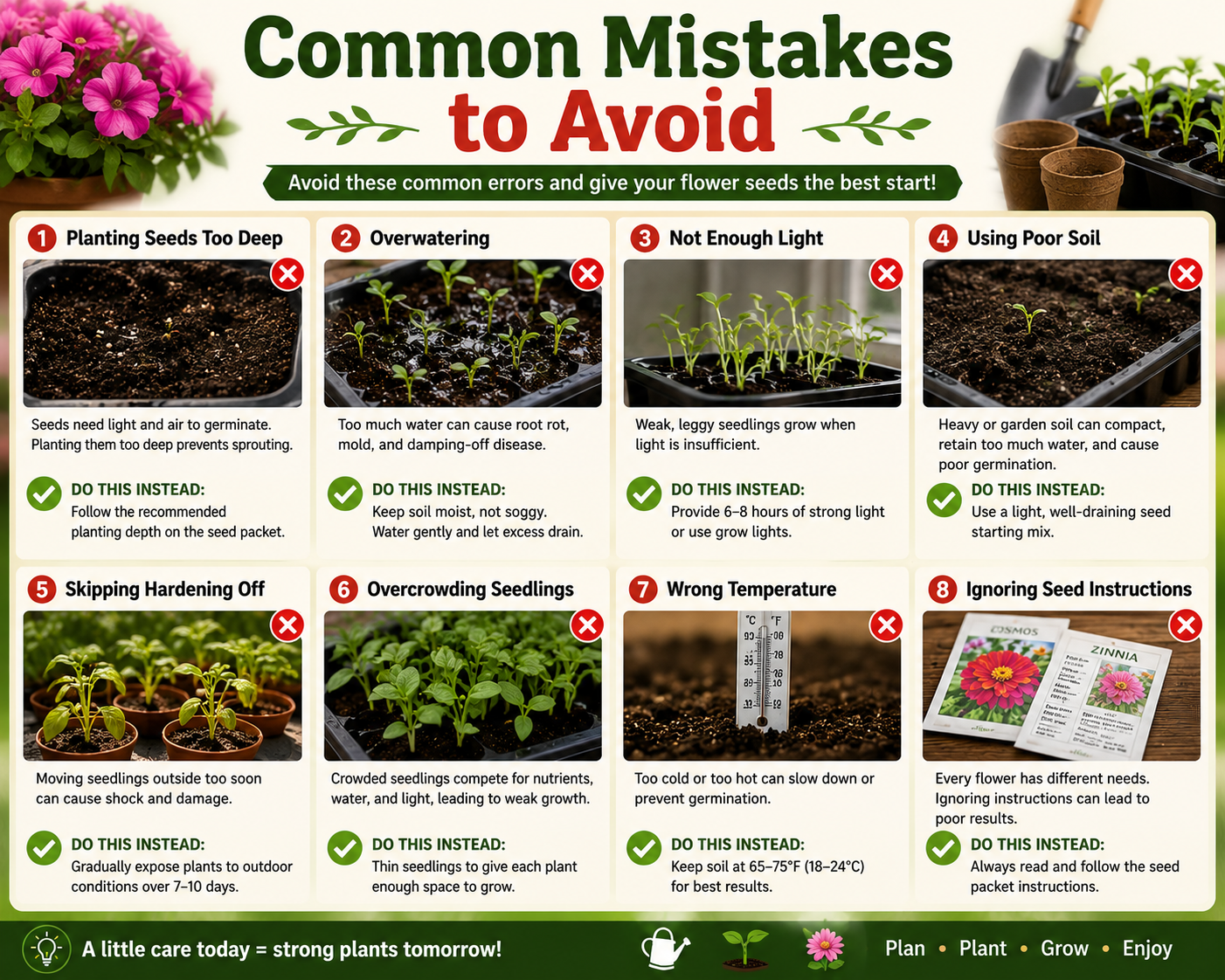
Common Mistakes to Avoid
Even with the best intentions, beginners often make mistakes that can affect plant growth. Avoiding these common errors will help you Grow Flowers successfully and enjoy healthier blooms.
Planting Seeds Too Deep
Many flower seeds need light to germinate. Planting them too deep can prevent them from sprouting.
Always follow the planting depth recommended on the seed packet.
Overwatering
One of the most common gardening mistakes is giving seedlings too much water.
Overwatering can lead to:
- Root rot
- Mold growth
- Damping-off disease
- Poor root development
Water only when the soil begins to feel slightly dry.
Using Poor-Quality Soil
Heavy garden soil may become compacted and reduce airflow around young roots.
Instead, choose a light, well-draining seed-starting mix for germination and improve garden soil with compost before transplanting.
Ignoring Sunlight Requirements
Different flowers require different amounts of sunlight.
Planting sun-loving flowers in shaded areas often results in weak growth and fewer blooms.
Read seed packets carefully before choosing planting locations.
Skipping Hardening Off
Moving indoor seedlings directly into the garden can cause transplant shock.
Gradually exposing plants to outdoor conditions helps them adapt more successfully.
Overcrowding Plants
Planting flowers too close together reduces airflow and increases the risk of diseases.
Proper spacing also allows plants to develop stronger roots and larger blooms.
Seasonal Tips
Gardening tasks change throughout the year. Following seasonal care practices helps keep your flower garden healthy and productive.
Spring
Spring is the ideal season to start most flower seeds.
Tasks include:
- Start seeds indoors.
- Prepare garden beds.
- Add compost to improve soil.
- Transplant seedlings after the last frost.
Summer
During warm weather, flowers grow quickly and produce abundant blooms.
Remember to:
- Water deeply during dry periods.
- Apply mulch to retain moisture.
- Deadhead spent flowers.
- Monitor plants for pests and diseases.
Autumn
Autumn is the perfect time to prepare your garden for the next growing season.
Helpful tasks include:
- Collect seeds from healthy flowers.
- Remove diseased plant material.
- Plant cool-season flowers where appropriate.
- Add compost to improve soil over winter.
Winter
Although flower growth slows during winter, gardeners can still prepare for the coming season.
Use this time to:
- Organize seed packets.
- Clean and disinfect seed trays.
- Plan next year’s flower garden.
- Order new flower seeds early.
Seasonal care ensures your garden remains productive year after year.
Conclusion
Learning how to Grow Flowers from seeds is a rewarding journey that combines patience, care, and creativity. Whether you’re planting a few containers on a balcony or creating a colorful backyard garden, starting flowers from seeds allows you to enjoy a wider selection of beautiful blooms while saving money.
Success begins with choosing quality seeds, using well-draining soil, providing enough sunlight, and maintaining consistent watering. As your seedlings grow, proper transplanting, regular feeding, and seasonal care will help them develop into healthy, vibrant plants that brighten your outdoor space.
Remember that every garden is unique, and each growing season offers new opportunities to learn. Don’t be discouraged if every seed doesn’t sprout or every plant doesn’t perform perfectly. With practice and the techniques shared in this guide, you’ll gain confidence and enjoy a garden filled with colorful flowers year after year.
Frequently Asked Questions (FAQs)
1. How long does it take to grow flowers from seeds?
It depends on the flower variety. Most annual flowers germinate within 7–21 days and bloom in 8–12 weeks, while many perennials take longer to flower.
2. Can I grow flowers from seeds indoors?
Yes. Starting seeds indoors allows you to control temperature, moisture, and lighting while giving plants a head start before the outdoor growing season.
3. How often should I water flower seedlings?
Keep the soil consistently moist but not soggy. Check the soil daily and water when the top surface begins to dry.
4. Which flowers are easiest for beginners to grow from seeds?
Marigolds, zinnias, sunflowers, cosmos, calendula, nasturtiums, and sweet alyssum are excellent choices because they germinate easily and require minimal maintenance.
5. Why aren’t my flower seeds germinating?
Common reasons include planting seeds too deeply, using old seeds, incorrect temperatures, inconsistent moisture, or insufficient light. Following the instructions on the seed packet usually improves germination.
6. When should I transplant flower seedlings outdoors?
Transplant seedlings after they have developed several true leaves, been hardened off, and the danger of frost has passed.
You can also check our article Best Herbs: 15 Easy Herbs to Grow