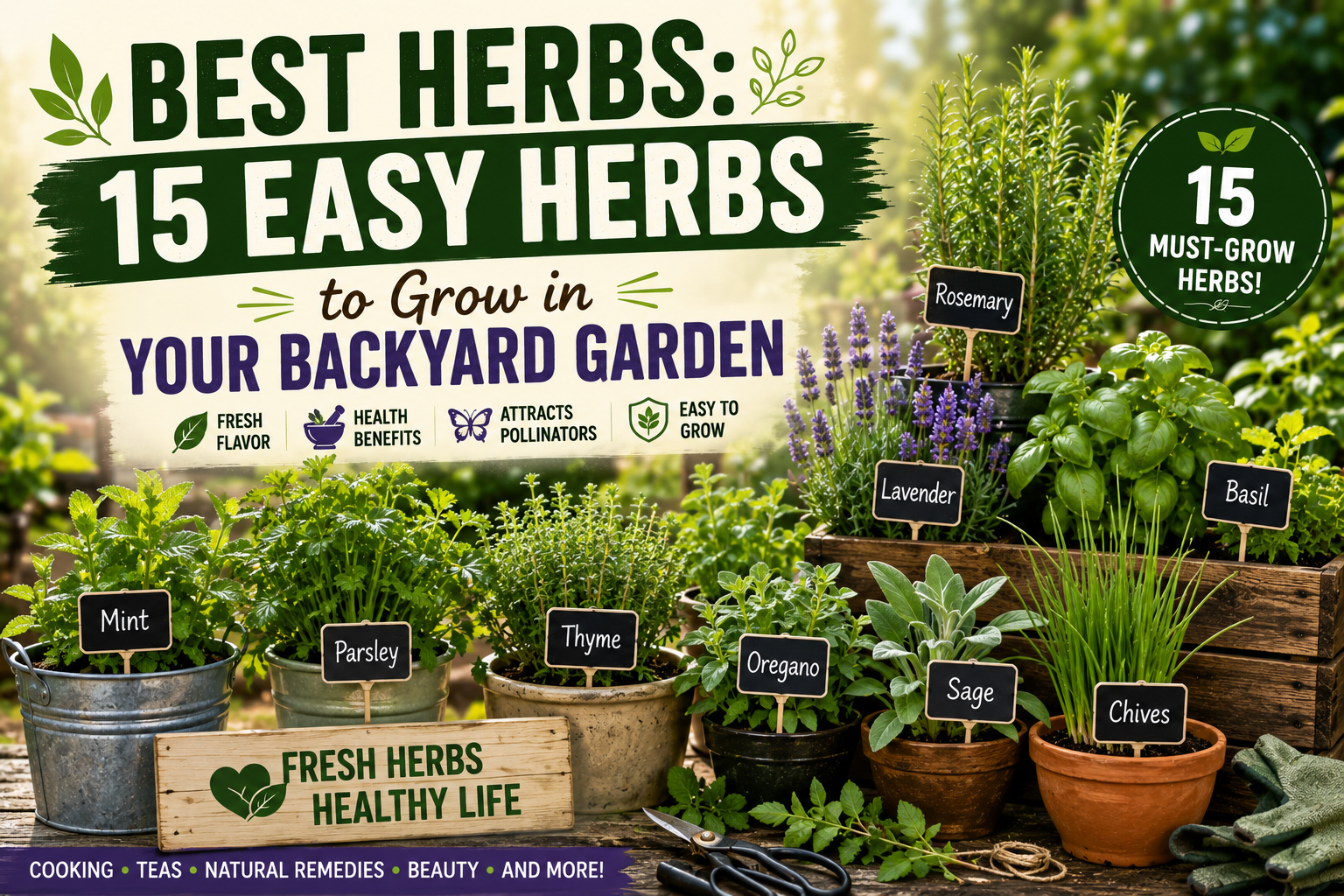
Growing herbs at home is one of the easiest and most rewarding ways to start gardening. Whether you have a spacious backyard, a small raised bed, or a few containers on your patio, herbs are simple to grow and provide fresh flavors for cooking, natural fragrances, and even medicinal benefits. Many of the Best Herbs require very little maintenance, making them perfect for beginners as well as experienced gardeners. From aromatic basil and rosemary to refreshing mint and parsley, homegrown herbs can transform everyday meals while adding beauty and biodiversity to your garden.
Besides their culinary uses, herbs attract beneficial pollinators such as bees and butterflies, improve garden health, and often help repel common garden pests naturally. They also save money by providing a continuous supply of fresh herbs throughout the growing season. With proper sunlight, healthy soil, and regular watering, you can enjoy a productive herb garden almost year-round. In this guide, you’ll learn why growing herbs at home is worthwhile, discover the many benefits of planting the Best Herbs, understand the key factors to consider before getting started, and compare the most popular herb gardening methods to choose the one that fits your space and lifestyle.
Why Grow Herbs at Home?
Growing herbs at home offers fresh ingredients, beautiful greenery, and countless practical benefits. Unlike many vegetables, herbs are compact, easy to maintain, and grow well in a variety of spaces, including raised beds, containers, and traditional garden plots.
Fresh herbs provide better flavor than dried store-bought options and can be harvested whenever needed. Many herbs also produce attractive flowers that attract bees, butterflies, and other pollinators, creating a healthier backyard ecosystem.
Reasons to Grow Herbs at Home
- Enjoy fresh herbs whenever you cook.
- Save money on grocery bills.
- Grow chemical-free herbs naturally.
- Add fragrance and beauty to your garden.
- Attract bees and beneficial insects.
- Help repel certain garden pests.
- Make herbal teas and natural remedies.
- Enjoy a relaxing and rewarding gardening hobby.
Whether you’re growing herbs for cooking, wellness, or decoration, they are among the easiest plants to maintain in any backyard garden.
Benefits of Growing the Best Herbs
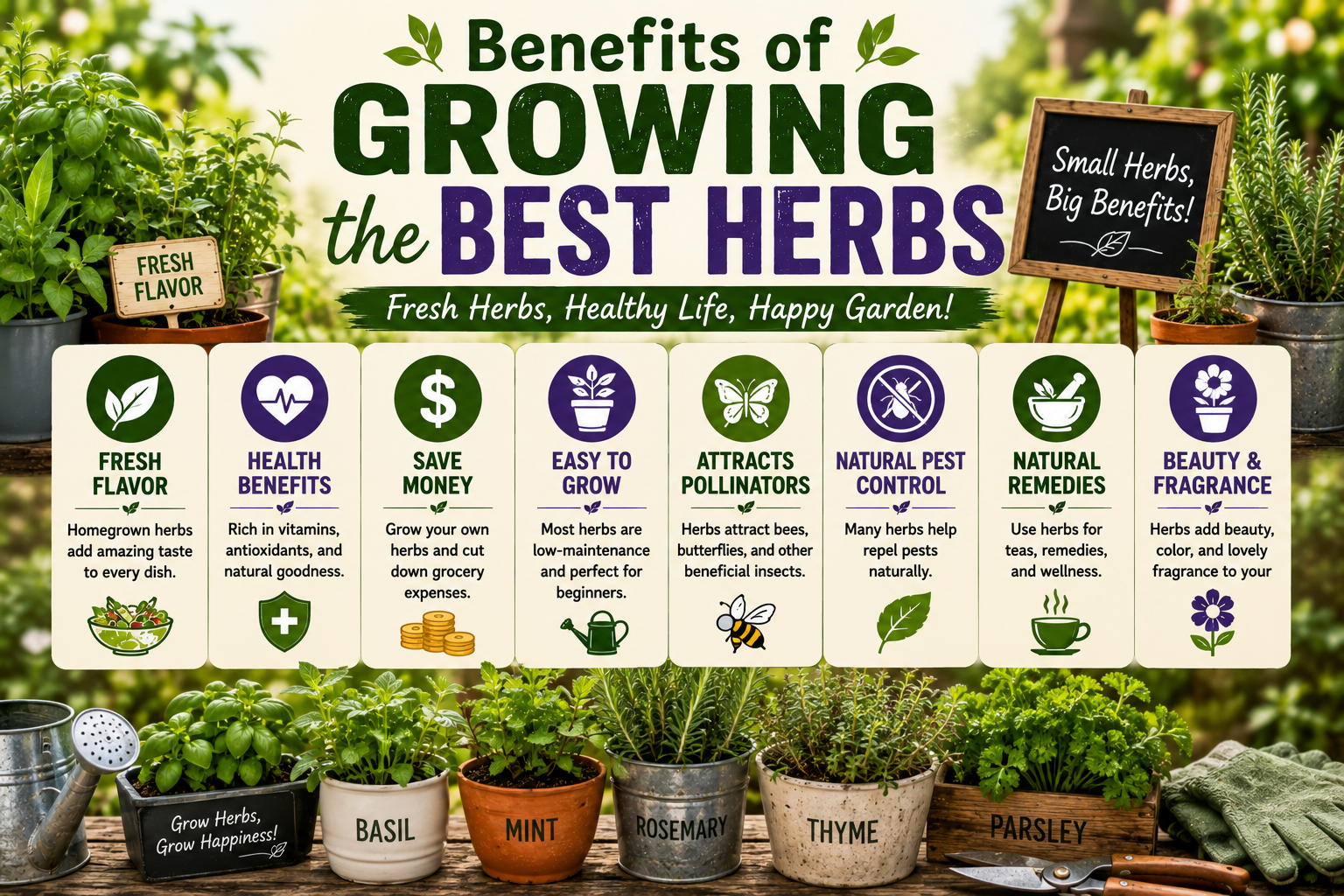
Choosing the Best Herbs makes gardening more enjoyable because these plants are easy to care for, productive, and useful in many ways.
Fresh Flavor All Season
Homegrown herbs provide fresh leaves that enhance the taste of salads, soups, pasta, grilled meats, and many other dishes.
Beginner-Friendly
Most herbs require only:
- Plenty of sunlight
- Well-drained soil
- Moderate watering
- Occasional pruning
This makes them ideal for first-time gardeners.
Supports Pollinators
Flowering herbs such as lavender, thyme, oregano, and basil attract bees, butterflies, and other beneficial insects that improve pollination throughout your garden.
Natural Pest Control
Several herbs naturally repel unwanted insects.
Examples include:
- Basil helps discourage flies and mosquitoes.
- Mint may help deter ants.
- Lavender can discourage moths.
- Rosemary may help repel cabbage moths.
Saves Money
Buying fresh herbs regularly can become expensive. Growing your own provides a continuous harvest for a fraction of the cost.
Environmentally Friendly
Growing herbs at home reduces plastic packaging, transportation emissions, and food waste while encouraging sustainable gardening practices.
Key Benefits
- Fresh herbs all season.
- Low-maintenance gardening.
- Supports pollinators.
- Helps reduce garden pests.
- Saves money.
- Suitable for small spaces.
- Improves backyard biodiversity.
- Perfect for beginners.
Growing the Best Herbs allows you to enjoy fresh harvests while creating a healthier and more attractive backyard garden
Factors to Consider Before Growing Herbs
Proper planning helps herbs thrive and produce abundant harvests throughout the growing season.
Sunlight
Most herbs grow best with 6–8 hours of direct sunlight each day.
Popular sun-loving herbs include:
- Basil
- Rosemary
- Lavender
- Thyme
- Sage
If your garden receives partial shade, herbs like parsley, mint, and cilantro can still perform well.
Soil Quality
Healthy soil is essential for growing strong herbs.
Improve your soil by adding:
- Compost
- Organic matter
- Aged manure
- Worm castings
Choose well-drained soil to prevent root rot.
Water Requirements
Most herbs prefer consistent but moderate watering.
Avoid overwatering because soggy soil can damage herb roots, especially Mediterranean herbs like rosemary and thyme.
Climate
Choose herbs that suit your local growing conditions.
Cool-season herbs include:
- Parsley
- Cilantro
- Dill
Warm-season herbs include:
- Basil
- Rosemary
- Oregano
- Lavender
Growing herbs during their preferred season leads to healthier plants and better harvests.
Available Space
Herbs are extremely versatile and can be grown in:
- Raised garden beds
- Containers
- Window boxes
- Vertical gardens
- Traditional garden plots
Even a sunny balcony can support a productive herb garden.
Harvesting Frequency
Many herbs benefit from regular harvesting.
Frequent trimming encourages:
- Bushier growth
- More leaves
- Longer harvesting periods
Avoid removing more than one-third of the plant at a time.
Comparison Table: Growing Herbs in Raised Beds vs. Containers vs. In-Ground Gardens
| Feature | Raised Beds | Containers | In-Ground Gardens |
|---|---|---|---|
| Best For | Backyard herb gardens | Patios, balconies, and small spaces | Large gardens |
| Soil Control | Excellent | Excellent | Depends on existing soil |
| Drainage | Excellent | Very Good | Varies by soil type |
| Water Needs | Moderate | More frequent | Moderate |
| Weed Control | Easy | Very Easy | Moderate |
| Maintenance | Easy | Easy | Moderate |
| Mobility | Fixed | Portable | Fixed |
| Ideal for Best Herbs | Excellent | Excellent | Excellent |
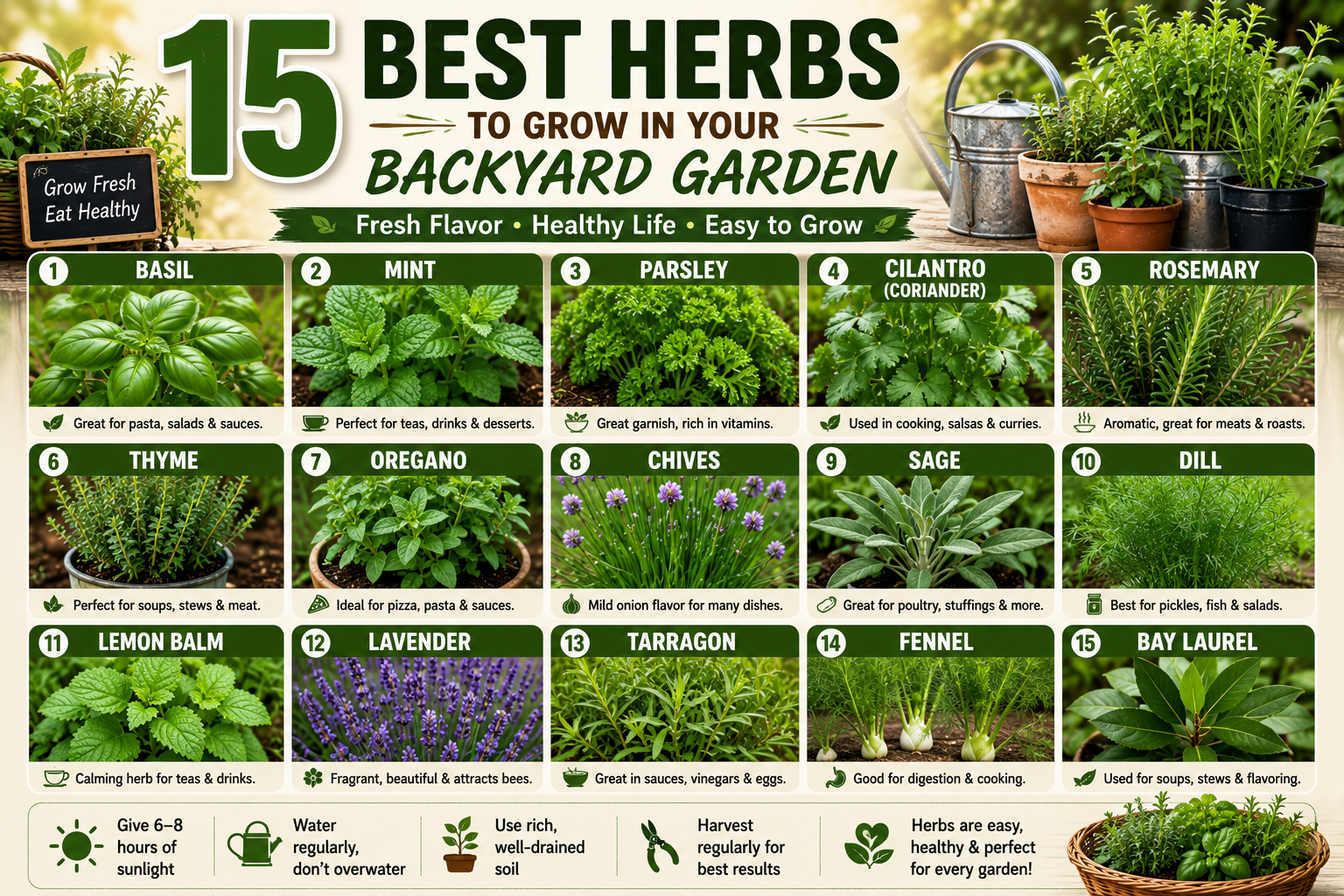
15 Best Herbs to Grow in Your Backyard Garden
Growing the Best Herbs at home is an excellent way to enjoy fresh flavors, natural fragrances, and beautiful greenery throughout the year. Most herbs are easy to maintain, grow well in raised beds, containers, or garden borders, and reward you with repeated harvests. Below are 15 of the Best Herbs every home gardener should consider growing.
Herb #1 – Basil
Basil is one of the Best Herbs for home gardens because it grows quickly and adds fresh flavor to many dishes.
Why It’s One of the Best Herbs
It is easy to grow, highly productive, and perfect for salads, pasta, and pesto.
Growing Requirements
- Full sun (6–8 hours daily)
- Well-drained, fertile soil
- Warm temperatures
Water Needs
Water regularly to keep the soil evenly moist.
Harvest Time
About 50–70 days after planting.
Beginner-Friendly Tips
- Pinch off flower buds to encourage leafy growth.
- Harvest leaves regularly for continuous production.
Herb #2 – Mint
Mint is a vigorous herb that grows rapidly and is ideal for teas, desserts, and refreshing drinks.
Why It’s One of the Best Herbs
It is fast-growing and thrives with minimal care.
Growing Requirements
- Partial to full sun
- Moist, well-drained soil
Water Needs
Keep the soil consistently moist.
Harvest Time
Harvest leaves once plants become well established.
Beginner-Friendly Tips
- Grow mint in containers to prevent it from spreading aggressively.
- Harvest frequently to keep plants healthy.
Herb #3 – Parsley
Parsley is a versatile herb used in countless recipes and garnishes.
Why It’s One of the Best Herbs
It grows well in many climates and produces fresh leaves for months.
Growing Requirements
- Full sun to partial shade
- Rich, fertile soil
Water Needs
Water regularly to maintain moist soil.
Harvest Time
Approximately 70–90 days.
Beginner-Friendly Tips
- Pick the outer stems first.
- Avoid removing more than one-third of the plant at a time.
Herb #4 – Cilantro (Coriander)
Cilantro provides flavorful leaves while its seeds become coriander spice.
Why It’s One of the Best Herbs
It offers two useful harvests from a single plant.
Growing Requirements
- Full sun in cool weather
- Well-drained soil
Water Needs
Keep soil evenly moist.
Harvest Time
About 45–60 days.
Beginner-Friendly Tips
- Sow seeds every few weeks for continuous harvests.
- Grow during spring or autumn for best results.
Herb #5 – Rosemary
Rosemary is a fragrant evergreen herb that adds beauty and flavor to the garden.
Why It’s One of the Best Herbs
It is drought-tolerant and lives for many years.
Growing Requirements
- Full sun
- Sandy, well-drained soil
Water Needs
Water moderately after the soil begins to dry.
Harvest Time
Harvest once plants are well established.
Beginner-Friendly Tips
- Avoid overwatering.
- Prune lightly to encourage bushy growth.
Herb #6 – Thyme
Thyme is a hardy herb with tiny aromatic leaves used in many savory dishes.
Why It’s One of the Best Herbs
It tolerates drought and requires very little maintenance.
Growing Requirements
- Full sun
- Well-drained soil
Water Needs
Allow the soil to dry slightly between watering.
Harvest Time
Ready for harvesting after 60–90 days.
Beginner-Friendly Tips
- Trim stems regularly.
- Avoid waterlogged soil.
Herb #7 – Oregano
Oregano is a popular herb for Mediterranean cooking and homemade pizza.
Why It’s One of the Best Herbs
It grows vigorously and produces abundant leaves.
Growing Requirements
- Full sun
- Well-drained soil
Water Needs
Water when the topsoil becomes dry.
Harvest Time
About 80–90 days.
Beginner-Friendly Tips
- Harvest before flowering for the strongest flavor.
- Prune regularly.
Herb #8 – Chives
Chives are attractive herbs with mild onion-flavored leaves.
Why It’s One of the Best Herbs
They regrow quickly after each harvest.
Growing Requirements
- Full sun to partial shade
- Fertile soil
Water Needs
Keep the soil lightly moist.
Harvest Time
Around 60 days.
Beginner-Friendly Tips
- Cut leaves about 2 inches above the soil.
- Divide clumps every few years.
Herb #9 – Sage
Sage is a hardy perennial herb with soft gray-green leaves.
Why It’s One of the Best Herbs
It is long-lasting, drought-tolerant, and highly aromatic.
Growing Requirements
- Full sun
- Well-drained soil
Water Needs
Water only when needed.
Harvest Time
Leaves can be harvested throughout the growing season.
Beginner-Friendly Tips
- Prune after flowering.
- Avoid excessive watering.
Herb #10 – Dill
Dill is a fast-growing herb commonly used in pickling and seafood dishes.
Why It’s One of the Best Herbs
It grows quickly and attracts beneficial pollinators.
Growing Requirements
- Full sun
- Loose, fertile soil
Water Needs
Water regularly.
Harvest Time
About 40–60 days.
Beginner-Friendly Tips
- Plant directly where it will grow.
- Harvest leaves before flowering.
Herb #11 – Lemon Balm
Lemon balm is known for its refreshing citrus fragrance and calming properties.
Why It’s One of the Best Herbs
It grows vigorously and attracts bees.
Growing Requirements
- Full sun to partial shade
- Moist, fertile soil
Water Needs
Water consistently.
Harvest Time
Leaves are ready once plants mature.
Beginner-Friendly Tips
- Trim regularly to prevent spreading.
- Harvest before flowering for the best flavor.
Herb #12 – Lavender
Lavender is valued for its fragrant flowers and ornamental beauty.
Why It’s One of the Best Herbs
It attracts pollinators while naturally helping deter certain pests.
Growing Requirements
- Full sun
- Sandy, well-drained soil
Water Needs
Water sparingly after establishment.
Harvest Time
Harvest flowers just before they fully open.
Beginner-Friendly Tips
- Avoid wet soil.
- Prune after flowering to maintain shape.
Herb #13 – Tarragon
Tarragon is a flavorful herb commonly used in French cuisine.
Why It’s One of the Best Herbs
Its unique taste enhances sauces, poultry, and seafood dishes.
Growing Requirements
- Full sun
- Well-drained soil
Water Needs
Moderate watering.
Harvest Time
Leaves are ready throughout the growing season.
Beginner-Friendly Tips
- Harvest regularly.
- Protect plants during harsh winters.
Herb #14 – Fennel
Fennel produces edible leaves, stems, and seeds with a sweet licorice flavor.
Why It’s One of the Best Herbs
It offers multiple edible parts and attracts beneficial insects.
Growing Requirements
- Full sun
- Rich, fertile soil
Water Needs
Water consistently.
Harvest Time
About 90–110 days.
Beginner-Friendly Tips
- Give plants plenty of space.
- Harvest leaves early for fresh flavor.
Herb #15 – Bay Laurel
Bay laurel is an evergreen shrub grown for its aromatic leaves.
Why It’s One of the Best Herbs
It provides fresh bay leaves year after year.
Growing Requirements
- Full sun to partial shade
- Well-drained soil
Water Needs
Water moderately.
Harvest Time
Leaves may be harvested once the plant becomes established.
Beginner-Friendly Tips
- Grow in containers in colder climates.
- Prune lightly to maintain size.
How to Care for Your Herb Garden
Growing the Best Herbs is simple, but consistent care will help your plants stay healthy, productive, and full of flavor. Whether you’re growing herbs in raised beds, containers, or directly in the ground, following a few basic gardening practices will keep your herb garden thriving throughout the year.
Water Consistently
Most herbs prefer evenly moist soil, but they don’t like sitting in water. Water deeply when the top inch of soil feels dry, especially during hot summer weather. Mediterranean herbs like rosemary, thyme, and lavender require less frequent watering than herbs such as basil, parsley, and mint.
Provide Enough Sunlight
Most of the Best Herbs need at least 6–8 hours of direct sunlight every day. If your garden receives partial shade, choose herbs like mint, parsley, cilantro, or lemon balm that tolerate lower light conditions.
Feed the Soil Naturally
Healthy soil produces healthier herbs. Add compost or well-rotted organic matter once or twice each growing season to improve soil fertility.
Natural soil amendments include:
- Compost
- Worm castings
- Aged manure
- Organic fertilizers
These materials slowly release nutrients while improving soil structure.
Prune and Harvest Regularly
Regular harvesting encourages herbs to produce more leaves and maintain a compact shape.
For best results:
- Harvest in the morning after the dew has dried.
- Remove flower buds from leafy herbs like basil.
- Trim herbs regularly to encourage bushier growth.
- Avoid removing more than one-third of the plant at a time.
Control Weeds
Weeds compete with herbs for water and nutrients. Remove weeds regularly to keep your herb garden healthy and tidy.
Watch for Pests and Diseases
Although many herbs naturally resist pests, it’s still important to inspect your plants regularly.
Look for:
- Yellow leaves
- Holes in foliage
- Wilting stems
- Insect damage
Early detection makes problems much easier to manage using natural gardening methods.
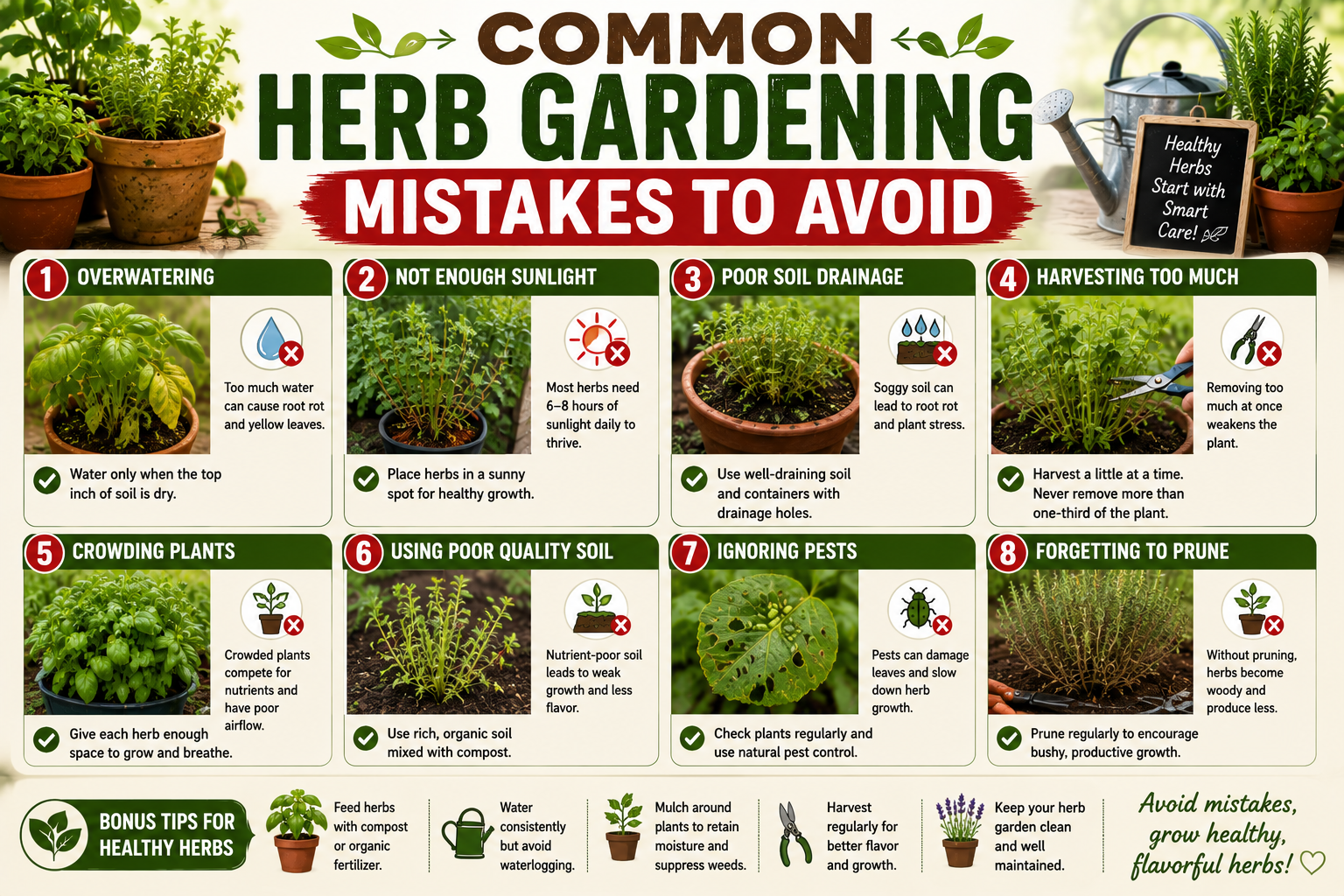
Common Herb Gardening Mistakes to Avoid
Even though herbs are among the easiest plants to grow, beginners often make simple mistakes that reduce plant health and harvests.
Overwatering
This is one of the most common problems.
Too much water can cause:
- Root rot
- Yellow leaves
- Poor growth
Always check soil moisture before watering.
Planting Herbs in Too Much Shade
Most herbs thrive in sunny locations.
Insufficient sunlight often results in:
- Weak stems
- Slow growth
- Fewer leaves
- Reduced flavor
Choose the brightest location available whenever possible.
Poor Soil Drainage
Heavy, compacted soil can damage herb roots.
Improve drainage by adding:
- Compost
- Coarse sand
- Organic matter
Well-drained soil is especially important for rosemary, thyme, lavender, and sage.
Harvesting Too Much at Once
Removing too many leaves weakens plants.
Instead:
- Harvest little and often.
- Leave enough foliage for continued growth.
- Use clean scissors or pruning shears.
Ignoring Plant Spacing
Crowded herbs reduce airflow and increase disease risk.
Always follow the recommended spacing for each herb variety.
Forgetting to Prune
Regular pruning keeps herbs productive and prevents them from becoming woody or leggy.
Seasonal Herb Gardening Tips
Each season requires different care to keep the Best Herbs healthy and productive.
Spring
It is the ideal season for planting most herbs.
Spring Checklist
- Prepare the soil with compost.
- Plant new herbs after the last frost.
- Divide mature herb plants.
- Apply mulch around plants.
- Begin regular watering.
Summer
Warm weather encourages rapid herb growth.
Summer Checklist
- Water deeply during dry periods.
- Harvest herbs frequently.
- Remove flower buds from leafy herbs.
- Watch for pests.
- Add fresh mulch if needed.
Autumn
It is an excellent time to prepare herbs for cooler weather.
Autumn Checklist
- Harvest remaining herbs.
- Dry or freeze excess leaves.
- Add compost around perennial herbs.
- Remove unhealthy plant material.
- Plant cool-season herbs where suitable.
Winter
Many perennial herbs continue growing slowly during winter in mild climates.
Winter Checklist
- Protect tender herbs from frost.
- Reduce watering.
- Move containers indoors if necessary.
- Prune dead growth.
- Plan next season’s herb garden.
Following these seasonal gardening tasks will help your herbs remain healthy and productive year after year.
Conclusion
Growing the Best Herbs in your backyard garden is one of the easiest ways to enjoy fresh ingredients, beautiful plants, and a healthier outdoor space. Herbs require relatively little maintenance, grow well in containers, raised beds, or traditional garden plots, and reward gardeners with continuous harvests throughout the growing season.
Whether you choose basil, parsley, rosemary, mint, thyme, or lavender, each herb offers unique flavors, fragrances, and practical benefits. Many herbs also attract pollinators, naturally discourage certain pests, and support a more balanced garden ecosystem.
Success starts with choosing the right location, preparing healthy soil, watering correctly, and harvesting regularly. By avoiding common gardening mistakes and following seasonal care routines, your herb garden will continue producing fresh, aromatic leaves for months or even years.
Start with a few easy herbs that match your cooking style and available space. As your confidence grows, expand your collection and enjoy the satisfaction of harvesting fresh herbs straight from your own backyard garden.
Frequently Asked Questions (FAQs)
1. What are the easiest herbs for beginners to grow?
Basil, mint, parsley, chives, thyme, oregano, and rosemary are among the easiest herbs for beginner gardeners because they require minimal care and grow reliably.
2. Can herbs grow in containers?
Yes. Most herbs grow very well in containers, making them perfect for patios, balconies, and small backyard spaces. Ensure the containers have good drainage and receive enough sunlight.
3. How much sunlight do herbs need?
Most herbs need 6–8 hours of direct sunlight each day. Herbs like mint, parsley, and cilantro can tolerate partial shade.
4. How often should I water herbs?
Water when the top inch of soil feels dry. Herbs growing in containers usually need watering more frequently than those planted in the ground.
5. When is the best time to harvest herbs?
Harvest herbs in the morning after the dew has dried but before the day becomes too hot. This is when the leaves contain the highest concentration of essential oils and flavor.
6. Which herbs come back every year?
Perennial herbs such as rosemary, thyme, oregano, sage, lavender, chives, and bay laurel return year after year when grown in suitable climates.3
7. How can I keep my herb garden healthy naturally?
Improve the soil with compost, water consistently, apply mulch, remove weeds regularly, encourage beneficial insects, and avoid overusing chemical fertilizers for a naturally healthy herb garden.
You can also check our article Easiest Vegetables