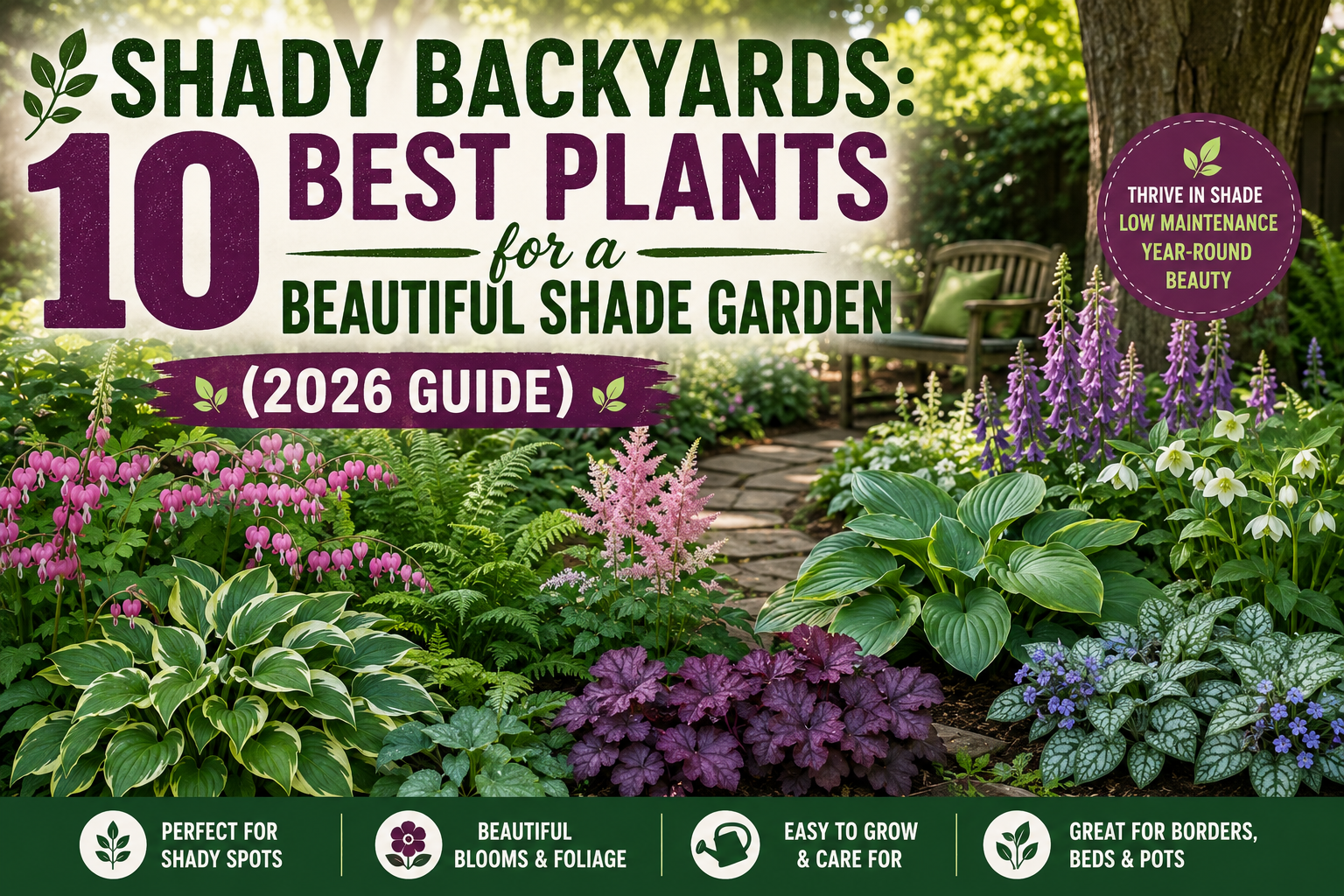
Many gardeners believe that a backyard needs full sunlight to be beautiful, but that’s far from the truth. Shady Backyards can be transformed into lush, colorful, and relaxing outdoor spaces with the right selection of shade-loving plants. Whether your backyard is shaded by tall trees, nearby buildings, or fences, there are plenty of plants that thrive in low-light conditions and bring texture, color, and year-round interest to your landscape.
Choosing plants that naturally prefer partial or full shade is the key to creating a healthy and low-maintenance garden. These plants often feature attractive foliage, delicate flowers, and unique shapes that add depth and beauty where sun-loving plants might struggle. Many shade-loving varieties are also easy to grow, making them perfect for both beginner and experienced gardeners.
In this guide, you’ll discover the best plants for Shady Backyards, learn what to consider before planting, and explore beautiful options that flourish in shaded areas. Whether you’re planning a peaceful woodland garden, refreshing an existing landscape, or filling empty corners of your yard, these plants will help you create a vibrant and inviting outdoor space.
Why Choosing the Right Plants for Shady Backyards Matters
Not every plant can thrive in areas with limited sunlight. Choosing species that are naturally adapted to shade helps ensure healthy growth, vibrant foliage, and long-lasting beauty. By selecting the right plants for Shady Backyards, you can create a garden that remains attractive throughout the year with less effort.
Here are some of the main benefits of growing shade-loving plants.
Healthy Plant Growth
Plants that are suited to shady conditions grow stronger because they receive the amount of light they naturally need. They are less likely to suffer from scorched leaves, wilting, or slow growth.
Lush Green Foliage
Many shade-loving plants are valued for their attractive leaves rather than their flowers. Their rich green, blue, silver, or variegated foliage creates a calm and refreshing atmosphere in shaded areas.
Adds Color to Dark Spaces
Although shaded gardens receive less sunlight, they don’t have to look dull. Many shade-loving plants produce colorful flowers that brighten even the darkest corners of your backyard.
Lower Water Requirements
Shaded soil usually stays moist longer than sunny areas. As a result, many plants grown in Shady Backyards require less frequent watering, helping you conserve water during the growing season.
Creates a Relaxing Outdoor Environment
A shaded garden filled with beautiful plants provides a cool and peaceful retreat during warm weather. It becomes an ideal place to relax, read, or spend time with family and friends.
Factors to Consider Before Choosing Shade-Loving Plants
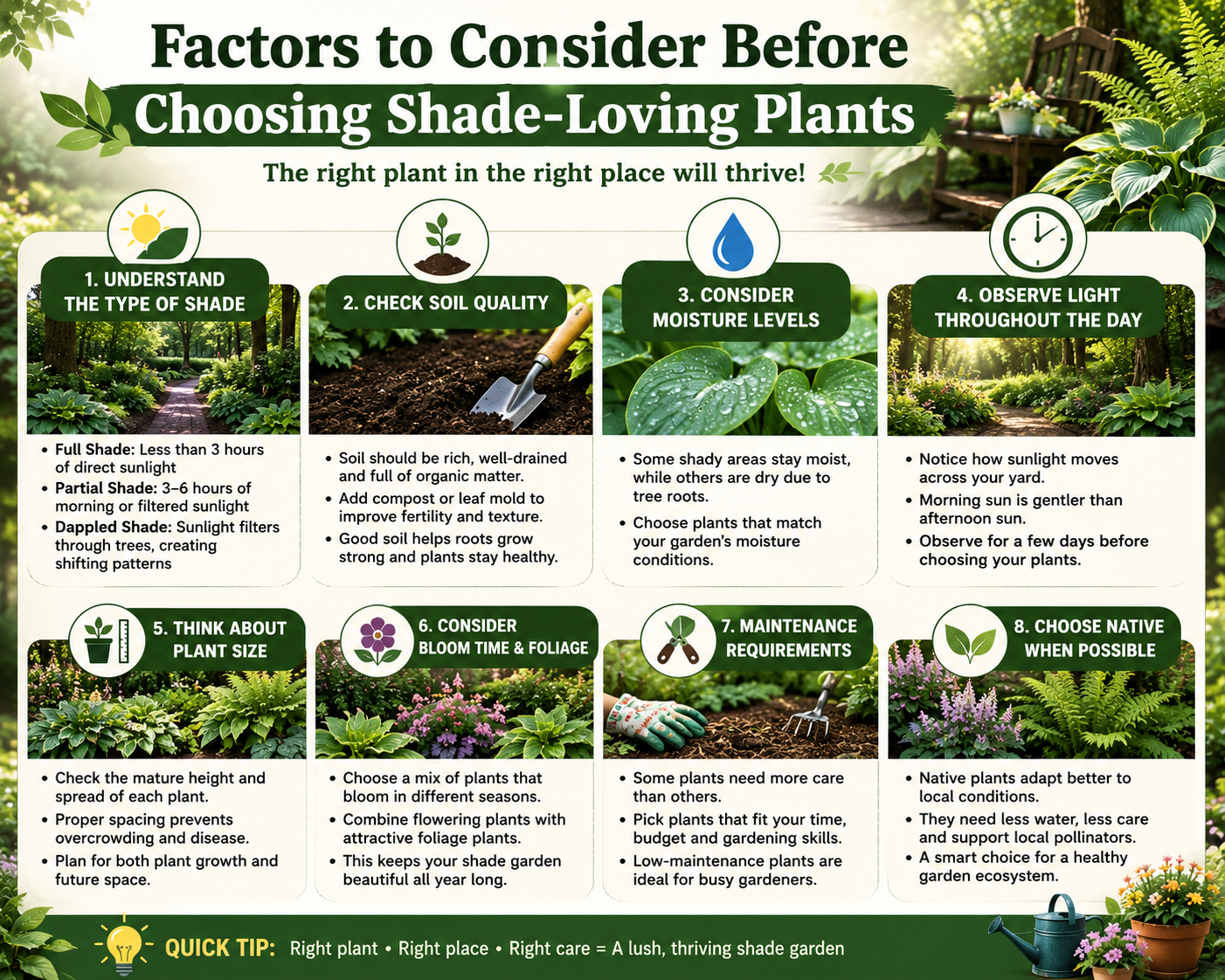
Before selecting plants for your Shady Backyards, take time to understand the growing conditions in your garden. Even shade-loving plants have different preferences, so matching the right plant to the right location is essential.
Understand the Type of Shade
Not all shade is the same. Knowing how much light your garden receives will help you choose suitable plants.
Types of Shade
- Full Shade: Less than 3 hours of direct sunlight each day.
- Partial Shade: Around 3–6 hours of morning or filtered sunlight.
- Dappled Shade: Sunlight filters through tree branches, creating shifting patterns of light and shade.
Observe your backyard throughout the day to determine which type of shade is present.
Check Soil Quality
Healthy soil supports strong root development and vigorous plant growth. Improve poor soil by mixing in compost or other organic matter before planting.
Consider Moisture Levels
Some shaded areas stay damp because they receive little direct sunlight, while others beneath large trees may become quite dry due to root competition.
Choose plants that match your soil’s moisture conditions for the best results.
Think About Plant Size
Consider the mature height and spread of each plant before planting. Proper spacing improves airflow and reduces the risk of fungal diseases.
H3: Tips for Choosing Shade-Loving Plants
- Choose plants suited to your shade level.
- Improve soil with compost before planting.
- Group plants with similar watering needs.
- Mix flowering plants with attractive foliage plants.
- Include native plants whenever possible.
- Select plants with different blooming seasons for year-round interest.
Planning ahead will help your Shady Backyards remain healthy, colorful, and easy to maintain.
Plant #1 – Hosta
Hostas are among the most popular plants for Shady Backyards because of their large, decorative leaves and exceptional adaptability. They are available in many sizes and foliage colors, including green, blue, gold, and variegated varieties.
Hostas create attractive borders, ground covers, and foundation plantings while requiring very little maintenance.
Why It’s Ideal for Shady Backyards
- Thrives in partial to full shade
- Attractive foliage throughout the growing season
- Easy to grow
- Excellent for borders and pathways
Growing Requirements
- Partial to full shade
- Rich, well-drained soil
- Organic matter added before planting
Water Needs
Keep the soil consistently moist, especially during hot, dry weather. Mulching helps retain moisture.
Maintenance Tips
- Remove damaged leaves as needed.
- Divide mature clumps every four to five years.
- Apply mulch each spring to conserve moisture.
Plant #2 – Ferns
Ferns are classic shade garden plants that add graceful texture and lush greenery to Shady Backyards. Their delicate fronds create a natural woodland appearance and blend beautifully with flowering shade plants.
Popular varieties include Japanese painted fern, lady fern, and ostrich fern.
Why It’s Ideal for Shady Backyards
- Beautiful, feathery foliage
- Thrives in cool, shaded areas
- Excellent for woodland gardens
- Low maintenance
Growing Requirements
- Partial to full shade
- Moist, well-drained soil
- High organic matter
Water Needs
Water regularly to keep the soil evenly moist, especially during dry periods.
Maintenance Tips
- Remove old fronds in early spring.
- Apply compost annually.
- Keep soil consistently moist but not waterlogged.
Plant #3 – Astilbe
Astilbe is a stunning perennial that brightens Shady Backyards with its soft, feathery flower plumes in shades of pink, white, red, and lavender. It blooms during early to mid-summer and provides attractive foliage even after flowering.
Its elegant appearance makes it perfect for borders, woodland gardens, and shaded flower beds.
Why It’s Ideal for Shady Backyards
- Colorful summer blooms
- Attractive fern-like foliage
- Excellent for moist garden areas
- Attracts butterflies
Growing Requirements
- Partial shade
- Rich, moist soil
- Good drainage
Water Needs
Astilbe prefers consistently moist soil and should not be allowed to dry out completely.
Maintenance Tips
- Water during dry weather.
- Apply compost in spring.
- Remove faded flower stalks after blooming.
- Divide plants every three to four years.
Comparison Table: Best Plants for Shady Backyards
| Plant | Light Requirement | Water Needs | Main Feature | Maintenance Level | Best Garden Use |
|---|---|---|---|---|---|
| Hosta | Partial to Full Shade | Moderate | Large decorative foliage | Low | Borders and ground cover |
| Ferns | Partial to Full Shade | Moderate to High | Soft, feathery foliage | Low | Woodland gardens and shaded beds |
| Astilbe | Partial Shade | High | Colorful feathery flowers | Moderate | Flower borders and moist shaded areas |
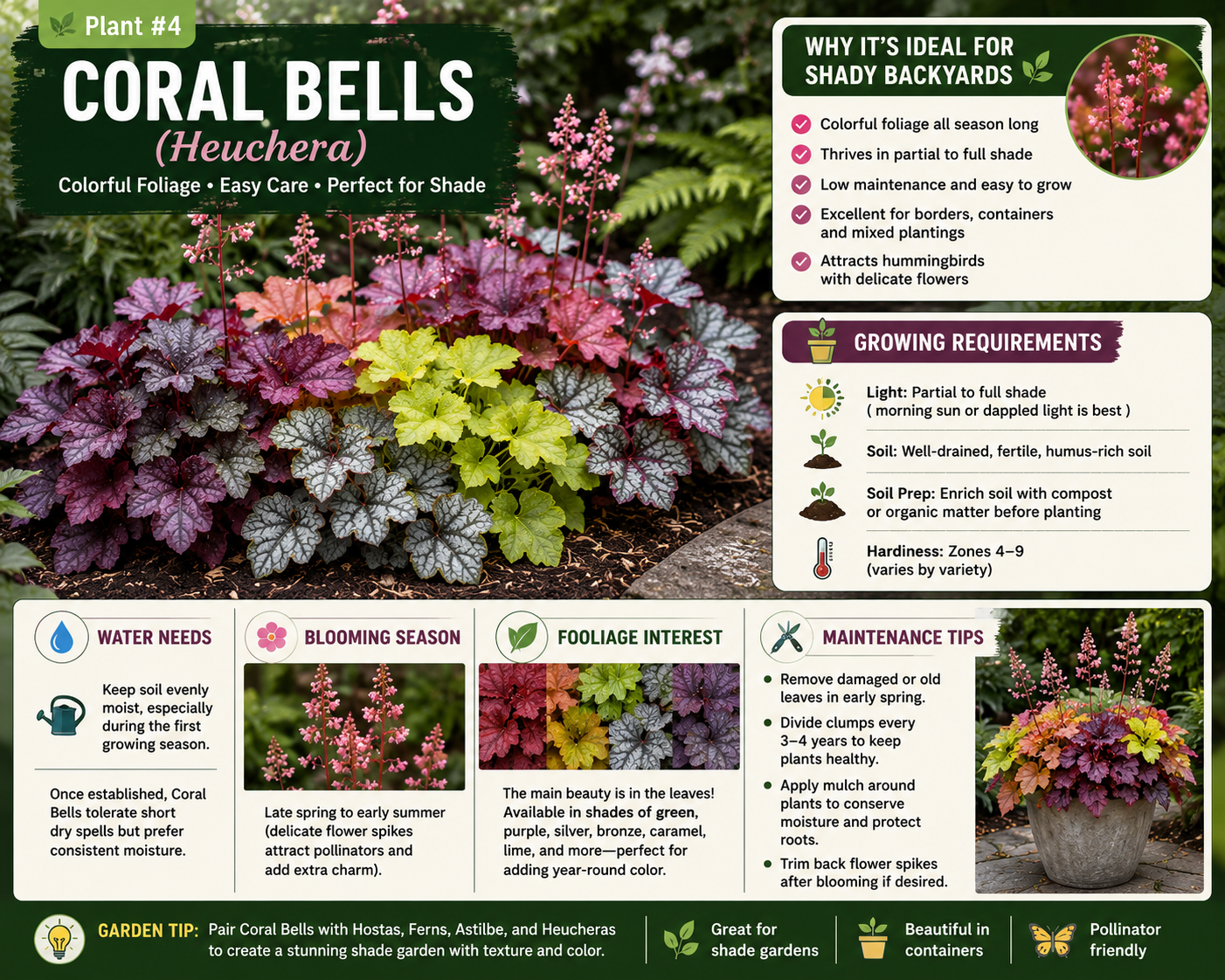
Plant #4 – Coral Bells (Heuchera)
Coral Bells, also known as Heuchera, are prized for their colorful foliage rather than their flowers. Their leaves come in shades of green, purple, silver, red, caramel, and lime, adding year-round interest to Shady Backyards.
During late spring and early summer, they also produce delicate flower spikes that attract hummingbirds and pollinators.
Why It’s Ideal for Shady Backyards
- Colorful foliage throughout the season
- Thrives in partial shade
- Excellent for borders and containers
- Attracts hummingbirds
Growing Requirements
- Partial to full shade
- Well-drained, fertile soil
- Soil enriched with compost
Water Needs
Water regularly during the first growing season. Once established, Coral Bells tolerate short dry periods but perform best in evenly moist soil.
Blooming Season
Late spring through early summer.
Maintenance Tips
- Remove damaged leaves in early spring.
- Divide mature plants every three to four years.
- Apply mulch to help retain soil moisture.
Plant #5 – Bleeding Heart
Bleeding Heart is one of the most elegant flowering plants for Shady Backyards. Its heart-shaped pink or white flowers hang gracefully from arching stems, creating a charming woodland appearance.
It blooms during spring and early summer before entering dormancy in hot weather.
Why It’s Ideal for Shady Backyards
- Beautiful heart-shaped flowers
- Perfect for woodland gardens
- Easy to grow
- Adds early-season color
Growing Requirements
- Partial to full shade
- Rich, well-drained soil
- High organic matter
Water Needs
Keep the soil consistently moist but avoid waterlogging.
Blooming Season
Mid-spring to early summer.
Maintenance Tips
- Apply compost each spring.
- Remove faded flower stems after blooming.
- Allow foliage to die back naturally before trimming.
Plant #6 – Japanese Forest Grass
Japanese Forest Grass is an ornamental grass that brings graceful movement and texture to Shady Backyards. Its arching leaves are available in shades of green, gold, and variegated patterns that brighten shaded spaces.
Unlike many ornamental grasses, it grows exceptionally well in partial shade.
Why It’s Ideal for Shady Backyards
- Attractive cascading foliage
- Brightens dark garden areas
- Low maintenance
- Excellent for borders and pathways
Growing Requirements
- Partial shade
- Moist, well-drained soil
- Sheltered location
Water Needs
Keep the soil evenly moist, especially during dry weather.
Foliage Interest
Spring through autumn, with golden shades developing in fall.
Maintenance Tips
- Remove old foliage in late winter or early spring.
- Apply mulch to conserve moisture.
- Divide mature clumps every few years.
Plant #7 – Lungwort (Pulmonaria)
Lungwort is a charming perennial known for its spotted leaves and clusters of pink, blue, or purple flowers. It thrives in cool, shaded conditions, making it an excellent choice for Shady Backyards.
Its colorful blooms appear early in the season, providing one of the first sources of nectar for pollinators.
Why It’s Ideal for Shady Backyards
- Decorative spotted foliage
- Early spring flowers
- Pollinator friendly
- Excellent ground cover
Growing Requirements
- Partial to full shade
- Rich, moist soil
- Good drainage
Water Needs
Water regularly to keep the soil evenly moist.
Blooming Season
Early to mid-spring.
Maintenance Tips
- Remove damaged leaves after flowering.
- Apply compost annually.
- Divide plants every four years if needed.
Plant #8 – Hellebores (Lenten Rose)
Hellebores, often called Lenten Roses, are among the earliest blooming perennials for Shady Backyards. Their elegant flowers appear in late winter or early spring, adding color when few other plants are in bloom.
They are available in shades of white, pink, purple, green, and deep burgundy.
Why It’s Ideal for Shady Backyards
- Extremely early blooms
- Evergreen foliage in many climates
- Long-lasting flowers
- Deer resistant
Growing Requirements
- Partial shade
- Rich, well-drained soil
- Organic matter added before planting
Water Needs
Water moderately while plants become established. Mature plants tolerate short dry periods.
Blooming Season
Late winter through early spring.
Maintenance Tips
- Remove old foliage before new flowers emerge.
- Mulch annually with compost.
- Avoid disturbing established plants.
Plant #9 – Foamflower (Tiarella)
Foamflower is a native woodland perennial that produces delicate white or pale pink flower spikes above attractive heart-shaped leaves. It spreads slowly to form a beautiful ground cover in Shady Backyards.
Its foliage often develops attractive bronze or reddish tones during autumn.
Why It’s Ideal for Shady Backyards
- Attractive ground cover
- Delicate spring flowers
- Beautiful seasonal foliage
- Supports pollinators
Growing Requirements
- Partial to full shade
- Moist, well-drained soil
- High organic content
Water Needs
Keep the soil evenly moist, particularly during dry spells.
Blooming Season
Mid to late spring.
Maintenance Tips
- Remove faded flower stalks.
- Add compost every spring.
- Divide plants when clumps become crowded.
Plant #10 – Impatiens
Impatiens are one of the most popular annual flowers for Shady Backyards because they bloom continuously from late spring until the first frost. Their bright flowers come in shades of pink, red, purple, white, orange, and coral.
They are perfect for flower beds, borders, hanging baskets, and containers.
Why It’s Ideal for Shady Backyards
- Continuous colorful blooms
- Fast-growing
- Perfect for containers and borders
- Easy for beginners
Growing Requirements
- Partial to full shade
- Rich, well-drained soil
- Sheltered location
Water Needs
Keep the soil consistently moist but avoid soggy conditions.
Blooming Season
Late spring until the first autumn frost.
Maintenance Tips
- Water regularly during hot weather.
- Feed monthly with a balanced fertilizer.
- Remove damaged flowers and stems to keep plants tidy.
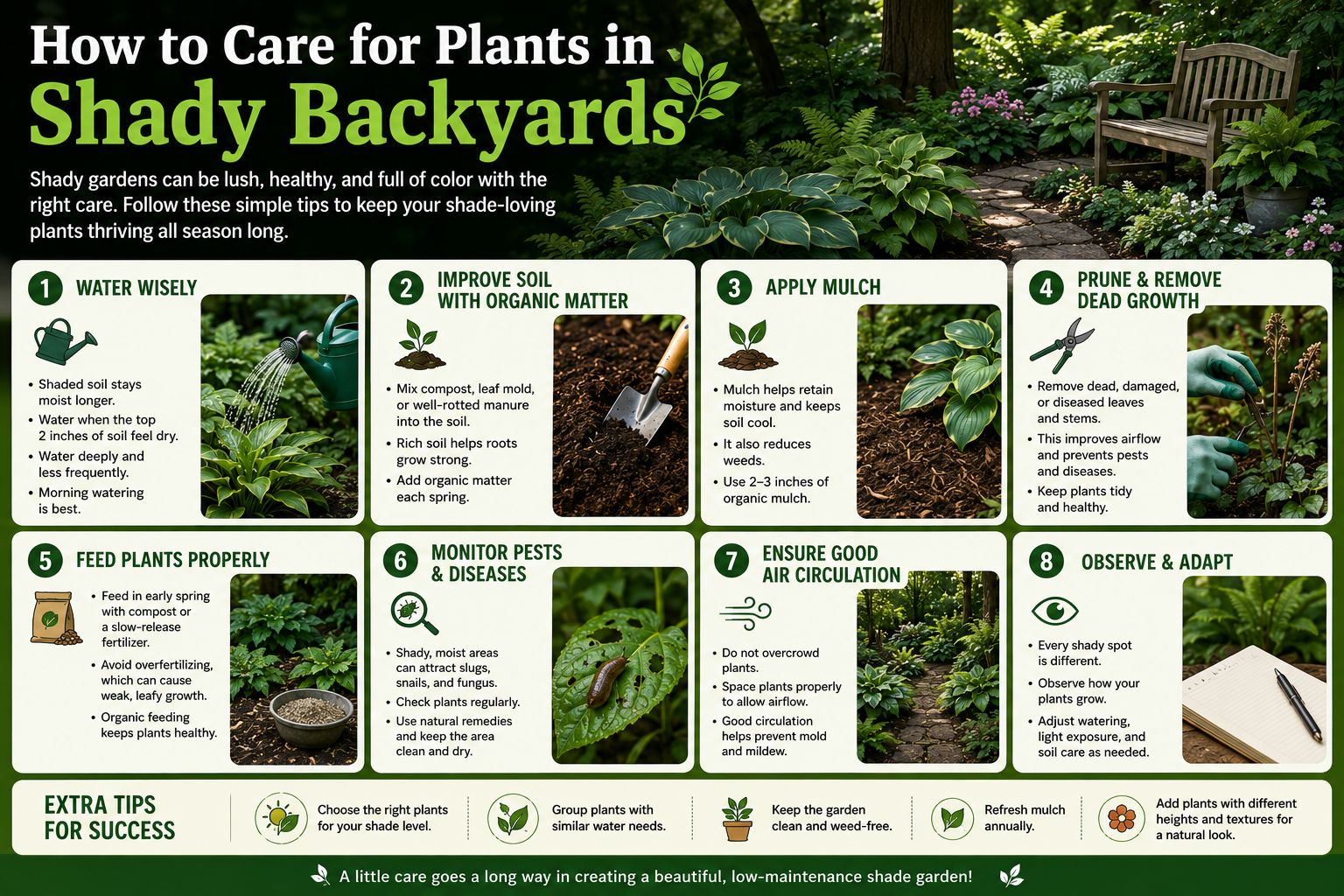
How to Care for Plants in Shady Backyards
Growing healthy plants in Shady Backyards is easier than many people think. Although shade-loving plants require less direct sunlight, they still need proper watering, healthy soil, and regular maintenance to stay vibrant throughout the year. By following a few simple gardening practices, you can create a lush, colorful backyard that remains attractive in every season.
Water Wisely
Shaded areas usually retain moisture longer than sunny locations, so plants often need less frequent watering. However, it’s still important to check the soil before watering.
Insert your finger about two inches into the soil. If it feels dry, it’s time to water. Deep watering encourages stronger root growth and helps plants withstand dry weather.
Watering Tips
- Water early in the morning.
- Water deeply instead of lightly.
- Avoid overwatering.
- Keep leaves as dry as possible.
- Adjust watering during rainy periods.
Improve Soil with Organic Matter
Healthy soil is the foundation of a successful shade garden. Mix compost, leaf mold, or well-rotted manure into the soil before planting and add more organic matter each year.
Rich soil improves drainage, retains moisture, and supplies essential nutrients that help plants grow strong and healthy.
Apply Mulch
Mulching is especially beneficial in Shady Backyards because it helps regulate soil temperature, reduces weed growth, and keeps moisture in the soil.
Organic mulch options include:
- Shredded bark
- Wood chips
- Pine needles
- Compost
- Leaf mulch
Apply a 2- to 3-inch layer around plants while keeping mulch a few inches away from the stems.
Prune and Remove Dead Growth
Regular pruning keeps plants healthy and improves airflow throughout your garden.
Remove:
- Dead leaves
- Damaged stems
- Diseased foliage
- Spent flowers
Cleaning up plants regularly also helps reduce pests and fungal diseases.
Feed Plants Properly
Most shade-loving plants benefit from a slow-release fertilizer or compost applied in early spring.
Avoid overfertilizing, as excessive nutrients can encourage weak, leafy growth instead of healthy flowers.
Common Mistakes to Avoid
Even experienced gardeners sometimes make mistakes that affect the health of Shady Backyards. Avoiding these common problems will help your plants thrive.
Choosing the Wrong Plants
Not every plant grows well in the shade. Full-sun plants often become weak, produce fewer flowers, or develop scorched leaves when planted in low-light conditions.
Always choose varieties labeled for partial shade or full shade.
Overwatering
Because shaded soil dries more slowly, watering too often can lead to:
- Root rot
- Yellow leaves
- Mold growth
- Fungal diseases
Always check soil moisture before watering.
Ignoring Soil Quality
Poor soil limits root development and reduces plant growth.
Improve heavy clay or sandy soil with compost before planting to provide better drainage and nutrients.
Planting Too Close Together
Crowded plants reduce airflow and create damp conditions where fungal diseases can develop.
Leave enough space between plants according to their mature size.
Forgetting Seasonal Maintenance
Many gardeners focus only on planting but forget routine maintenance throughout the year.
Regular weeding, mulching, watering, and pruning help keep Shady Backyards healthy and attractive.
Seasonal Care Tips
Every season brings different gardening tasks. Following a simple maintenance routine helps your Shady Backyards remain beautiful all year long.
Spring
It is the best time to prepare your shade garden for the growing season.
Spring Checklist
- Remove winter debris.
- Add compost to garden beds.
- Apply fresh mulch.
- Divide overcrowded perennials.
- Plant new shade-loving flowers.
Summer
Even shade gardens need attention during warm weather.
Summer Checklist
- Water during dry periods.
- Remove faded flowers.
- Watch for slugs and snails.
- Pull weeds regularly.
- Check plants for pests and diseases.
Autumn
Prepare your garden for cooler weather before winter arrives.
Autumn Checklist
- Remove dead foliage.
- Divide mature plants if needed.
- Add compost around perennials.
- Refresh mulch.
- Clean fallen leaves from pathways.
Winter
Although many shade plants become dormant, winter is a great time for planning and maintenance.
Winter Checklist
- Protect tender plants from severe frost.
- Clean and sharpen gardening tools.
- Plan next year’s garden layout.
- Order seeds and new plants.
- Review drainage in shaded areas.
Following these seasonal tasks helps your Shady Backyards stay healthy, organized, and ready for each new growing season.
Conclusion
Creating beautiful Shady Backyards is easier than you might think when you choose plants that naturally thrive in low-light conditions. From the bold foliage of hostas and graceful ferns to the colorful blooms of astilbe, bleeding heart, and impatiens, shade-loving plants can transform even the darkest corners of your backyard into a peaceful and inviting retreat.
The secret to a successful shade garden is understanding your growing conditions, improving the soil with organic matter, watering wisely, and providing regular maintenance throughout the year. Adding mulch, pruning dead growth, and selecting plants with different bloom times and foliage textures will keep your garden attractive in every season.
Remember that a shaded backyard offers unique opportunities to create a cool, relaxing landscape filled with lush greenery and vibrant flowers. With thoughtful planning and consistent care, your Shady Backyards can become one of the most beautiful and enjoyable spaces around your home.
Frequently Asked Questions (FAQs)
1. What are the best plants for shady backyards?
Some of the best plants for Shady Backyards include hostas, ferns, astilbe, coral bells, bleeding heart, Japanese forest grass, lungwort, hellebores, foamflower, and impatiens.
2. How much sunlight do shade-loving plants need?
It depends on the plant. Most shade-loving plants grow well with 2–6 hours of filtered or indirect sunlight each day, while some thrive in full shade with very little direct sunlight.
3. Do plants in shady backyards need less water?
Yes. Since shaded soil retains moisture longer than sunny areas, many plants require less frequent watering. However, always check the soil before watering to avoid overwatering.
4. Can flowering plants grow in shady backyards?
Absolutely. Plants such as astilbe, bleeding heart, impatiens, hellebores, and foamflower produce beautiful blooms even in partial or full shade.
5. What type of soil is best for shade gardens?
Most shade-loving plants prefer rich, well-drained soil with plenty of organic matter. Adding compost each year helps improve soil fertility, drainage, and moisture retention.
6. How can I make my shady backyard more colorful?
Combine plants with colorful flowers and attractive foliage. Mixing different heights, leaf textures, and bloom times creates a vibrant garden that stays interesting throughout the growing season.
7. Are shade-loving plants low maintenance?
Many shade-loving plants are easy to care for once established. With proper watering, annual compost, mulching, and occasional pruning, they will continue to grow well for many years.
You can also check our article 10 Best Plants for a Beautiful Full Sun Garden