Garden Pests are one of the biggest challenges for home gardeners. From tiny aphids sucking sap from plants to hungry caterpillars chewing leaves, these unwanted visitors can quickly damage flowers, vegetables, herbs, and fruit plants. If left untreated, they may reduce plant growth, spread diseases, and lower your harvest.
Fortunately, you don’t need harsh chemicals to protect your garden. Natural pest control methods are safer for your family, pets, beneficial insects, and the environment. Many simple solutions, such as attracting helpful insects, using homemade sprays, and practicing companion planting, can effectively keep pests under control while supporting a healthy garden ecosystem.
Whether you’re a beginner or an experienced gardener, learning how to manage Garden Pests naturally can save money and improve the long-term health of your plants. In this guide, you’ll discover the most common garden pests, understand why they are a problem, and learn why natural pest control is a smarter and more sustainable choice than chemical pesticides. By following these practical tips, you can enjoy a thriving, productive garden throughout the growing season.
Why Garden Pests Are a Problem
Every healthy garden naturally attracts insects and other small creatures. While many of them are beneficial, some become Garden Pests that feed on leaves, stems, roots, flowers, and fruits. These pests can weaken plants and make them more vulnerable to diseases.
Here are some of the main reasons why Garden Pests are harmful:
Damage Plant Growth
Many pests feed directly on plant tissues, reducing the plant’s ability to produce energy through photosynthesis. As a result, plants become weak, stunted, and less productive.
Reduce Fruit and Vegetable Harvest
Pests often attack edible crops before they are ready to harvest. Damaged fruits and vegetables may rot, become misshapen, or be unsafe to eat.
Spread Plant Diseases
Certain insects, including aphids and whiteflies, carry viruses and bacteria from one plant to another. Consequently, diseases can spread quickly throughout the garden.
Destroy Flowers and Ornamentals
Flowering plants are not immune to pest attacks. Caterpillars, beetles, and thrips can chew petals, buds, and leaves, reducing the beauty of your garden.
Increase Gardening Costs
Severe pest infestations may require replacing damaged plants, purchasing treatments, or spending extra time maintaining your garden. Preventing pest problems naturally is often more affordable in the long run.
Signs Your Garden Has Pest Problems
Watch for these common warning signs:
- Holes in leaves
- Yellowing or curling leaves
- Sticky residue on plants
- Chewed fruits or vegetables
- Wilting despite regular watering
- Webbing on leaves or stems
- Visible insects or insect eggs
- Slow or stunted plant growth
Identifying these signs early allows you to control Garden Pests before they become a serious problem.
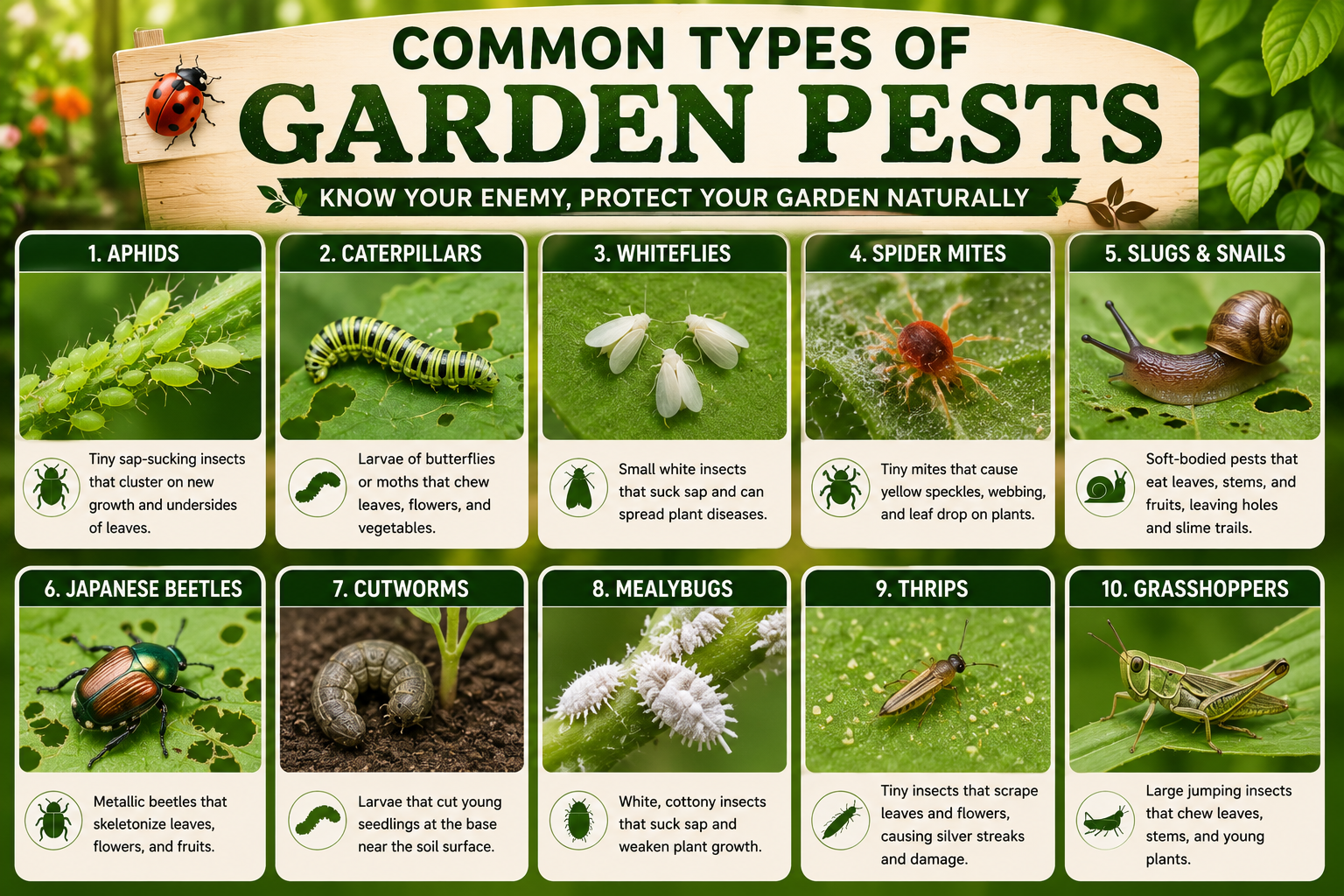
Common Types of Garden Pests
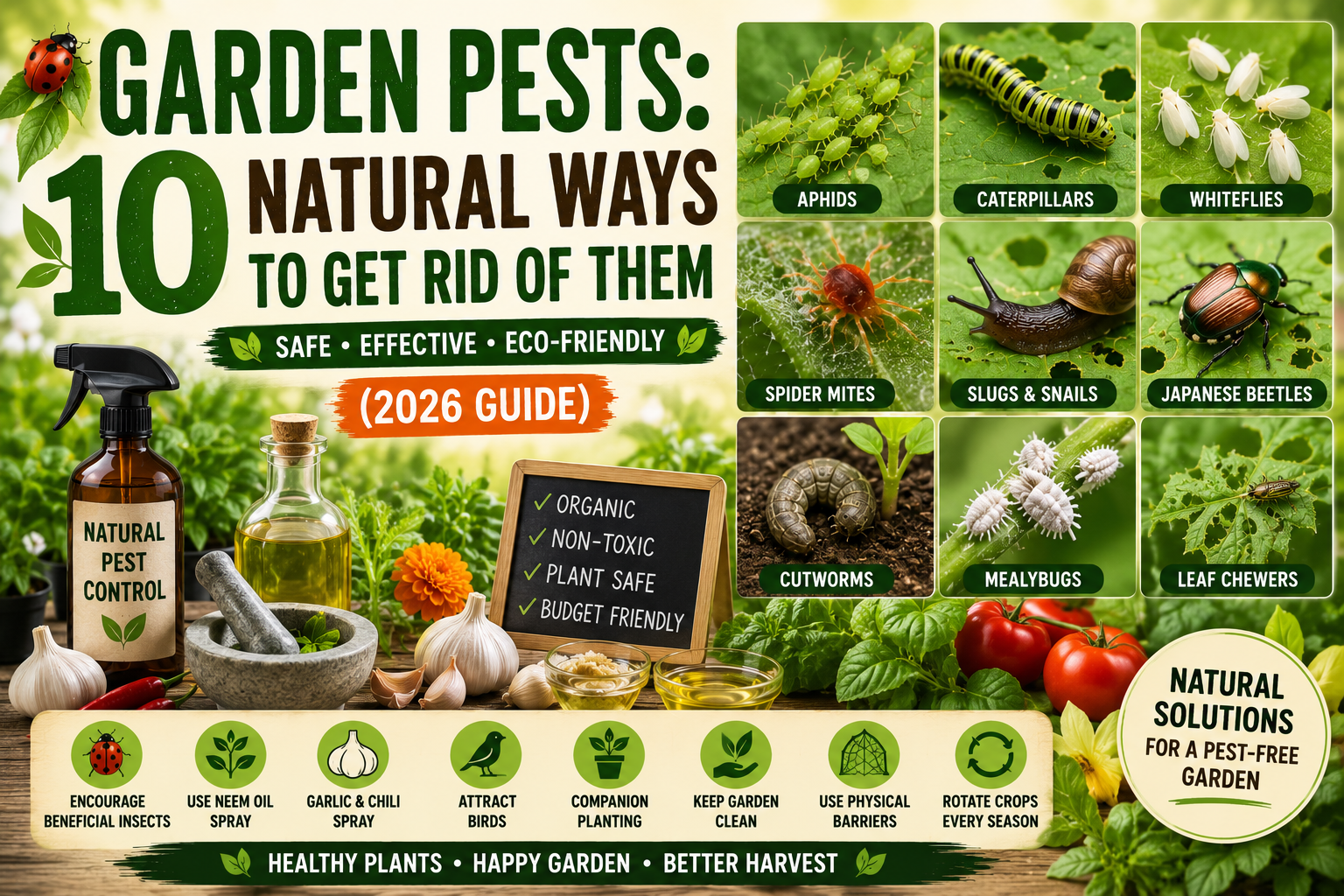
Knowing which pests are damaging your plants is the first step toward choosing the right natural solution. Below are some of the most common Garden Pests found in home gardens.
Aphids
These tiny insects gather on new shoots and the undersides of leaves, where they suck plant sap. Aphids multiply rapidly and leave behind a sticky substance called honeydew that can encourage mold growth.
Caterpillars
Caterpillars are the larvae of butterflies and moths. Although butterflies are beneficial pollinators, some caterpillars can quickly chew through leaves, flowers, and vegetables.
Whiteflies
Whiteflies are small, white insects that feed on plant sap. They weaken plants, cause leaves to turn yellow, and may spread plant diseases.
Spider Mites
Spider mites are tiny pests that are difficult to see with the naked eye. They create fine webs on leaves and cause yellow spots, eventually leading to leaf drop if left untreated.
Slugs and Snails
These pests are most active during cool, damp conditions. They leave irregular holes in leaves and often damage young seedlings overnight.
Japanese Beetles
Japanese beetles feed on leaves, flowers, and fruits. They typically leave behind skeletonized leaves, making plants look unhealthy.
Cutworms
Cutworms attack young seedlings by cutting stems near the soil surface. They are especially harmful to newly planted vegetables.
Mealybugs
Mealybugs appear as white, cotton-like clusters on stems and leaves. They feed on plant sap and weaken plant growth over time.
H3: Quick Identification Tips
- Aphids: Small green, black, yellow, or brown insects clustered on new growth.
- Caterpillars: Chewed leaves and visible larvae.
- Whiteflies: Tiny white insects that fly up when plants are disturbed.
- Spider Mites: Fine webbing and yellow speckles on leaves.
- Slugs and Snails: Large holes in leaves and shiny slime trails.
- Japanese Beetles: Metallic green and bronze beetles with skeletonized leaves.
- Cutworms: Seedlings cut off at ground level.
- Mealybugs: White cottony masses on stems and leaf joints.
Correct identification helps you apply the most effective natural pest control method.
Why Choose Natural Pest Control Instead of Chemicals?
Chemical pesticides may provide quick results, but they can also harm pollinators, beneficial insects, pets, wildlife, and even soil health. Natural methods offer a safer and more sustainable way to manage Garden Pests while maintaining a balanced garden ecosystem.
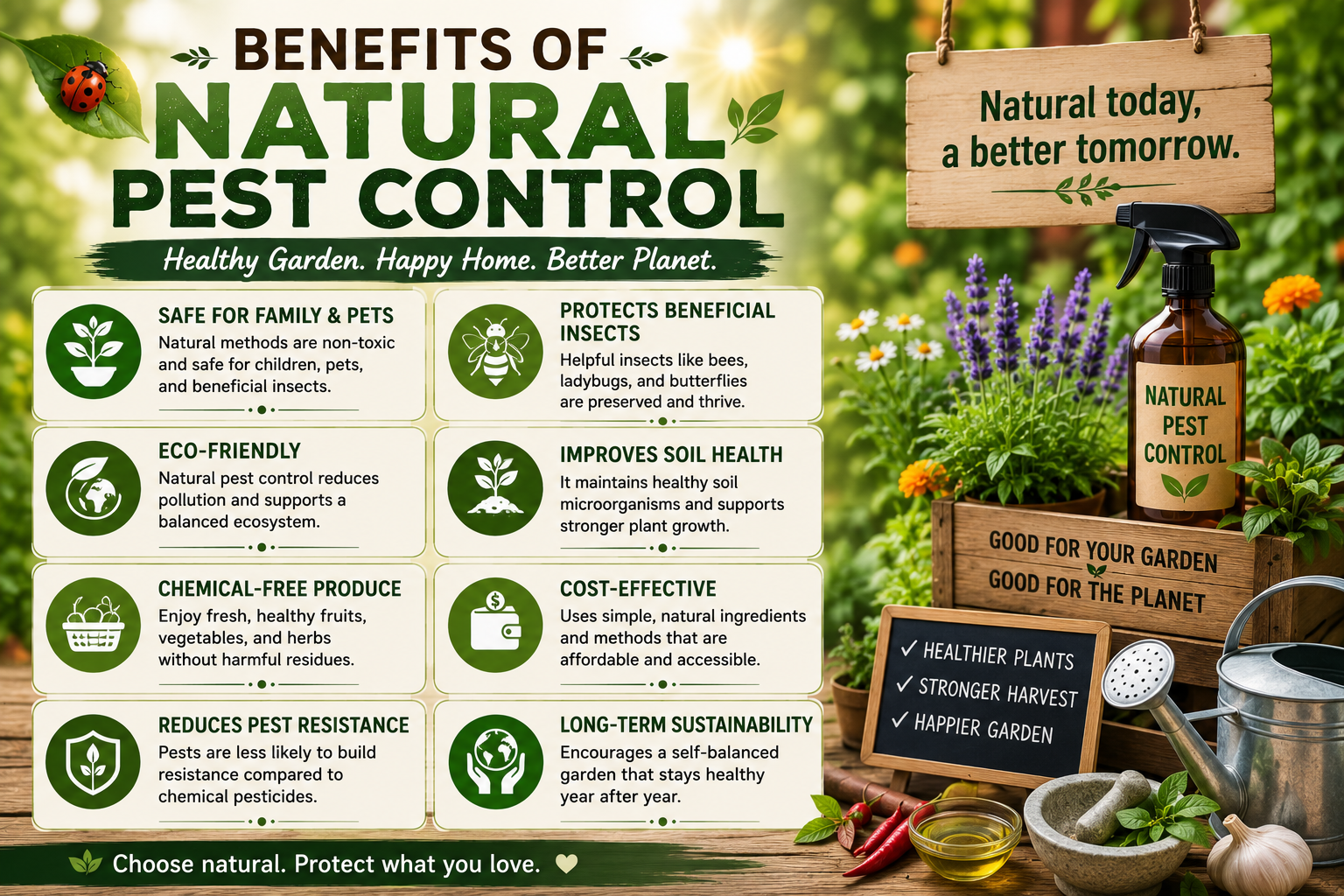
Benefits of Natural Pest Control
Protects Beneficial Insects
Natural pest control helps preserve bees, butterflies, ladybugs, lacewings, and other insects that pollinate flowers and naturally reduce pest populations.
Safer for Children and Pets
Unlike many chemical pesticides, natural methods reduce the risk of harmful exposure, making your garden a safer place for the whole family.
Supports Healthy Soil
Healthy soil contains beneficial organisms that help plants absorb nutrients. Natural pest control protects these microorganisms and encourages long-term soil fertility.
Prevents Chemical Residue
Using natural treatments reduces the chance of chemical residues remaining on fruits, vegetables, and herbs, giving you cleaner produce to enjoy.
Environmentally Friendly
Natural solutions are generally biodegradable and have less impact on nearby water sources, wildlife, and the surrounding ecosystem.
Cost-Effective
Many natural remedies use inexpensive household ingredients or gardening practices, helping you manage Garden Pests without spending a lot of money.
Comparison Table: Natural Pest Control vs. Chemical Pest Control
| Feature | Natural Pest Control | Chemical Pest Control |
|---|---|---|
| Safety for Family | High | Moderate to Low |
| Safe for Pets | Usually Yes | Often No |
| Protects Pollinators | Yes | Often Harms Bees and Butterflies |
| Environmental Impact | Low | Higher |
| Cost | Usually Affordable | Can Be Expensive |
| Soil Health | Improves Soil Ecosystem | May Harm Beneficial Organisms |
| Residue on Produce | Minimal | Possible Chemical Residue |
| Long-Term Sustainability | Excellent | Less Sustainable |
| Best For | Preventive and Long-Term Control | Severe Infestations When Used Carefully |
Natural Ways to Get Rid of Garden Pests
Keeping Garden Pests under control doesn’t have to involve harsh chemicals. In fact, many natural methods are highly effective, environmentally friendly, and safe for your family, pets, and beneficial insects. The key is to combine several techniques to create a healthy garden where pests are less likely to thrive.
Below are ten proven natural methods to protect your plants and enjoy a productive garden all season long.
Method #1 – Encourage Beneficial Insects
Not all insects are harmful. Many are natural predators that feed on common Garden Pests, helping you maintain a healthy balance without using pesticides.
Beneficial Insects to Welcome
- Ladybugs eat aphids, mealybugs, and whiteflies.
- Lacewings feed on aphids, caterpillars, and insect eggs.
- Hoverflies help control aphids while also pollinating flowers.
- Praying mantises hunt a wide variety of garden pests.
To attract these helpful insects, plant nectar-rich flowers such as marigolds, dill, yarrow, calendula, and sweet alyssum. Avoid broad-spectrum pesticides, as they can also kill beneficial insects.
Method #2 – Use Neem Oil Spray
Neem oil is one of the most popular natural solutions for controlling Garden Pests. It comes from the seeds of the neem tree and works by disrupting the feeding and reproduction of many insects.
Neem oil is effective against:
- Aphids
- Whiteflies
- Spider mites
- Mealybugs
- Young caterpillars
Mix neem oil with water according to the product label and spray it on both the tops and undersides of leaves during the early morning or late evening. Reapply every 7 to 10 days or after heavy rain for the best results.
Method #3 – Make Homemade Garlic and Chili Spray
A homemade garlic and chili spray is an affordable and eco-friendly way to repel many Garden Pests. The strong smell and natural compounds discourage insects from feeding on your plants.
Simple Garlic and Chili Spray Recipe
You’ll need:
- 1 garlic bulb
- 2 hot chili peppers
- 1 liter of water
- A few drops of mild liquid soap
Blend the garlic, chilies, and water until smooth. Let the mixture sit overnight, strain it, and stir in the liquid soap. Spray lightly on affected plants once a week or after rainfall.
Always test the spray on a small section of a plant before applying it more widely to ensure it doesn’t cause leaf damage.
Method #4 – Attract Birds to Your Garden
Many birds naturally feed on insects, making them valuable partners in controlling Garden Pests.
Birds such as robins, wrens, chickadees, and bluebirds enjoy eating caterpillars, beetles, grasshoppers, and other troublesome insects.
To encourage birds to visit your garden:
Bird-Friendly Garden Tips
- Install bird feeders.
- Provide fresh water with a birdbath.
- Plant native shrubs and trees.
- Add nesting boxes.
- Avoid harmful pesticides.
A bird-friendly garden supports natural pest control while creating a lively and enjoyable outdoor space.
Method #5 – Use Companion Planting
Companion planting is a natural gardening technique that pairs certain plants together to discourage Garden Pests or attract beneficial insects.
Effective Companion Plant Combinations
- Marigolds help repel aphids and nematodes.
- Basil planted near tomatoes may discourage whiteflies and hornworms.
- Nasturtiums attract aphids away from vegetables as a trap crop.
- Lavender helps deter moths and some flying insects.
- Chives planted near carrots and roses can reduce aphid problems.
Using companion plants also increases biodiversity, which contributes to a healthier and more resilient garden.
Method #6 – Handpick Large Pests
Although it may seem old-fashioned, manually removing pests is one of the quickest ways to reduce infestations, especially in smaller gardens.
This method works well for:
- Caterpillars
- Tomato hornworms
- Japanese beetles
- Slugs
- Snails
Inspect your plants early in the morning or during the evening when many pests are most active. Wear gardening gloves and place collected pests into a bucket of soapy water to prevent them from returning.
Regular inspections help stop pest populations before they become difficult to manage.
Method #7 – Keep Your Garden Clean
Good garden hygiene is one of the easiest ways to prevent Garden Pests from becoming established.
Dead leaves, weeds, and fallen fruit often provide shelter and breeding areas for insects and plant diseases.
Garden Cleanup Checklist
- Remove dead or diseased plants.
- Pull weeds regularly.
- Pick up fallen fruits and vegetables.
- Trim overcrowded plants to improve airflow.
- Clean gardening tools after use.
- Refresh mulch when necessary.
A clean garden creates fewer hiding places for pests and promotes healthier plant growth.
Method #8 – Use Diatomaceous Earth
Diatomaceous earth is a natural powder made from fossilized aquatic organisms. It is safe for gardens when used correctly and can effectively control crawling Garden Pests.
It works well against:
- Slugs
- Snails
- Ants
- Earwigs
- Beetles
Sprinkle a thin layer around the base of plants on dry days. The powder damages the outer coating of crawling insects, causing them to dehydrate.
Reapply after rain or watering to maintain effectiveness. Always use food-grade diatomaceous earth for gardening purposes.
Method #9 – Install Physical Barriers
Physical barriers provide immediate protection by preventing Garden Pests from reaching your plants.
Common protective barriers include:
- Floating row covers
- Garden netting
- Copper tape for slugs
- Plant collars for seedlings
- Fine mesh covers for vegetables
These barriers are especially useful for protecting young plants during their most vulnerable stages without affecting pollinators once flowering begins.
Method #10 – Rotate Crops Every Season
Growing the same crop in the same location year after year encourages certain Garden Pests and soil-borne diseases to build up over time.
Crop rotation interrupts the life cycle of pests by changing the plants available to them each season.
Simple Crop Rotation Tips
- Avoid planting vegetables from the same family in the same bed every year.
- Rotate crops on a three- or four-year cycle whenever possible.
- Keep a garden journal to track planting locations.
- Include legumes occasionally to improve soil fertility.
Crop rotation not only reduces pest problems but also supports healthier soil and stronger plant growth.
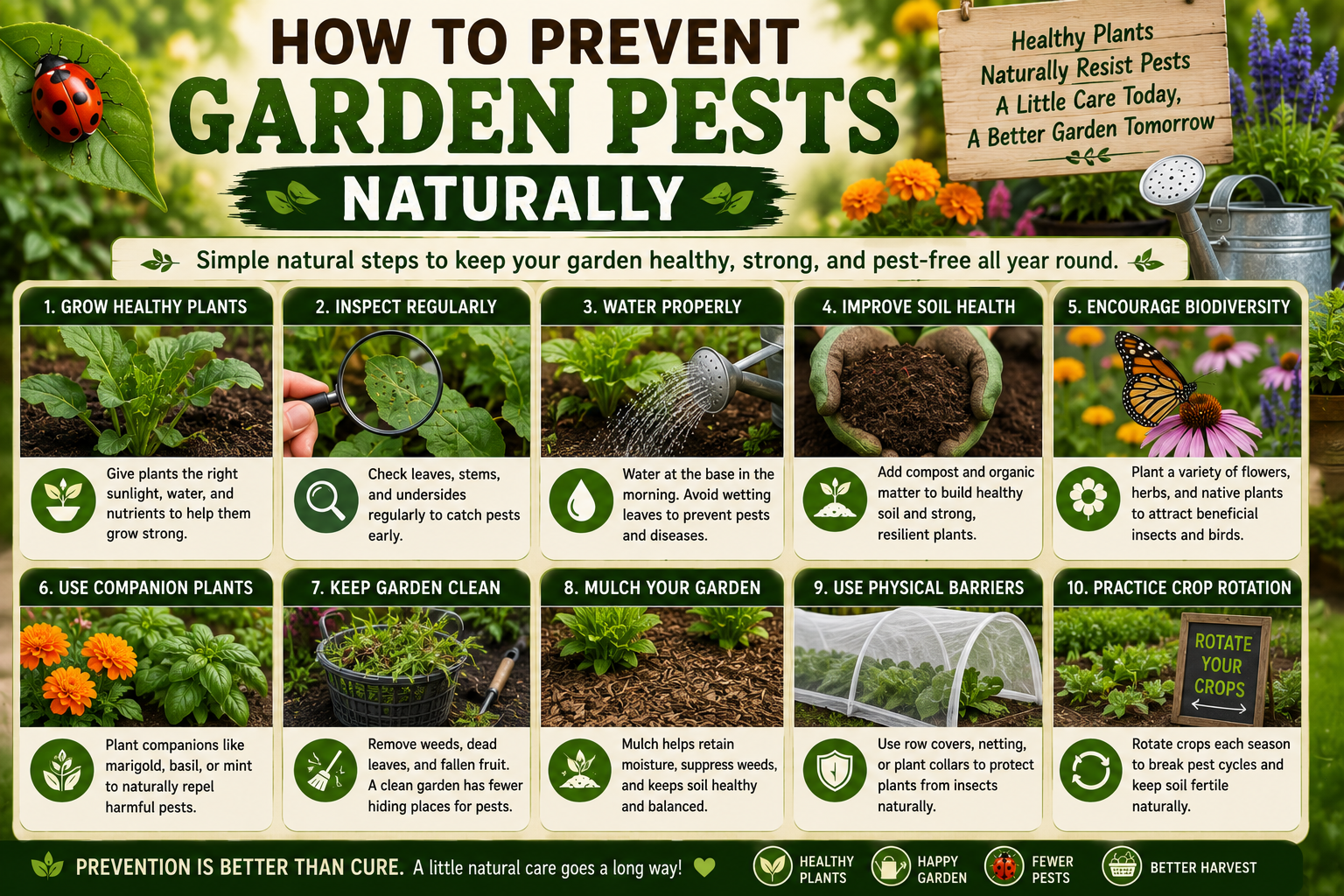
How to Prevent Garden Pests Naturally
The best way to deal with Garden Pests is to prevent them before they become a serious problem. A healthy, well-maintained garden naturally resists pests better than one that is stressed or neglected. By following a few simple gardening practices, you can reduce pest problems while encouraging strong plant growth.
Grow Healthy Plants
Healthy plants are naturally more resistant to insects and diseases. Give your plants the right amount of sunlight, water, and nutrients to help them thrive.
Choose plant varieties that are well suited to your local climate and soil conditions. Strong plants recover more quickly from minor pest damage and are less likely to suffer from severe infestations.
Inspect Your Garden Regularly
Walk through your garden at least once or twice a week to check for early signs of Garden Pests. Look closely at the undersides of leaves, stems, flower buds, and new growth where insects often hide.
What to Look For
- Holes or chewed leaves
- Yellow or curling foliage
- Sticky residue on leaves
- Fine webs from spider mites
- Insect eggs on stems or leaves
- Wilting or stunted plants
Early detection allows you to solve small problems before they spread throughout the garden.
Water Plants Properly
Overwatering and underwatering can both weaken plants, making them more attractive to pests.
Water deeply at the base of the plants instead of wetting the leaves. Morning watering is ideal because it allows excess moisture to dry during the day, reducing the risk of fungal diseases.
Improve Soil Health
Healthy soil supports healthy plants. Add compost or well-rotted organic matter each season to improve soil structure and provide essential nutrients.
Good soil also encourages beneficial microorganisms and earthworms that contribute to a balanced garden ecosystem.
Encourage Biodiversity
A diverse garden naturally attracts pollinators and beneficial insects that feed on Garden Pests.
Plant a mixture of:
- Flowers
- Herbs
- Vegetables
- Native plants
- Shrubs
Greater biodiversity creates a healthier environment where pests are less likely to dominate.
Common Mistakes to Avoid
Even experienced gardeners sometimes make mistakes that encourage Garden Pests. Avoiding these common problems will help keep your garden healthier and more productive.
Using Too Many Chemical Sprays
Frequent use of chemical pesticides can kill beneficial insects along with harmful ones. As a result, pest populations often return even stronger because their natural predators have disappeared.
Instead, rely on natural pest control methods whenever possible.
Ignoring Early Signs
Small infestations can quickly become major problems if left untreated.
Check your plants regularly and deal with pests as soon as you notice them.
Planting Too Close Together
Overcrowded plants reduce airflow and create damp conditions where pests and diseases thrive.
Always follow the recommended spacing for each plant variety.
Overfertilizing Plants
Too much nitrogen encourages soft, leafy growth that attracts aphids and other sap-sucking insects.
Feed plants according to their needs rather than applying excessive fertilizer.
Forgetting to Clean Garden Debris
Dead leaves, fallen fruit, weeds, and old mulch provide excellent hiding places for pests.
Remove garden waste regularly to reduce breeding areas.
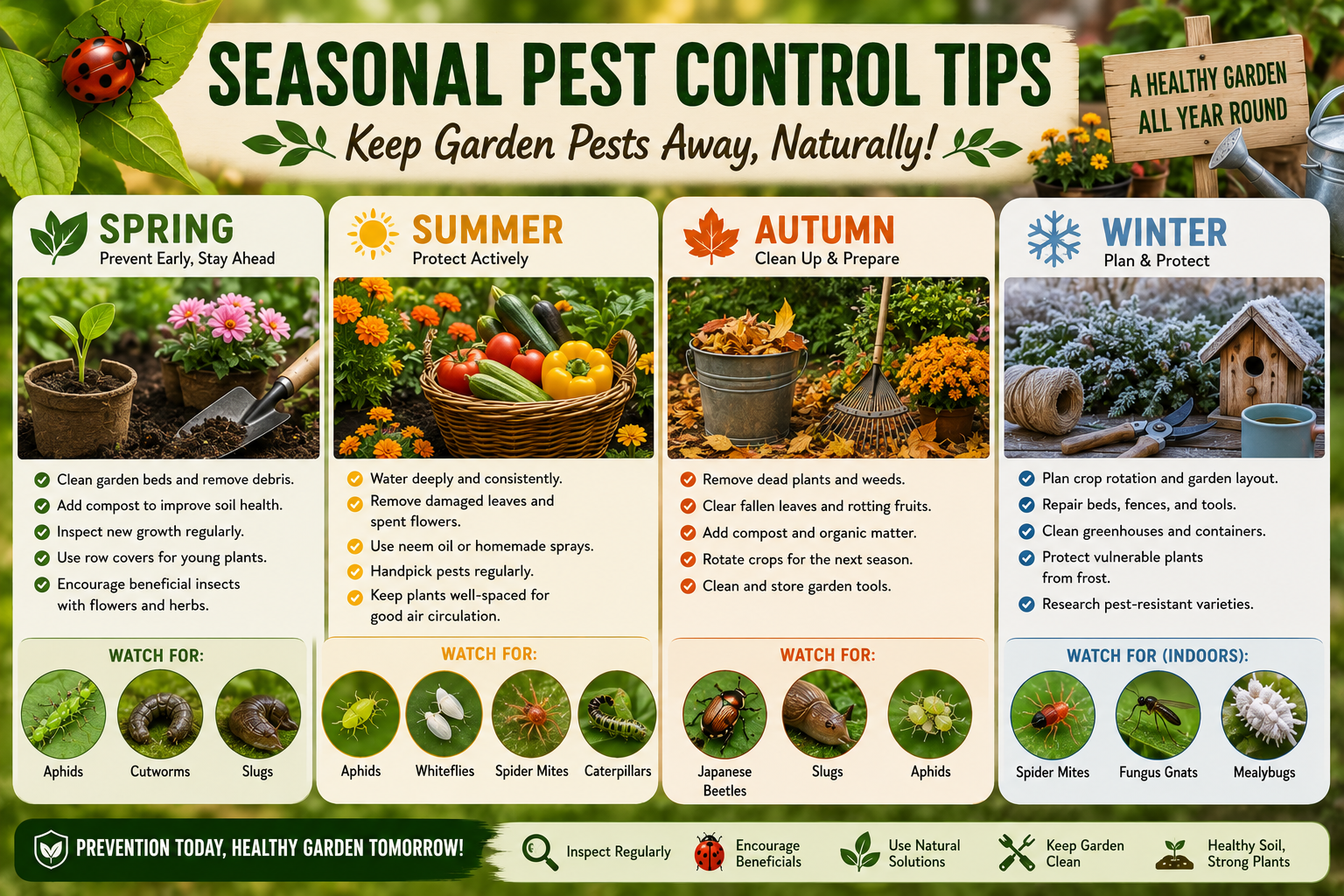
Seasonal Pest Control Tips
Different Garden Pests become active during different times of the year. Seasonal maintenance helps prevent infestations before they begin.
Spring
It is the time when many insects become active.
Spring Checklist
- Remove winter debris.
- Apply fresh compost.
- Inspect new growth weekly.
- Install row covers for young vegetables.
- Introduce beneficial insects if needed.
Summer
Warm temperatures encourage rapid pest reproduction.
Summer Checklist
- Water deeply during dry periods.
- Remove damaged leaves.
- Reapply neem oil or homemade sprays when necessary.
- Harvest vegetables regularly.
- Watch for caterpillars, aphids, and spider mites.
Autumn
As the growing season ends, focus on garden cleanup.
Autumn Checklist
- Remove dead plants.
- Pull weeds before they produce seeds.
- Rotate crops for next season.
- Add compost to empty beds.
- Clean and store gardening tools.
Winter
It is an excellent time to prepare for the next gardening season.
Winter Checklist
- Plan crop rotation.
- Repair raised beds and fences.
- Sharpen and clean tools.
- Order seeds.
- Research pest-resistant plant varieties.
Following these seasonal routines helps reduce future Garden Pests while keeping your garden healthy year-round.
Conclusion
Managing Garden Pests naturally is one of the best ways to protect your plants while creating a healthier and more sustainable garden. Although pests are a normal part of gardening, they don’t have to ruin your flowers, vegetables, or herbs.
Simple methods such as encouraging beneficial insects, using neem oil, companion planting, attracting birds, maintaining healthy soil, and keeping your garden clean can significantly reduce pest problems without relying on harsh chemicals. These eco-friendly techniques protect pollinators, improve soil health, and make your garden safer for children, pets, and wildlife.
Remember that successful pest control is based on prevention rather than reaction. Regular inspections, seasonal maintenance, and quick action at the first signs of damage will help keep infestations under control. By combining several natural methods, you’ll build a balanced garden ecosystem where plants can thrive and Garden Pests are far less likely to become a major issue.
With patience and consistent care, you can enjoy a beautiful, productive, and chemical-free garden throughout the year.
Frequently Asked Questions (FAQs)
1. What are the most common garden pests?
Some of the most common Garden Pests include aphids, whiteflies, spider mites, caterpillars, slugs, snails, Japanese beetles, mealybugs, and cutworms.
2. Is neem oil safe for vegetable gardens?
Yes. Neem oil is generally considered safe for vegetables when used according to the manufacturer’s instructions. Spray during the early morning or evening and avoid applying it when pollinators are actively visiting flowers.
3. What plants naturally repel garden pests?
Marigolds, lavender, basil, rosemary, mint, chives, garlic, and nasturtiums are popular companion plants that help deter certain Garden Pests while attracting beneficial insects.
4. How often should I inspect my garden for pests?
Inspect your garden at least once or twice a week. During warm weather or periods of rapid plant growth, more frequent checks can help you spot problems before they spread.
5. Can homemade pest sprays really work?
Yes. Homemade sprays made with ingredients such as garlic, chili peppers, or mild soap can help repel or reduce many common Garden Pests. Always test a small area of the plant first to ensure it doesn’t cause leaf damage.
6. Are natural pest control methods better than chemical pesticides?
Natural methods are often safer for beneficial insects, pollinators, pets, and the environment. While they may require consistent application, they provide effective long-term pest management without leaving harmful chemical residues.
7. How can I prevent garden pests without using chemicals?
Maintain healthy soil, rotate crops, encourage beneficial insects, plant companion flowers and herbs, keep your garden clean, inspect plants regularly, and use physical barriers like row covers or netting to prevent Garden Pests naturally.
You can also check our article 10 Easy DIY Garden Projects