Starting your gardening journey doesn’t have to be difficult. With the right plants, anyone can create a beautiful and healthy garden, even without previous experience. If you’re interested in home gardening for beginners, choosing easy-to-grow plants is the best way to build confidence while learning the basics of plant care.
Beginner-friendly plants require less maintenance, adapt well to different environments, and can tolerate occasional mistakes like missed watering or changing weather conditions. Whether you have a spacious backyard, a small balcony, or a few containers on your patio, there are plenty of plants that will thrive with minimal effort.
In this guide, you’ll discover ten of the easiest plants every beginner can grow. You’ll also learn how to choose the right plants for your space, understand their basic care requirements, and avoid common mistakes. By starting with these resilient plants, you’ll enjoy a greener home, cleaner air, and the satisfaction of watching your garden flourish.
Why Choosing Easy Plants Matters
Starting with beginner-friendly plants makes gardening enjoyable instead of overwhelming. Many new gardeners become discouraged after choosing plants that require constant care or specific growing conditions.
Easy-care plants are more forgiving and allow you to learn essential gardening skills at your own pace.
Benefits of Growing Easy Plants
- Require less maintenance.
- Tolerate occasional watering mistakes.
- Adapt to different light conditions.
- Grow well in pots, containers, or gardens.
- Build confidence for new gardeners.
- Improve indoor air quality and outdoor beauty.
Choosing the right plants from the beginning increases your chances of success and makes home gardening for beginners a rewarding experience.
How to Choose the Right Plant
Before purchasing your first plant, consider where it will grow and how much care you can provide.
Consider These Factors
🌞 Sunlight
Observe how much sunlight your space receives each day.
- Full Sun (6–8 hours)
- Partial Sun (3–6 hours)
- Shade (less than 3 hours)
💧 Water Requirements
Some plants enjoy consistently moist soil, while others prefer the soil to dry between waterings.
Choose plants that match your schedule and lifestyle.
🌡️ Climate
Select plants suitable for your local weather conditions.
If temperatures vary throughout the year, consider growing plants in containers so they can be moved when necessary.
📏 Available Space
Think about where your plants will grow.
- Small apartments
- Balconies
- Patios
- Backyards
- Windowsills
Choosing plants that suit your available space helps them grow healthier and reduces maintenance.
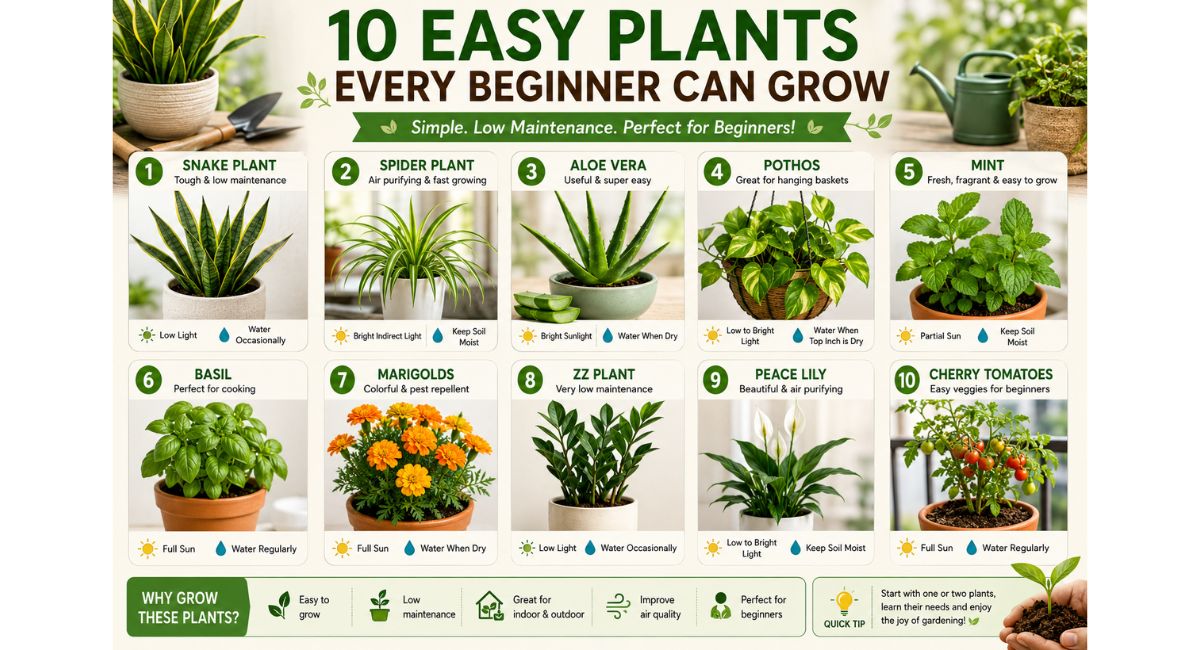
1. Snake Plant (Sansevieria)
The Snake Plant is often considered the perfect beginner plant because it is extremely resilient and can survive with very little care. Its upright green leaves add a modern touch to any room while helping improve indoor air quality.
This plant grows well indoors and tolerates low light, making it an excellent choice for homes and offices.
Why Beginners Love Snake Plants
- Very low maintenance
- Survives occasional neglect
- Thrives in low to bright indirect light
- Requires watering only when the soil is completely dry
- Excellent air-purifying plant
Care Tips
- Water every 2–3 weeks.
- Use well-draining soil.
- Avoid overwatering.
- Place near a bright window for faster growth.
2. Spider Plant
Spider Plants are one of the easiest houseplants to grow. Their long green leaves and baby plantlets create a beautiful cascading appearance that looks great in hanging baskets or decorative pots.
They grow quickly and are forgiving if you occasionally forget to water them.
Why Spider Plants Are Great for Beginners
- Fast-growing plant
- Easy to propagate
- Improves indoor air quality
- Safe for most households
- Grows well in containers
Care Tips
- Place in bright, indirect sunlight.
- Water when the top inch of soil feels dry.
- Trim brown leaf tips if necessary.
- Repot once roots outgrow the container.
3. Aloe Vera
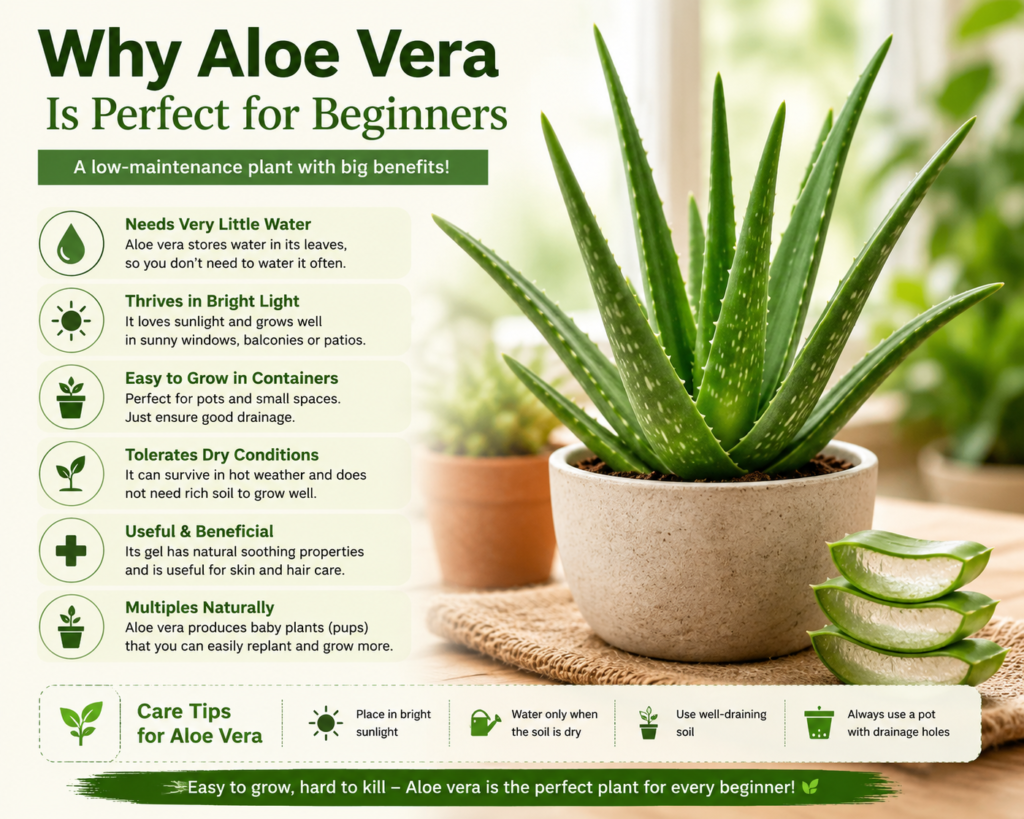
Aloe Vera is both decorative and useful. Besides being attractive, its gel has long been used in many households for soothing minor skin irritation and burns. This succulent requires very little attention and is ideal for beginners.
It grows best in sunny locations and doesn’t require frequent watering.
Why Aloe Vera Is Perfect for Beginners
- Needs very little water
- Thrives in containers
- Tolerates dry conditions
- Attractive succulent appearance
- Multiples naturally through offsets
Care Tips
- Place in bright sunlight.
- Water only when the soil is dry.
- Use cactus or succulent potting mix.
- Ensure the pot has drainage holes.
Comparison Table
| Plant | Light Requirement | Water Needs | Difficulty | Best For |
|---|---|---|---|---|
| Snake Plant | Low to Bright Indirect Light | Low | ⭐ Very Easy | Indoor beginners |
| Spider Plant | Bright Indirect Light | Moderate | ⭐ Very Easy | Hanging baskets & containers |
| Aloe Vera | Full Sun to Bright Light | Low | ⭐ Very Easy | Sunny windows, patios & balconies |
What’s Coming in Part 2
In the next part of this guide, you’ll discover:
- 🌿 Pothos
- 🌱 Mint
- 🌿 Basil
- 🌼 Marigolds
- 🪴 ZZ Plant
- Essential care tips for beginner gardeners
- Practical checklists to help your plants thrive
Plant #4 – Pothos
Pothos is one of the easiest houseplants to grow, making it an excellent choice for anyone starting home gardening for beginners. Known for its heart-shaped green leaves and trailing vines, this plant grows well in hanging baskets, shelves, or decorative pots. It adapts to a variety of indoor conditions and continues to thrive even with minimal care.
Pothos is also valued for its ability to improve indoor air quality, making it both attractive and practical.
Why Beginners Love Pothos
- Thrives in low to bright indirect light
- Grows quickly with little maintenance
- Easy to propagate from stem cuttings
- Suitable for homes, apartments, and offices
- Helps create a lush indoor environment
Care Tips
- Water when the top inch of soil feels dry.
- Avoid direct afternoon sunlight.
- Trim long vines to encourage bushier growth.
- Use a well-draining potting mix.
Plant #5 – Mint
Mint is one of the easiest herbs to grow and a fantastic addition to any beginner’s garden. It grows rapidly in containers or garden beds and can be harvested regularly for cooking, teas, and refreshing drinks.
Because mint spreads quickly, many gardeners prefer growing it in pots to keep it under control.
Why Mint Is Great for Beginners
- Fast-growing herb
- Easy to maintain
- Produces fresh leaves throughout the season
- Perfect for containers and small gardens
- Adds fragrance to your outdoor space
Care Tips
- Provide 4–6 hours of sunlight daily.
- Keep the soil consistently moist.
- Harvest leaves regularly to encourage new growth.
- Grow in a container to prevent spreading.
Plant #6 – Basil
Basil is one of the most rewarding herbs for beginner gardeners. Its fragrant leaves are commonly used in salads, pasta dishes, soups, and homemade pesto. With plenty of sunlight and regular watering, basil grows quickly and provides a continuous harvest.
Growing basil is an enjoyable way to practice basic gardening skills while adding fresh flavor to your meals.
Why Beginners Love Basil
- Easy to grow from seeds or seedlings
- Produces fresh herbs for cooking
- Grows well in pots and raised beds
- Pleasant fragrance
- Encourages regular harvesting
Care Tips
- Place in a sunny location with at least 6 hours of sunlight.
- Water whenever the top layer of soil begins to dry.
- Pinch off flower buds to promote leaf growth.
- Harvest leaves regularly for healthier plants.
Plant #7 – Marigolds
Marigolds are colorful flowering plants that brighten gardens while naturally attracting beneficial pollinators such as bees and butterflies. They are also known for helping discourage certain garden pests, making them a popular companion plant in vegetable gardens.
These cheerful flowers bloom throughout the growing season and require very little maintenance.
Why Marigolds Are Perfect for Beginners
- Bright, colorful flowers
- Easy to grow from seeds
- Attract pollinators
- Help deter some common garden pests
- Thrive in garden beds and containers
Care Tips
- Plant in full sunlight.
- Water when the soil feels dry.
- Remove faded flowers to encourage continuous blooming.
- Use well-draining soil.
Plant #8 – ZZ Plant
The ZZ Plant is another excellent option for anyone learning home gardening for beginners. It has glossy green leaves and is famous for surviving in conditions where many other houseplants struggle. This low-maintenance plant tolerates low light and requires very little water, making it ideal for busy households.
Its elegant appearance also makes it a favorite for modern home décor.
Why Beginners Love ZZ Plants
- Extremely low maintenance
- Tolerates low-light conditions
- Requires infrequent watering
- Resistant to many common plant problems
- Long-lasting and attractive
Care Tips
- Water every 2–3 weeks.
- Place in indirect sunlight.
- Avoid overwatering.
- Clean leaves occasionally to remove dust.
Beginner Care Tips
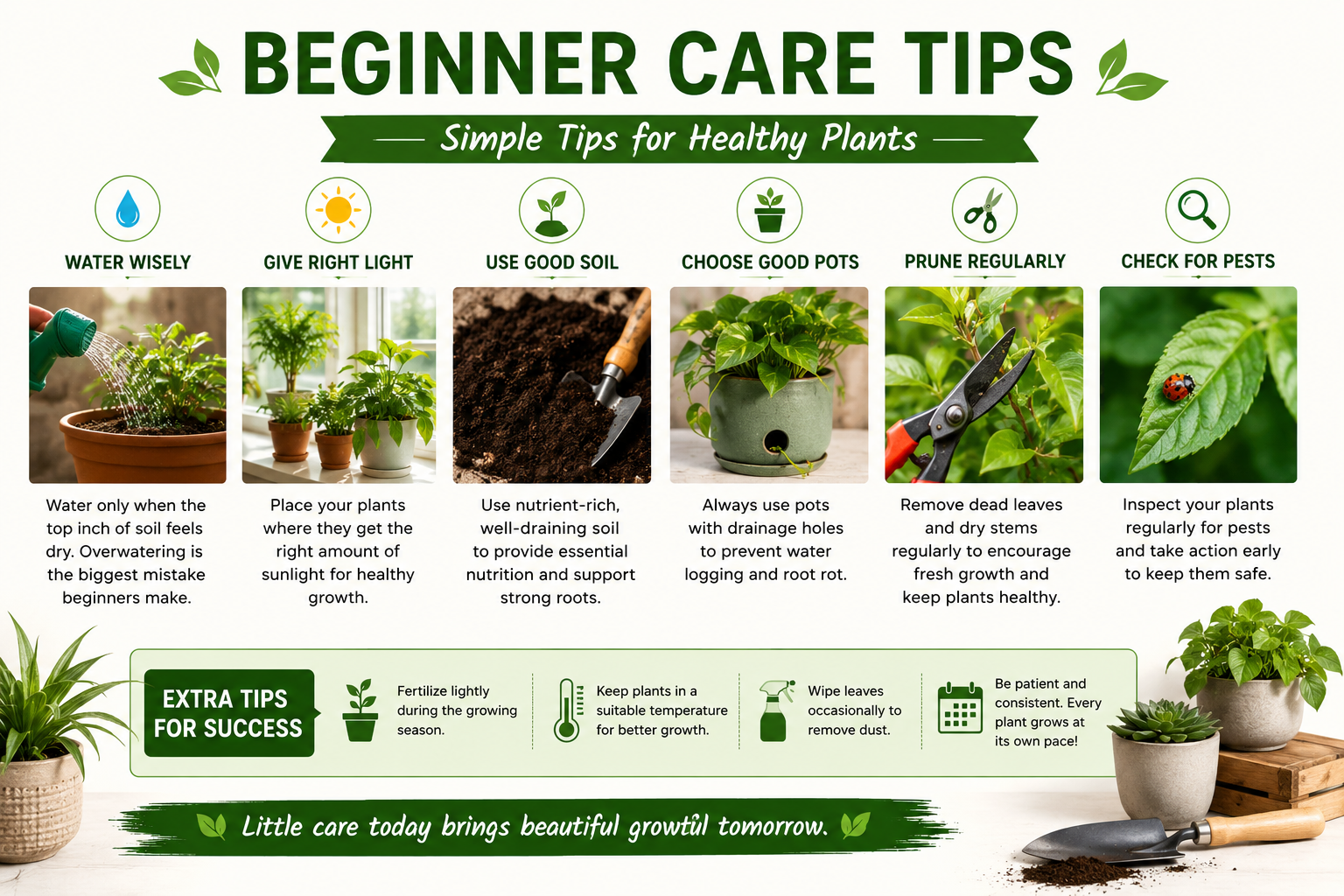
Successful gardening doesn’t require expensive equipment or years of experience. A few simple habits can help your plants stay healthy and continue growing throughout the year.
🌱 Water Wisely
Overwatering is one of the most common beginner mistakes. Before watering, check whether the top layer of soil feels dry.
☀️ Give Plants the Right Amount of Light
Different plants have different sunlight requirements. Always place your plants where they’ll receive the recommended amount of natural light.
🌿 Use Good-Quality Soil
Healthy soil provides nutrients, improves drainage, and supports strong root development.
🪴 Choose Containers with Drainage
Pots with drainage holes help prevent water from collecting around the roots, reducing the risk of root rot.
✂️ Prune Regularly
Removing dead leaves and faded flowers encourages healthy growth and keeps plants looking their best.
Beginner Gardening Checklist ✅
Before You Plant
- ✔️ Choose beginner-friendly plants.
- ✔️ Select the right location.
- ✔️ Use nutrient-rich, well-draining soil.
- ✔️ Pick containers with drainage holes.
- ✔️ Gather essential gardening tools.
Weekly Plant Care Checklist
- ✔️ Check soil moisture before watering.
- ✔️ Inspect leaves for pests or disease.
- ✔️ Remove dead leaves and flowers.
- ✔️ Rotate indoor plants for even sunlight.
- ✔️ Keep the growing area clean and tidy.
Monthly Maintenance Checklist
- ✔️ Apply fertilizer if needed.
- ✔️ Repot plants that have become root-bound.
- ✔️ Clean pots and gardening tools.
- ✔️ Refresh mulch around outdoor plants.
- ✔️ Monitor plant growth and adjust care as needed.
By growing plants like Pothos, Mint, Basil, Marigolds, and ZZ Plant, you’ll gain confidence while building a thriving garden. These low-maintenance choices are ideal for home gardening for beginners, helping you develop essential gardening skills with minimal effort and maximum enjoyment.
Plant #9 – Peace Lily
The Peace Lily is one of the most popular indoor plants for beginners. It is admired for its glossy green leaves and elegant white flowers that bloom throughout the year. Besides adding beauty to your home, Peace Lilies are also known for helping improve indoor air quality.
This plant prefers indirect sunlight and slightly moist soil, making it easy to care for without requiring constant attention.
Why Beginners Love Peace Lilies
- Beautiful white flowers
- Thrives indoors
- Helps improve indoor air quality
- Grows well in low to medium light
- Easy to maintain
Care Tips
- Place in bright, indirect sunlight.
- Water when the top inch of soil feels dry.
- Avoid direct sunlight, which can scorch the leaves.
- Wipe the leaves occasionally to remove dust.
Plant #10 – Cherry Tomatoes
Cherry tomatoes are one of the easiest vegetables for beginners to grow. They produce delicious, bite-sized fruits throughout the growing season and perform well in garden beds, raised beds, or large containers.
With enough sunlight, water, and basic care, a single plant can produce dozens of tomatoes, making it a rewarding choice for anyone learning home gardening for beginners.
Why Beginners Love Cherry Tomatoes
- Fast-growing vegetable
- Produces an abundant harvest
- Suitable for containers and raised beds
- Great for fresh salads and snacks
- Easy to grow from seedlings
Care Tips
- Plant in full sunlight (6–8 hours daily).
- Water consistently to keep the soil evenly moist.
- Use a tomato cage or stake for support.
- Feed with a balanced fertilizer every few weeks.
Common Beginner Mistakes
Even easy-to-grow plants can struggle if they’re not cared for properly. Fortunately, most beginner mistakes are simple to avoid.
🌱 Overwatering
Too much water is the leading cause of plant problems. Always check the soil before watering, and make sure pots have drainage holes.
☀️ Giving Too Much or Too Little Sunlight
Different plants have different light requirements. Read the care instructions and place each plant in the right location.
🌿 Using Poor-Quality Soil
Healthy plants start with healthy soil. Use nutrient-rich, well-draining soil to encourage strong roots and healthy growth.
🪴 Choosing the Wrong Pot
Containers without drainage holes can cause water to collect around the roots, leading to root rot.
✂️ Ignoring Plant Maintenance
Remove dead leaves, faded flowers, and damaged stems regularly. This helps plants stay healthy and encourages new growth.
Seasonal Care Tips
Plants need different care throughout the year. Adjusting your gardening routine with the seasons helps keep your garden healthy and productive.
🌸 Spring
- Plant flowers, herbs, and vegetables.
- Add compost to enrich the soil.
- Begin regular watering as temperatures rise.
☀️ Summer
- Water deeply during hot weather.
- Apply mulch to retain soil moisture.
- Watch for pests and remove weeds regularly.
🍂 Autumn
- Harvest remaining vegetables and herbs.
- Remove dead plants and garden debris.
- Prepare garden beds for the cooler months.
❄️ Winter
- Protect sensitive plants from frost.
- Reduce watering for most indoor plants.
- Plan next season’s garden and organize gardening tools.
Conclusion
Starting your gardening journey doesn’t have to be complicated. By choosing beginner-friendly plants such as Snake Plant, Spider Plant, Aloe Vera, Pothos, Mint, Basil, Marigolds, ZZ Plant, Peace Lily, and Cherry Tomatoes, you’ll develop confidence while learning the fundamentals of home gardening for beginners.
Remember that every successful gardener started as a beginner. With the right plants, consistent care, and a little patience, you’ll enjoy healthier plants, fresh herbs, colorful flowers, and even homegrown vegetables. Gardening is a rewarding hobby that brings beauty, relaxation, and a sense of accomplishment to your daily life.
Take the first step today, and soon you’ll have a thriving garden you can be proud of.
Frequently Asked Questions (FAQs)
1. What is the easiest plant for beginners?
Snake Plant is one of the easiest plants for beginners because it requires very little water and grows well in various light conditions.
2. Can I start gardening without a backyard?
Yes. Many beginner-friendly plants grow successfully in pots, containers, balconies, patios, and even sunny windowsills.
3. How often should I water beginner plants?
Most plants should be watered only when the top inch of soil feels dry. Always avoid overwatering.
4. Which beginner plants grow indoors?
Snake Plant, Spider Plant, Pothos, ZZ Plant, Aloe Vera, and Peace Lily are excellent indoor choices.
5. Which beginner plant grows the fastest?
Mint, Basil, Pothos, and Cherry Tomatoes grow quickly when provided with proper sunlight and water.
6. Do beginner plants need fertilizer?
Most plants benefit from light fertilization during the growing season, but avoid applying too much fertilizer.
7. What is the best way to start home gardening?
Begin with a few low-maintenance plants, use quality soil, provide the right amount of sunlight, and water only when necessary. As your confidence grows, you can gradually expand your garden.
You can also check our article Home Gardening for Beginners