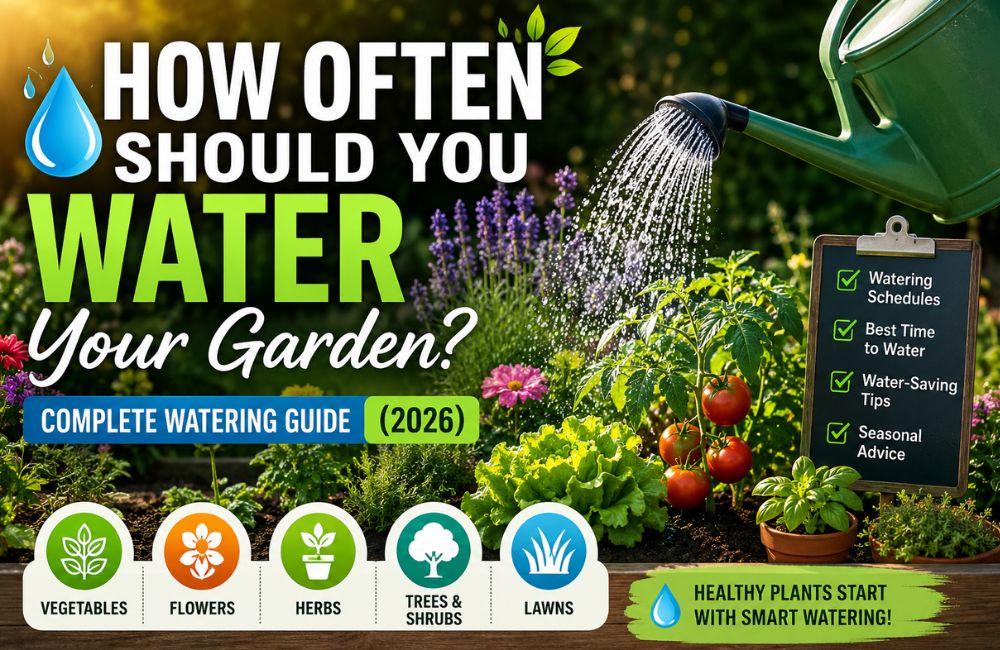
Knowing how often to Water Your Garden is one of the most important parts of successful gardening. Whether you’re growing vegetables, flowers, herbs, or shrubs, the right watering routine helps plants stay healthy, grow faster, and produce better blooms or harvests. However, watering too much or too little can lead to weak roots, yellow leaves, poor growth, and even plant death.
Many beginner gardeners believe that watering every day is the best approach. In reality, plants need water based on several factors, including the weather, soil type, plant variety, and season. For example, a vegetable garden may require more frequent watering during hot summer days, while established trees often need much less water.
Fortunately, learning when and how to Water Your Garden isn’t difficult. By understanding your plants’ needs and following a few simple watering practices, you can keep your garden thriving throughout the year. This guide explains everything you need to know, including why proper watering matters, the factors that affect watering frequency, common signs your garden needs water, and the differences between overwatering and underwatering.
Why Proper Watering Matters
Water is essential for every plant because it supports photosynthesis, nutrient absorption, and healthy root development. Without enough water, plants cannot grow properly. On the other hand, too much water can damage roots and encourage diseases.
When you Water Your Garden correctly, your plants become stronger and more productive. As a result, you’ll enjoy healthier vegetables, brighter flowers, and greener foliage.
Benefits of Proper Watering
Healthy watering habits provide many advantages, including:
- First, they encourage deep and healthy root growth.
- Additionally, they improve nutrient absorption from the soil.
- Moreover, they help plants produce more flowers, fruits, and vegetables.
- Furthermore, they reduce plant stress during hot weather.
- In addition, they lower the risk of diseases caused by improper watering.
- Finally, they help conserve water by preventing unnecessary waste.
Consistent watering is far better than watering too frequently or too little. Therefore, creating a regular watering schedule is one of the best ways to maintain a healthy garden.
Factors That Affect How Often You Should Water Your Garden
There isn’t a single watering schedule that works for every garden. Instead, several important factors determine how often you should Water Your Garden.
Climate and Weather
The weather has the biggest impact on watering needs.
Consider These Conditions
- During hot weather, plants lose water more quickly and may need daily watering.
- However, cool or cloudy days reduce water loss.
- Additionally, windy conditions dry out soil faster.
- After rainfall, you can often skip watering for a day or two.
Always check the soil before watering rather than following a fixed schedule.
Soil Type
Different soils hold water differently.
Sandy Soil
Sandy soil drains quickly.
As a result:
- Water more often.
- Apply mulch to retain moisture.
Clay Soil
Clay soil holds water much longer.
Therefore:
- Water less frequently.
- Avoid overwatering because roots may rot.
Loamy Soil
Loamy soil offers the best balance.
It:
- Holds moisture well.
- Drains excess water efficiently.
- Supports healthy root growth.
Plant Type
Different plants have different watering needs.
For example:
- Vegetables generally need frequent watering.
- Flowering annuals prefer consistently moist soil.
- Herbs usually require moderate watering.
- Established trees and shrubs need deep but less frequent watering.
- Drought-tolerant plants require much less water.
Therefore, always consider the specific needs of each plant before watering.
Plant Age
Young plants require more frequent watering because their root systems are still developing.
In contrast, mature plants have deeper roots that can reach moisture farther below the soil surface.
Container vs. Garden Beds
Container plants dry out much faster than plants growing in the ground.
As a result, potted plants often need watering every day during summer, while garden beds may only need watering a few times each week.
Mulch
Mulch helps retain soil moisture.
Common organic mulches include:
- Straw
- Wood chips
- Shredded bark
- Dry leaves
- Compost
Additionally, mulch reduces evaporation and helps regulate soil temperature.
Signs Your Garden Needs Water
Plants often show clear signs when they need water. Fortunately, learning to recognize these symptoms can prevent serious damage.
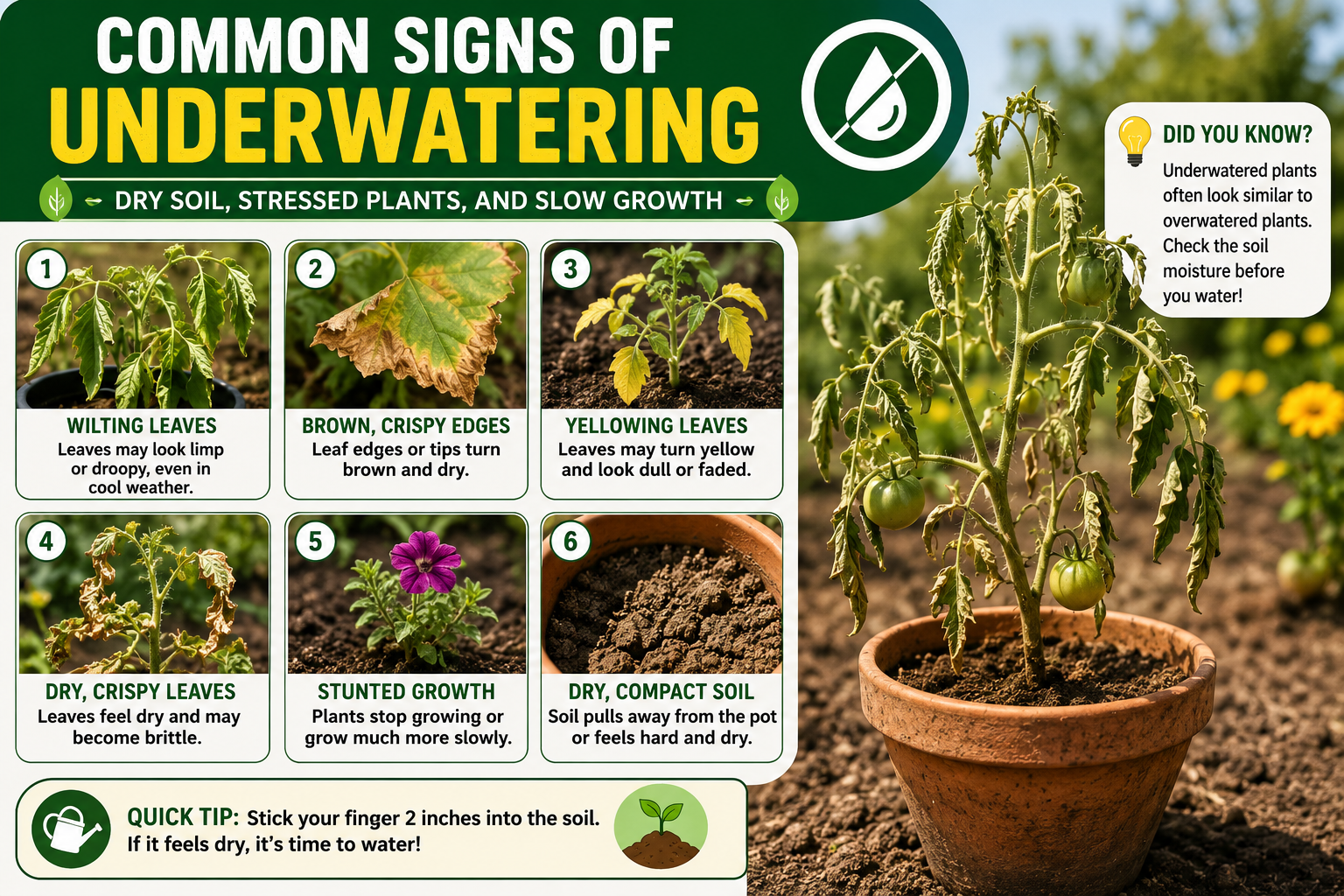
Common Signs of Underwatering
Watch for These Symptoms
- First, leaves begin to wilt or droop.
- Additionally, leaf edges become dry or brown.
- Furthermore, flowers may wilt prematurely.
- In some cases, fruits become smaller than normal.
- Finally, the soil feels dry about one inch below the surface.
If you notice these signs, water your plants thoroughly rather than giving them a light sprinkle.
How to Check Soil Moisture
The easiest way to know when to Water Your Garden is by checking the soil.
Simple Finger Test
- Insert your finger about one inch into the soil.
- If the soil feels dry, it’s usually time to water.
- However, if the soil still feels moist, wait another day before checking again.
This simple method helps prevent both overwatering and underwatering.
Comparison Table: Overwatering vs. Underwatering
Understanding the difference between overwatering and underwatering helps you identify problems early and keep your plants healthy.
| Feature | Overwatering | Underwatering |
|---|---|---|
| Soil Condition | Wet and soggy | Dry and dusty |
| Leaf Appearance | Yellow, soft, or falling | Wilted, dry, or crispy |
| Root Health | Root rot may develop | Roots become dry and weak |
| Plant Growth | Slow growth | Stunted growth |
| Flower Production | Reduced blooms | Flowers wilt or drop |
| Pest Problems | Fungus gnats and mold | Spider mites may appear |
| Solution | Reduce watering and improve drainage | Water deeply and consistently |
Overall, both overwatering and underwatering can harm your plants. Therefore, always check the soil before watering instead of relying on a fixed schedule.
How Often to Water Different Types of Plants
Not all plants have the same watering needs. Some thrive in consistently moist soil, while others prefer the soil to dry slightly between waterings. Understanding the requirements of different plant types helps you provide the right amount of water, reduce waste, and encourage healthier growth.
Vegetables
Vegetable plants generally need more water than ornamental plants because they grow quickly and produce edible crops. Most vegetables require 1 to 2 inches of water per week, including rainfall.
Vegetables with shallow roots, such as lettuce, spinach, and radishes, need frequent watering because their roots dry out quickly. Deep-rooted vegetables like tomatoes, peppers, carrots, and squash benefit from deep watering two or three times each week rather than daily light watering.
For the best results:
- Water deeply to encourage strong root development.
- Keep the soil consistently moist but not soggy.
- Increase watering during flowering and fruit production.
- Add mulch around plants to retain soil moisture.
Tip: Raised garden beds often dry out faster than in-ground gardens, so they may need more frequent watering during hot weather.
Flowers
Flowering plants vary in their watering needs depending on the species, but most garden flowers perform well with about 1 inch of water each week.
Annual flowers such as petunias, marigolds, and impatiens usually require more frequent watering because they bloom continuously throughout the growing season. Perennials like lavender, coneflowers, and black-eyed Susans are generally more drought tolerant once established.
To keep flowers healthy:
- Water at the base instead of spraying blooms.
- Allow the top inch of soil to dry slightly before watering again.
- Remove faded flowers to reduce stress on the plant.
- Use mulch to keep moisture in the soil.
Healthy watering practices encourage longer blooming periods and stronger root systems.
Herbs
Most culinary herbs prefer moderate watering rather than constantly wet soil.
Popular herbs such as basil, parsley, cilantro, and mint enjoy consistently moist soil. Mediterranean herbs like rosemary, thyme, oregano, and sage prefer slightly drier conditions and can suffer if overwatered.
For healthy herb gardens:
- Water when the top inch of soil feels dry.
- Grow herbs in containers with drainage holes.
- Avoid letting pots sit in standing water.
- Harvest regularly to encourage fresh growth.
Container-grown herbs usually need watering more often than herbs planted directly in the ground.
Trees and Shrubs
Trees and shrubs require less frequent watering than vegetables or flowers, but they benefit from deep soaking.
Newly planted trees should be watered every 2–3 days during the first few weeks. Once established, watering once every 7–14 days is usually enough, depending on weather conditions.
Shrubs typically require watering once or twice per week during dry periods.
Best practices include:
- Water slowly so moisture reaches deep roots.
- Create a watering ring around young trees.
- Apply mulch around the base while keeping it away from the trunk.
- Reduce watering during rainy weeks.
Deep watering encourages trees to develop strong root systems that withstand drought.
Lawns
Healthy lawns generally need 1 to 1½ inches of water per week.
Instead of watering every day, water deeply two or three times weekly. This encourages grass roots to grow deeper, making the lawn more drought-resistant.
Signs your lawn needs water include:
- Grass blades fold or curl.
- The lawn develops a bluish-gray color.
- Footprints remain visible after walking across the grass.
Adjust watering schedules during extremely hot or rainy periods.
Best Time of Day to Water Your Garden
The timing of watering is almost as important as the amount of water you apply.
Early Morning (Best Choice)
The ideal time to water your garden is between 5:00 AM and 9:00 AM.
Morning watering offers several benefits:
- Less water evaporates in cooler temperatures.
- Plants absorb moisture before the heat of the day.
- Leaves dry quickly, reducing fungal diseases.
- Plants remain hydrated throughout hot afternoons.
Garden experts widely consider morning watering the healthiest option for nearly every type of plant.
Evening Watering
If morning watering isn’t possible, late afternoon or early evening is the next best option.
However:
- Avoid watering too late at night.
- Wet leaves that remain overnight can encourage mildew and fungal infections.
- Water the soil instead of the foliage whenever possible.
Avoid Midday Watering
Watering during the hottest part of the day wastes water because much of it evaporates before reaching plant roots.
Although watering at midday won’t burn leaves as commonly believed, it is far less efficient and often requires more water to achieve the same results.
Best Watering Methods
Choosing the right watering method helps conserve water while ensuring plants receive adequate moisture.
Soaker Hoses
Soaker hoses slowly release water directly into the soil.
Benefits:
- Excellent water efficiency
- Keeps leaves dry
- Reduces weed growth
- Ideal for vegetable gardens
Drip Irrigation
Drip irrigation delivers water directly to plant roots through small emitters.
Advantages:
- Minimal water waste
- Prevents fungal diseases
- Easy to automate with timers
- Perfect for flower beds and raised gardens
Watering Can
A watering can provides precise watering for:
- Seedlings
- Container plants
- Indoor plants
- Small garden beds
It also prevents accidental overwatering.
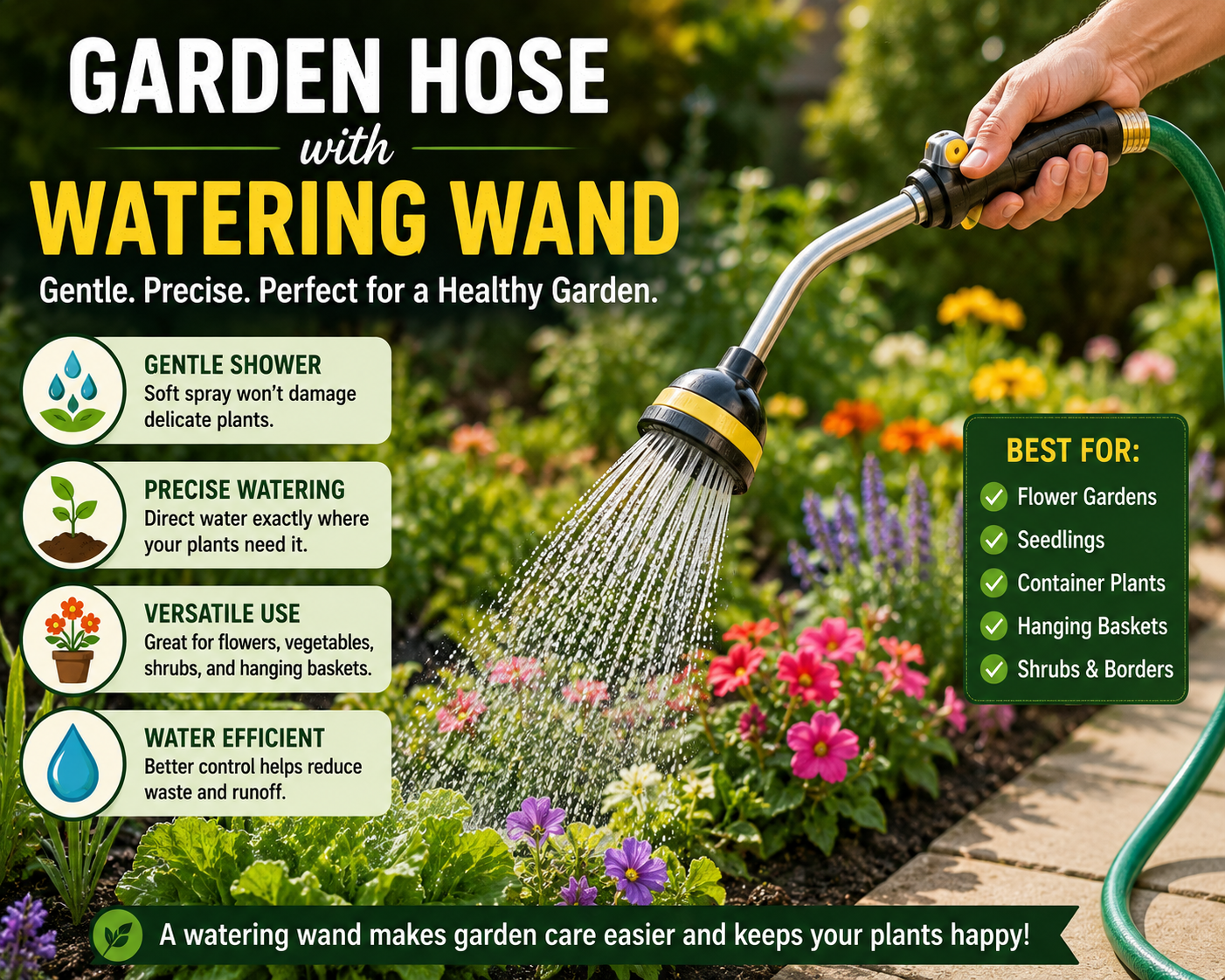
Garden Hose with Watering Wand
A watering wand produces a gentle shower that won’t wash away soil or damage delicate plants.
It’s especially useful for:
- Flower gardens
- Newly planted seedlings
- Hanging baskets
- Shrubs
Sprinklers
Sprinklers work well for lawns but are less efficient for garden beds because they also water pathways and encourage weed growth.
For lawns, run sprinklers long enough to moisten the soil several inches deep rather than watering lightly every day.
Common Watering Mistakes to Avoid
Even experienced gardeners sometimes make watering mistakes that affect plant health.
Watering Too Often
Frequent shallow watering encourages weak, shallow roots and increases the risk of root rot.
Instead, water deeply and less often.
Overwatering
Too much water removes oxygen from the soil and can cause roots to decay.
Watch for symptoms like:
- Yellow leaves
- Wilting despite wet soil
- Mold or algae on the soil surface
- Slow plant growth
Watering Too Little
Underwatered plants become stressed and produce fewer flowers, vegetables, or fruits.
Deep watering helps plants survive dry weather more effectively than frequent light watering.
Wetting the Leaves
Whenever possible, water the soil around the base of the plant instead of spraying leaves. Wet foliage increases the likelihood of fungal diseases such as powdery mildew and leaf spot.
Ignoring Weather Conditions
Adjust your watering schedule according to rainfall, humidity, and seasonal temperatures. Gardens typically need less supplemental water after heavy rain and more during heat waves.
Watering Without Checking Soil Moisture
Don’t rely solely on a schedule. Insert your finger about 2 inches into the soil before watering. If the soil still feels moist, wait another day. This simple habit helps prevent both overwatering and underwatering while promoting healthier, more resilient plants.
Seasonal Watering Tips
Your garden’s watering needs change throughout the year. Temperature, rainfall, humidity, and plant growth all affect how much water your plants require. Adjusting your watering routine each season helps prevent both overwatering and underwatering while keeping plants healthy.
Many gardeners wonder how often should you water your garden as the seasons change. The answer depends on temperature, rainfall, soil type, and the plants you’re growing.
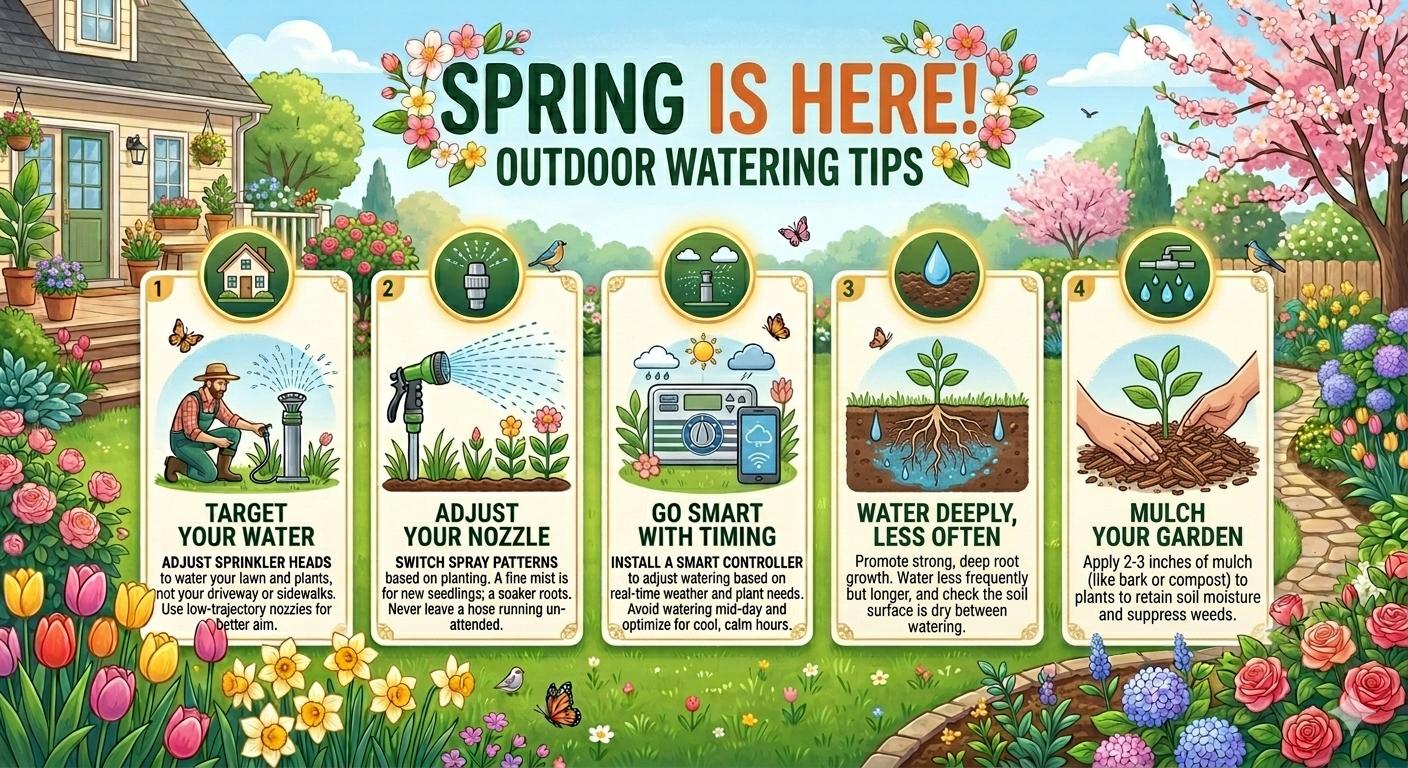
How Often Should You Water Your Garden During Spring?
Spring is when most plants begin actively growing after winter dormancy. The weather is usually cooler, and natural rainfall is more common, so gardens typically require less supplemental watering.
Spring watering tips:
- Water only when the top 1–2 inches of soil feel dry.
- Newly planted flowers and vegetables may need more frequent watering.
- Check weather forecasts before watering to avoid unnecessary watering after rain.
- Apply mulch around plants to help retain moisture as temperatures begin to rise.
Starting a proper watering routine in spring encourages strong root development before summer heat arrives.
How Often Should You Water Your Garden in Summer?
Summer is the most demanding season for watering. High temperatures, strong sunlight, and increased evaporation cause soil to dry out quickly.
To keep plants healthy:
- Water deeply in the early morning.
- Increase watering frequency during heat waves.
- Mulch garden beds with organic materials like straw, wood chips, or shredded leaves.
- Pay extra attention to containers and hanging baskets, which may need daily watering.
- Avoid watering lightly every day, as this encourages shallow roots.
Vegetables, flowering plants, and newly planted shrubs usually need the most water during summer.
How Often Should You Water Your Garden During Fall?
As temperatures cool, plants grow more slowly and require less water.
Fall watering recommendations include:
- Reduce watering frequency gradually.
- Continue watering vegetables that are still producing.
- Water newly planted trees and shrubs deeply to help establish roots before winter.
- Remove dead plants and refresh mulch to improve moisture retention.
Consistent watering during early fall helps plants prepare for colder weather.
How Often Should You Water Your Garden During Winter?
Many gardens require little or no supplemental watering during winter, especially in regions with regular rainfall or snowfall.
However:
- Water evergreen trees and shrubs during extended dry periods.
- Water only when the ground is not frozen.
- Avoid overwatering dormant plants.
Container plants kept outdoors may still need occasional watering because potting soil dries faster than garden soil.
Water Conservation Tips
Using water wisely benefits both your garden and the environment. Simple water-saving techniques can reduce your water bill while keeping plants healthy.
Water Early in the Morning
Morning watering reduces evaporation and allows plants to absorb moisture before the day’s heat.
Add Organic Mulch
A 2–3 inch layer of mulch helps:
- Reduce evaporation
- Keep soil cool
- Prevent weed growth
- Improve soil quality over time
Organic mulch also breaks down naturally, enriching the soil.
Collect Rainwater
Installing a rain barrel allows you to collect water from your roof for later use in the garden.
Rainwater is naturally soft and free of many chemicals found in treated tap water, making it an excellent choice for watering plants.
Choose Drought-Tolerant Plants
Native and drought-resistant plants require less water once established.
Examples include:
- Lavender
- Coneflowers
- Black-eyed Susans
- Sedum
- Russian Sage
These plants thrive with minimal watering while still providing beautiful blooms.
Improve Soil Quality
Healthy soil rich in compost retains moisture longer than poor-quality soil.
Adding compost every year improves:
- Water retention
- Soil structure
- Root growth
- Nutrient availability
Use Efficient Irrigation Systems
Drip irrigation and soaker hoses deliver water directly to plant roots, reducing water waste caused by evaporation and runoff.
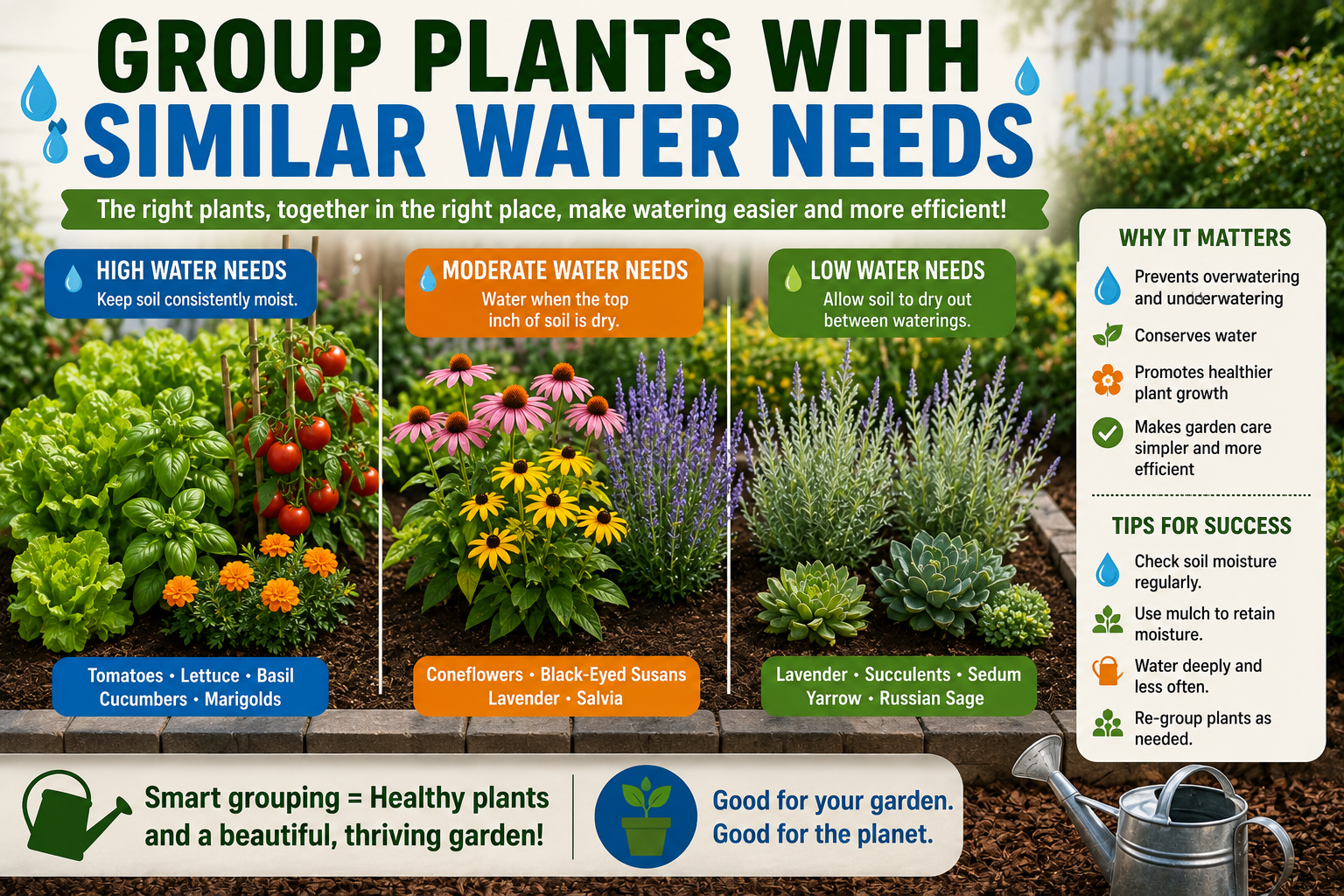
Group Plants with Similar Water Needs
Growing thirsty plants together and drought-tolerant plants in separate areas allows you to water more efficiently without overwatering certain plants.
Conclusion
Knowing how often to water your garden is one of the most important skills every gardener can learn. While there isn’t a single watering schedule that works for every garden, understanding your plants’ needs, checking soil moisture regularly, and adjusting your routine based on the weather will help your garden thrive.
By understanding how often should you water your garden, checking soil moisture regularly, and adjusting your watering schedule with the seasons, you can enjoy a healthier and more productive garden.
Remember that deep, infrequent watering is usually better than daily light watering. Watering early in the morning, using efficient watering methods, and conserving water with mulch and drip irrigation can improve plant health while reducing water waste.
Whether you’re growing vegetables, flowers, herbs, trees, or a lush lawn, paying attention to your garden’s changing needs throughout the seasons will reward you with stronger plants, healthier roots, and a more vibrant outdoor space.
Frequently Asked Questions (FAQs)
1. How often should you water your garden in hot weather?
During hot summer weather, most gardens need deep watering two or three times per week. Container plants and newly planted flowers may require daily watering because their soil dries out more quickly.
2. Is it better to water every day or once a week?
Deep watering a few times each week is generally better than watering lightly every day. This encourages plants to develop deeper, stronger roots that are more resistant to drought.
3. How can I tell if my garden needs water?
Check the soil by inserting your finger about 2 inches deep. If it feels dry, it’s time to water. Wilting leaves, dry soil, and slow plant growth are also common signs that your garden needs moisture.
4. What is the best time of day to water a garden?
Early morning, between 5:00 AM and 9:00 AM, is the best time to water because temperatures are cooler and less water is lost through evaporation.
5. Can overwatering damage plants?
Yes. Overwatering can cause root rot, yellow leaves, fungal diseases, and poor plant growth by limiting oxygen in the soil.
6. How often should you water your garden after heavy rain?
Not always. Check the soil first. If rainfall has thoroughly soaked the soil, additional watering is unnecessary.
7. Does mulch reduce watering needs?
Yes. Organic mulch helps retain soil moisture, keeps roots cooler, suppresses weeds, and can significantly reduce how often you need to water your garden.
8. How often should you water your garden if you have sandy soil?
If you have sandy soil, you should usually water your garden every 2–3 days, as sandy soil drains quickly and dries out faster than other soil types. Check the top 1–2 inches of soil, and water deeply whenever it feels dry.
You can also check out article Organic Gardening for Beginners