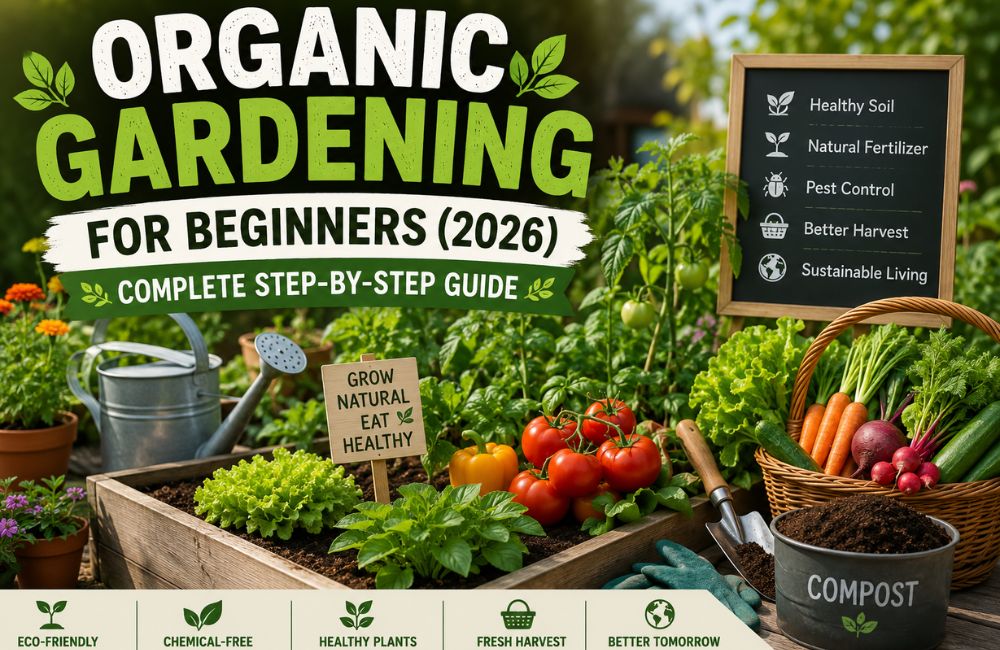
Organic Gardening is a natural and eco-friendly way to grow healthy vegetables, fruits, herbs, and flowers without using synthetic fertilizers, pesticides, or harmful chemicals. Instead, it focuses on improving soil health, encouraging beneficial insects, and using natural methods to help plants grow strong and productive. As a result, organic gardening is becoming increasingly popular among homeowners who want fresh, chemical-free produce while protecting the environment.
Whether you have a spacious backyard, a small patio, or a few containers on your balcony, you can successfully start an organic garden with the right planning and care. Moreover, organic gardening is suitable for beginners because it encourages simple, sustainable practices that are easy to learn over time. In addition, it helps create a healthier outdoor space for people, pets, birds, and pollinators like bees and butterflies.
This beginner-friendly guide explains everything you need to know about Organic Gardening, from understanding its basic principles to selecting the best location for your garden. By following these practical tips, you’ll be well on your way to growing healthy plants naturally while enjoying a greener and more rewarding gardening experience.
What Is Organic Gardening?
Organic Gardening is the practice of growing plants using natural methods instead of synthetic chemicals. Simply put, it focuses on working with nature rather than against it. Instead of relying on chemical fertilizers and pesticides, organic gardeners use compost, natural fertilizers, mulch, crop rotation, and beneficial insects to maintain healthy plants and fertile soil.
The main goal of organic gardening is to build healthy soil because strong soil produces healthy plants. As a result, plants become more resistant to pests, diseases, and changing weather conditions. Furthermore, organic gardening supports biodiversity by encouraging earthworms, pollinators, and other helpful organisms that improve the overall health of your garden.
Unlike conventional gardening, organic gardening emphasizes long-term sustainability. Therefore, it not only provides fresh and nutritious food but also helps protect water, wildlife, and the environment for future generations.
Key Principles of Organic Gardening
Successful organic gardening is based on a few simple principles:
- First, build healthy, nutrient-rich soil.
- Next, use compost and other natural fertilizers.
- Additionally, choose disease-resistant plants whenever possible.
- Moreover, conserve water by watering wisely and using mulch.
- Instead of chemical pesticides, encourage beneficial insects and use natural pest control methods.
- Finally, rotate crops each season to reduce pests and maintain soil fertility.
By following these principles, you can create a productive garden that thrives naturally year after year.
Benefits of Organic Gardening
There are many reasons why more gardeners are choosing organic methods. Not only does organic gardening produce healthier plants, but it also supports a cleaner and more sustainable environment.
Health Benefits
Organic gardening helps you grow fresh produce without synthetic chemicals.
Benefits include:
- Fresh fruits and vegetables free from harmful pesticide residues.
- Better nutritional value in many homegrown crops.
- Safer food for your family.
- Healthier herbs for cooking and natural remedies.
Environmental Benefits
Organic gardening protects nature in several ways.
Some important advantages include:
- Additionally, it improves soil quality over time.
- It helps reduce water pollution caused by chemical runoff.
- Furthermore, it protects bees, butterflies, and other pollinators.
- It encourages earthworms and beneficial microorganisms.
- It supports biodiversity in your garden.
Financial Benefits
Growing your own organic food can also save money.
For example:
- Spend less on fresh vegetables and herbs.
- Reduce the need for expensive chemical fertilizers.
- Produce compost from kitchen and garden waste.
- Reuse containers and natural materials for gardening.
Personal Benefits
Gardening is rewarding for both the body and mind.
Some personal benefits include:
- Moreover, gardening reduces stress and promotes relaxation.
- It provides regular physical activity.
- It encourages spending more time outdoors.
- It creates a beautiful and peaceful outdoor space.
- It gives a sense of accomplishment when harvesting fresh produce.
Organic Gardening vs. Conventional Gardening
Although both gardening methods aim to grow healthy plants, they differ significantly in how they care for the soil and control pests.
| Feature | Organic Gardening | Conventional Gardening |
|---|---|---|
| Fertilizers | Compost, manure, and natural fertilizers | Synthetic chemical fertilizers |
| Pest Control | Natural predators, neem oil, and organic sprays | Chemical pesticides |
| Soil Health | Builds soil naturally over time | Focuses mainly on plant nutrition |
| Environmental Impact | Eco-friendly and sustainable | Can contribute to pollution |
| Pollinator Safety | Safe for bees and butterflies | May harm beneficial insects |
| Cost Over Time | Often lower due to homemade compost | Can be higher because of chemical products |
| Long-Term Sustainability | Excellent | Moderate |
Overall, organic gardening is the better choice for gardeners who want healthier food while protecting the environment. However, conventional gardening may provide faster short-term results, although it often relies on synthetic products.
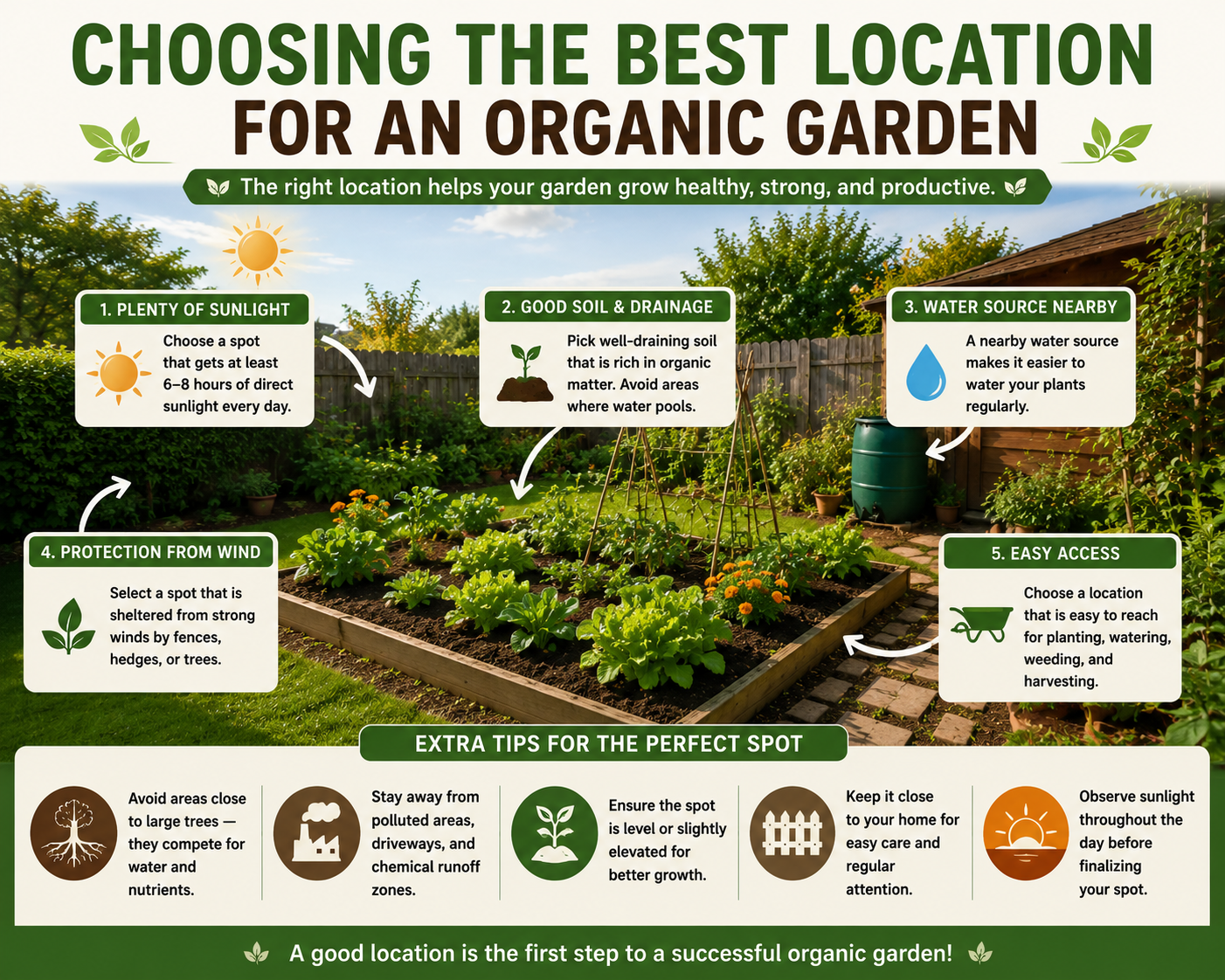
Choosing the Best Location for an Organic Garden
Selecting the right location is one of the most important steps in Organic Gardening. Even the healthiest soil cannot produce strong plants if the growing conditions are poor. Therefore, take time to evaluate your available space before planting.
Look for Plenty of Sunlight
Most vegetables, herbs, and flowering plants require at least 6–8 hours of direct sunlight each day.
Choose a location that receives consistent sunlight throughout the day. If your yard has both sunny and shaded areas, reserve the sunniest spot for vegetables like tomatoes, peppers, cucumbers, and beans.
Ensure Good Drainage
Healthy roots need both moisture and oxygen.
Therefore, avoid areas where water collects after rain. Instead, choose slightly elevated ground or improve drainage by adding compost and organic matter to the soil.
Choose Fertile Soil
Good soil is the foundation of every successful organic garden.
Look for soil that is:
- Dark and crumbly.
- Rich in organic matter.
- Well-draining.
- Easy to dig.
- Full of earthworms.
If your soil is poor, don’t worry. Fortunately, compost, aged manure, and other organic materials can significantly improve soil quality over time.
Keep Water Nearby
Watering is easier when your garden is close to a water source.
For convenience, choose a location near an outdoor faucet or rainwater collection system. This saves time and makes regular watering much simpler, especially during hot weather.
Protect Plants from Strong Winds
Strong winds can damage young plants and dry out the soil quickly.
If possible, plant your garden near a fence, hedge, or wall that provides natural wind protection while still allowing good air circulation.
Consider Accessibility
Your garden should be easy to reach throughout the year.
Choose a location where you can:
- Water plants easily.
- Harvest vegetables comfortably.
- Remove weeds regularly.
- Monitor pests and diseases.
- Add compost whenever needed.
Finally, avoid planting too close to large trees because their roots compete with garden plants for water and nutrients.
Preparing Healthy Organic Soil
Healthy soil is the foundation of successful Organic Gardening. Without nutrient-rich soil, even the healthiest plants may struggle to grow. Fortunately, improving your soil naturally is simple and highly effective.
Organic soil contains beneficial microorganisms, earthworms, and organic matter that work together to provide plants with essential nutrients. As a result, plants develop stronger roots, produce better harvests, and become more resistant to pests and diseases.
How to Improve Organic Soil
You don’t need expensive products to build healthy soil. Instead, focus on adding natural materials that improve soil structure and fertility.
Best Ways to Improve Soil
- First, mix plenty of compost into the soil.
- Additionally, add well-aged manure to increase nutrients.
- Furthermore, use leaf mold to improve moisture retention.
- Next, loosen compacted soil before planting.
- Finally, avoid walking on garden beds to prevent soil compaction.
By improving your soil every growing season, you’ll create a healthy environment where plants can thrive naturally.
Composting for Beginners
Composting is one of the easiest and most valuable practices in Organic Gardening. Simply put, compost is organic material that has broken down into a rich, dark substance that feeds the soil naturally.
Instead of throwing away kitchen and yard waste, you can turn it into nutrient-rich compost. As a result, you’ll reduce household waste while creating one of the best natural fertilizers for your garden.
What Can You Compost?
A balanced compost pile contains a mixture of green and brown materials.
Green Materials
These materials provide nitrogen.
- Fruit and vegetable scraps
- Coffee grounds
- Fresh grass clippings
- Tea leaves
- Plant trimmings
Brown Materials
These materials provide carbon.
- Dry leaves
- Shredded newspaper
- Cardboard
- Straw
- Small twigs
Avoid Adding
To keep your compost healthy, avoid:
- Meat
- Dairy products
- Oily foods
- Diseased plants
- Pet waste
Additionally, turn your compost pile every few weeks to improve airflow and speed up decomposition. With regular care, your compost should be ready to use within a few months.
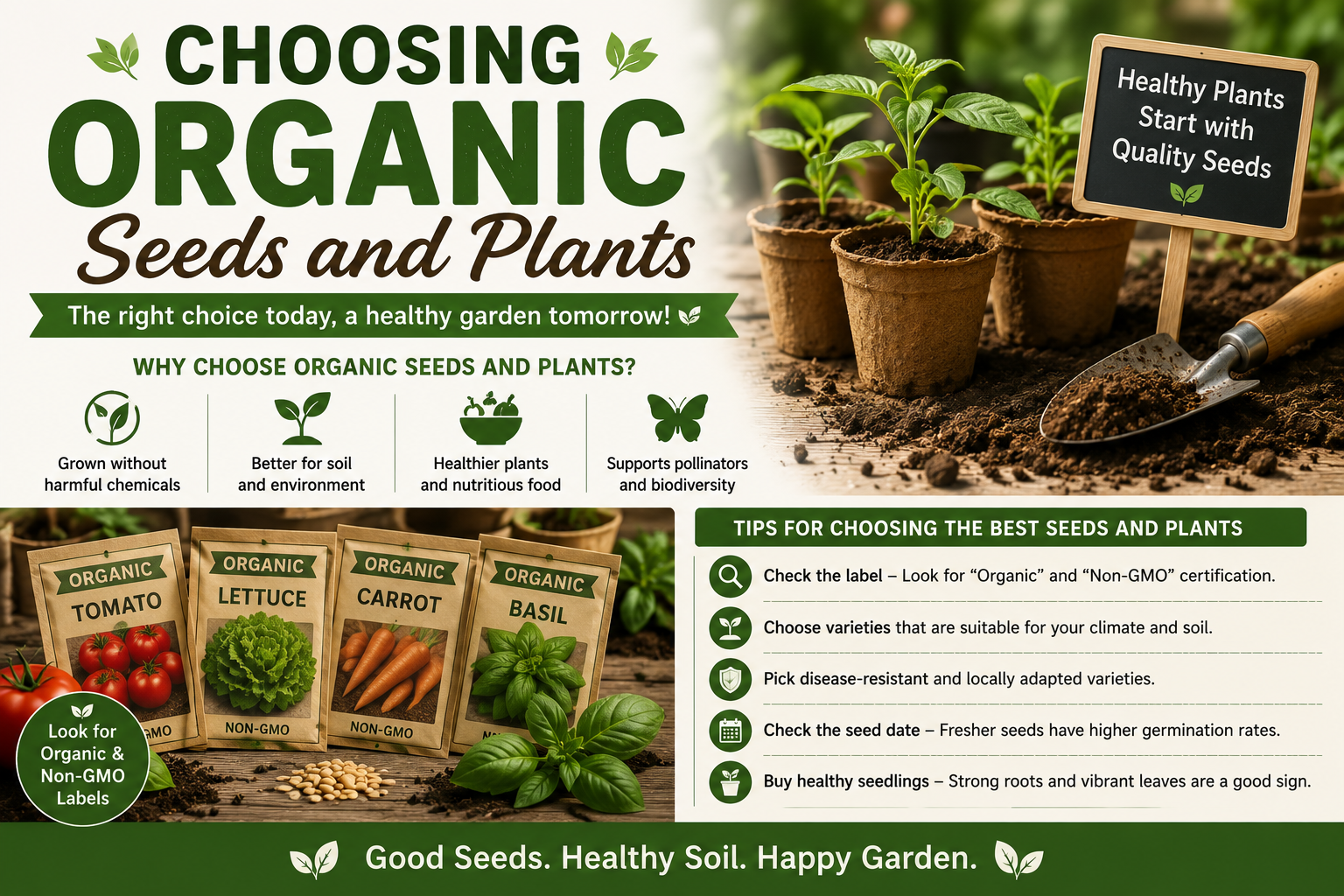
Choosing Organic Seeds and Plants
Selecting high-quality seeds and healthy plants is another important step in Organic Gardening. Although many plants grow well naturally, choosing organic varieties gives your garden the best possible start.
Organic seeds are produced without synthetic chemicals and are often better adapted to sustainable growing methods. Moreover, they help maintain healthier ecosystems by encouraging natural biodiversity.
Tips for Choosing the Best Seeds
Look for These Features
- Certified organic seeds
- Disease-resistant varieties
- Fresh seeds with current packaging dates
- Plants suitable for your local climate
- Varieties recommended for beginners
Easy Organic Crops for Beginners
If you’re just getting started, consider growing:
- Tomatoes
- Lettuce
- Spinach
- Radishes
- Carrots
- Green beans
- Basil
- Mint
- Parsley
- Marigolds
For the best results, purchase seeds and seedlings from trusted local nurseries or reputable online suppliers.
Natural Watering Techniques
Watering correctly is essential for successful Organic Gardening. However, watering too much or too little can weaken plants and reduce harvests.
Instead of watering every day on a fixed schedule, check the soil moisture first. Generally, plants should be watered when the top inch of soil feels dry.
Best Watering Practices
Follow These Simple Tips
- First, water early in the morning whenever possible.
- Next, water deeply instead of lightly.
- Additionally, direct water toward the base of each plant.
- Furthermore, avoid wetting the leaves to reduce disease.
- During hot weather, check soil moisture more frequently.
- Finally, adjust your watering schedule after rainfall.
Deep watering encourages roots to grow farther into the soil. As a result, plants become stronger and more drought-tolerant.
Water Conservation Tips
You can also save water by:
- Collecting rainwater.
- Installing drip irrigation.
- Using mulch around plants.
- Watering only when necessary.
These simple habits help conserve water while keeping your garden healthy.
Organic Fertilizers
Plants need nutrients throughout the growing season. Instead of using synthetic fertilizers, organic gardeners rely on natural materials that nourish both the plants and the soil.
Organic fertilizers release nutrients slowly. Therefore, plants receive a steady supply of nutrition without the risk of excessive chemical buildup.
Popular Organic Fertilizers
Excellent Natural Choices
- Compost
- Well-aged manure
- Worm castings
- Fish emulsion
- Seaweed fertilizer
- Bone meal
- Blood meal
- Compost tea
Each fertilizer provides different nutrients. For example, compost improves overall soil health, while bone meal supplies phosphorus for strong root development.
Tips for Applying Organic Fertilizers
- First, follow the recommended application rates.
- Additionally, apply fertilizer around the base of the plant.
- Next, water thoroughly after feeding.
- Furthermore, avoid over-fertilizing because too many nutrients can reduce plant growth.
- Finally, continue feeding plants regularly during the growing season.
Healthy soil naturally supplies many nutrients. Even so, regular feeding helps vegetables, fruits, and flowering plants remain productive throughout the season.
Mulching Tips
Mulching is one of the simplest ways to improve Organic Gardening. Basically, mulch is a protective layer of organic material placed on top of the soil.
Mulch helps retain moisture, reduce weeds, regulate soil temperature, and slowly add nutrients as it breaks down. In addition, it protects soil from erosion caused by heavy rain and wind.
Best Organic Mulch Materials
You can use many natural materials as mulch.
Popular Choices
- Straw
- Dry leaves
- Grass clippings
- Wood chips
- Pine needles
- Compost
- Shredded bark
Choose mulch based on the needs of your plants and local climate.
How to Apply Mulch
For the best results:
- First, remove weeds before applying mulch.
- Next, spread a layer about 2–3 inches thick.
- Then, keep mulch a few inches away from plant stems.
- Additionally, replenish mulch as it naturally decomposes.
- Finally, inspect the mulch regularly for signs of mold or pests.
Proper mulching improves soil quality over time. As a result, your plants require less watering and experience fewer weed problems.
Natural Pest and Disease Control
One of the biggest advantages of Organic Gardening is that you can manage pests and diseases without relying on harmful chemicals. Instead, organic gardeners use natural methods that protect plants while preserving beneficial insects and the environment.
A healthy garden naturally attracts helpful insects such as ladybugs, lacewings, and praying mantises. These beneficial insects feed on common pests like aphids, helping to keep their populations under control.
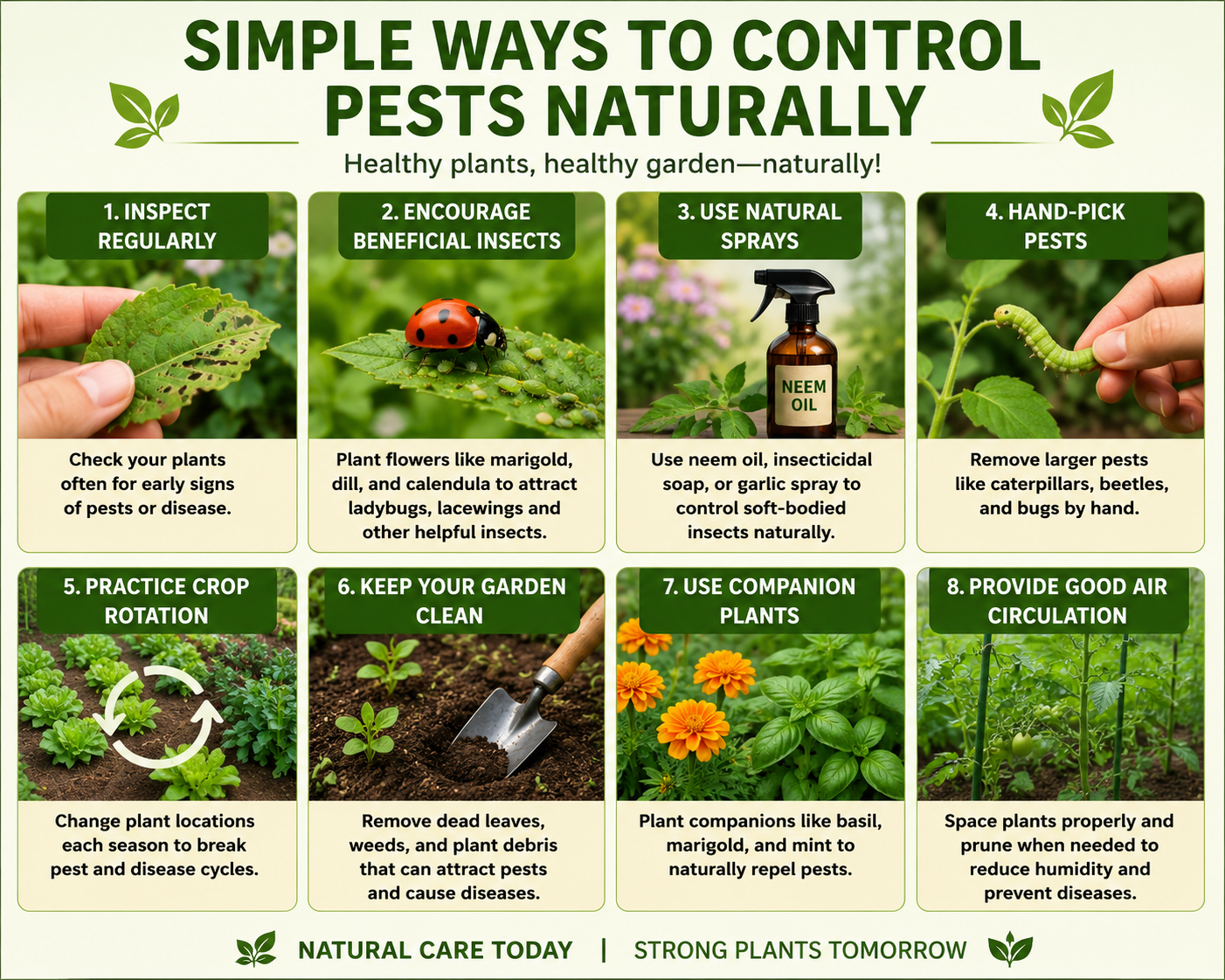
Simple Ways to Control Pests Naturally
Follow These Natural Methods
- First, inspect your plants regularly for signs of insects or disease.
- Next, remove damaged leaves and infected plant parts immediately.
- Additionally, encourage beneficial insects by planting flowers such as marigolds, dill, and calendula.
- Furthermore, spray neem oil or insecticidal soap when necessary.
- Instead of chemical pesticides, hand-pick larger pests like caterpillars.
- Finally, rotate crops every season to reduce recurring pest problems.
Preventing Plant Diseases
Preventing diseases is much easier than treating them.
For the best results:
- Water plants at the base instead of wetting the leaves.
- Moreover, provide enough space between plants for good air circulation.
- Remove weeds regularly because they can harbor pests and diseases.
- In addition, clean gardening tools after each use.
- Avoid overwatering to reduce fungal infections.
Healthy plants are naturally more resistant to pests and diseases. Therefore, maintaining healthy soil remains one of the best forms of protection.
Common Organic Gardening Mistakes
Every beginner makes mistakes. Fortunately, most problems are easy to avoid once you understand the basics of Organic Gardening.
Mistakes to Avoid
Overwatering Plants
Too much water can cause root rot and fungal diseases.
Instead, check the soil before watering. If the top inch feels dry, it’s usually time to water.
Ignoring Soil Health
Healthy plants begin with healthy soil.
Therefore, add compost regularly and avoid using poor-quality soil.
Planting Too Close Together
Crowded plants compete for sunlight, nutrients, and airflow.
As a result, they become more vulnerable to diseases and pests.
Using Fresh Manure
Fresh manure can damage plant roots and introduce harmful bacteria.
Instead, use well-aged manure or finished compost.
Forgetting to Mulch
Mulch helps conserve moisture and suppress weeds.
Without mulch, soil dries out more quickly and weeds grow faster.
Choosing the Wrong Plants
Some plants perform better than others depending on your climate.
Before planting, select varieties that are suitable for your growing zone and local weather conditions.
Expecting Instant Results
Organic gardening improves over time.
Be patient, because healthy soil and strong plants develop gradually with consistent care.
Seasonal Organic Gardening Tips
Each season brings different gardening tasks. Therefore, adjusting your routine throughout the year helps keep your garden productive.
Spring
It is the perfect time to prepare your garden.
Checklist
- Add compost to garden beds.
- Plant cool-season vegetables.
- Start warm-season seedlings indoors.
- Check irrigation systems.
- Apply fresh mulch.
Summer
Warm weather encourages rapid plant growth.
Checklist
- Water deeply during dry periods.
- Additionally, harvest vegetables regularly.
- Watch for insects and diseases.
- Feed heavy-producing plants with organic fertilizer.
- Remove weeds before they spread.
Autumn
It is ideal for cleaning and improving your garden.
Checklist
- Harvest remaining crops.
- Plant cover crops if needed.
- Add fallen leaves to the compost pile.
- Refresh mulch before winter.
- Clean and store gardening tools.
Winter
Although plant growth slows down, winter is still productive for gardeners.
Winter Checklist
- Plan next season’s garden layout.
- Order organic seeds early.
- Maintain compost piles.
- Protect sensitive plants from frost.
- Repair raised beds and containers.
By following seasonal gardening tasks, you’ll keep your organic garden healthy all year long.
Conclusion
Organic Gardening is more than simply avoiding synthetic chemicals—it’s a sustainable way to grow healthy plants while caring for the environment. By focusing on healthy soil, natural fertilizers, compost, proper watering, and eco-friendly pest control, you can create a thriving garden that produces fresh vegetables, fragrant herbs, colorful flowers, and delicious fruits.
Whether you’re planting your first vegetable bed or expanding an existing garden, organic gardening offers countless rewards. Moreover, it helps protect beneficial insects, improves soil fertility, and creates a healthier outdoor space for your family.
Ultimately, success comes from patience, observation, and consistent care. As your soil improves over time, your plants will become stronger, healthier, and more productive. With the knowledge you’ve gained from this guide, you’re ready to enjoy the many benefits of Organic Gardening and grow naturally with confidence.
Frequently Asked Questions (FAQs)
1. What is organic gardening?
Simply put, Organic Gardening is the practice of growing plants naturally without using synthetic fertilizers, pesticides, or herbicides. Instead, it relies on compost, organic fertilizers, and natural pest control methods.
2. Is organic gardening suitable for beginners?
Yes. In fact, organic gardening is an excellent choice for beginners because it uses simple, natural techniques that improve over time while promoting healthier soil and plants.
3. How can I improve my garden soil naturally?
Generally, you can improve soil by adding compost, well-aged manure, leaf mold, and other organic matter. These materials increase nutrients, improve drainage, and encourage beneficial microorganisms.
4. What are the best vegetables for organic gardening?
Some of the easiest vegetables include tomatoes, lettuce, spinach, carrots, radishes, cucumbers, peppers, green beans, and zucchini.
5. How do I control pests without chemicals?
Instead of chemical pesticides, use neem oil, insecticidal soap, companion planting, beneficial insects, crop rotation, and regular garden inspections.
6. How often should I water an organic garden?
Generally, water when the top inch of soil feels dry. However, plants may require more frequent watering during hot, dry weather.
7. Why is compost important in organic gardening?
Compost improves soil structure, supplies essential nutrients, retains moisture, and supports beneficial microorganisms. As a result, plants grow stronger and produce healthier harvests.
You can also check our article about Container Gardening