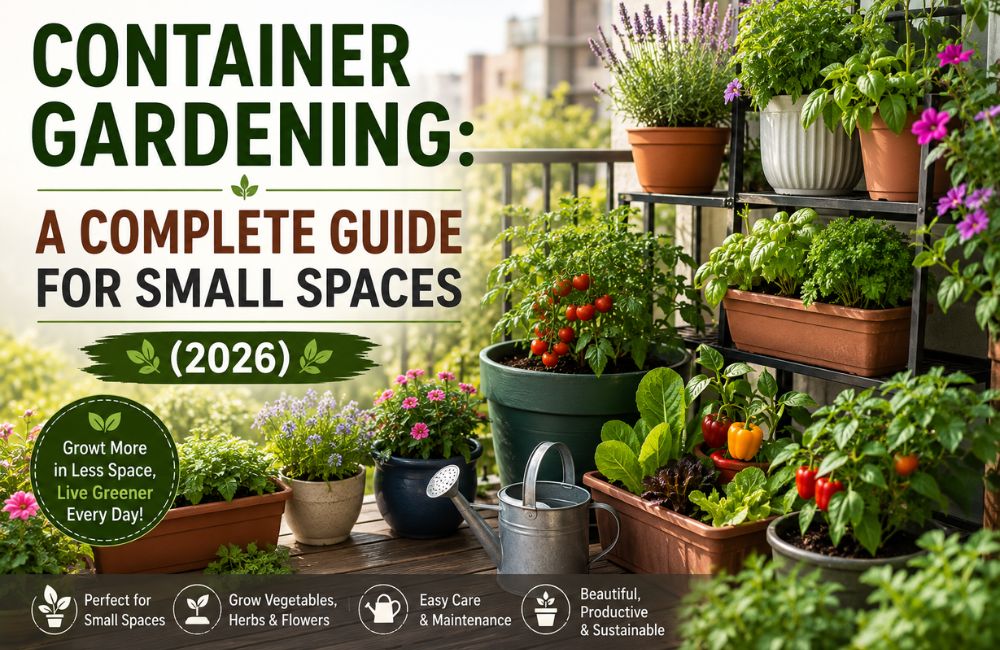
Container Gardening is one of the easiest and most rewarding ways to grow plants, even if you have limited outdoor space. Whether you live in an apartment with a balcony, a small house with a patio, or simply want to decorate your porch, container gardening allows you to enjoy fresh vegetables, colorful flowers, fragrant herbs, and even small fruit plants without needing a large backyard.
One of the biggest advantages of container gardening is its flexibility. For example, you can move your plants to receive the right amount of sunlight, protect them from harsh weather, and create a beautiful garden almost anywhere. Additionally, it is an excellent choice for beginners because it requires less maintenance than traditional gardening while offering impressive results.
With the right containers, quality potting soil, proper watering, and suitable plant selection, anyone can grow a thriving container garden. In fact, from tomatoes and peppers to roses and lavender, many plants perform exceptionally well in pots when given proper care.
Finally, this complete guide covers everything you need to know about Container Gardening, including choosing the right containers, selecting plants, watering techniques, soil preparation, fertilizing, pest control, common mistakes, seasonal care, and expert tips to help your small-space garden flourish throughout the year.
Why Choose Container Gardening?
Container gardening has become increasingly popular because it allows people to grow plants regardless of space limitations. Whether you have a small balcony, a patio, or simply a sunny windowsill, this gardening method makes it easy to create a beautiful and productive green space. Moreover, it offers greater flexibility and control than many traditional gardens.
Some of the biggest benefits include:
- First, it’s perfect for balconies, patios, rooftops, decks, and windowsills.
- Additionally, it is ideal for renters who cannot modify the landscape.
- Furthermore, you can easily move plants according to sunlight and changing weather conditions.
- As a result, you have better control over soil quality and plant health.
- In addition, container gardens usually have fewer weeds than traditional garden beds.
- Likewise, pest management is often easier because plants are kept in a controlled environment.
- Another advantage is that container gardening requires less bending, making it more comfortable for many gardeners.
- Finally, it adds beauty, color, and greenery to both indoor and outdoor spaces.
Overall, whether your goal is growing fresh food or decorating your home, container gardening offers endless possibilities and can fit almost any lifestyle.
Is Container Gardening Right for You?
Overall, container gardening is suitable for almost everyone, especially if you:
- Live in an apartment
- Have a small backyard
- Want fresh herbs near the kitchen
- Enjoy growing flowers
- Need better control over soil conditions
- Want an easy gardening method for beginners
Container Gardening vs Traditional Gardening
| Feature | Container Gardening | Traditional Gardening |
|---|---|---|
| Space Required | Very little | Large garden area |
| Soil Control | Excellent | Limited |
| Weed Problems | Very Low | High |
| Water Requirement | More Frequent | Moderate |
| Mobility | Easy to move | Fixed |
| Cost | Moderate | Usually lower initially |
| Pest Control | Easier | More difficult |
| Best For | Small spaces | Large landscapes |
Choosing the Right Containers
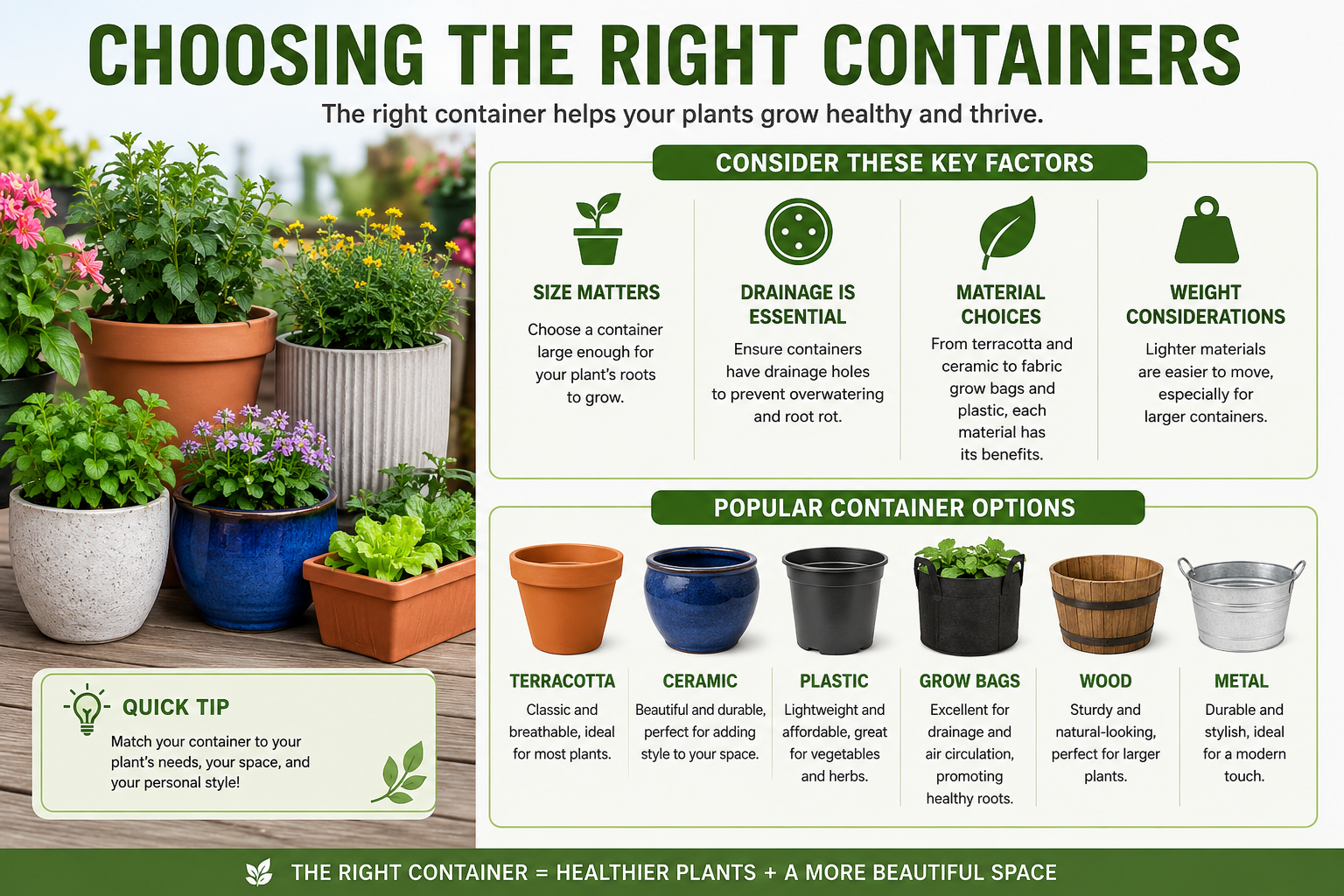
The container you choose directly affects plant health and growth.
Common Container Materials
Plastic Pots
Pros
- Lightweight
- Affordable
- Retain moisture well
- Available in many colors
Cons
- Can crack over time
- May overheat in direct sunlight
Clay (Terracotta) Pots
Pros
- Attractive appearance
- Excellent airflow
- Prevent overwatering
Cons
- Heavy
- Dry out quickly
- Break easily
Ceramic Pots
These decorative containers are perfect for patios and balconies.
Advantages include:
- Stylish appearance
- Durable
- Good insulation
However, they tend to be heavier and more expensive than other container options.
Fabric Grow Bags
Grow bags have become increasingly popular for vegetable gardening.
Benefits include:
- Excellent drainage
- Healthy root growth
- Lightweight
- Easy storage
Wooden Planters
Wood creates a natural look and is ideal for flowers and vegetables.
For the best results, choose rot-resistant wood such as cedar for longer life.
Choosing the Right Size Container
In fact, container size matters more than many beginners realize.
| Plant Type | Recommended Pot Size |
|---|---|
| Herbs | 6–8 inches |
| Lettuce | 8–10 inches |
| Peppers | 12 inches |
| Tomatoes | 16–20 inches |
| Cucumbers | 18 inches |
| Roses | 18–24 inches |
| Lemon Trees | 20–24 inches |
Larger containers retain moisture better and allow stronger root development.
Best Soil for Container Gardening
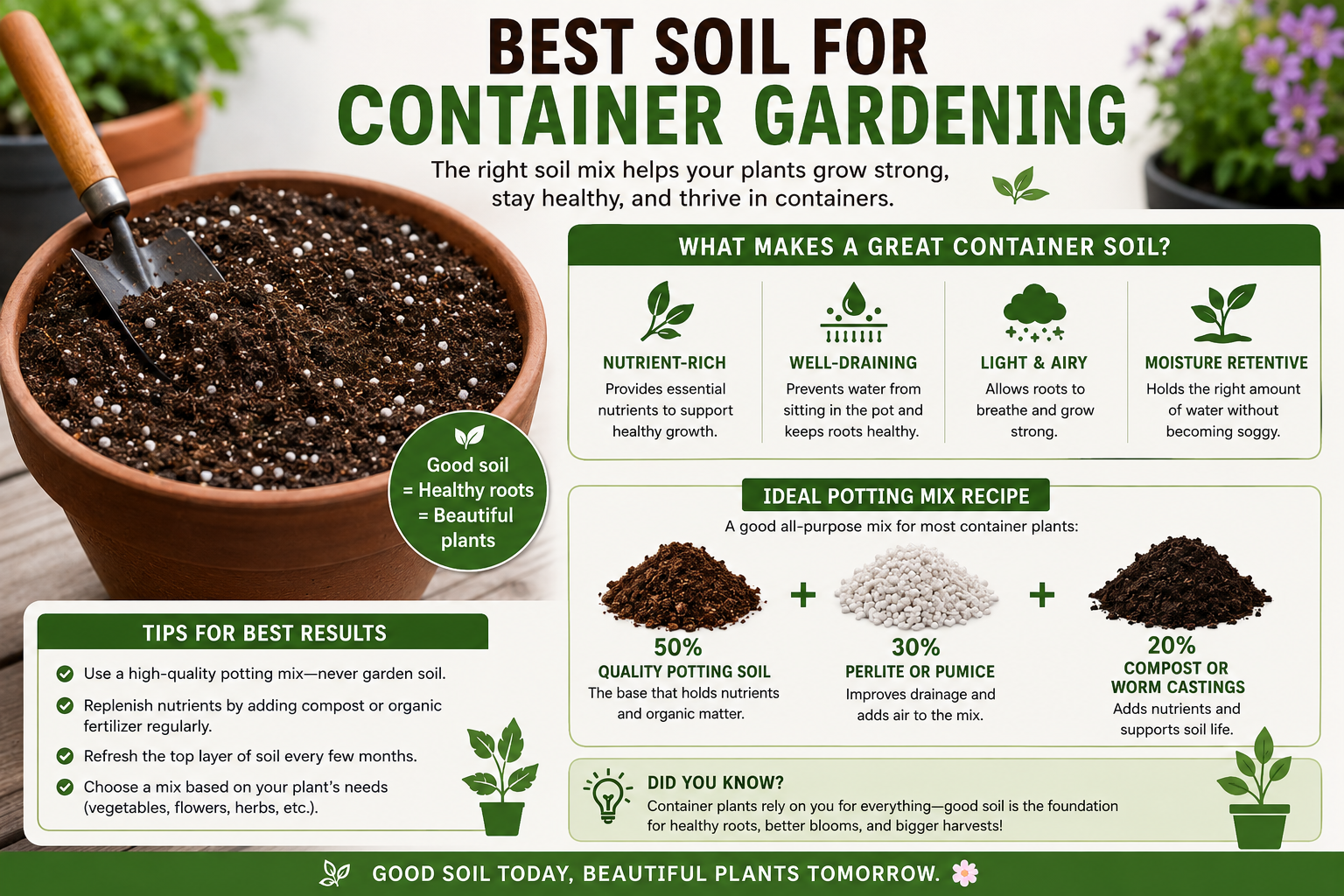
Never use regular garden soil in containers.
Garden soil becomes compacted, drains poorly, and may contain pests or diseases.
Instead, use a high-quality potting mix.
A good potting mix usually contains:
- Peat moss or coco coir
- Compost
- Perlite
- Vermiculite
- Organic matter
This combination improves drainage, moisture retention, and root growth.
Choosing the Best Plants for Container Gardening
In fact, almost any plant can grow in containers if the pot is large enough.
Vegetables
- Tomatoes
- Chili peppers
- Bell peppers
- Lettuce
- Spinach
- Radishes
- Carrots
- Beans
- Cucumbers
- Eggplant
Herbs
- Basil
- Mint
- Rosemary
- Thyme
- Oregano
- Parsley
- Chives
- Cilantro
Flowers
- Petunias
- Marigolds
- Geraniums
- Begonias
- Pansies
- Lavender
- Zinnias
- Coneflowers
- Verbena
Fruits
- Strawberries
- Blueberries
- Dwarf lemons
- Dwarf oranges
- Figs
How to Plant a Container Garden
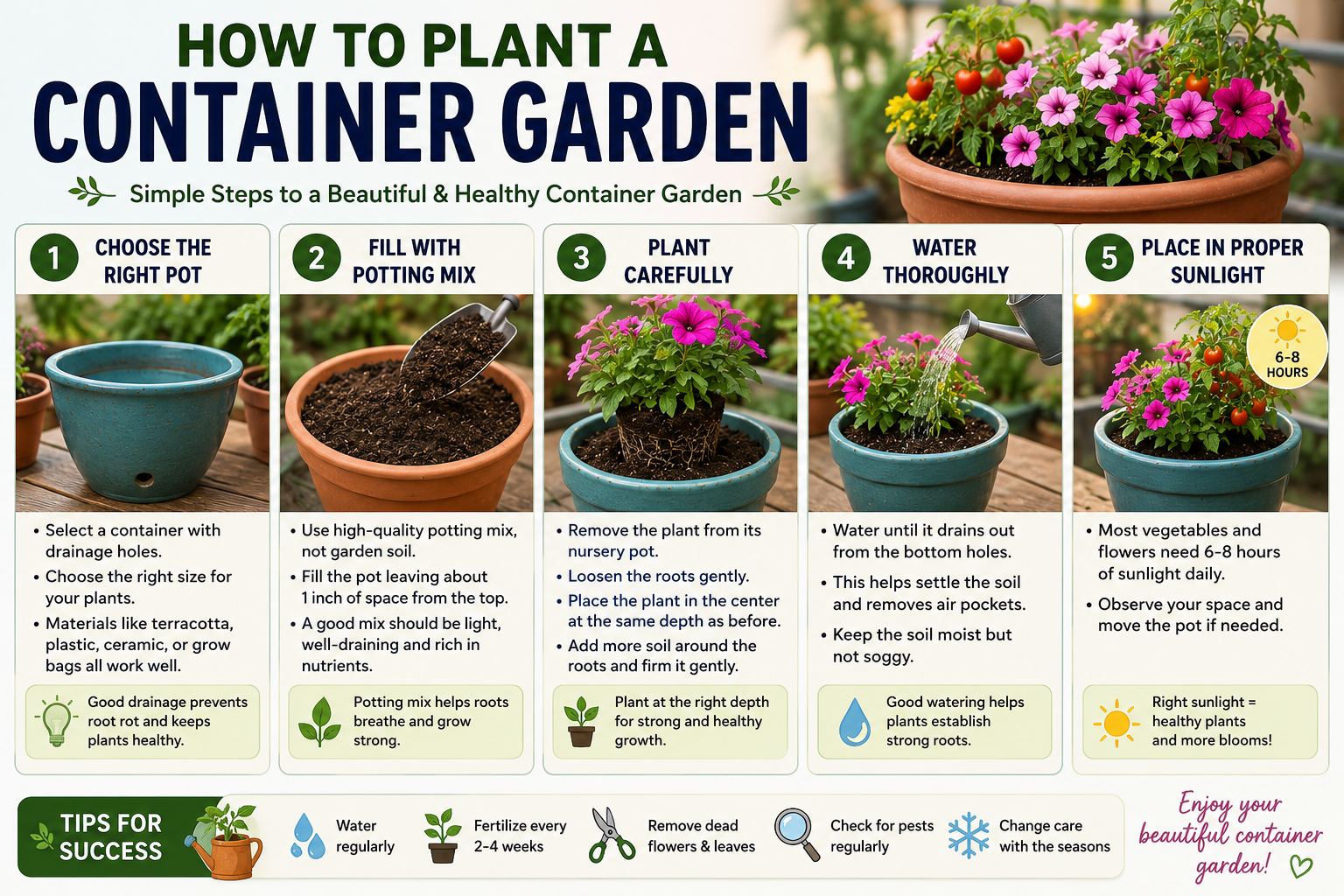
Follow these simple steps.
Step 1: Choose the Right Pot
Ensure drainage holes are present.
Step 2: Fill with Potting Mix
Leave about one inch of space at the top.
Step 3: Plant Carefully
Place the plant at the same depth as it was in its nursery container.
Step 4: Water Thoroughly
After planting, water until it drains from the bottom.
Step 5: Place in Proper Sunlight
Most vegetables require 6–8 hours of sunlight daily.
Watering Container Plants
Watering is one of the most important aspects of Container Gardening. Because containers dry out much faster than traditional garden beds, they require more frequent monitoring and consistent watering.
Signs Plants Need Water
- Dry soil
- Drooping leaves
- Slow growth
- Crispy leaf edges
Watering Tips
- Water early in the morning.
- Water deeply.
- Avoid frequent shallow watering.
- Check soil moisture before watering.
- Increase watering during hot weather.
Fertilizing Container Plants
Plants in containers use nutrients quickly.
Regular feeding keeps plants healthy.
Best Fertilizer Options
- Compost
- Fish emulsion
- Seaweed fertilizer
- Organic liquid fertilizer
- Slow-release fertilizer
During the growing season, feed flowering and vegetable plants every 2–4 weeks.
Sunlight Requirements
Different plants require different light conditions.
| Light Level | Hours of Sun | Suitable Plants |
|---|---|---|
| Full Sun | 6–8+ hours | Tomatoes, peppers, lavender |
| Partial Sun | 4–6 hours | Lettuce, spinach, parsley |
| Shade | 2–4 hours | Ferns, hostas, begonias |
Observe your growing space before selecting plants.
Drainage Is Essential
Poor drainage causes root rot.
Always ensure containers have:
- Drainage holes
- Quality potting mix
- Proper watering habits
Avoid leaving pots standing in water for long periods.
Supporting Tall Plants
Some plants need additional support.
Examples include:
- Tomatoes
- Cucumbers
- Beans
- Peas
Use:
- Tomato cages
- Bamboo stakes
- Trellises
- Plant clips
Supporting plants prevents stem damage and improves air circulation.
Common Container Gardening Problems
Yellow Leaves
Possible causes:
- Overwatering
- Nutrient deficiency
- Poor drainage
Wilting Plants
Usually caused by:
- Underwatering
- Heat stress
- Root damage
Slow Growth
May result from:
- Small containers
- Poor soil
- Lack of fertilizer
- Insufficient sunlight
Root Rot
Often caused by excessive watering and poor drainage.
Common Pests
Container gardens can still attract pests.
Common ones include:
- Aphids
- Whiteflies
- Spider mites
- Mealybugs
- Slugs
Natural control methods include:
- Neem oil
- Insecticidal soap
- Hand-picking pests
- Encouraging beneficial insects
Seasonal Care for Container Gardens
Spring
- Refresh potting mix.
- Divide crowded plants.
- Apply fertilizer.
- Plant warm-season vegetables.
Summer
- Water more often.
- Remove faded flowers.
- Monitor pests.
- Fertilize regularly.
Fall
- Harvest remaining vegetables.
- Plant cool-season crops.
- Reduce fertilizer.
Winter
- Move tender plants indoors.
- Protect pots from freezing.
- Water less frequently.
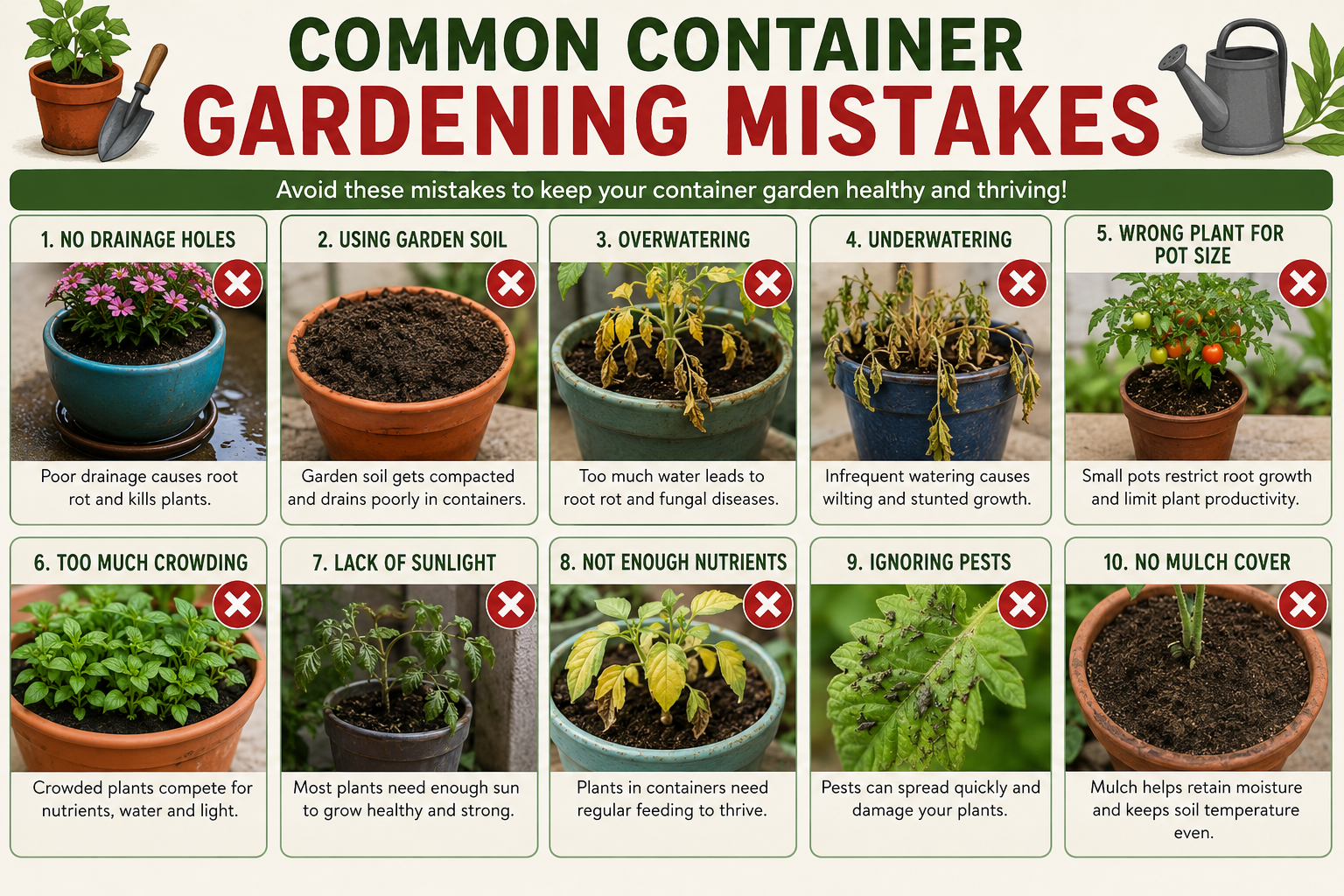
Common Container Gardening Mistakes
Avoid these beginner mistakes:
- Choosing containers without drainage holes
- Using garden soil instead of potting mix
- Overwatering plants
- Underwatering during hot weather
- Growing large plants in tiny pots
- Ignoring fertilizer needs
- Placing sun-loving plants in shade
- Crowding too many plants together
Learning from these mistakes will improve your gardening success.
Expert Tips for Successful Container Gardening
Follow These Simple Practices
- Choose containers based on plant size.
- Water consistently.
- Feed plants regularly.
- Rotate pots for even growth.
- Remove dead flowers and leaves.
- Repot root-bound plants.
- Clean containers before reusing them.
- Group plants with similar watering needs.
- Mulch the soil surface to retain moisture.
- Inspect plants weekly for pests and diseases.
Small improvements in daily care can make a significant difference in plant health and productivity.
Conclusion
Container Gardening proves that you don’t need a large backyard to enjoy a beautiful and productive garden. With the right containers, quality soil, suitable plants, and consistent care, even the smallest balcony or patio can become a vibrant green space filled with flowers, herbs, vegetables, or fruits.
The key to success lies in selecting the appropriate containers, providing adequate sunlight, watering consistently, and feeding plants regularly. As you gain experience, you can experiment with different plant combinations and seasonal displays to keep your garden attractive all year.
Ultimately, whether you’re a beginner starting your first potted herb or an experienced gardener looking to maximize a small space, container gardening offers a practical, enjoyable, and rewarding way to connect with nature while enhancing your home.
Frequently Asked Questions (FAQs)
1. What is container gardening?
Simply put, container gardening is the practice of growing plants in pots, planters, grow bags, or other containers instead of planting them directly in the ground.
2. Which vegetables grow best in containers?
Tomatoes, peppers, lettuce, spinach, radishes, carrots, beans, cucumbers, and eggplants are among the best vegetables for container gardening.
3. How often should I water container plants?
In general, most container plants need watering when the top inch of soil feels dry. During hot summer weather, however, some plants may need daily watering.
4. Can I use garden soil in pots?
No. Garden soil becomes compacted in containers and drains poorly. Always use a high-quality potting mix designed for container gardening.
5. What size container is best for tomatoes?
For the best results, most tomato varieties grow best in containers that are at least 16–20 inches wide and deep, providing enough room for healthy root development.
6. Do container plants need fertilizer?
Yes. Since nutrients wash out of containers over time, regular feeding with a balanced liquid or slow-release fertilizer helps maintain healthy growth.
7. Can container gardens survive winter?
Many hardy plants can survive winter with proper protection, while tender plants should be moved indoors or covered during freezing temperatures.
You can also check out article 15 Beautiful All Season Flowers for Your Backyard